

The Triumph ‘C’ Range Machines 1957-1974
This Site is designed to assist Buyers, Owners and Restorers in confirming the Specification for the Triumph 350cc and 500cc Machines.
It covers all models such as the Triumph T21, 3TA, 5TA, Tiger 90, Tiger 100 and the Competition, Police and Military Versions.
You will find detailed information on each model for each year together with sections on Dating, Colour Schemes and Parts.
Additionally there are pages on Triumph History, The Factory Records, Magazine Road Tests and The Works Manual.
To view many of the Triumph Parts books use this link to Classic British Spares www.classicbritishspares.com and use their Parts Book library Tab.
To view the Brochures use this link to Classic Bike Biz http://classicbike.biz/ where you will find the Triumph Brochures and other material.
Added to the site are additional photographs from the VMCC Library Collection
Many of which have not been previously published.
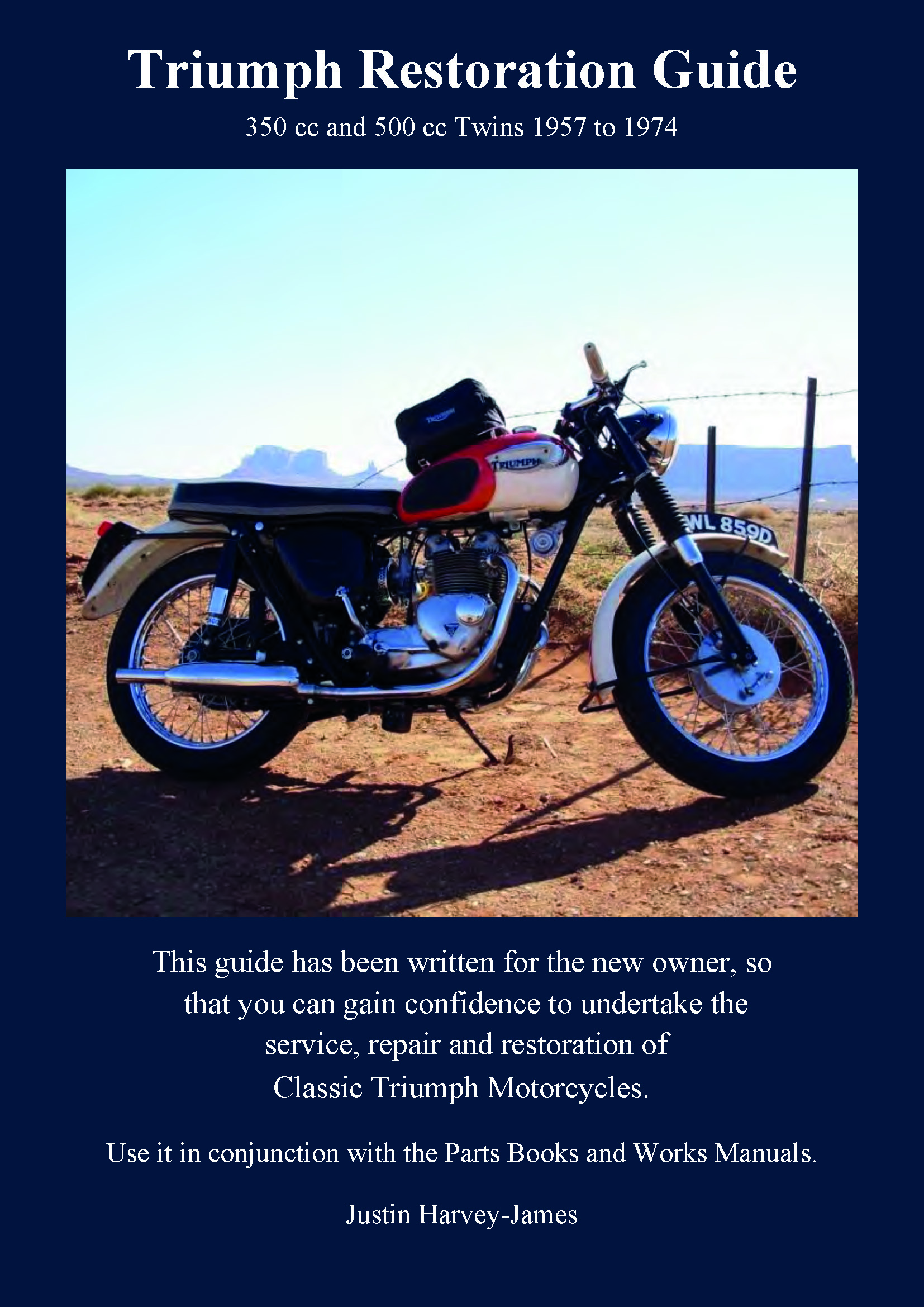
The Restoration Guide available to download here.
The C Range Triumphs are rewarding to ride, easy to maintain and make ideal first Classic’s for new owners.
Do not be put off by the perceived complexity of maintenance or restoration as most parts are available
and the skills needed are within the capability of any confident owner with the appropriate tools.
A simple parts book to help the new owner has been added, use the Parts Book Tab.
When working on any Meriden Triumph I recommend obtaining a copy of the Parts Book for the year.
The Owner’s Manual if available for early machines, and a copy of the Brochure for the Model Year.
The Specifications Sheets, Supplementary Parts Lists, Road Tests and Appropriate Factory Bulletins are useful if you are seeking to create an accurate restoration while the Works Manual is invaluable for new owners, mechanics and engineers, a scanned copy can be found using the Manual tab.
From my work with the Factory Records and interviews with former dealers, employees, Triumph experts and owners together with studying surviving original machines and photographs, I have come to the conclusion that many machines especially for the export market were built and sold in specifications that differ from the published brochures.
In addition, specifications were constantly changed as new models and parts were introduced during production.
On this site and others you will find the parts books, repair manuals, brochures, catalogues, images and all the Information and support you need to succeed with your restoration, whether you are a first timer or an expert.
For those who are already experienced owners I hope that you find my information interesting and useful.
Justin Harvey-James
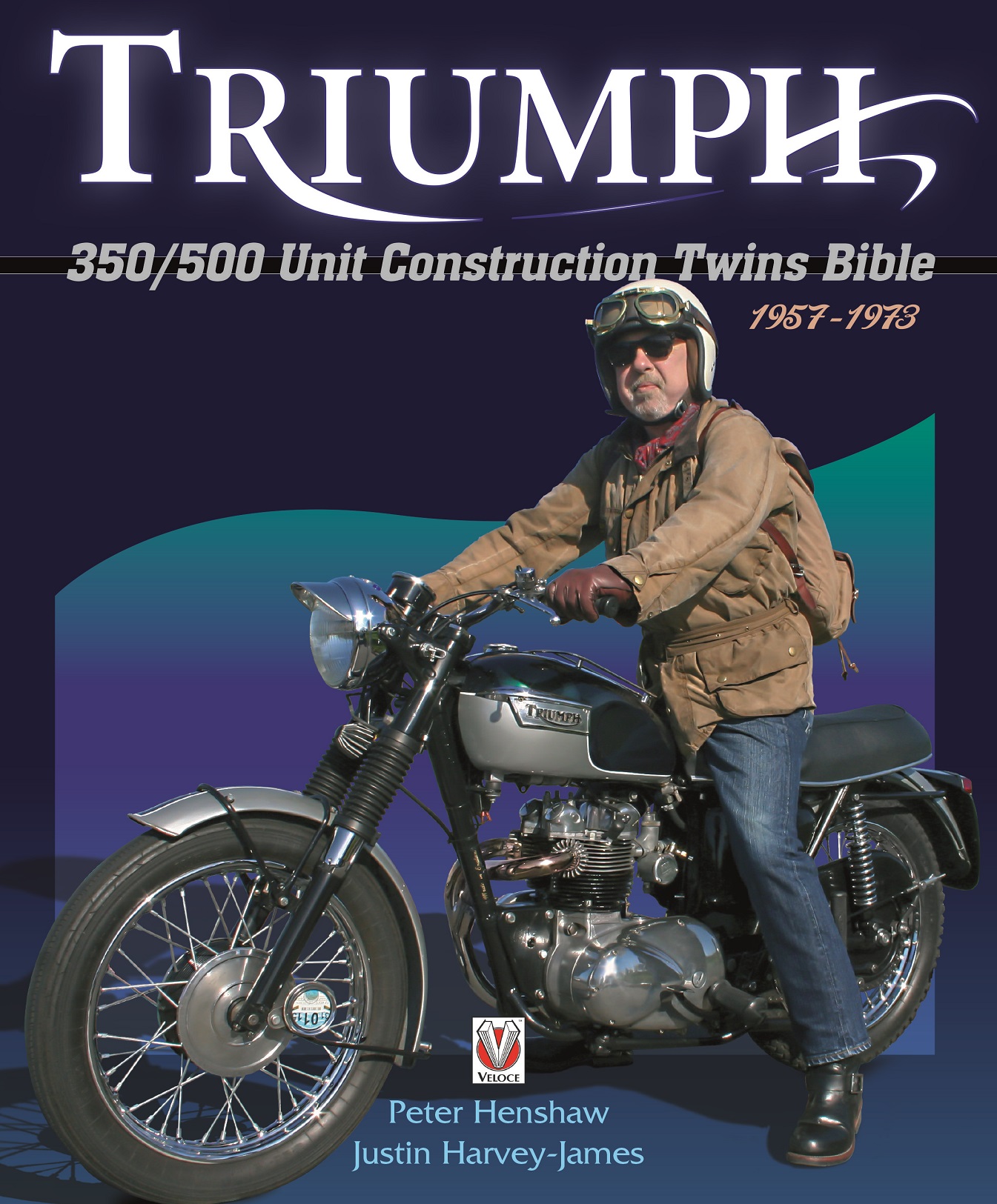
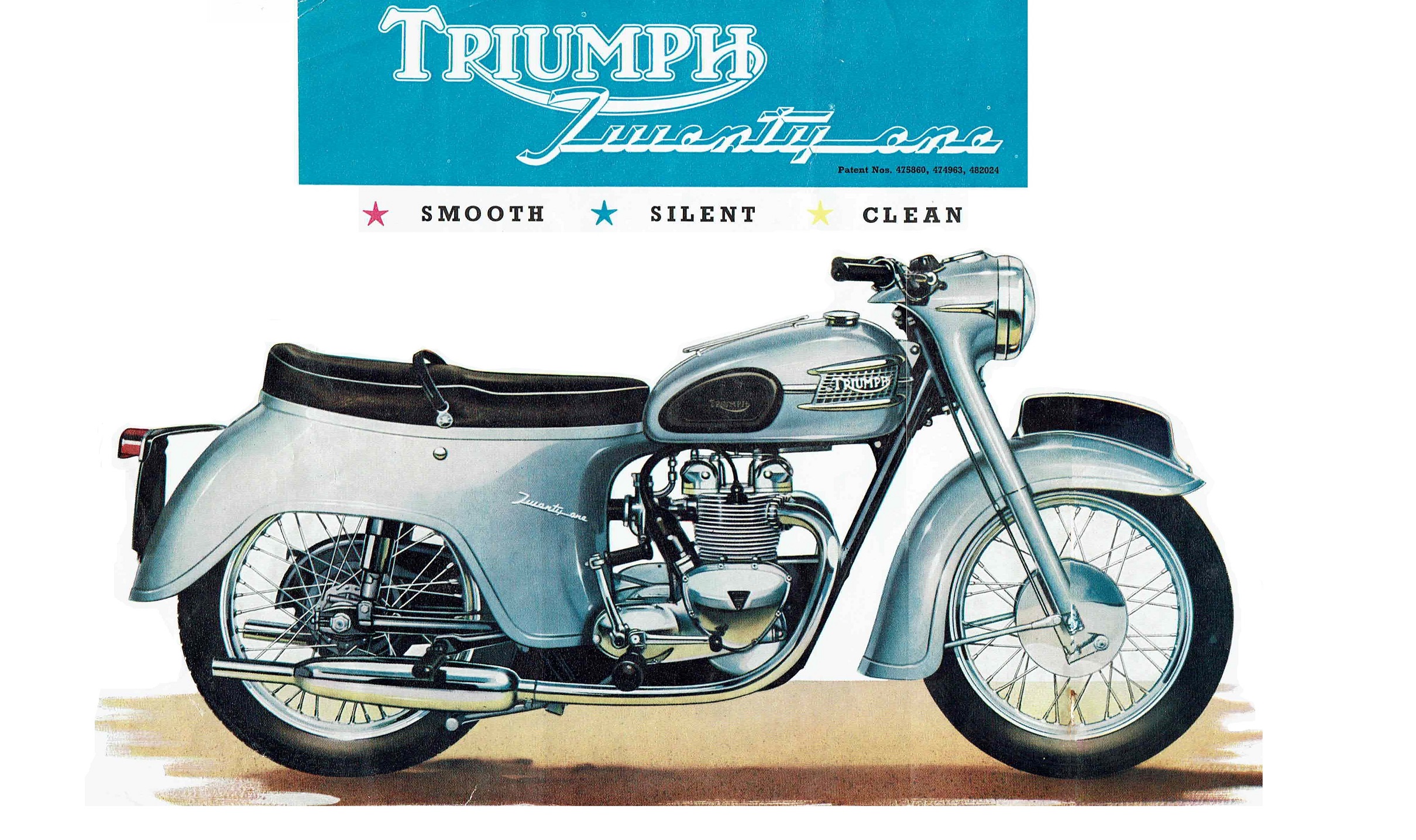
Motorcycling Feb 25th 1957 Press Release of the new T21 model.
1957
Models Covered
1957 Triumph T21 760 Machines
Sales for all Models for 1957
| 1957 | T15 | T20 | T20C | T21 | 5T | T100 | TR5 | TRW | 6T | TR6 | T110 |
|---|---|---|---|---|---|---|---|---|---|---|---|
| Home | 1 | 3960 | 571 | 244 | 618 | 495 | 47 | 1028 | 42 | 729 | |
| Export | 31 | 3011 | 1167 | 294 | 608 | 686 | 88 | 2099 | 1620 | 1571 | 1872 |
| Other | |||||||||||
| 32 | 6971 | 1738 | 538 | 1226 | 1181 | 135 | 2100 | 2648 | 1613 | 2601 |
The sales figures for the T21 here give an inaccurate picture as all of the machines built are dispatched from the factory by September 1957 to locations across the world.
The start of production for the next model year begins usually in late August after the factory shutdown so that new models are ready for the Earls Court Show and batches of machines are then built for the important export markets.
The ‘C’ range machines share parts and design features with other models in the Triumph Range and earlier parts show similar shapes and manufacturing methods.
The patent numbers you will find on the triangular plate on the timing cover and in period brochures refer to several Triumph features by now standard across the range.
Total production of the unit range between the start of production in 1957 with H1 to the last machine (T100T JJ 58013) in 1974 is a little over 100,000 machines.
A word of warning… On all Triumphs you will find a bewildering array of fasteners and threads (Nuts and Bolts). The majority of fasteners and threads are to British Standards, BSCY (Cycle) or BSF. Threads into alloy such as crankcases vary and depend on the design requirements and you will find engine studs in course (BSF) thread at one end and BSCY at the other. The parts books usually provide the length of studs and bolts but no hint as to the diameter, thread form, finish or head type. To identify bolt and stud diameters refer to the parts book and use the associated washers to indicate the bolt diameter. For example part number S25-2 is a 3/8 diameter plain washer while S25-3 is 5/16 Plain washer. Nuts come in a variety of types including plain, chamfered, reduced, thinned and locking, and prior to the now common Nyloc nuts, Philidas, Simmonds and later Clevlock nuts were used in certain critical locations. The parts book illustrations hint at the type of fastener used and general assembly but from my experience these illustrations cannot be trusted and only by studying original machines and photographs from the period will you find the answers.
For owners new to Triumphs and in general to older motorcycles it is essential that you familiarise yourself, with the forms of fasteners, thread patterns and tools appropriate for your machine. Prior to 1967 all fasteners and thread forms used by Triumph were to British Standards (though bearings were often Metric). Essentials for your tool kit should include AF and Whitworth Spanners and Sockets, a Torque Wrench, Taps and Dies in BSF, BSP, BSCY (Cycle) and for later machines UNF, a micrometre and thread gauge. I am slowly identifying the specific threads and fasteners used by Triumph and in the sections below I have included this information where it is needed.
A useful booklet to look for is Fowlers Mechanics’ and Machinists’ Pocket Book, published for many years and packed with information, hints and tips and an essential for your workshop. More advanced restorers will usually aspire to have a bike lift, engineers vice, a lathe, milling machine, press, blast cleaning cabinet, compressor, plating kit, spray equipment and stocks of spares but all of these are not essential to restore your Triumph to a good standard.
Specific Triumph workshop tools for certain tasks are available or can be made and are detailed in the works manual, a copy of which you will find on this site.
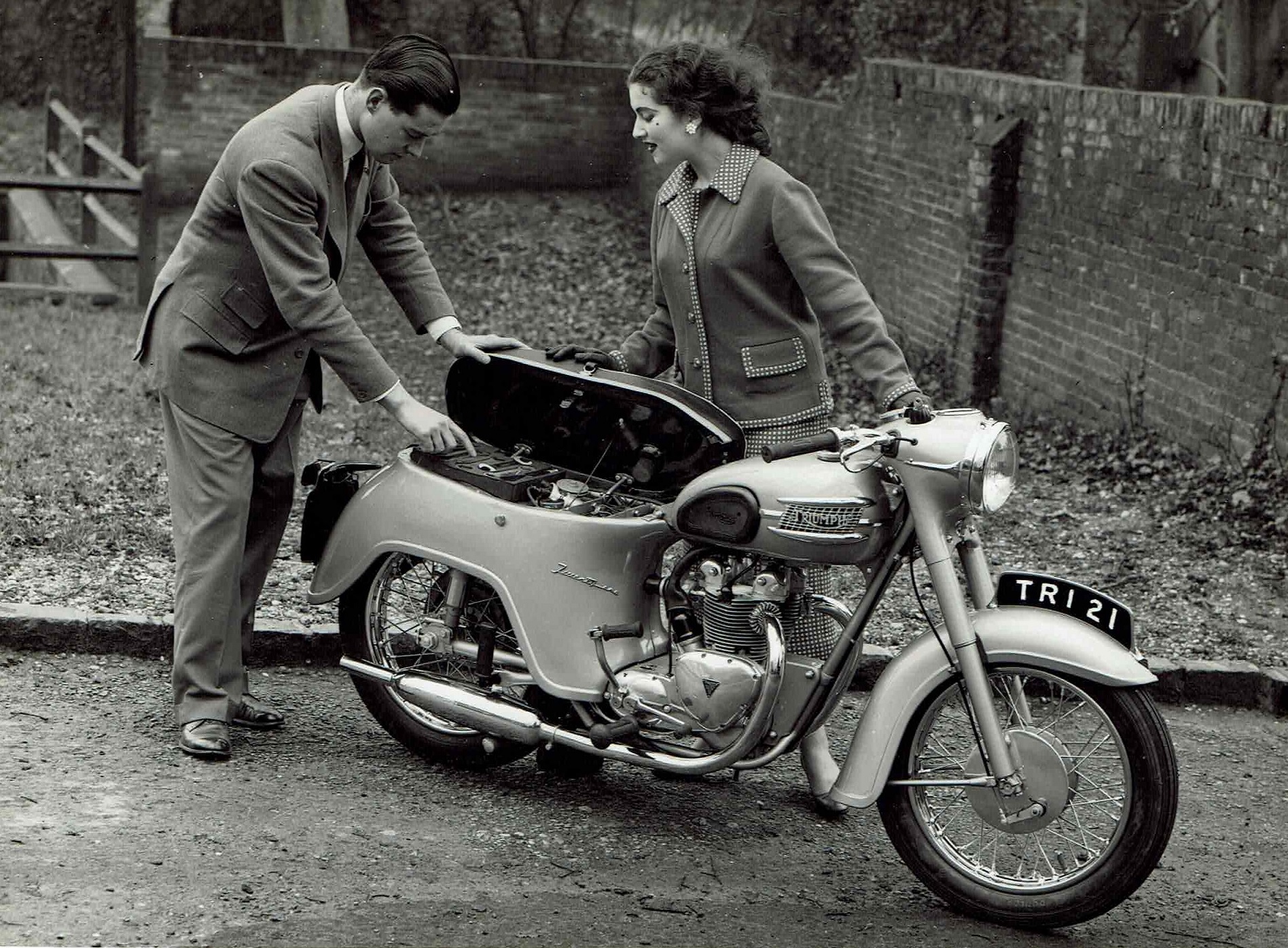
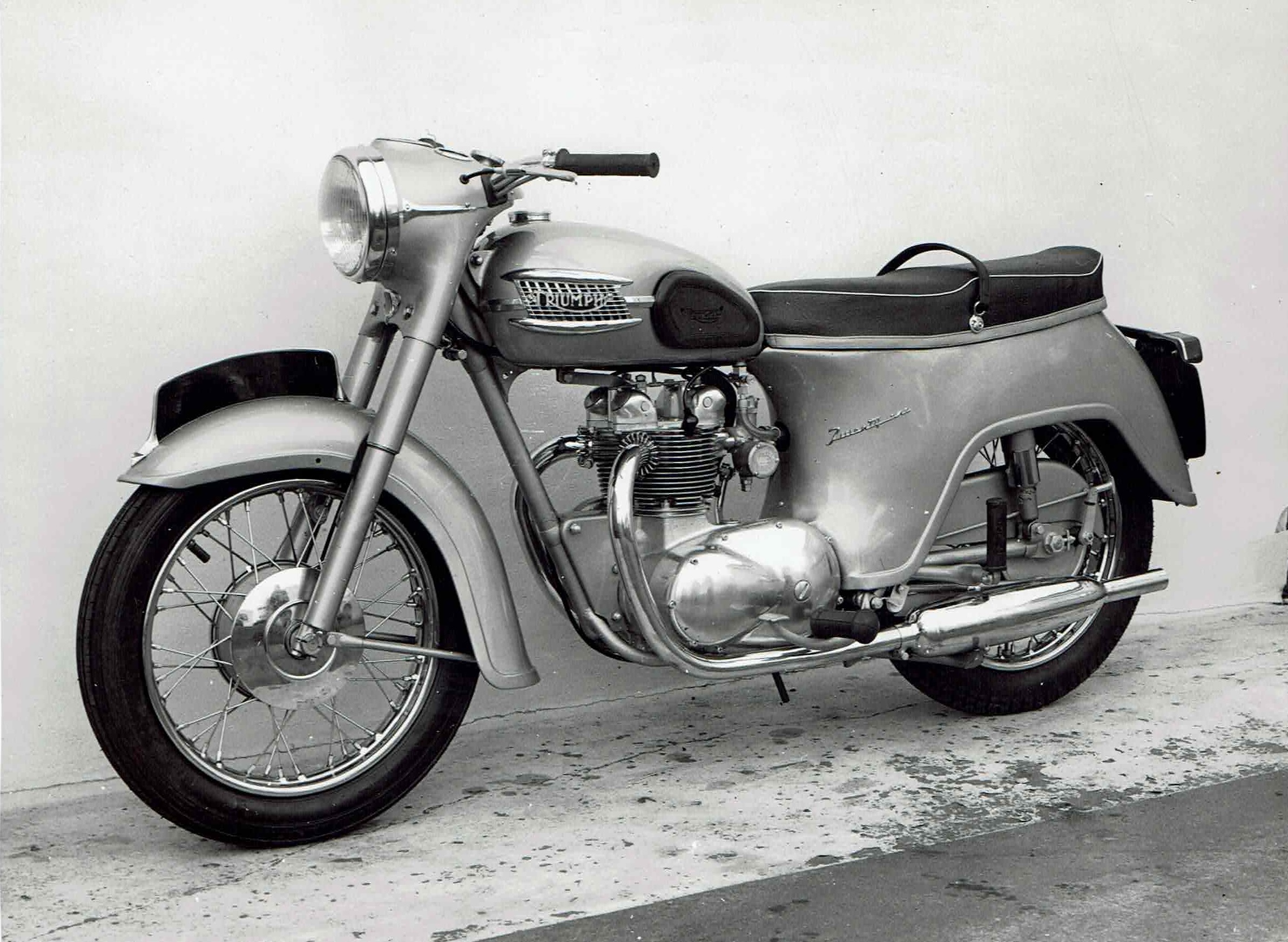
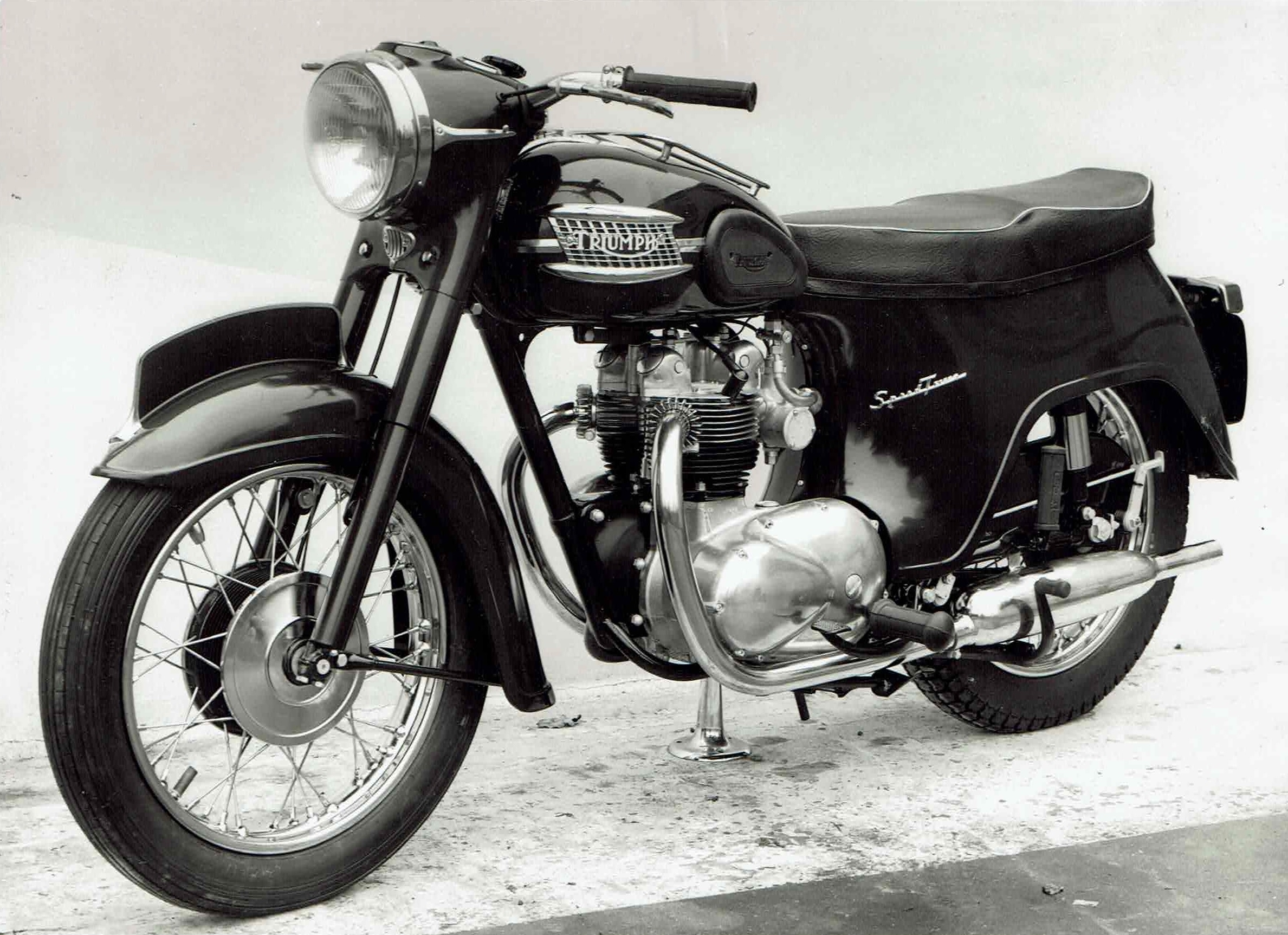
One of the very early production models in a publicity shot, from the VMCC Library Collection.
The T21 was designed from the outset as a machine incorporating for then; modern features and aimed to attract new buyers looking for clean inexpensive transport.
Named in honour of the Company’s 21st Anniversary, It is the first Triumph model to be fitted with the Bathtub enclosure.
The design brief was for a clean, high performance, 350cc roadster and the components and specifications applied reflect this.
Many parts for the T21 were taken from the T20 (Cub) and also the 500cc and 650cc machines, the abridged parts list published in April 1957 details all the parts shared with the other ranges, you can obtain a copy of this useful document from the VMCC Library, please quote ‘Triumph Article 673’ in your correspondence.
The Frame (pinned and brazed) comprises a single tube loop main frame with castings for the headset and rear engine support/swing arm. A bolted on sub frame supports the seat and rear suspension while additional welded on brackets are provided for other components.
The main frame is made from 1 3/8 OD 12 gauge tubing, duplex frame tubes for supporting the engine are 7/8 14 gauge, while the sub frame is a combination of 1 inch 15 gauge tubing for the uprights and 7/8 14 gauge for the seat support base. The headset and engine bridge support are malleable-iron castings.
For this early frame the Trail is 64.5 degrees as this matches Triumph practice for the period.
The forks are oil damped of conventional Triumph design for the period featuring chromed stanchions held in malleable cast iron brackets with the sliders supported by sintered bronze bushes. The long internal springs and damping control are housed within the stanchions. Externally there are painted covers. The lower sliders feature cast clamps and at the lower end is a mudguard support that can be hinged down to support the front wheel to assist in wheel removal.
The recommended quantity of SAE 30 Oil for each fork leg is 150cc.
The headset is enclosed by the trademark Triumph Nacelle, made in two parts with chrome trims disguising the joins, the Nacelle houses the headlamp with pilot light, combined ignition and lighting switch on the right, ammeter on the left, the speedometer and the horn. The steering damper knob is also mounted on the Nacelle. Shaped Rubber grommets are used where the handlebars pass into the nacelle and these additionally support the control cables and wiring.
The steering stops are associated with the lower fork bridge and there is a facility to lock the steering with a padlock.
The Headset itself is the usual pattern of cups pressed into the machined head-lug with cones, one fixed (bottom) and one adjustable; bearing onto the ball bearings, 24 in each cup. Adjustment is provided by a turreted sleeve nut in the top yoke that is locked into position by a pinch bolt and specialised nut. By inserting a tommy bar underneath the nacelle the headset can be adjusted once the pinch bolt is slackened.
The slightly upswept 1inch handlebar is attached by U bolts to the upper fork yoke, the brake and clutch levers are plain with vertical clamps and feature distinctive “One Finger” adjustment of the clutch and brake cables. This type of adjuster slides easily within the lever clamp and has a knurled adjuster turning half a turn at a time to change the cable tension. On the right the handlebar is swaged down to 7/8 in for the Twistgrip.
On the left is a Lucas 25SA Combined dip/horn switch attached to the Clutch lever by a specialised clamp (Alloy casting), the wiring is grey. The Throttle on the right is the Doherty pattern and features a curved a sleeve so that the cable enters the nacelle smoothly, the throttle friction clutch is operated by a small adjusting knob.
The grips are similar to the Amal Pattern, Black, quite thin with a fine raised finish and embossed with the Triumph Logo.
The Ignition/Lighting switch is the Lucas PRS8 Type the three-position switch controls the Pilot lighting and headlamp. The Speedometer is the 120 Mph Smiths Chronometric with the trip meter operated by an extension accessible within the Nacelle. The Ammeter is the Black faced Lucas BM4 8-0-8 ampere type while the hidden horn is the Lucas HF1441 model. Look carefully on the reverse for the date code applied to all Lucas components.
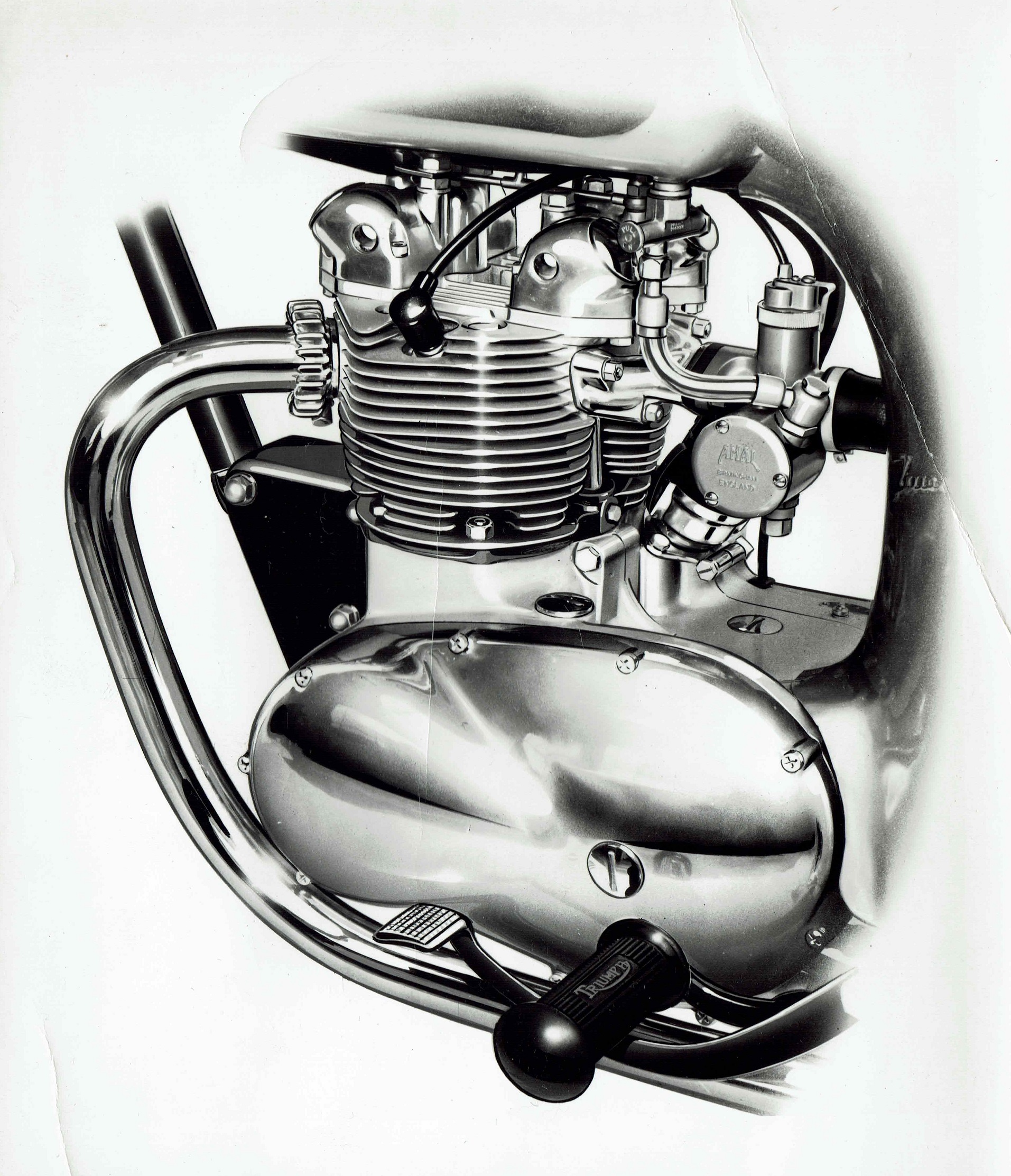
Factory Portrait of the up-to-date engine.
The engine for the T21 was totally new, the first Triumph Twin engine to feature unit construction with the gearbox housing as part of the right hand crankcase casting. The design allows the gearbox to be dismantled without disturbing the remainder of the engine. This form of Unit Construction with the integral gearbox had been applied to the Triumph Terrier for 1954 and continued on in the Terrier and Cub Models with the larger Twins changing in 1963. The 348 cc capacity is achieved with a bore of 58.25 mm and a stroke of 65.5 mm, the crankshaft is single forging (EN.16B Steel) with the central flywheel attached by radial bolts, very early machines feature straight sided crankshaft webs. Within the crankshaft is the removable sludge trap designed to assist in the filtration of the engine oil by separating out particles by the centrifugal action of the crankshaft. Oil is fed to the big end bearings through drillings associated with the sludge trap. On the left of the crank is the single row ball drive side bearing (Hoffmann Metric 330) while on the right is a VP3 Copper Lead bearing bush which is perforated so as to provide pressurised oil to the rotating crankshaft. From H500 the Timing side Crank Journal is heat treated and ground.
The connecting rods are steel stampings, split to hold the white metal thin wall big end bearings and fixed with special high tensile blind bolts and lock nuts. The small ends are pressed in phosphor bronze bushes.
The engine is quoted as producing 18.5 brake-horsepower at 6,500 r.p.m using 7.5:1 pistons.
The finned iron barrels are painted in silver heat resistant finish (see notes) and attached at their base by 8 short specialised studs and nuts. Between the barrels fore and aft are found the chromed push rod tubes which contain short pushrods operating on paired tappets; housed within removable blocks in the cylinder base.
The pushrod tubes are sealed with specialised silicone rubber washers at either end.
Note… The Pushrod Cover arrangement is altered many times over the years and you will see numerous variations in parts. Sealing the tubes and the barrels always presented problems and was never really overcome successfully. Careful assembly occasionally using some sealing compound and new correct parts will minimise but is unlikely to completely eliminate leaks and many machines in regular use will have issues that develop over time.
Leaks at the base of the barrel are often caused by oil creeping up the outside of the tappet block as this is not fully sealed by the cylinder base gasket. Oil leaks can also be attributed to oil creeping up the threads of the two studs closest to the timing cover as the stud holes open into the crankcase adjacent to the camshafts.
The Tappets have stellite faces to reduce wear, are retained in position by the guide blocks and lubricated by oil draining from the cylinder head down the push rod tubes, each tappet is partially hollow with oil collection and delivery holes arranged to ensure adequate lubrication in the guide block while the cams themselves are lubricated by oil splashing from the rotating crankshaft and also dropping from the tappet blocks.
The well-designed light alloy cylinder head is fixed by 8 specialised bolts, four of which pass through the rocker boxes; these have paired rockers moving on hollow hardened shafts. The rockers feature drillings to allow oil to be fed to the adjustable tappets, these adjusters are assessed by removable caps on the rocker boxes. Above the rocker boxes, is the branched oil feed pipe, oil is provided to the rocker shafts via drillings within each box. Each pipe is attached by a shouldered bolt running through the box and sealed with soft copper washers. The nuts associated with the oil ways are domed and cadmium plated. Additionally attached to the forward head bolts are the paired flat metal head steady’s running to an attachment point on the frame, readily visible in period photographs.
Early Cylinder Heads appear to have smaller exhaust ports and stubs than later heads look for the casting number 3699 to identify an early example.
On the cylinder head near the Right Inlet Valve you will find a stamped alpha numeric code, these seem to show a date relationship, I am studying these but have yet to decipher the information, the alpha numeric code is seen on all ‘C; range heads.
The paired case hardened nickel steel camshafts run in plain bronze, replaceable collapsible bushes on the left and un-bushed within the right hand crankcase, oil is supplied to the un-bushed ends and the inlet camshaft bush by collectors and galleries, and oil scrolls assist distribution and lubrication.
The Inlet camshaft additionally operates the paired plunger oil pumps, the distributor drive and the timed breather system. The camshafts are located with steel plates and countersunk screws (1/4 BSF), punched on assembly so as to prevent them loosening. The camshafts are keyed to the timing pinions which feature a short screw thread to allow a special tool to be fitted to assist removal of the pinion. This tool is also designed to aid replacement of the pinion and to remove the crankshaft sprocket.
The breather system is designed to ensure a partial vacuum within the crankcase when the engine is running. The inlet camshaft is hollow with a drilling part way along its length, at the end a light spring and keyways retain a disc that is pierced by two holes (triangular) and as the camshaft rotates the holes in the disc selectively correspond with two holes in a plate secured by the camshaft bush. The holes open as the pistons begin their descent. Any escaping gases and oil pass into a vent tube that emerges from the crankcase adjacent to the gearbox sprocket.
The paired oil pump feeds pressurised oil via drillings to the timing bush and onwards to oil pressure relief valve located in the front of the crankcase. This features a Tell-Tail plunger to indicate the presence of oil pressure. From the relief valve a drilling takes oil to the Timing Side gears and then makes its way to the sump.
Oil having made its way from the crankshaft to the small sump within the crankcase is collected by the return pump via a filter gauze and curved pipe fixed within the right hand crankcase casting to be returned to the oil tank. The filter here is accessed via a removable cap forward underneath the engine.
The brass oil pump of conventional Triumph design features two steel plungers driven in unison by a sliding aluminium block. The feed plunger on the right is smaller than the return plunger so that the system runs on the dry sump principle. At the bottom of the pump are the valves, one for each side, consisting of a spring loaded ball bearing seating into the pump body. Both valves can be dismantled for servicing with the pump in situ. Under the crankcase near the oil pump is the junction and gasket for the oil feed pipes that sweep backwards towards the oil tank. Short lengths of Herringbone pattern oil Pipe connect the tank to the pipework with small pipe clips providing security.
Looking at the junction block the forward oil pipe is the feed and the rearmost one the oil return. (Simple to remember, forward is feed…rear is return)
The primary drive located on the left behind an oval cover is by a 3/8 non-tensioned, non-adjustable duplex chain to the Triumph 4 spring clutch of the period. The hub is fixed to the gearbox main shaft by a taper and located with a woodruff key. The clutch features 4 bonded and 4 plain plates. The clutch hub also incorporates a rubber shock absorber consisting of a rotating four vaned centre, located within eight shaped rubber segments. Within the primary drive case is also located the Lucas three wire Alternator, the rotor keyed to the crankshaft and secured with a shouldered nut and locking washer. Access to the final drive sprocket is via a removable plate (with oil seal) behind the clutch basket. The small attachment screws are punched to prevent them coming loose.
In a Tri-Cor Bulletin of 21st July 1961 the Chain Oiler Tube is described and is recommended to be blocked off to prevent oil leaks.
This blocked off tube remains on the “C” Range machines for several years and is the small hollow stud seen behind the Clutch corresponding with the lower part of the final drive sprocket !
The Clutch operating mechanism is by a quick thread screw; the cable enters the gearbox via a simple grommet on the top of the outer cover and connects directly to the clutch release lever within the gearbox. Replacing the cable requires removal of the entire outer cover and extracting the cable through the rubber cover of the distributor as well.
The four-speed gearbox features plain bushes for the lay shaft and ball bearings for the main, the gears are built up onto an intermediate cover while the outer cover contains the positive stop mechanism and clutch release screw. A useful gear indicator is provided attached to the selector quadrant. The gears are down for down arrangement and selected to make the most of the power available. Ratios are 13.0/9.32/6.30/5.31. The Gearbox sprocket has 18 Teeth.
On top of the gearbox is a recessed screwed filler cap and underneath a drain plug (1/2 in BSF thread) that also incorporates an oil level tube to ease servicing.
The gearbox is designed so that the gears and shafts except for top gear can be removed as a cassette once the clutch has been dismantled and without disturbing the final drive sprocket, chain and gearbox bearings.
The Engine Gearbox unit is held in the frame by shaped plates forward, the fasteners here are studs with distinctive dome headed nuts, while underneath, behind and above the gearbox are spacers and plates fixed by studs with conventional nuts.
The Carburettor is an 375 Amal Monoblock, there is no choke arrangement though the carb features the usual tickler arrangement and receives its air via a rubber hose from an oblong air filter attached forward on the left of vertical main frame rail. Carb size is 13/16 inch.
The twin exhausts are 1 inch in diameter and terminate into the Triumph style of tubular silencer this does not show the offset entry of later silencers. The silencers are attached to the frame by short lengths of tubing with trapped ends. The same support is used to attach the pillion footrests if these optional extras are fitted.
Recent documentation I have seen indicates that Triumph Silencers were made by Burgess one of the many Birmingham companies supplying the British Motor industry.
The short chrome plated Kickstart folds at the top, its ‘Triumph’ monogrammed rubber is closed at the end, while the chromed gear lever forward also shows ‘Triumph’
There is a Factory Photograph showing a Radio and Handlebar Fairing Equipped machine which features extended cylindrical silencers. This machine does not represent normal production specification and several details lead me to believe that this is a 1958 display machine to stimulate sales to the Police.
The Distributor located behind the right hand cylinder is the Lucas 18D2 Unit; reference 40573, driven by a skew gear from the inlet camshaft and is neatly covered and protected from the elements by a large rubber sleeve. The ignition timing is adjusted by loosening a clamp located on the crankcase.
The wheels are 17 inch, Dunlop WM2 Chrome rims 3.35 Front and Rear, The front tyre is a 3.25/17 inch Dunlop. Ribbed in the pattern of the modern Avon Speedmaster, while the Rear is a 3.25/17 inch Dunlop universal; the tread pattern of the modern Avon SM.
New for 1957 is the full width front hub, painted silver with a 7inch lightly polished alloy brake plate on the right and a shaped chromed hub on the left showing pressed concentric circles. The brake shoes fitted are not fully floating at this point in production while the cable stop fits on the lower fork.
The brake cable is additionally supported to the mudguard by a small P bracket.
The rear wheel features the common hub from the other Triumph models; there is a combined tubular brake torque stay and lower chain guard. Like the front brake the rear brake shoes are not fully floating.
A single piece upper chainguard attaches to the left side of the swing arm using a specialised fastening at the rear and can swing up to assist wheel and or chain removal once this fastening is loose. The pivot for the chainguard is associated with a small bracket bolted to the swing arm.
Both sides of the rear axle show shaped spacers and have the effective Triumph type chain adjuster, all parts cadmium plated.
It is quite normal for the left adjuster to foul the brake plate when set to the minimum chain length. The nuts associated with the adjusters are an early type of ‘Nyloc’ fastener,
it is important to use this type here.
The Brake rod adjuster is simple in form, T shaped and cadmium plated or chrome plated.
Standard Girling Rear Shock Absorbers (SB3 4234) using 100 lb springs are fitted with painted/chromed covers.
Extended length is 11.9 ins, compressed is 9.4 ins.
The Lucas Brake light switch, new for 1957 is the 6SA unit and operates by movement of a small ear on the brake lever, the switch itself attached to the brake torque stay nearby. The cables to the switch pass through a moulded rubber cover. The brake lever pivots on a specialised trunnion bolting to an eye brazed to the frame, there is no provision for lubricating the pivot but it is located with a large Thackeray washer and nut. All the fasteners here are specialised.
The Smiths Speedo drive unit is the early angular form and appears ‘upside down’! With Smiths speedo drives there is a bewildering array with multiple of types, sizes and gearing ratios. All operate on the same principle (worm drive) and suffer from poor lubrication. The drive unit is arranged to be quickly removed so that the wheel can be taken off for repairs. The routing of the cable heads from the drive unit and follows the swing arm before curving up behind the oil tank towards the junction of the main frame and sub frame before running along under the petrol tank and into the Nacelle.
The ribbed and flanged front mudguard is the full (Roman Helmet) style and is attached to the lower fork sliders by a shaped brace; the lower mudguard stay loops within the mudguard and when released by a single nut is able to act as a stand to help with wheel removal. On the mudguard is fitted the front number plate fitted within a stylish chrome surround (Patented). The rear mudguard is hidden by the bathtub enclosure, which is a new Triumph feature for 1957. The Bathtub enclosure is made from two 22 gauge steel pressings bolted together with a rubber strip between them. The bolts are carefully hidden so that the finish is neat. The panels are supported by the seat loop and fastened by four self-tapping screws around the seat loop together with additional brackets associated with the fuel tank mount. Hidden underneath is a support stay running from the suspension mounts to a point at the rear of the panels. This is nicely illustrated in the description article in “The Motor Cycle” of 28th February 1957. The stay rarely survives and many restored machines omit this feature in error. It is not illustrated or mentioned in the parts book!
The rear number plate is attached by two nuts and bolts at the lower edge, the single upper mounting fits neatly between the Bathtub panels and no fixing is visible from the top.
On each side of the bathtub is found the Chromed ‘Twenty One’ script, while on the right is the removable chromed knob; which releases the seat.
The fuel tank 3½ Gallons (16 Litres) has fore and aft mountings, no tank top grid or central styling strip. Fitted are the chrome styling strips on either side of the Mouth Organ type Tank badge. There are Black rubber knee grips featuring the Triumph motif and are attached by two screws on either side. The 1957 Parts Catalogue has an illustration of an early machine and tank within the preface but the Petrol tank shown later is the later version.
The fuel tap is the Ewarts type which has a in tank filter with separate plungers for main and reserve leading to a single clear plastic fuel pipe connecting to the carburettor
All early machines do not feature the Parcel Grid and I am trying to ascertain if this is fitted to any 1957 machines.
The Oil Tank is hidden behind the Bathtub Panels suspended at the top by two flat steel strips bridging the frame, additionally there is a lower mount associated with the rear engine plate. The cap incorporates a dip-stick, while at the bottom is an extension to allow the drain plug to be reached by a spanner and a removable filter and connection for the oil pipes. By removing the cap, owners could see the returning oil pulsing out of the return tube which was arranged to be visible. Under the tank a T piece in the return pipe provided an oil feed to the rockers.
Triumph Petrol and Oil Tanks were supplied by A.J. Homer and Sons, Solihull, Birmigham who specialised in medium sized steel and aluminium pressings for the Motorcycle Industry. Several companies would have been suppliers of pressed components to Triumph, Ward Brothers were a long established company and it is not currently possible to identify which suppliers were used for pressed components such as the bathtubs and nacelle.
The seat (Supplied by Motoplas) has a shaped a metal base topped with Latex foam; the covering is Black Vynide for both the top and sides separated by white piping. The lower fringe of the seat cover nearest the base is in grey. There is a centrally fixed passenger strap. The seat hinges on the left, raising but restrained by a wire to give assess to the Air Filter, Oil Tank filler, Battery within it’s cradle, Rectifier, Coil and the Tools, which are housed in a moulded tray covering the rear mudguard.
The inner mudguard extends forwards and attaches to the frame at several points, using a tapped hole in the main frame forging as one of the locations, this tapped hole survives for many years and can be seen on all models up to 1967.
The early seat base is nicely illustrated in the parts catalogue and shows the rubber pad for the battery and also the export only Safety Strap.
The Lucas MA6 coil is attached by a loop bracket to the inner rear mudguard and angled to allow the HT cable to exit to the left.
Current Rectification is taken care of by the large Lucas 47111 rectifier mounted to the left of the coil on a welded bracket with the connections protected by a rubber sleeve.
Photographs showing the seat base of the early factory machines (Gloss Black) show an unusual foam rubber extension to retain the battery in position when the seat is closed.
The Lucas alternator is a composite of an RM13 Stator and RM15 Rotor, lighter than the RM15 but efficient at lower engine speeds.
The three cell; six volt Lucas PUZ7E/11 battery supplies charge for the all the electrical needs including ignition, the wiring to the alternator is arranged; in combination with the ignition/lighting switch to provide adequate charging capacity depending on load. There is an “Emergency Start” circuit.
Lighting comprises the Lucas 700 Motorcycle headlamp with Pilot light; look carefully for ‘Motorcycle’ written in the glass. The period Lucas catalogue details variations for export models. On the rear number plate is found the Lucas 564 combined tail/brake/reflector light, look for the Lucas part numbers. The plastic lens is attached by specialised slotted chromed fasteners; mating to studs that pass through extensions within the lens. Pattern replacements do not have these distinctive fasteners.
The finish for the 21 is confusing to say the least, (H1 to H100) are Metallic Silver Grey including the frame and engine mounts. From H101 the finish is Shell Blue Sheen including the Frame parts and engine mounts with only the number plates in Black. Sometime later the frame parts become Black! Possibly from H288 as there is a note in the front of Triumph Record Book 147
The cylinder barrels are shown finished Silver in the brochures but one road test machine shows these as black! The majority of the engine cases are un-polished apart from the three covers and the rocker boxes. These are not highly polished but generally show a satin sheen.
The fasteners for the covers are distinctive Phillips head screws in ¼ BSF.
On the Timing cover is the Triangular Patent Plate; this reads ‘Triumph 350 Twin’ Made under Patent Numbers etc.
Photographs of H120 show the machine having the external Pannier Brackets fitted but these do not appear in the 1957 brochure, the parts book or on period shots of other machines. From H301 Pannier Brackets are recorded as fitted to the frame but holes are not provided in the bodywork and owners must pierce the panels themselves to complete the fittings. The holes that show in the upper suspension gussets are part of the pannier fitting arrangement (these continue for years to come).
From H434 the Side Stand is recorded fitted as standard though this and the pillion footrests are advertised as ‘Extras’!
The Mainstand on early machines is not the ‘Easylift’ Stand indicated in the 1958 Catalogue published in October 1957.
Mainstands on all of the range are weak and prone to damage, distortion and wear. Later models use the same basic stand but with extension feet. Look for wear in the pivots, feet, and distortion where the Easylift action is inclined to distort the left forwards. Careful bending with heat and welding repairs can reclaim these stands.
Note that the stand pivot holes, up to 1966 are threaded (1/2 in 20 TPI BSF) to accept the pivot bolts which are then located with slim nuts and lock tabs.
The same thread form is found on the specialised pivot bolt for the brake lever though this uses a different type of slim nut.
The 57 Parts book in my personal collection does not illustrate all of the parts such as the front mudguard arrangement, exhausts or primary drive cover, it also shows parts fitted which will be appropriate only for the very early machines.
Interestingly part of the manual concerning part ordering is printed in French, Spanish and German
Frame technical data on the “21” and other models in the 1957 to 1960 range can be found in notes taken from the Johnson Motors dealer meeting at the Huntington Sheraton Hotel in January 1960. This interesting book was produced for the dealers and mechanics attending this event and describes pricing, sales, advertising, parts ordering and detailed technical data on both the Triumph and Ariel ranges.
For details of the various road tests for 1957 refer to the Magazine Articles Tab at the top of the page.
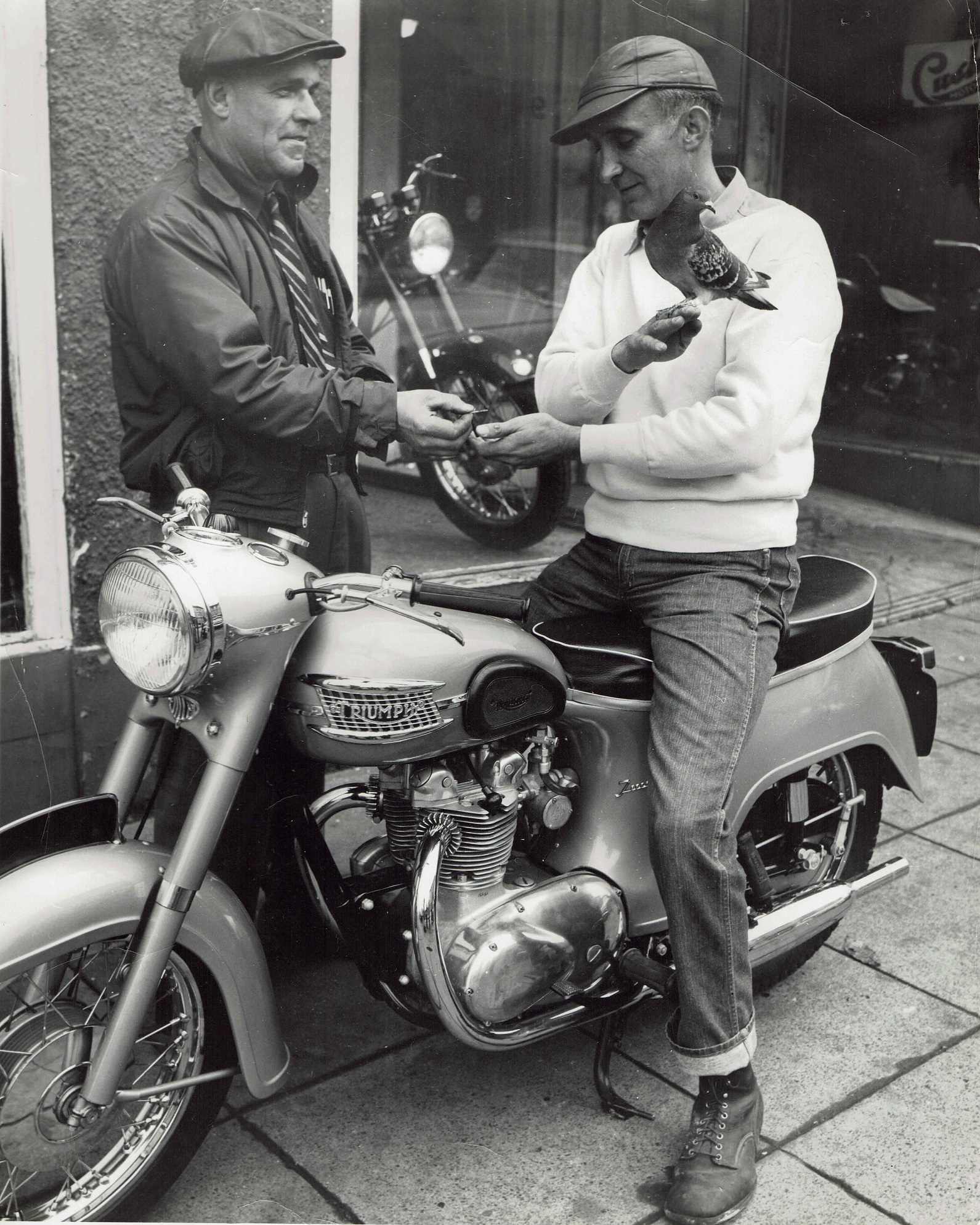
Notes for 1957
| 1957 | T15 | T20 | T20C | A Range | T21 | 5T | T100 | TR5 | C Range | TRW | 6T | TR6 | T110 | B Range | Total | % Sales | |
|---|---|---|---|---|---|---|---|---|---|---|---|---|---|---|---|---|---|
| Home | 1 | 3960 | 571 | 4532 | 244 | 618 | 495 | 47 | 1404 | 1028 | 42 | 729 | 1799 | 7735 | 37% | ||
| Export | 31 | 3011 | 1167 | 4209 | 294 | 608 | 686 | 88 | 1676 | 2099 | 2099 | 1620 | 1571 | 1872 | 5063 | 13047 | 63% |
| Other | 1 | 1 | 1 | 0% | |||||||||||||
| 32 | 6971 | 1738 | 8741 | 538 | 1226 | 1181 | 135 | 3080 | 2100 | 2100 | 2648 | 1613 | 2601 | 6862 | 20783 | ||
| % Sales | 0.2% | 33.5% | 8.4% | 42.1% | 2.6% | 5.9% | 5.7% | 0.6% | 14.8% | 10.1% | 10.1% | 12.7% | 7.8% | 12.5% | 33.0% |
The Sales figures shown are compiled from the surviving original Triumph account Ledgers held at Warwick University Modern Records Centre.
The now fragile; handwritten ledgers contain comprehensive details of salaries, stocks, materials, buildings, sales etc and are fascinating to study. I have compiled detailed charts of sales of all models from 1950 until 1969 when the records end and you will find these in my book along with other useful information and pictures.
UK registrations of motorcycles over 250cc for 1957 amount to 26498 machines with some 25000 British manufactured motorcycles exported. Look for the small Motorcycle and Scooter Guide booklets published by the Daily Mail for more detailed information.
For an interesting analysis of Motorcycle Sales from 1957 to 1969 look for the article in Motorcycle Sport Vol 10 No7 July 1969
The Reasons for the introduction and popularity or otherwise of the Bathtub are somewhat complex. It needs to be remembered that in the late 50’s and early 60’s the Scooter had become very popular and was seen as clean and inexpensive transport. Many UK manufactures attempted to enter the scooter market with new products Triumph included (Tina Scooter). There have been many attempts over the decades to sanitise mainstream motorcycling and the Bathtub was Triumph’s attempt!
Unfortunately for Triumph the market was moving and the family man who would previously bought a motorcycle for his daily use was now buying a small car and motorcycling especially in America was becoming a leisure activity where style was more important than cleanliness.
Neale Shilton in his book “A Million Miles Ago” indicates that development work on the T21 was done in some secrecy in Litchfield by Charles Granfield whom Edward Turner had recruited from Rolls Royce. Neale is the only source for this information and therefore it cannot be confirmed.
The book itself is an excellent read filled with stories of the authors long career with Triumph as export sales manager and the characters involved in the British motorcycle industry of the 1950’s and 60’s. It’s long been out of print but copies can usually be found on Amazon and other sites.
For the USA the Model Name ‘Twenty One’ conveniently described the cubic capacity, in the period literature this is not indicated and I believe that an Urban Myth has arisen that the model was named to convey the cc rather than the anniversary!
In 1956 by industry agreement there is no London Motorcycle Show the various manufactures would usually have prepared new models for display at this prestigious end of year event. Because there was no show Triumph did not complete development of the exciting new ‘Twenty One’ until early 1957.
Engine Production officially begins with H1 to H4 sometime after the 15th February 1957 though there will have been several months of activity previously to design and arrange a supply of parts for the revolutionary new model. These first engines are not built in the engine workshop but within the experimental department.
Production of engines H5 to H36 is on the 19th March 1957. H36 is sent to the experimental dept and production does not start again until the 13th April when new flywheel balance weights are applied obviously as a result of tests on H36. The engine record book during this early period is fascinating as it details a number of small changes and details, i.e. machines destined for Australia are fitted with +10 thou Pistons and Barrels.
There is an interesting anecdote of Percy Tait achieving 80 mph on one of the test machines in order to escape the pursuing press who were interested in this new and as yet unidentified model!
Complete machines H1 and H2 are recorded as being assembled on the 22nd February 1957 with H3 on the 28th and H4 on the 8th March, the first two machines are shown at the RAI Motorcycle Exhibition in Amsterdam from 28th Feb-10th March 1957.
H1 H2, H5 and H6 are sent to Stokvis & Zonen, Holland, H3 to Germany, H4 to Sweden, and H7 & H8 to Norway while other early machines go to dealers in Denmark, Malta, Japan, Singapore, Chile and Algiers. Machines H5 and H6 are known to survive.
H5 was sold at the Stafford Show Bonham’s Auction in April 2017.
The first machine supplied to a UK dealer is H39.
H39, H41, H45, H50-H52 and H88 are possibly test machines as though made in early 1957 are not recorded as dispatched until November, all of these are sent to UK Dealers with the Factory Records carefully amended.
H39 sent to Elite Motors Tooting Ltd. 951/965 Garratt Lane, Tooting SW17 on 15/11/57
H41 sent to Harveys, Lambeth SW8 on 15/11/57
H45 Sent to Pride & Clark, 158 Stockwell Road, London on 15/11/57
H50 Sent to Kings of Oxford on 22/11/57
H51 Sent to W. Shearings, 23 North Street, Bishops Stortford on 16/11/57
H52 Sent to Pride & Clarke, 158 Stockwell Road, London on 14/11/57
H120 (WAC 574) Sent to Cliffe & Sons, London SE1 on 15/5/57 pictures of this factory/press machine survive in the VMCC archive.
H71 appears to be the first official UK machine sent to Marble Arch Motor Supplies on the 27th May 1957. UK machines in general do not start until H120 (WAC 574) which is sent to Cliffe & Sons London SE1.
H71 is possibly registered TYM 21, this machine features in some early articles in Motor Cyclist Illustrated. Look for the June 1958 copy which details a 10,000 mile service and assessment undertaken at the factory.
The first USA machine appears to be H85 sent to Johnson Motors with H96 going to Tri-Cor but generally very few of these 1957 machines are sent to the USA.
There are photographs featuring one of these early machines taken in Baltimore where Tri-Cor were based, so it is possible to assume that this machine is H96!
Look for American Motorcyclist of November 1957 for the release article of the new model. Back issues of American Motorcycling can be found on Google Books.
Look for Cycle (USA) December 1957 as this has a Test and a nice illustration of Gill Stratton (Actor, Sports Reporter) with his new T21.
Most of these early production machines are exported with destinations as varied as Costa Rica, Algeria, Borneo, Mexico, Japan, South Africa, Australia etc.
In total some 485 T21 machines are exported for 1957, only 11 machines go to the USA, 5 to Johnson Motors and 6 to Tri-Cor.
Look for “The Motor Cycle” of 28th February 1957 for an extremely detailed and beautifully illustrated write-up. The machine featured is likely to be one of the very early machines H1 to H4 as no others had been manufactured by the date of the publication. Within the magazine are other promotional images and photographs.
In “Motorcycling” also of the 28th February 1957 is another excellent article with photographs and illustrations.
Again showing one of the very early production models.

The 25th April 1957 copy of “The Motorcycle” is a test impression of a T21 registered TUE 751
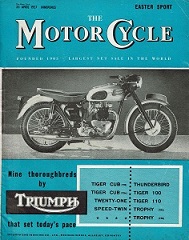
Cycle (USA) of December 1957 has a road test on one of the early US machines.
The Motorcycle of 17th April 1958 shows WAC 574 (H120) on the cover though there are no further details or pictures in the magazine.
The VMCC in their archive have a copy of the press brochure together with some excellent photographs of early machines which show
details that are not normally visible.
The Price for the T21 is £ 217 without extras fitted.
Restoration of the model to a basic specification is not complex but availability of the parts such as the bathtub, front mudguard, nacelle, rear inner mudguard, tool pack and original electrical components make the bathtub models a nightmare for a full concourse restoration and costs will quickly outstrip the final value.
As the basic frame, engine, hubs, brakes, petrol tanks, oil tanks and suspension components remained in production for many years and other parts such as seats, mudguards, headlamps, exhausts and general components are available as relatively inexpensive pattern spares it is easy to create a replica of any of the later sports models from a T21 project bike at a reasonable cost. Buyers of projects should also consider replicas of the various ISDT, Trials, Dirt, Scrambler, Racing and Military models that Triumph built from the same basic components that made up the varied ‘C’ Range Twins. Continue to scroll down or use the tabs to take you to the other sections of the site.
1958
Engine Frame Numbers H761-H5480
| Models Covered | Standard |
|---|---|
| 1958 Triumph T21 | 4720 |
| 1958 Triumph 3TA | 2 |
| 1958 Triumph 5TA | 2 |
Sales for all Triumph Models for 1958
| 1958 | T20 | T20c | T21 | 5T | TR5 | T100 | TRW | 6T | TR6 | T110 |
|---|---|---|---|---|---|---|---|---|---|---|
| Home | 5558 | 714 | 2374 | 592 | 37 | 627 | 1260 | 54 | 1394 | |
| Jomo | 189 | 508 | 275 | 10 | 30 | 10 | 125 | 812 | 180 | |
| Tri-Cor | 474 | 524 | 351 | 10 | 66 | 8 | 183 | 643 | 531 | |
| Export | 1699 | 171 | 1263 | 599 | 336 | 511 | 27 | 820 | 178 | 720 |
| 7920 | 1917 | 4263 | 1211 | 469 | 1156 | 27 | 2388 | 1687 | 2825 |
Total Sales for Triumph in 1958 is 23836 machines. 53% are Home Market, 21% USA and 26% Export Sales.
By the late 1950’s the output of British Motorcycle Manufacturers is falling from its peak of 187,000 in 1954. In 1958 Honda build 285,000 Machines!
Triumphs are extremely popular in America, out selling most other makes with distribution of machines and parts handled by Johnson Motors and Tri-Cor.
Jomo or Johnson Motors, formed by Bill Johnson and Wilbur Cedar in 1938 in Pasadena, distribute complete machines and parts to 150 dealers in the 19 western states including Texas, Oklahoma, Kansas, Nebraska and North and South Dakota with California being the main location for motorcycle sales.
Tri-Cor in Baltimore begun in 1949 as a wholly owned subsidiary of Triumph Engineering is the distribution hub for hundreds of dealers spread across the eastern United States from the Canadian border to Key West in Florida.
For more information and images look for Lindsay Brooke and David Gaylin’s excellent “Triumph Motorcycles in America”
Many of the details for the 1957 T21 apply for the 1958 model.
For 1958 there is a new frame with revised steering angle (possibly 67 degrees) and a new ‘Stressed’ petrol tank, now showing the raised central seam covered by the chrome trim, with the addition of the parcel grid on the tank top. This new tank is ‘Stressed’ by the inclusion of a squared beam running longitudinally between the fixing points, the top of the beam is visible through the fuel cap aperture.
The front brake hub is now painted black and on the offside is shown a fluted chrome cover, this only applies for 1958!
For 1958 there are new Silencers, now asymmetric with the exhaust pipe entering lower down and therefore raising the silencer slightly, the brackets to attach the silencers to the machine and to support the pillion footrests change to an improved shape which now becomes standard for the model until 1963.
The Mainstand is now the ‘Easylift’ stand indicated in the 1958 brochure and displayed in the 1959 brochure.
After H3330 the carb size changes to 25/32 inch, now with the plunger choke fitted though this is likely to have been added earlier in production.
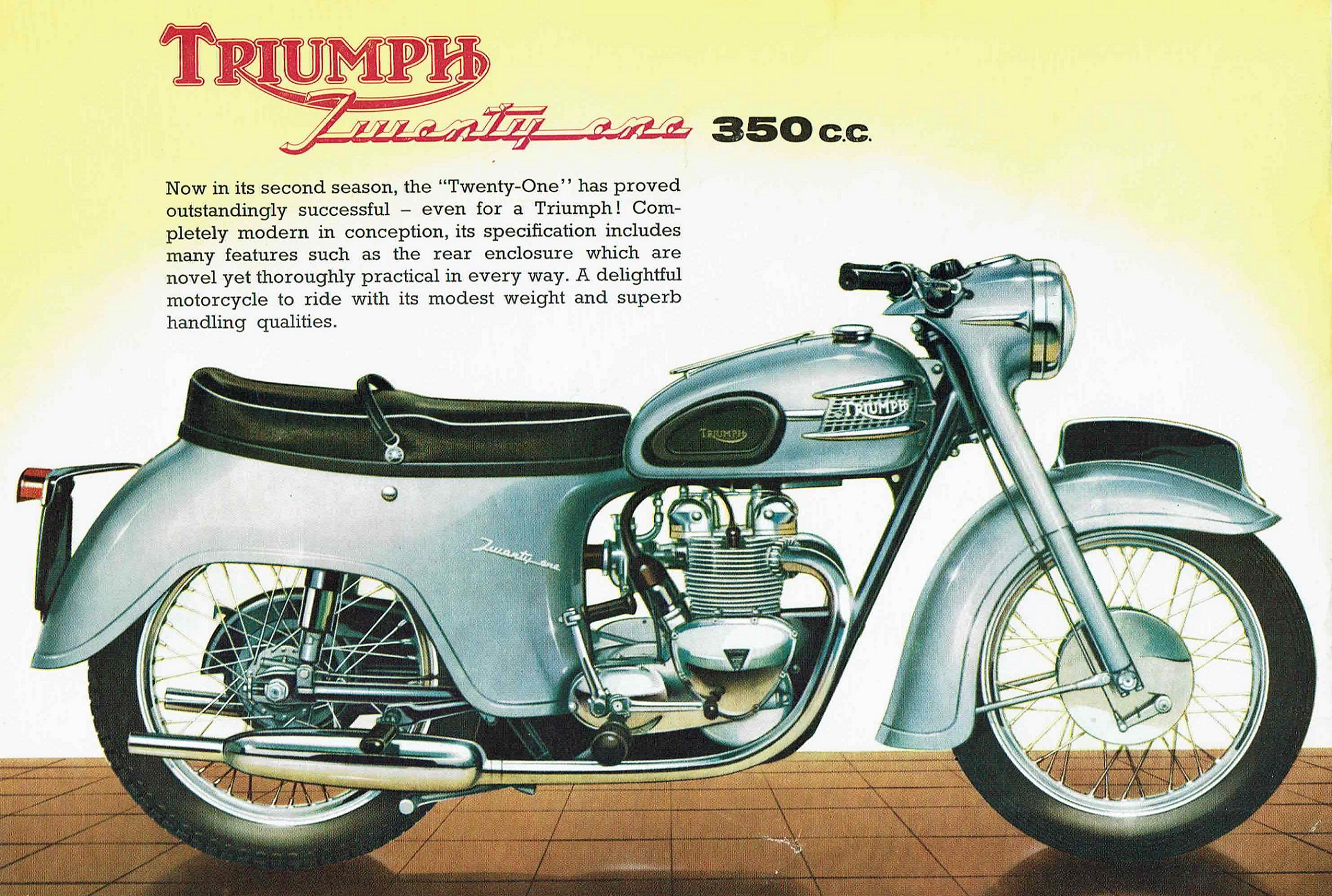
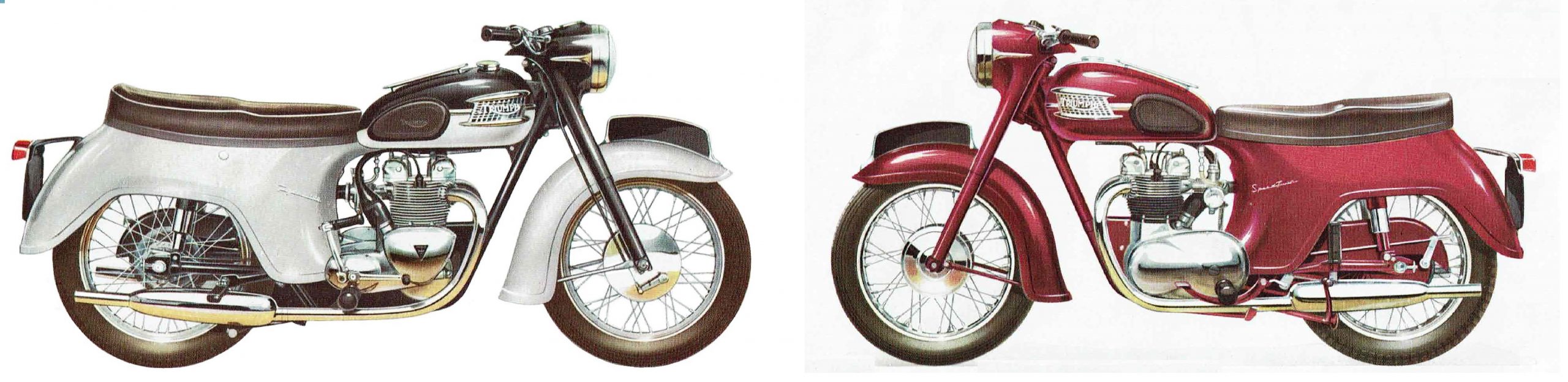
The Dualseat illustrated in the 1958 catalogue (above image) shows the seat strap but this is inaccurate on UK machines, it may remain on some export machines.
From July 1958 the method of securing the battery changes to the later form where a rod passes across the battery holding this in place.
1958 T21 machines will be finished overall in Blue Sheen with Black Frames and ancillary parts including hubs. Cylinder fins are generally Silver Sheen.
Parts Book No: 1

Notes for 1958
This is a summary of the engine modifications made during 1958 and the models that they apply to/from, these details are taken from the Factory Engine Build Records
H1584 Modified Valve Springs Fitted from here
H2297 Primary Chaincase Metering Jet Reduced (This is a mystery to me as I was not aware there was one!)
H2458 Modified Big End Bolt (Shorter) fitted from here
H2769 Battery Securing Method Changes.
H2828 First engine fitted with endless chain (primary drive)
H3663 Longer Distributor Clamp Bolt fitted
H4184 New Pattern Tappets Fitted from this number
H5169 New Clutch inserts on all machines (Neolangite)
H5015 Modified Bottom Seal on the push rod tubes
A Tri-Cor Bulletin of 10th January 1958 describes a Plastic Battery Cover that should be fitted before the machine is sold and to not overfill the battery.
This probably covers machines before H2769 when the Battery Tray is changed to eliminate the earlier issues of acid vapours causing corrosion.
Production for 1958 begins on the 10th September 1957 with H761 sent to Hacks Cycle Store, British Guiana on the 20th September
The first UK machine is H774 sent to F.H. Blackpool and Co Ltd, Stanstead Road, Forest Hill, London on the 18th September.
Only 637 machines are sent to the USA with approximately equal numbers to Johnson Motors and Tri-Cor.
33 T21 machines are supplied to UNICEF (Kenya), a picture is available in the BSA Group News Centenary booklet, this rare and fascinating book can be viewed at the VMCC Library in Burton on Trent (Open to Members of the VMCC)
The 1958 brochure shows the under seat area of a T21, I have identified this machine as H120 as the image is taken from the publicity shots of this machine and therefore does not actually represent a 1958 model !
I have in my photo collection a number of images of T21’s taken at the factory in September 1957, kindly provided by Mike Estall of Tiger Cub Fame.
There are no UK road tests on the model in 1958 but look for “The Motorcycle” of 24th October 1957 for an article on the Improvements to the Triumph Range for 1958. These annual improvements are generally announced in the press at about the time of the Earls Court Show and are a valuable source of information for restorers.
The article also includes an exploded diagram of the T21 Engine, a description and picture of the crankshaft, details of the “Slickshift” featured on the larger models and images, specifications and prices.

Look for American Motorcycling of January 1958 for the release article and images. These show a black framed T21, one of only a handful dispatched in time for this publication.
In the 1958 ISDT (West Germany) Roy Peplow is riding for the Great Britain A Vase Team is on a 500cc Triumph this is in fact an earlier Triumph Trophy (UAC 534)
Look at the superb site www.speedtracktales.wordpress.com for details on the ISDT including many previously unpublished photographs.
The Barber Museum in Birmingham Alabama have an excellent restored example of a ‘21’ (H2158) along with several other Triumphs, the museum is a motorsport mecca housing a diverse collection of rare motorcycles and cars, well worth a trip, especially for the Barber festival in October.
List Price for the T21 from Sep 1st 1957 (1958 season) is £ 228/5s/11d
List price in the USA is $ 818
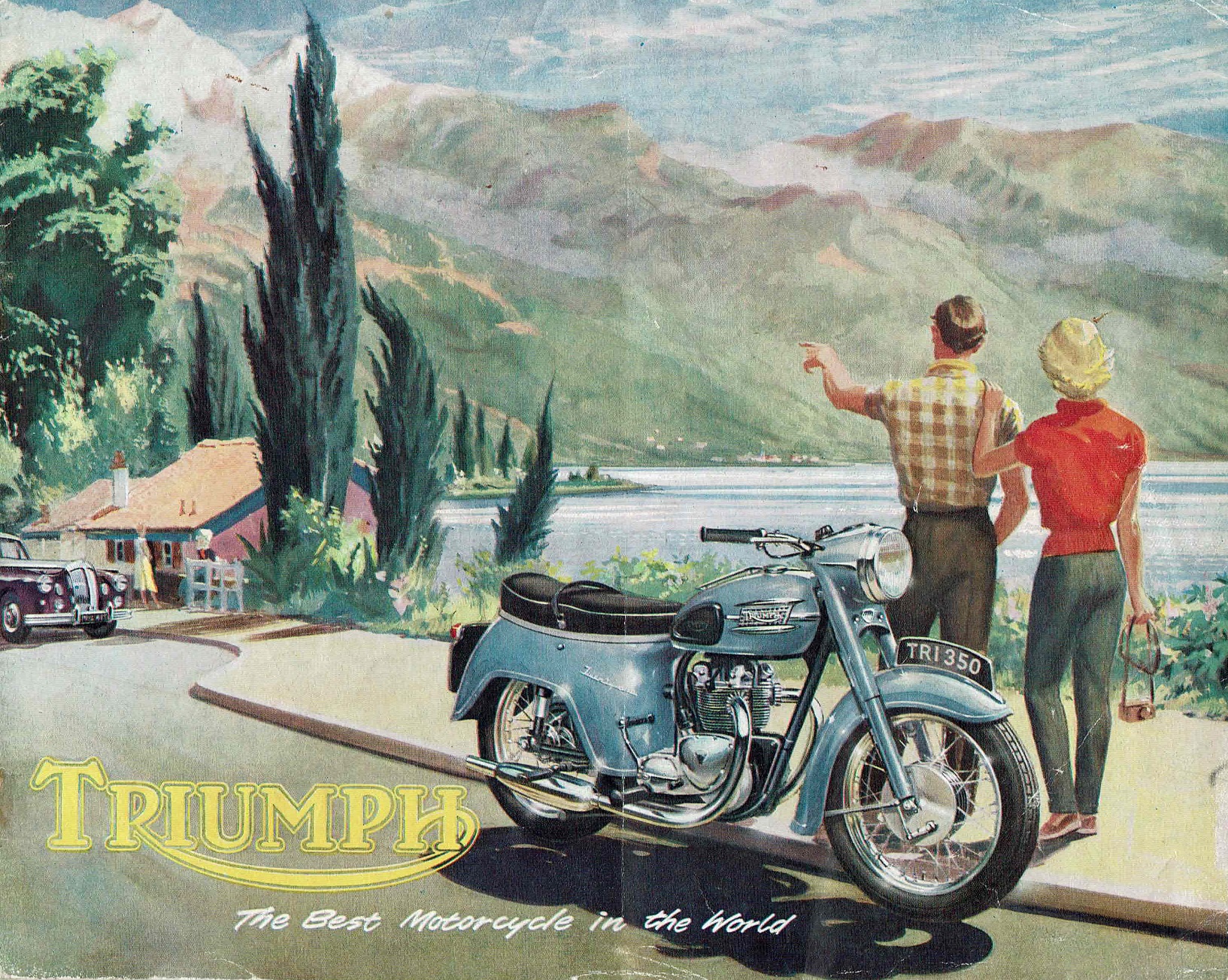
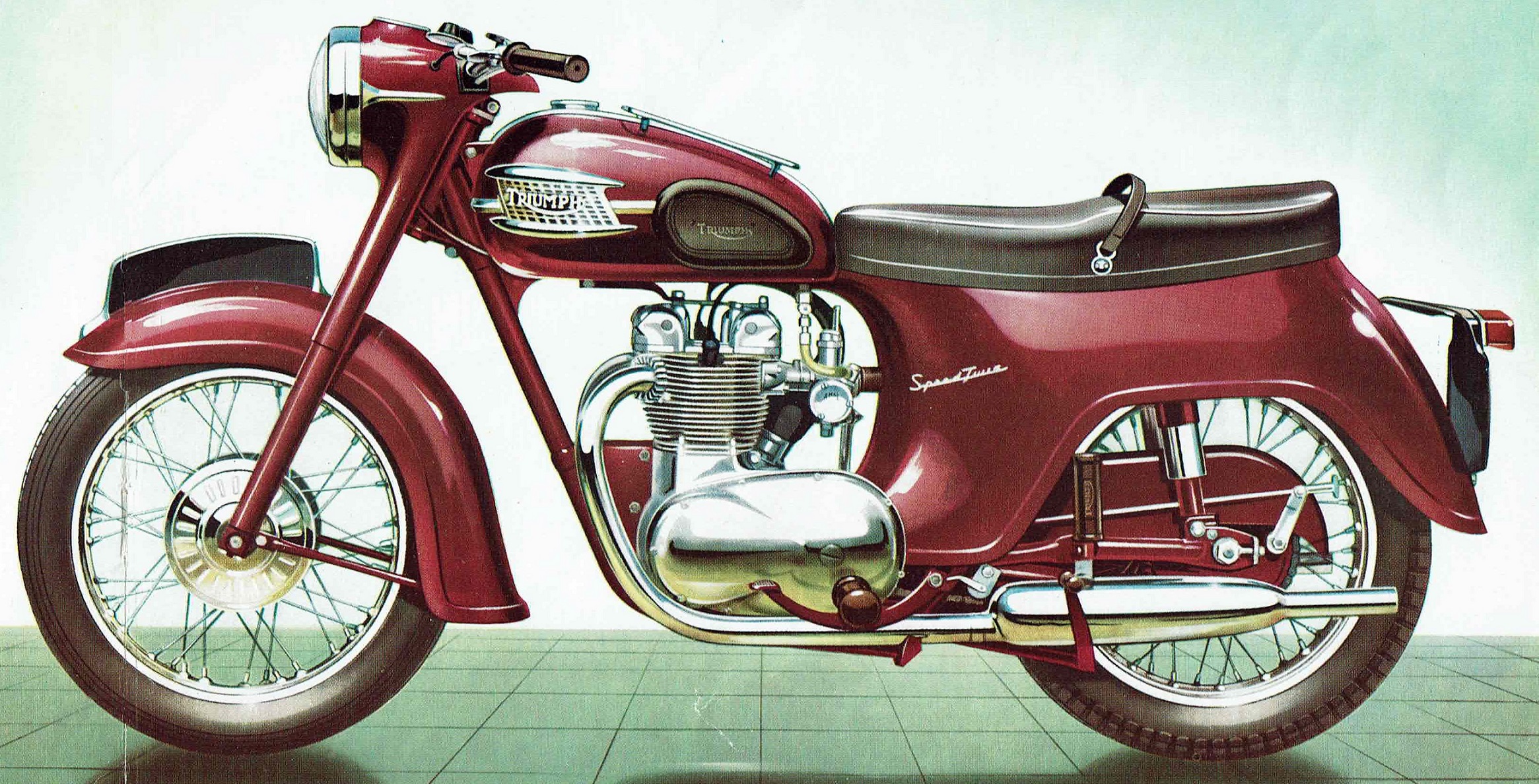
1959 5TA
1959
Engine Frame Numbers H5481-H11511.
| Models Covered | Standard | Police |
|---|---|---|
| 1959 Triumph T21 | 34 | |
| 1959 Triumph 3TA | 2802 | 59 |
| 1959 Triumph 5TA | 3112 | 18 |
| 1960 Triumph T100A | 2 | |
| 1960 Triumph TR5AR | 1 |
Sales for all Triumph Models for 1959
| 1959 | T20 | T20C | T20S | 3TA | 5T | 5TA | TR5 | T100 | TRW | 6T | TR6 | T110 | T120 |
|---|---|---|---|---|---|---|---|---|---|---|---|---|---|
| Home | 5868 | 307 | 169 | 2220 | 45 | 1867 | 1 | 514 | 1 | 1274 | 91 | 1821 | 271 |
| Jomo | 254 | 159 | 425 | 10 | 92 | 50 | 2 | 111 | 461 | 95 | 310 | ||
| Tri-Cor | 441 | 317 | 432 | 1 | 226 | 30 | 5 | 193 | 584 | 351 | 799 | ||
| Export | 1968 | 86 | 73 | 853 | 66 | 562 | 18 | 347 | 100 | 626 | 128 | 590 | 500 |
| 8531 | 869 | 1099 | 3084 | 111 | 2747 | 99 | 868 | 101 | 2204 | 1264 | 2857 | 1880 |
Note that the Sales figures do not represent how many of each model were built for that model year.
From the sales data you will note the failure of the 3TA in the US Market but strong sales into the UK
The accounting period is August 1st to July 31st with production for 1959 starting on the 18th September with quantities of 3TA’s and 5TA’s.
The engine number will be preceded by the model type to indicate the general specification. Machines were supplied to a variety of overseas customers and it is important to identify the original destination and user of your machine before commencing restoration. Machines supplied in batches to overseas governments would have been made to a particular specification often far removed from Home market (UK) machine specification.
Police machines indicated in the build and despatch records are for both UK and Export and feature detail differences from Standard Machines.
In the Factory Records it can be very difficult to identify machines built to non-standard specifications, to the casual observer without knowing which dealers dealt with Police orders for their county or municipal force these can be easily missed.
The 3TA for 1959 remains largely unchanged and remains popular in the Home market.
1959 sees the introduction of the 5TA, which replaces the earlier 5T, the ancestor of the famous Speed Twin of 1938
The crankshaft for the 3TA and 5TA are common but rather than the stamped steel conrods of the 3TA the 5TA uses Light Alloy H-Section rods. The stroke remains at 65.5 mm but the bore is increased to 69.0 mm to give the new capacity of 490cc and fitted with 7:1 pistons the performance improves to 27 b.h.p at 6,500 r.p.m.
The 5TA has a 20 tooth gearbox sprocket in place of the 18 tooth one of the 3TA/21. Both machines have the same gearbox internal ratios but the 20 tooth sprocket raises the overall ratios to 11.56,8.35,5.62 & 4.8 to 1.
The 5TA also features a slightly larger 375/3 (7/8inch) Amal Monoblock Carb.
The 5TA features an increase in rear tyre width to 3.5 inches while the T21/3TA retains the 3.25 Tyre Size as before..
For both models a revised method of attaching the air filter is used, illustrated in the “The Motor Cycle” of 23rd Oct 1958. This allows the filter to be extracted through the seat opening rather than removing the left hand Bathtub Panel. Also shown in the illustration is the Plunger for the Choke, the clear petrol pipe with ferrule and the distributor clamp.
The modifications feature in “The Motorcycle” indicates that the front brake cam lever is altered to improve the action and that plain chrome covers on the hub replace the fluted covers fitted for 1958, even though the brochure image above shows the fluted cover!
So far No 3TA or 5TA machines have been fitted with the QD rear hub and it is not listed in the optional extras which remain advertised as Prop Stand and Pillion Footrests.
Colours for 1959 are …
3TA Shell Blue Sheen, Black Frame, Silver Sheen Front Hub and Cylinder Fins
5TA Amaranth Red Overall including the Hubs and rear brake drum. Black Cylinder fins
US brochures describe the colours as Azure Blue and Continental Red.
A few machines are supplied in other Colours, 3TA’s H8945 and H8946 are supplied to the Ministry of Supply London. H8946 in Charcoal Finish !
Other machines supplied to the Police or in batches to foreign governments such as Vietnam may be in an alternative scheme.
Parts Book No: 2 this starts from H5485! Like the earlier parts book not all the parts are illustrated.
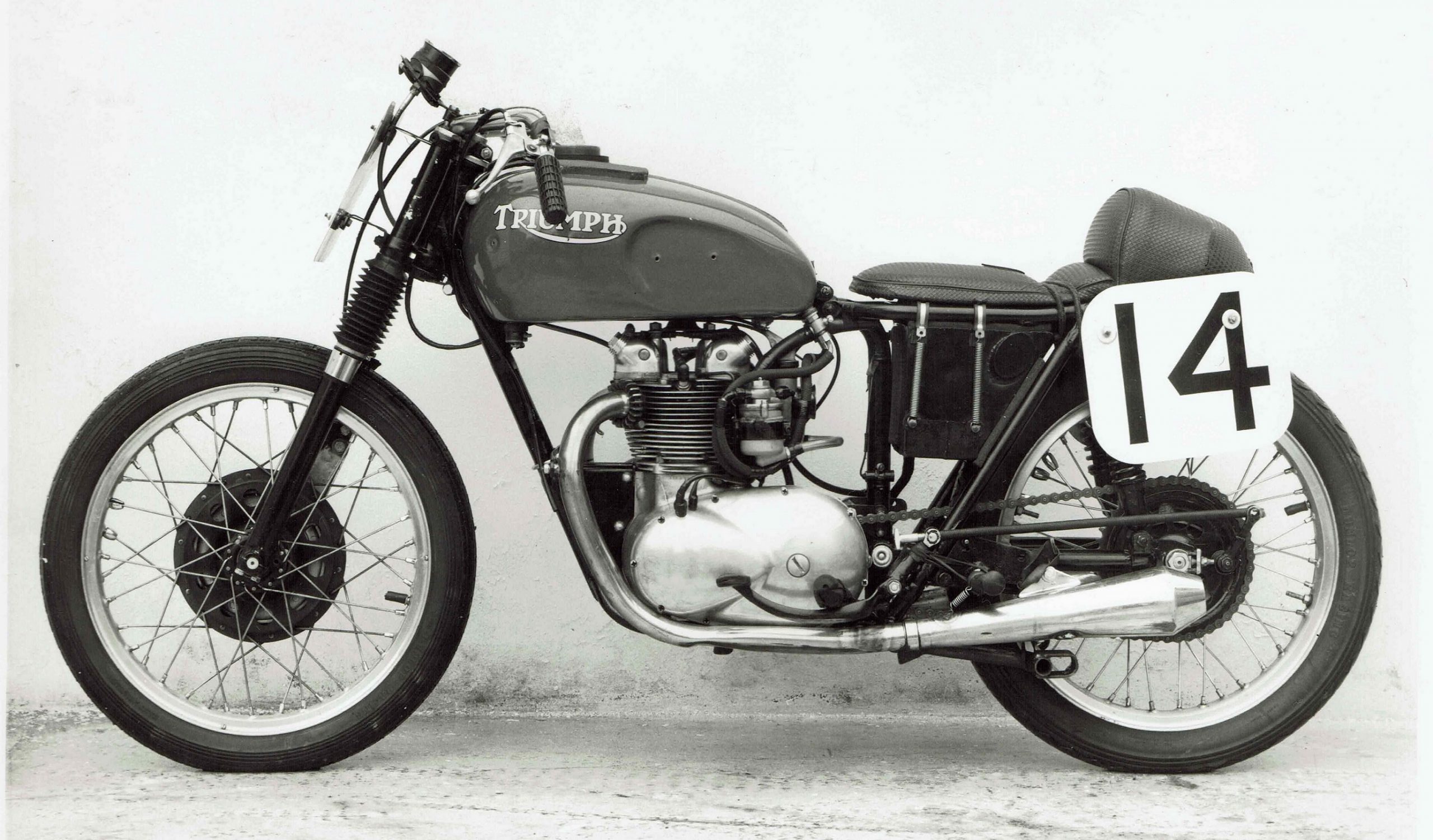
From my collection of original Triumph Publicity photographs.
Notes for 1959
| 1948 | % | 1949 | % | 1950 | % | 1951 | % | 1952 | % | 1953 | % | 1954 | % | 1955 | % | 1956 | % | 1957 | % | 1958 | % | 1959 | % | |
|---|---|---|---|---|---|---|---|---|---|---|---|---|---|---|---|---|---|---|---|---|---|---|---|---|
| Australia | 18880 | 46% | 25107 | 61% | 22171 | 44% | 24180 | 41% | 6872 | 21% | 6678 | 20% | 9474 | 22% | 6692 | 20% | 3923 | 13% | 4490 | 16% | 2271 | 11% | 1921 | 9% |
| New Zealand | 924 | 2% | 1787 | 4% | 2235 | 4% | 5600 | 9% | 3186 | 10% | 2168 | 6% | 3140 | 7% | 1371 | 4% | 705 | 2% | 1264 | 5% | 756 | 4% | 614 | 3% |
| South Africa | 2907 | 7% | 1234 | 3% | 1282 | 3% | 2054 | 3% | 1885 | 6% | 1843 | 5% | 1957 | 4% | 2334 | 7% | 2418 | 8% | 2606 | 10% | 1456 | 7% | 843 | 4% |
| India / Pakistan | 3258 | 8% | 552 | 1% | 1625 | 3% | 3511 | 6% | 3413 | 10% | 1849 | 5% | 4565 | 10% | 3325 | 10% | 2247 | 7% | 2357 | 9% | 2784 | 13% | 3136 | 14% |
| U.S.A | 8178 | 20% | 4267 | 10% | 8582 | 17% | 8195 | 14% | 7075 | 21% | 5136 | 15% | 8172 | 19% | 9598 | 29% | 13651 | 44% | 12383 | 45% | 10601 | 51% | 12834 | 58% |
| Canada | 3790 | 9% | 5404 | 13% | 6225 | 12% | 3326 | 6% | 1047 | 3% | 2062 | 6% | 1595 | 4% | 1196 | 4% | 2562 | 8% | 1411 | 5% | 1228 | 6% | 1387 | 6% |
| Denmark | 321 | 1% | 591 | 1% | 480 | 1% | 505 | 1% | 1325 | 4% | 5641 | 16% | 4040 | 9% | 1537 | 5% | 584 | 2% | 338 | 1% | 114 | 1% | 180 | 1% |
| Sweden | 804 | 2% | 299 | 1% | 3653 | 7% | 5283 | 9% | 4340 | 13% | 5762 | 17% | 5689 | 13% | 2086 | 6% | 643 | 2% | 813 | 3% | 693 | 3% | 423 | 2% |
| France | 587 | 1% | 150 | 0% | 1907 | 4% | 5015 | 8% | 3117 | 9% | 3044 | 9% | 2539 | 6% | 2358 | 7% | 2662 | 9% | 963 | 4% | 695 | 3% | 658 | 3% |
| Netherlands | 1495 | 4% | 1468 | 4% | 2097 | 4% | 1899 | 3% | 1171 | 4% | 43 | 0% | 2552 | 6% | 2240 | 7% | 1725 | 6% | 799 | 3% | 343 | 2% | 320 | 1% |
| Ireland | 1101 | 3% | 586 | 1% | 1206 | 2% | 1291 | 2% | 1211 | 4% | 3003 | 9% | 3266 | 7% | 3365 | 10% | 2052 | 7% | 1151 | 4% | 1322 | 6% | 3383 | 15% |
| Total | 41144 | 40859 | 50257 | 59568 | 33431 | 34226 | 43723 | 32737 | 31120 | 27424 | 20941 | 22316 |
The table above gives an overall view of all British Motorcycle Exports to 1959 and has been compiled from information taken from a Daily Mail publication, one of a series of data books produced until the early 1960’s that contain interesting details for any motorcycle historian.
The figures above do not include the buoyant home market, at the peak in 1954 the British factories build 187,000 motorcycles! From above you will note the changing fortunes of each market and the increasing importance of the USA which is reflected in Triumph’s sales figures shown elsewhere. These figures represent the whole of the British Motorcycle Industry and the numerous manufactures and products that they are producing. By the mid-sixties many of these companies have gone or been absorbed and motorcycles begin the change from being predominately forms of transport to a means of leisure.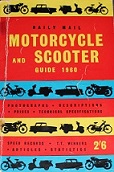
This is a summary of the engine modifications made during 1959 and the models that they apply to/from, these details are taken from the Factory Engine Build Records
H5785 Modified Kick Starter Shaft Bush from here
H7039 Shorter Valve Guides Fitted from here
H7116 All subsequent 5TA’s now have Tapered Piston Rings
H8141 Modified Tappet Guide Blocks to improve sealing of the Push Rod Covers
H8141 Thicker Push Rod Cover Seals from here
H9001 New Alternator Grommet
H10049 Modified Distributor Oil Seal
Production for 1959 begins on the 17th September 1958 with show models for the Paris Show (3rd Oct 58) and the Earls Court Show (Nov 15th-22nd)
3TA H5481 is eventually sent to Nigeria (10th December)
3TA H5482 is sent to Decat of Belgium on the 6th December
5TA H5483 is sent to Campbell & Cameron
5TA H5484 is sent to F. Llewellyn & Co Ltd, Liverpool on 18th Dec 1959
5TA H6187 is sent to The Daimler Company, Coventry for a Mr Hopper on the 18th Feb 59
One of the 5TA’s is shown at Earls Court fitted with a Radio in the Tank Top I believe that this is H5484.
The first Production 3TA for 1959 is H5485 sent to Kingston Motors, Kingston on Thames
The first Production 5TA for 1959 is H5785 sent to Julius Martinez, Nicaragua as part of a batch of 23 machines.
H5881 is a 5TA built by the experimental dept, eventually dispatched to J Surtees on 23rd Oct 59
H5939 is a 5TA possibly a press machine or factory machine eventually dispatched to Slocombes of Neasden (3rd Oct 1960)
H6549 is possibly the first Police Specification 3TA, supplied to the Bucks Constabulary on 21st November 1958.
H6550 is also a Police Specification machine but is retained until March 1959 when it is sent to Surtees, West Wickham.
H8656 appears to be the First Police Specification 5TA supplied to Hadlers of Chelmsford followed later by H8900
3TA’s H8945 and H8946 are supplied to the Ministry of Supply, London. H8946 is in a Charcoal Finish !
H6159 is a 5TA which is converted to a TR5AC by the competition department, this machine is registered to the Factory as 565 AAC.
H6282 is an engine taken from a 3TA production batch on the 12th November 1958 and transferred to the Experimental Department for conversion to a T100A.
This machine is sent to Slocombes of Neasden on the 16th November 1959.
H9480 the T100A production prototype is a taken from a batch of 5TA’s on the 22nd May 1959 and built for the Experimental Dept with high compression pistons.
Two sets of photographs of this machine survive in the VMCC archive, one with the machine finished in Blue or Silver Sheen (unregistered) and the other set with the machine in Black over Ivory (registered 148 AUE), see next section. Also see the road test in “Motor Cycling” March 10th 1960 featuring this machine.
Both sets of photographs clearly show the engine stamped as 5TA H9480, it later is sent to Jack Surtees, West Wickham on the 8th July 1960
The whereabouts of this interesting machine is as yet unknown, one to look out for …
A photograph of this machine is in the 1960 Section.
H5886 appears to be the first 5TA sent to the USA (Tri-Cor) part of a batch of 50 with H5934 a single 5TA from this production batch to Johnson Motors
From my collection of Tri-Cor Bulletins and articles is a Brochure Sheet describing converting the 5TA to an AMA Class “C” Racer, this sheet details the soon to be available “Race Kit” and gives comprehensive details of the modifications required and parts needed for Class “C” Road Racing and Class “C” Dirt Track Racing. Included are Photographs of Two Machines, see above.
At Daytona a modified 5TA ridden by Ralph Tysor from Charlotte NC puts in the second fastest qualifying time at a speed of 120 mph, there is a picture of the machine and rider in Motor Cycle News of Wednesday March 18th 1959
If you have a 5TA Project Bike, you could consider these specifications as an option to an original restoration. If you have found a 5TA in the USA carefully assess the engine specification as your machine may have been converted into one of these exciting machines.
Two machines are reported to have been entered for the National Championships at Laconia in June 1959.
Riders on Triumphs at the one mile Laconia circuit are Jimmie O’Dell and Sammy Tanner, finishing 13th and 19th respectively,
For more information look for “The Complete Grand National Championship Volume 1” by Gregory R Pearson. This excellent work contains the results lists for all the Grand National Championship races from 1954 to 1969 with numerous photos and anecdotes. A must have book for fans of the USA race scene.
A good source of period photographs, advertisements and event reports will be found in copies of American Motorcycling, now available on-line and searchable.
Also look for copies of Cycle and Cycle World, for a small subscription these can be viewed and enjoyed.
An early production 1959 5TA was entered in the 1959 Thruxton 500, coming seventh in the unlimited multi-cylindered event, the machine is used in other production bike events at Silverstone and Snetterton before being converted by Cyril Jones to a track bike in 1962. See the article in Motorcycle Mechanics September 1965.
The interesting modification on this machine is the swing arm to frame support as used on the later Daytona bikes and 1967 production machines.
1959 Production ends on the 4th September 1959 with H11511 a 3TA sent to Austria (part of a group of six)
Exports for this year are to varying locations as usual but relatively few machines are sent to the USA.
3TA machines (H6237 & H6557-H6585) and 5TA machines (H6938 & H6955-H7088) are sent to Aziz, South Vietnam. One Survives in the UK!
New export markets recently opened by Triumph are South Vietnam and Peru; 30 Twenty-Ones for the Vietnamese Customs service and 137 Speed Twins for other departments. The Peru Dispatch was for 30 Speed twins to be used by the Police in Lima, the capital. 100 TRW’s are going to Pakistan, which means that the Pakistan army now has nearly 1000 Triumphs in service. A repeat order is from Jamaica for 21 Speed twins to replace earlier models used by the police. Motor Cycle 26th Feb 1959.
For Illustrations of the 5TA you will need the “Motor Cycle” Road Test of 15th January 1959 and 14th May 1959,
both featuring 698 AAC (H6782)
Also look for Harry Woolridge’s excellent book on the Speed Twin which covers in detail the development history of the model from 1938 to its demise in 1966.
ISBN 0-85429-722-7.
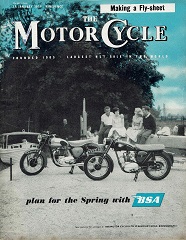
The 14th May 1959 Cover of the “Motor Cycle” as described above.
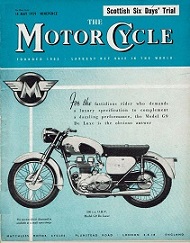
There is a 1959 road test of a 3TA with excellent photographs available in the 30th April copy of “Motor Cycling”, this features 914 AAC.
I have yet to identify the Engine number of this machine.
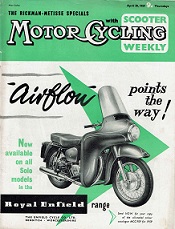
Also look up images of Kwame Nkrumah’s Motorcade. Ghana 1959 which features a number of 3TA’s.
To find the 1959 Road Tests for all Triumph models use the “Magazine Articles” Tab at the top of the page.
Prices for the 1959 season are …
3TA £ 228/5s/11d
5TA £ 245/15s/2d
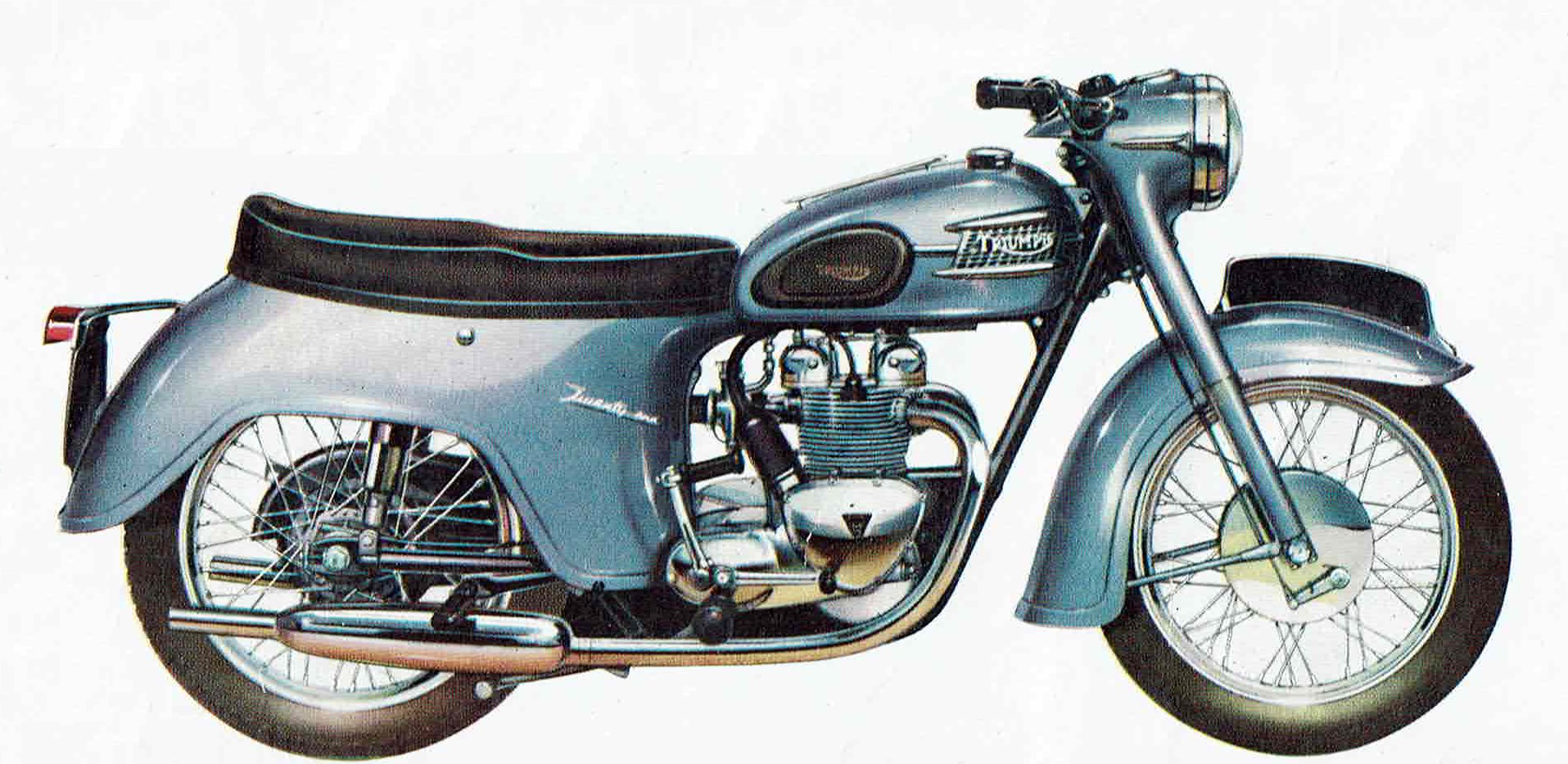
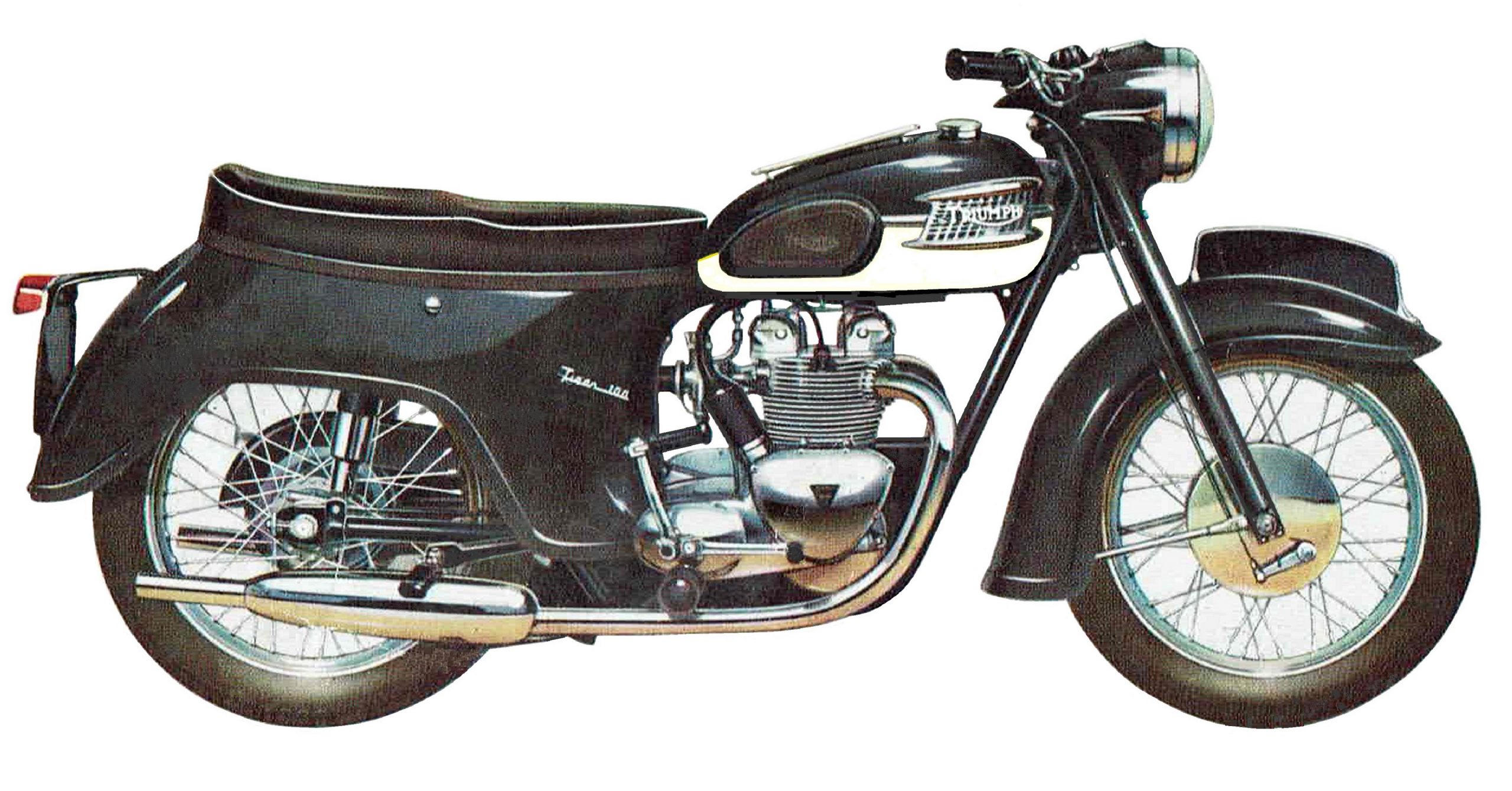
Shown here the 1960 3TA and T100A
1960
Engine Frame Numbers H11512-H18611.
| Models Covered | Standard | Police |
|---|---|---|
| 1960 Triumph 3TA | 2758 | 6 |
| 1960 Triumph 5TA | 2172 | 42 |
| 1960 Triumph T100A | 2120 |
Sales for all Triumph Models for 1960
| 1960 | T20 | T20S | 3TA | 5TA | T100A | T100 | TRW | 6T | TR6 | T110 | T120 |
|---|---|---|---|---|---|---|---|---|---|---|---|
| Home | 7416 | 728 | 1697 | 1592 | 1209 | 1383 | 155 | 1581 | 201 | ||
| Jomo | 358 | 720 | 24 | 33 | 122 | 50 | 652 | 122 | 598 | ||
| Tri-Cor | 540 | 582 | 30 | 77 | 114 | 171 | 638 | 274 | 878 | ||
| Export | 2135 | 169 | 988 | 544 | 327 | 12 | 198 | 601 | 274 | 375 | 479 |
| 10449 | 2199 | 2739 | 2246 | 1772 | 12 | 198 | 2205 | 1719 | 2352 | 2156 |
The Sales figures above show the popularity of the Cub dwarfing all other models, with larger models becoming popular in the USA.
Note the poor sales of the 3TA and 5TA into the USA but strong sales into the Home Market. Most surviving machines are UK machines.
For 1960 the 5TA (not illustrated) remains in much the same specification as the previous year apart from the general changes introduced during production.
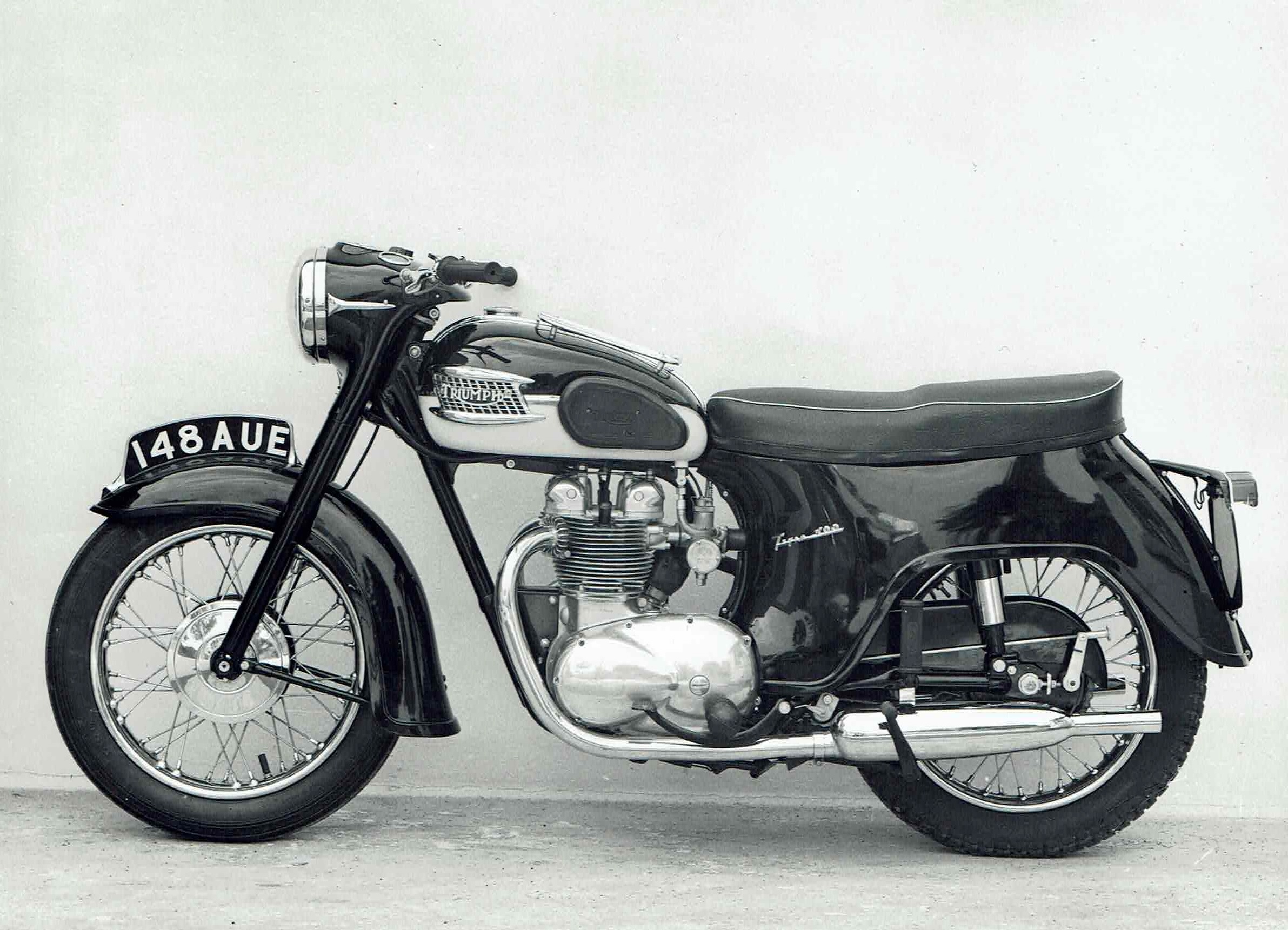
Factory Portrait Photographs were taken outside in a small area behind the canteen that had been prepared, at times such as in this photograph the reflections of the distant background is visible in the timing cover and bathtub. These “Factory” photographs are quite distinctive and can be picked out from most others by the background, they often feature mock up, pre-production machines or test machines that do not represent actual production models and should be considered carefully by restorers.
1960 Sees the introduction of the T100A which replaces the successful pre-unit T100, like the 5TA earlier it uses many parts common to the range but is improved by using 9:1 Pistons and sports camshafts giving 32 b.h.p at 7000 r.p.m. The Cylinder Head, Carb and the gear ratios remain as for the 5TA.
Another innovation is the use of energy transfer ignition allowing a battery and rectifier to be dispensed with though both are retained to provide current to the lights.
It needs to be considered that the Pre-Unit Tiger 100 that this model replaces is a sporting model and was often modified for racing and off road use.
Potential owners should not dismiss the T100A, it is a fine machine with excellent performance in a small package, very few survive in original condition and the model sharing many parts with its siblings is easy to maintain but with a distinct performance advantage for modern road conditions.
The 3TA and 5TA share the E3858/E3839 Camshafts but for the T100A E4022/E4023 camshafts are fitted. The Tappets are common across the range.
The alternator on the T100A is not keyed to the crankshaft but is driven by a dowel on the face of the engine sprocket engaging with one of two marked sockets on the rear of the rotor. For normal use the driving dowel engages with the socket marked S but for racing purposes the R socket can be used to advance the ignition timing.
Distributor part numbers for the models are ….
3TA 40573
5TA 40646
T100A 40710 40710B after H17466
The T100A features the Lucas 2ET Ignition Coil while the 3TA and 5TA continue with the Lucas MA6 ignition coil.
Police Machines supplied with the High Output Alternator have additional wiring and a switch to enable the higher charge rate to be enabled at any time.
Alternative Lucas Parts are provided on these machines. Often with these machines the Engine Number will have a W after the number.
The T100A though sharing the same gearbox components as the other models does feature new clutch components to allow two more plates to be fitted. Though complete Clutches are interchangeable be aware that the Clutch components are not!
The 1960 Parts book shows the 5TA and T100A now fitted with the Primary Chain Tensioner this consists of a spring steel blade which can be adjusted to bear upon the chain by access to a screwed sleeve inside the primary drive drain plug. The Chaincase of the 3TA retains the earlier form and so the part numbers differ (E3107-E4122).
During the production year the 3TA is also fitted with the adjuster starting with H18392. See Notes for 1960.
Unlike the 3TA and 5TA which are fitted with silencers incorporating baffles the T100A has less restrictive absorption type silencers (E4157-.8) with removable mutes.
All models now have the QD rear wheel as an option, interestingly most early machines manufactured have this option.
The Nacelle of the 3TA and 5TA remain as for earlier but there is a new Nacelle Top for the T100A to accommodate the smaller Lucas SA41 Lighting switch.
From H13116 the Bathtub Panels change so that the fixing flanges are now external and easier to assemble, a new number plate design is required. I also believe that the support stay seen with the earlier Bathtub is deleted. This stay is not illustrated in the parts book and is only seen in the 1957 3TA press bulletin.
From 1960 all the models have uprated shock absorber springs now at 130 lb, optional springs, of 110 and 145 lb’s are available.
The parts book shows that the 5TA has a different damper unit!
Factory illustrations show that the front Hub Plate has reverted to the plain non fluted style.
Another press illustration shows the presence of a tyre pump located under the Petrol Tank.
American models feature higher bars and appropriate cables.
Colours for 1960
3TA Shell Blue Sheen, Black Frame and ancillary components, Black Hubs; Silver cylinder fins.
5TA Now in Ruby Red overall, Black Cylinder Fins
T100A Black over Ivory separated by Gold lining on the petrol tank, all other cycle parts Black, Black hubs, Silver cylinder fins.
It needs to be noted that machines supplied to overseas governments and Police models will have differing specification.
I urge you to contact the VMCC or the Triumph Owners Club to confirm the original destination of your machine and conduct an internet picture search.
Optional extras include QD Wheels, Pillion Footrests and Prop Stand
Parts book No: 3 Covers machines from H11512
While the earlier parts books are not fully illustrated parts book 3 is and shows the components for each of the models.
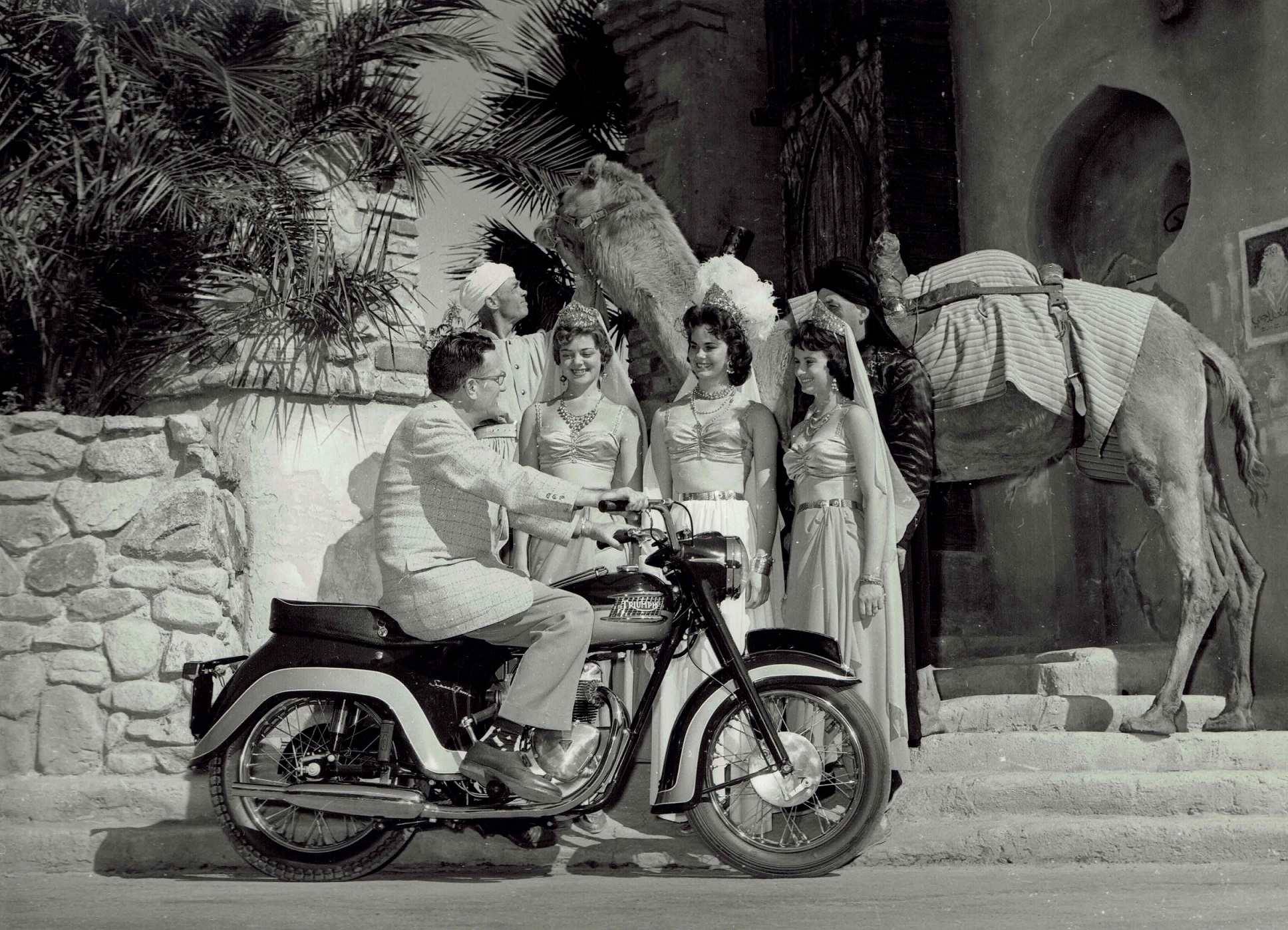
I have several images from this Shoot in my collection, can you name the film?
Notes for 1960
This is a summary of the engine modifications made during 1959 and the models that they apply to/from, these details are taken from the Factory Engine Build Records
H12014 Crankshaft Timing Side Bearing a Locking device is fitted comprising a small plate located by a screw. (Remains until 1967)
H12107 New type engine sprockets fitted, incorporating drillings for an extractor.
H12313 First T100A with primary chain tensioner
H13115 First 5TA with primary chain tensioner
H18392 First 3TA with primary chain tensioner
Police machines become identifiable within the build records as the engines are to a differing specification and recorded as such.
As there is no Earls Court show in 1959 no machines are produced for display but 5TA H12614 is a USA Show Machine.
1960 Production begins on the 1st October 1959 with 3TA’s (H11512-H11545) destined for the USA
H11962 is the first 5TA for 1960 (sent to Uganda)
H12313 is the first production T100A made on the 16th October 1959. Sent to Johnson Motors on the 22nd October.
H12331 is the first UK production T100A sent to Pat Keebles, Leiston.
Most early production of the T100A is for export, you will find them in Borneo, Cyprus, Australia, Venezuela and the USA.
1960 production ends with 3TA H18611 on the 2nd September 1960 this machine is dispatched to Nigeria.
The road test of the T100A featured in “Motorcycling” of March 10th 1960 shows 148 AUE the production prototype T100A (H9480).
The test photos show some interesting details; notably that the rocker covers are on the wrong way round and that the cylinder fins are Black! The article states that the machine is ‘new’ and not run in, I suspect that the engine has been re-conditioned.
A photo of this machine is above, more excellent photographs of this interesting machine survive in the VMCC Collection.
Roy Peplows Trials Tiger 100 built by Henry Vale in the competition shop carries the registration 612 BFD, a Dudley Registration from July 1960, this well known machine is pictured in Don Morleys “Classic British Trials Bikes”
Roy told me that he bought the machine cheaply near his home, second hand and the factory helped to convert it for trials use. It eventually became uncompetitive against the lighter Cubs and later foreign two strokes. As with many competition machines, upgrades were regularly added during its life.
This machine, now numbered H24122 a 1961 model was sold from a collection at the Stafford Auction in April 2019
The Tri-Cor Monthly Hints and Tips Service Department Bulletin for January 1960 indicates that nine T100A machines are entered in the 100 Mile Class “C” amateur race at Daytona Beach (March 7th to 13th) and Six Expert Riders on New Triumphs in the 200 Mile National !
Bob Burnett (T100A) Finishes 4th in the Amateur Race.
These race machines are likely to be from between H13749 to H13840 as this is a group of T100A’s dispatched to the USA in late December 1959.
For more information look for Gregory R Pearsons “The Complete Grand National Championship Volume 1”. This excellent book contains the results for all of the USA National Races from 1954 to 1969 with numerous pictures. A must have book for race fan and researchers.
Triumph Riders to research for 1960 are Bob Burnett Wenham Mass, Ray Durham Greenville SC, Everett Brashear and the soon to be famous Sammy Tanner.
Another rare book to look for is J.J O’Malleys “Daytona Hot Shoe, The History of Short Track Motorcycle Racing in Daytona Beach”
From the September 1960 issue of cycle (below) is an extensive report on the Laconia Road Races attended by 22,000 fans with at least five riders entered on Triumphs. Winner of the 25 mile novice race is John Platchek from Sprinfield PA on a modified T100A, fans will recognise many famous names in the line-up.
Interestingly the article has a picture of a 3TA included.
In “Motorcycle Mechanics” June 1960 is a Road Test and Decoke article on a 1960 3TA (683 AWD)
In 1960 at the Bonneville Salt Flats Danny Macias takes a modified 3TA to a new class ‘C’ speed record of 116.42 mph.
The machine survives and appears in a you tube video at www.youtube.com/watch?v=L699Ry3MvRs
Danny Later becomes Triumph’s Racing Manager and appears in several later period photographs.
Prices as stated in September 1959 for the 1960 season.
3TA £ 227/19s/8d
5TA £ 237/12s/8d
T100A £ 247/17s/9d
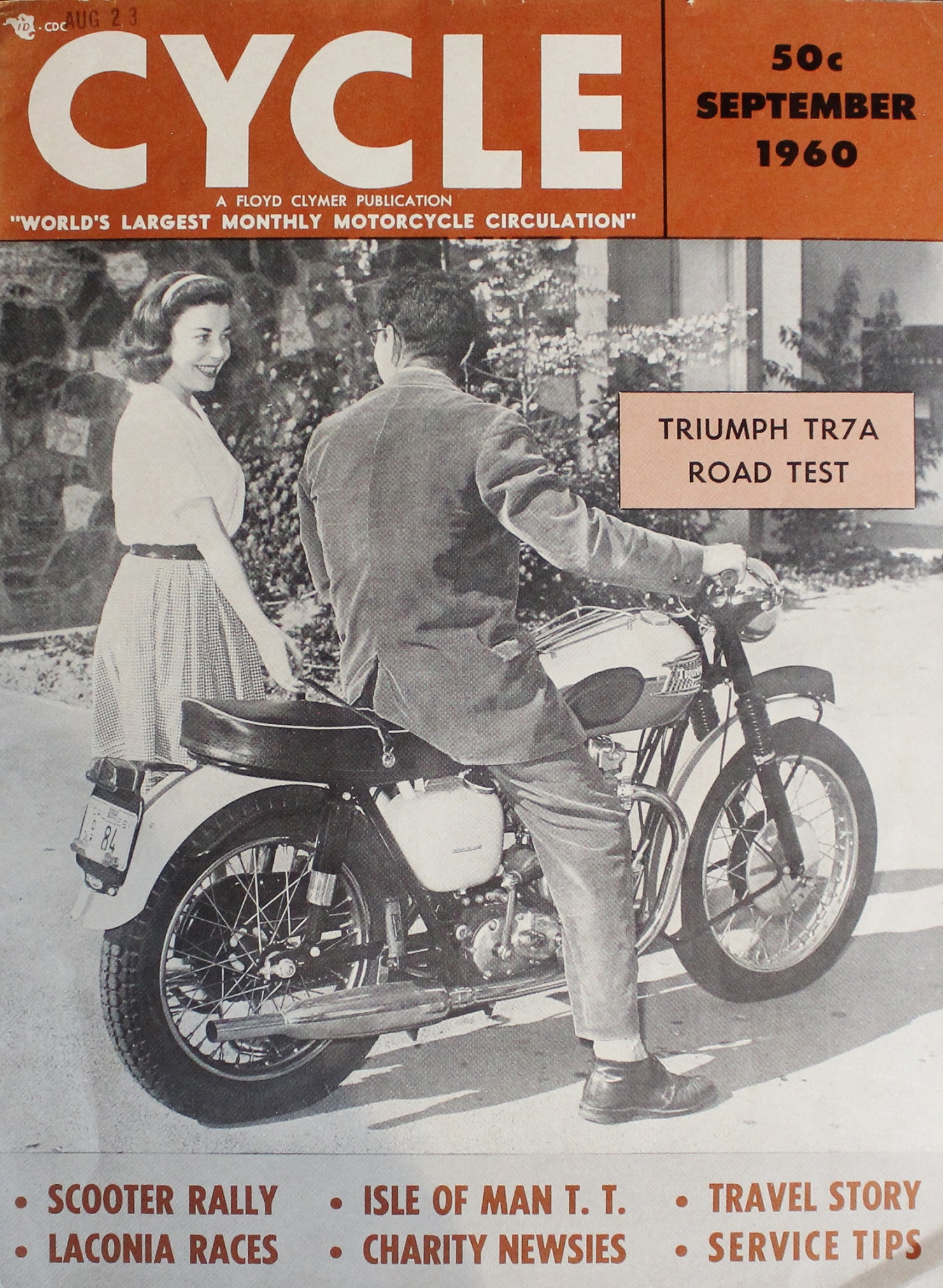
A road test for the 1960 TR7A Bonneville in Cycle Magazine.

The 1961 Catalogue Cover featuring Walt Fulton a successful Triumph racer.
1961 T100A and 5TA .
1961
Engine Frame Numbers H18612-H25251. (H24241)
| Models Covered | Standard | Police |
|---|---|---|
| 1961 Triumph T90 | 1 | |
| 1961 Triumph T100A | 1006 | |
| 1961 Triumph TR5AR | 462 | |
| 1961 Triumph TR5AC | 669 | |
| 1961 Triumph 3TA | 2995 | |
| 1961 Triumph 5TA | 1477 | 18 |
Sales for all Triumph Models for 1961
| 1961 | T20 | T20S | T20T | T20SL | 3TA | 5TA | T100A | TR5AR | TR5AC | 6T | T110 | T120R | T120C | TR6R | TR6C |
|---|---|---|---|---|---|---|---|---|---|---|---|---|---|---|---|
| Home | 7164 | 1 | 258 | 1262 | 1575 | 1171 | 1013 | 1251 | 1208 | 1326 | 475 | ||||
| Jomo | 56 | 189 | 155 | 193 | 14 | 14 | 12 | 75 | 350 | 22 | 44 | 295 | 139 | 175 | 216 |
| Tri-Cor | 304 | 124 | 150 | 230 | 6 | 32 | 26 | 250 | 255 | 52 | 312 | 530 | 56 | 337 | 75 |
| Export | 2777 | 17 | 43 | 87 | 1401 | 371 | 72 | 135 | 24 | 522 | 322 | 345 | 34 | 123 | 27 |
| 10301 | 331 | 606 | 1772 | 2996 | 1588 | 1123 | 460 | 629 | 1847 | 1886 | 2496 | 229 | 1110 | 318 |
The 1961 Catalogue Cover Artwork shown above originates from a photograph taken earlier showing Walt Fulton on a racing machine with two women feeding seagulls. The composition of the photograph is translated into the artwork above but the machine featured is very different, most triumph artwork until 1967 uses this technique which makes the images of machines used especially accurate.
Sales of the various Cub Models remain strong especially in England, again there is growth in the US Market.
Sales of the 3TA, 5TA and T100A remain poor in the US market but the new sports models show promise.

The 1961 Model T100A being attractively displayed at the Earls Court Show, November 1960.
The Factory records show that a number of machines produced after H24241 were converted to 1962 Specification, this includes 73 5TA’s and 177 T100A’s converted to 3TA’s these machines retain the original T100A Frame and Engine numbers although new engines were fitted. If your machine falls within this group it is vital that you consult the factory records held by the VMCC or TOMCC to confirm the model and specification.
For 1961 the 3TA, 5TA and the Tiger 100A are joined by New Models for Export only, the TR5AC and TR5AR; most of these destined for America.
The TR5AC features a rubber mounted small competition petrol tank, Trials Universal Tyres 3.25-19 Front 4.00-18 Rear, Wide ratio Gears, Direct lighting, Energy Transfer Ignition without battery, detachable headlamp and Siamesed exhaust system terminating into a slightly upswept silencer.
On early batch machines the small Tank is held in place by a rubber band strap which is later replaced by the four Shouldered Bolts and Rubber Bushes seen on all later tanks.
See Below for more details.
To Confirm the Specification refer to the Supplement to the Parts Book No:4 as this details the sports models which have four versions for 1961-62
This important document is essential for restorers of these USA models.
The TR5AR features the larger (standard) petrol tank, ET Ignition, with a battery fitted, a standard gearbox, 19 inch front wheel with Ribbed Tyre and 18 inch rear Universal. Twin low level exhausts are fitted. The TR5AR is illustrated below.
Both the TR5AC and AR are not fitted with the left hand side ‘Side Panel’ as this is not introduced as yet. Both models show the unusual looped rear mudguard stays which are seen on the 1962 Home Market T100SS.
Note that the Engine Number will show TR5R or TR5C rather than the code TR5AR or AC.
Both the TR5AC and TR5AR are recorded as not being fitted with the roll on centre stand.
All models feature a new head lug angle frame (H4849) introduced to cater for the sports models, this has a slightly increased trail.
The frame will show the brackets associated with the pannier fittings, these are usually hidden under the Bathtub but are seen on the early US TR5 models.
All models in the range are now fitted with the re-designed ‘Floating Shoe’ brake, this has a hardened steel slipper between the light alloy shoe and the fixed spindle. The chromed hub remains relatively plain as before.
Pre 61 brake shoes will not fit the new assembly but later shoes will fit the early brake plate assembly.
Forks … All models in the Triumph range now have Aluminium Spacer Sleeves replacing the rolled steel components previously used.
The T100A receives new high performance camshafts and a slightly larger 1 inch Carb (376/273).
The export models also seem to show the first use of the Pancake air filter which becomes common later on the other models.
All models use a common inlet manifold but with a variety of insulating blocks and gaskets to suit the carburettor sizes used, refer to the parts book !
Later versions of the Parts Catalogue show differences in Clutch Components between Sports and road Models, I expect that as for the 1960 models the T100A will have the clutch assembly with two more plates and the components to fit these.
The Clutch Components introduced this year continue to be used across the range until 1967 and there are detail differences between the clutch parts fitted to the 3TA and other models, care needs to be taken when identifying these parts, do not assume that what you have is appropriate for your restoration.
For example, there are two versions of the clutch basket, clutch centre, spring cups, springs, bolts and the operating rod.
The 5TA and T100A have the Gearbox sprocket reduced in size (19t) to improve acceleration.
The T100A TR5AR and TR5AC all gain a Torrington Needle Roller Bearing on the gearbox layshaft.
This is the same bearing as the 650’s use and is fitted only to the Inner End. It can be fitted to earlier “C” range Twins if the layshaft gears are replaced with the 1961 type.
Part Numbers T1650 18T Standard Ratio and T1616 17T Wide Ratio.
From H22430 the complicated ET electrical and ignition system of the T100A is dropped and changed to match the standard coil arrangement used on the 5TA
Lucas supplied a conversion kit (Part Number 54006033) to convert ET ignitions to coil ignition.
Information in the Tri-Cor Bulletin 60/11 indicates that this change to Coil Ignition happens at H20000 but this does not match with T100A Production.
For the Export TR5 models the PRS8 ignition switch is located on the left under the nose of the seat, consult the Lucas Brochure for 1961 to view the items fitted.
The 3TA, 5TA and T100A continue with Low Level Exhausts. The T100A has less restrictive absorption type silencers (E4157-.8) with removable mutes.
The 3TA 5Ta and T100A continue with 17inch wheels on Dunlop WM2 Rims and all models in the range have the full width front hubs painted black, the home market models all are now fitted with 3.5 inch rear tyres, an increase in size for the 3TA.
All Road models show fore and aft fitting Stressed Petrol Tanks showing the centre seam covered with the chrome trim and the parcel rack.
The Petrol Tank for the TR5AC is new (2 3/8 Gallon no Parcel Grid) and attaches using rubber buffers to strips attached by specialised brackets to the frame.
Early 1961 TR5AC models from the first batch (October 1960) H18641 to H18790 may show the tank attached using a rubber band strap as indicated in the service bulletin of February 1961. The second batch from H21331 to H21547 (February 1961) and all TR5AC’s from H22800 (April 1961) should feature the later shouldered bolts, rubber washers and brackets indicated above. Tanks and fittings may have been changed under warranty.
The TR5AC is the first Triumph to feature the additional Bracing strut running from the headset to near the seat that becomes common to the range after 1965.
All models show the decorative chrome strips associated with the Tank Badges and the Knee Grips are the screw on version. The Smaller tank uses Knee rubbers taken from the Tiger Cub.
In ‘Motorcycle Sport’ of March 1965 is an extended article on the history of the ‘Trophy’ which shows a Factory Image of a TR5AC which does not show the tank badges.
And I have seen other period images which show the same detail.
UK Home market machines continue to be fitted with the Nacelle incorporating the Ignition/Lighting Switch (Lucas), Ammeter, Smiths Chronometric Speedometer and the Steering Damper. All machines feature the distributor though this is optimised internally for each model.
The 3TA, 5TA and T100A home and export machines all retain the Bathtub and Full mudguard illustrated above, while US versions of the T100A, 3TA and 5TA feature painted sports guards and higher handlebars with longer appropriate cables.
I am uncertain as to the diameter of the handlebars and the controls fitted to the export machines. All the other British manufacturers had by this time standardised on 7/8 inch handlebars with controls to match while Triumph used a variety of bars and spacers on the various models in their range. The Picture of the Paris Show TR5AR (H18612) seems to show ball ended levers!
On the new sports mudguards (fenders) the stay arrangement is as illustrated with only a single stay on the front guard and the curved stay fitted to the rear. This rear stay is a rare part to find if not already fitted to your machine.
All models retain the all black dual seat with white piping except that the TR5AR and TR5AC do not show the small lower skirt of the bathtub models and in the factory photographs the frame loop is visible.
The Sponge Toolholder on the Bathtub Models is replaced by a Tool roll containing fewer items, this tucks between the battery and the oil tank in a fabricated holder.
The horn is the Lucas HF1950 version look for the Lucas date code on the back.
The Restored TR5AR (TR5R H22747) in the Barber Museum (Alabama) shows the horn attaching to the bracket associated with the small forward chain guard
This location for the horn continues for the non-Nacelle models until sometime during 1964 when the horn is re-located forwards.
Colours for 1961
3TA Shell Blue Sheen with Gloss Black Frame, Hubs and Ancillary Parts, Silver Sheen Cylinder Fins
5TA Ruby Red Overall including Hubs, Black Number Plates, Matt Black Cylinder Fins
T100A Black over Silver Sheen, Gloss Black Frame, Forks, Hubs and Ancillary Parts, Silver Sheen Cylinder Fins
TR5AR and AC Kingfisher Blue over Silver Sheen, Gloss Black Frame, Hubs and Ancillary Parts, Silver Sheen Cylinder Fins
For paint advice in the UK I recommend you approach John Chritchlow at www.msmotorcyclesuk.com
In the USA the contact for Paint advice is Don Hutchinson at www.hutchinsoncycle.com
Extras include QD Rear Wheel at £ 3/16s/0d, Prop Stand at 19s/11d and Pillion Footrests at 19s/11d
Parts book 4 covers machines from H18612 (September 1960) to H32464 (all 1964 machines), it is printed in December 1961 and therefore needs to be consulted with care.
To view the Triumph Parts books use this link to Classic British Spares www.classicbritishspares.com and use the Parts Book library Tag.
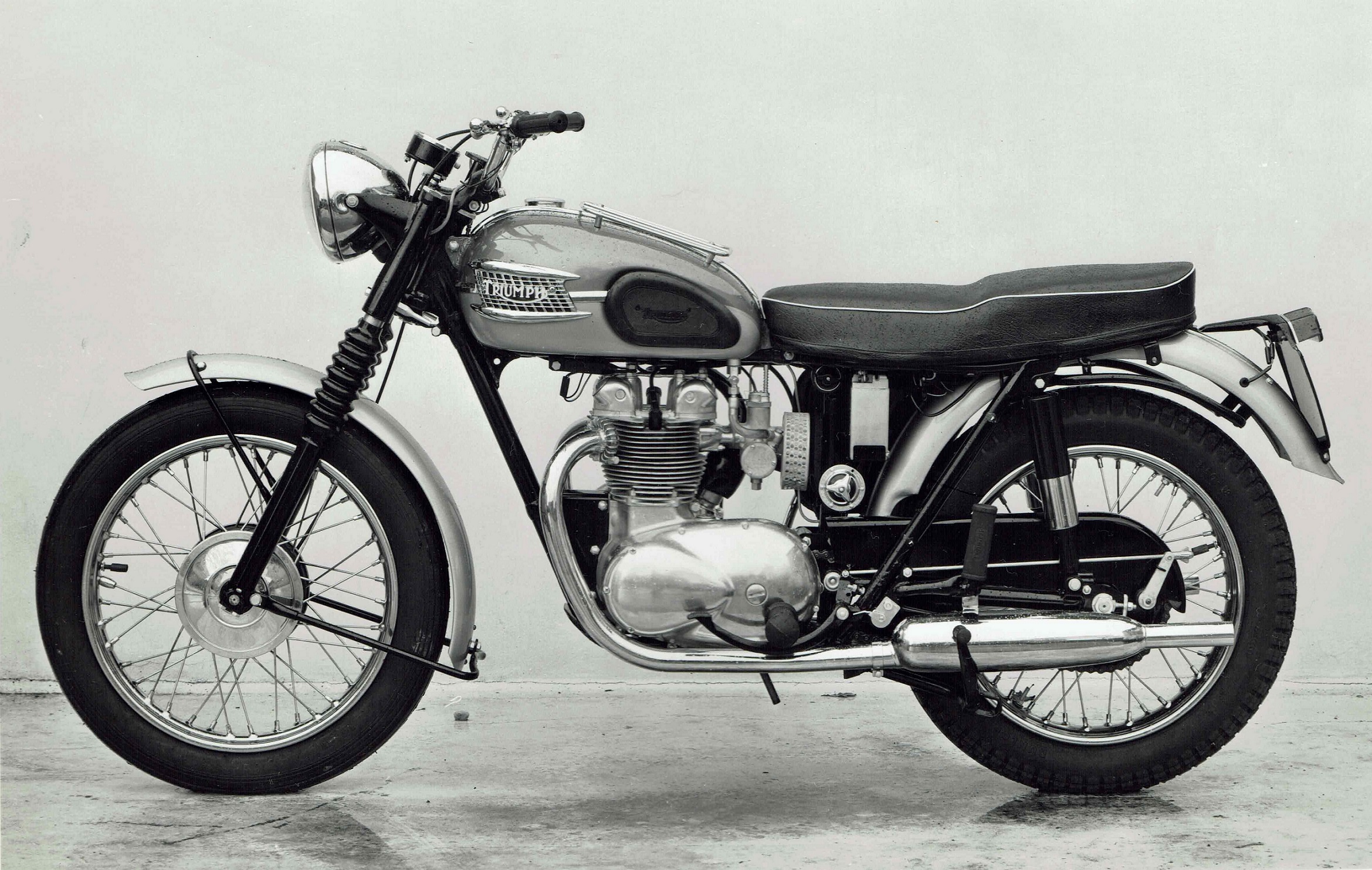
A relatively rare model showing for the first time the Sports Styling
soon to be introduced across the range.
Notes for 1961
This is a summary of the engine modifications made during 1959 and the models that they apply to/from, these details are taken from the Factory Engine Build Records
H18638 Timing gears ‘Crown Shaved’ to reduce noise and wear from here
H22430 Battery and Coil Ignition Replaces AC Ignition on T100A and TR5A/R Models
H23348 Low Gear Bush ‘Pegged’ on all engines from this number
H25128 Alternator Grommet modified to E4144
Engines H23394 to H23474 have alternator stud holes tapped CEI instead of BSF in error!
With the introduction of the sports models increasing care needs to be taken with identifying parts, as from here onwards the specifications applied to the nacelle models differ in several areas. Study the parts book (No: 4) carefully and note that the images are only a guide.
Consult the Parts Book Supplement to confirm the specification applied to the TR5AR and TR5AC as four specifications are applied
TR5AR with ET Ignition up to Engine H21122
TR5AR with Coil Ignition from Engine H21123 (Feb 1961)
TR5AC with ET Ignition up to Engine H25251 (All 1961 Models)
T100SC with ET Ignition from Engine H25252 (Start of 1962 Production)
This fascinating document is essential for restorers and parts identification.
The rare 1961, 16 page USA Catalogue details the specifications for all models in the range with the note that “specifications are subject to change without prior notice”.
For 1961, Production begins on the 1st September 1960 with machines for the Paris and Earls Court Shows with main production commencing with TR5AC’s and AR’s destined for export.
Destinations include Singapore, Malaya, Canada and Australia with most of these models going to the USA to either Johnson Motors of Tri-Cor.
1960 Show Machines. Note these are 1961 Models The Earls Court Show was held on the 12th November 1960
H18111 Paris Show 5TA sent to Terrot on the 21st September 1960 (This Machine Survives)
H18612 Paris Show TR5AR sent to Terrot on the 21st September 1960 (See Image in Roy Bacons T90 and T100 Booklet).
H18613 Paris Show T100A sent to Terrot on the 21st September 1960
H18627 Earls Court Show 5TA, this machine is retained in the works showroom eventually going to Aberdeen in May 1963
H18628 Earls Court Show 5TA dispatched to Ceylon in December
H18629 Earls Court Show T100A is eventually re-stamped H26201 (5TA)
H18630 Earls Court Show T100A which is sent after the show to Hallens of Cambridge, Union Lane, Cambridge
H18631 Earls Court Show T100A which is sent after the show to Harveys of Lambeth. (This Machines Survives)
H18632 Earls Court Show 3TA this machine is recorded as dispatched in January 1961 but the destination is not recorded.
H18633 Earls Court Show 3TA which is sent to Decat, Belgium
H18634 Earls Court Show 3TA this machine is retained and registered 104 CUE eventually being sent to Hitchcocks of Folkestone in January 1964
H18635 Earls Court Show TR5AC Machine sent to Tri-Cor
H18636 Earls Court Show TR5AR machine sent to Johnson Motors
H18637 Earls Court Show 3TA (Standard Finish) Williams of Worcester
H18638 Earls Court Show 5TA (Standard Finish) Sid Morams, Wexham Road, Slough
H18639 Earls Court Show 5TA (Standard Finish) J.E. Clarkson, Chapel Street, Carlilse
H18614 is recorded as a T100A built on 1st September 1960 to 1961 Specification and may have been sent with the other machines to the Paris Show but its destination and dispatch date are not recorded.
The TR5AC (565 AAC) shown in the Triumph Range Details for 1961 is in fact a 1959 model 5TA converted by the competition dept.
H18644 TR5AC is possibly a Press/Factory Bike
H18807 TR5AR is possibly a Press/Factory Bike, the records indicate that this machine is dismantled in December 1961.
H21441 a 3TA, H21442 a 5TA and H21443 a T100A are recorded as being built for the factory showroom.
H21442 becomes the Prototype Tiger 90 this machine is eventually sent to Hitchcocks of Folkestone in November1962 Obviously for sale as a 1963 model Tiger 90.
H24122 a T100A becomes Roy Peplows Trails Mount 612 BFD (See Notes for 1960) This machine was used regularly by Roy over several years and you will find original images of this famous and much modified bike in the period literature and books on Trials. You could consider building a replica if you have a suitable period engine (post 1963) and frame without the tinware required to finish a bathtub model. Photographs of this machine from the Peter Howdle Collection can be viewed on the British Only Austria website. Roy’s machine in its current form shows many later parts and features such as side points (1963), later forks (1964), concentric carburettor, later electrics etc as befitting a competition machine.
For images of the Factory TR5AR and AC look for the pictures on page 64 and 65 of Lindsay Brooks excellent‘Triumph Motorcycles in America’ ISBN 0-87938-746-7.
The new Triumph Motorcycles in America ISBN 978-0-7603-5328-8 uses different images but on page 74 you will find a Factory Image of the TR5AR
Many of the images used in the book are the property of David Gaylin who acquired them along with other material when the Triumph Corporation closed in 1975.
A Picture of the Paris show Machines can be found in Roy Bacons Book on the Tiger 90 and 100, along with an image of Bill and Ginny Dorresteyn on their TR5AR’s.
These images are available through Jane Skayman at Mortons Media
The Triumph Range Detail can be found in Motor Cycling and Motor Cycle both of the 6th October 1960.
Motor Cycle (The Blue un) and Motorcycling (The Green un) published details of the major manufacturers new ranges to coincide
with the Earls Court Show. Look for the various videos of the shows that show up. (search British Pathe or Gaumont News).
In early 1962 Motor Cycling changes to a newspaper format making copies today much more difficult to find.
In “Motorcycle Mechanics” April 1961 there is a brief 5TA test with one rather small photograph.
At Daytona in 1961 on the International Speedway Course, Don Burnett finishes 2nd, the bike is a modified unit 500 and a good image is shown in the US Catalogue.
A 1959 Tri-Cor 5TA (H9566) was raced at Daytona in 1961 ridden by Richard Clark, coming in 6th place behind Bart Markel. Richard was a well-known Flat-Track rider, three times South East Region champion. The machine survives and is in restoration. It’s earlier history is unknown.
Richard is also successful at the Columbus Half-Mile, 20 lap national, coming in 6th.
For more information look for Gregory R Pearsons “The Complete Grand National Championship Volume 1”. This excellent book contains the results for all of the USA National Races from 1954 to 1969 with numerous pictures. A must have book for USA race fans.
TR5AC’s are successful in US competition in the famous Jack Pine, Buckhorn and Sandy Lane events, in the hands of Bill Baird, Lewis Atkinson and Norm Smith
Refer to the 16 page 1962 USA Catalogue for details of competition successes with additional photographs as below.
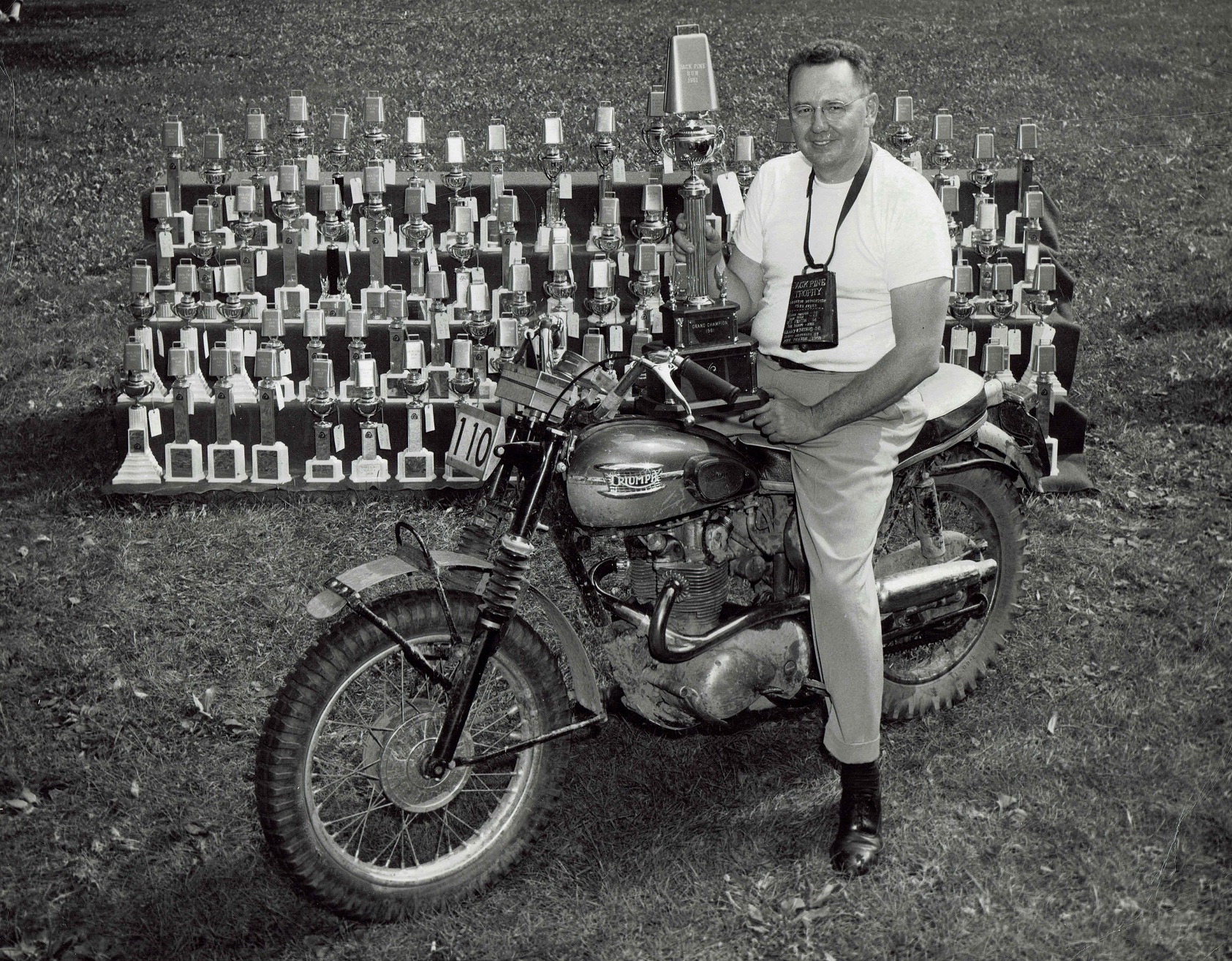
For an excellent report with images look for the May 1961 copy of American Motorcycling.
This image above features on the Cover of American Motorcycling October 1961 which contains an extensive report on the event with many famous Triumph riders involved.
Copies of American Motorcycling from January 1955 can be viewed via Google Books are an excellent resource for motorcycle historians.
For 1961 the ISDT (International Six Days Trial) is held at Llandrindod Wells, Wales between the 2nd – 7th September 1961.
Look at the superb site www.speedtracktales.wordpress.com for details on the ISDT including many previously unpublished photographs.
In the Motor Cycle of 21st September 1961 is an article and pictures on Johnny Giles ISDT T100SS (230 CAC), The machine was converted several times for other purposes. Johnny indicates that the machine was returned to Triumph after its competition life was over.
The “Motor Cycle” of 19th October 1961 gives the Triumph Range detail and several pictures, including a shot of 230 CAC
Three Triumph 500cc machines were entered in the ISDT ridden by Johnny Giles, Roy Peplow and Gordon Blakeway.
In the Dutch Silver Vase B team is G.J. Wassink riding a 500cc Triumph
Have a look at the pictures of Gordon Blakeways machine using this link . www.stilltimecollection.co.uk pictures abe910 and abe911.
Johnny indicates that machines after selection from the assembly line; were rebuilt by Henry Vale in the Competition shop and that the riders were discouraged from tampering with them. Roy would often collect his machine early and then use the additional time to check the machine and to practice repairs.
Generally for the ISDT the smaller capacity machines were considered the short straw! Johnny himself preferring the 650’s, for Trials the factory favoured the Tiger Cub over the ‘C’ range machines.
For excellent pictures of the Triumph competition machines and others look for Andy Westlake’s ‘Off Road Giants’ by Veloce Publishing ISBN 978-1-84584-190-4
The factory records seem to indicate these machines ….
H18807 (TR5AR) 119 CAC is Roy Peplows IDST machine. Eventually dismantled and the number deleted.
H18859 (T100A) 120 CAC is Gordon Blakeways ISDT machine Sent to Hughes on 4th Dec 1961
H18614 (T100SS) may be 230 CAC Johnny Giles Machine
For interesting images look up President Kennedy’s visit to Ireland in June 1963 featuring 5TA Police Machines.
Copies can be purchased from the Irish Photo Archive at www.irishphotoarchive.ie
I believe that the bikes featured are 5TA’s H24498 to H24505 supplied unassembled in August 1961.
Retail Prices for UK and Northern Ireland for 1st September are
3TA £ 234/0s/3d
5TA £ 243/13s/3d
T100 £ 250/18s/0d
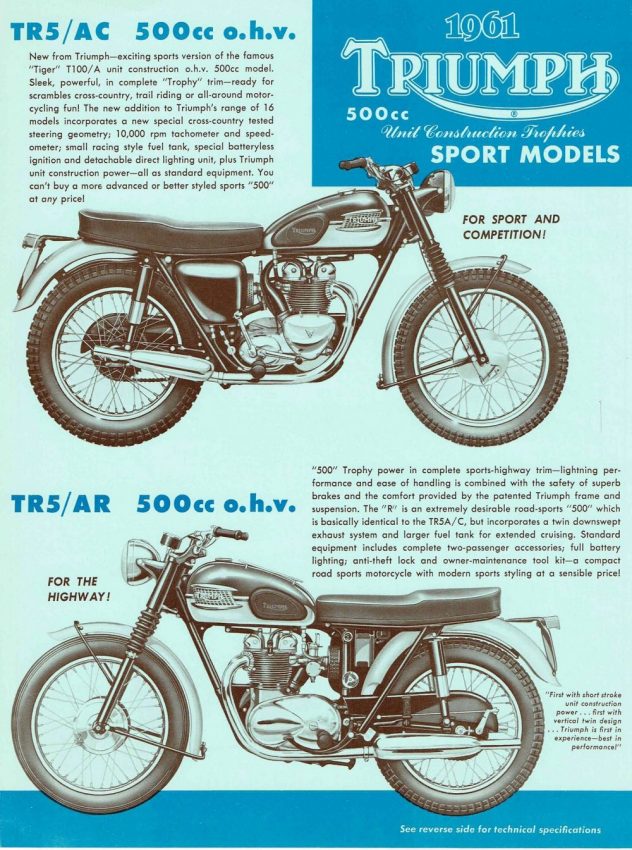
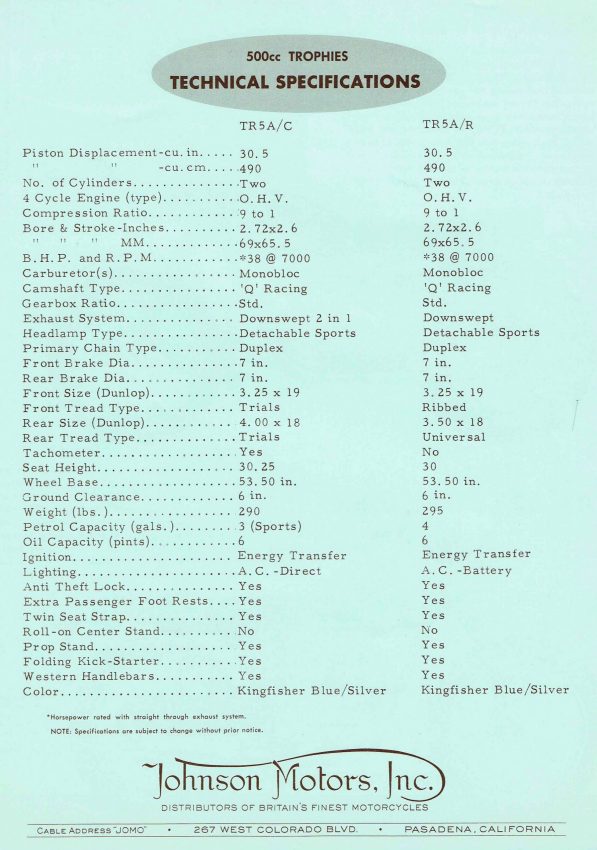
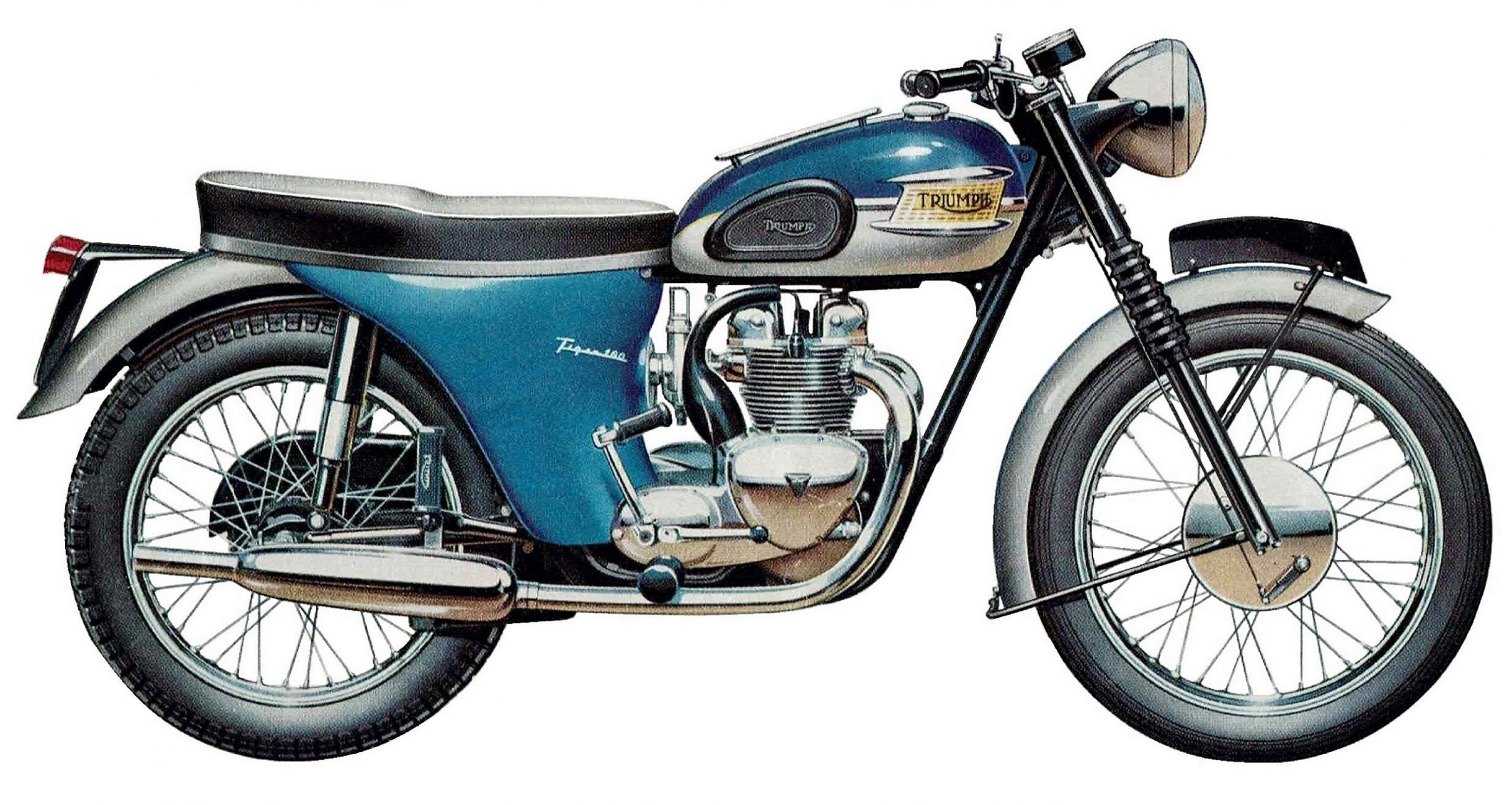
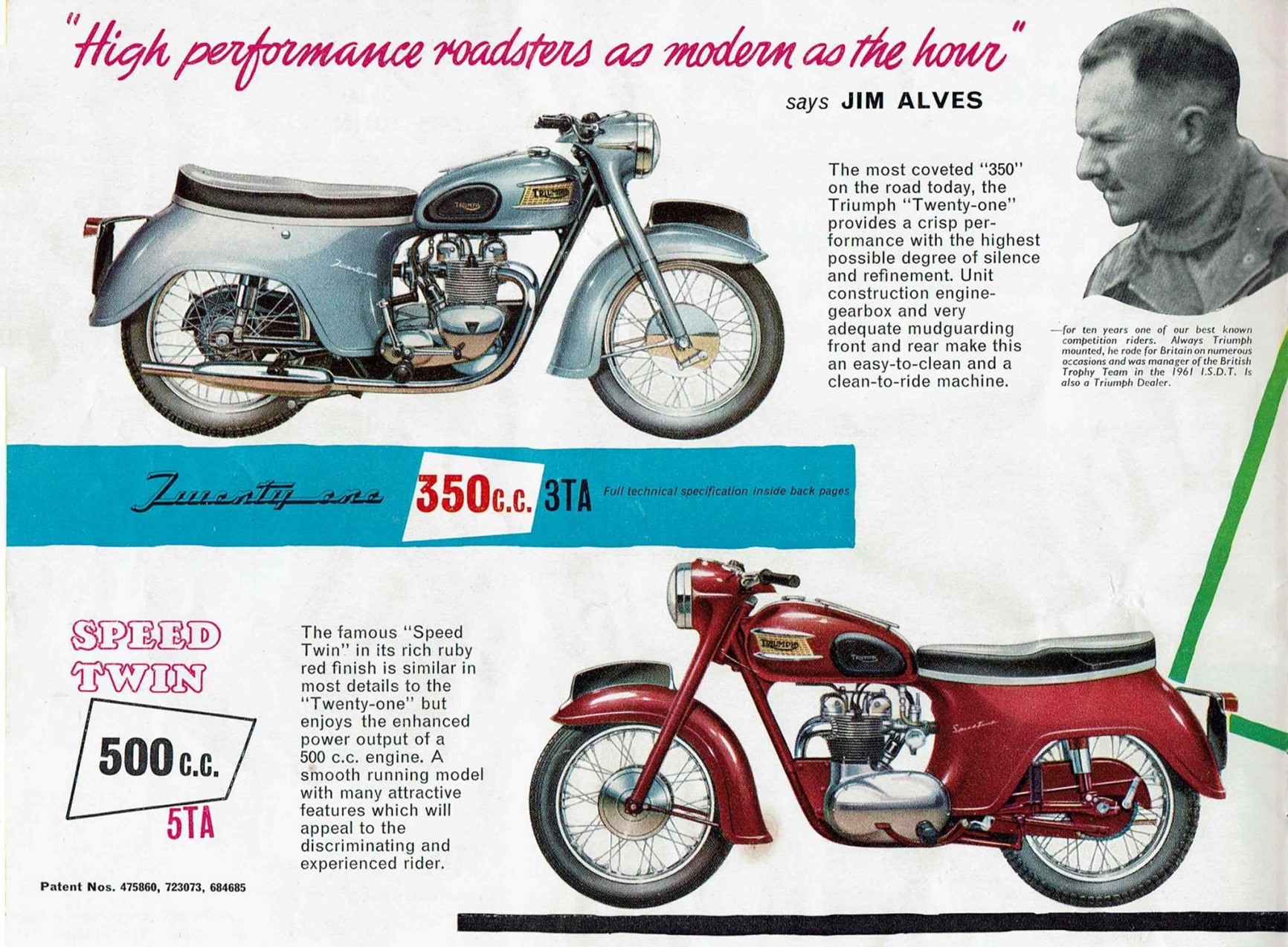
| Models Covered | Standard | Police |
|---|---|---|
| 1962 Triumph T90 | 1 | |
| 1962 Triumph T100A | 6 | |
| 1962 Triumph T100SS | 1470 | |
| 1962 Triumph T100SC | 424 | |
| 1962 Triumph T100SR | 13 | |
| 1962 Triumph 3TA | 2139 | |
| 1962 Triumph 3TAP | 23 | |
| 1962 Triumph 3T | 48 | |
| 1962 Triumph 5TA | 343 | |
| 1962 Triumph 5T | 7 |
1962
Engine Frame Numbers H25252-H29732.
Sales for all Triumph Models for 1962
| 1962 | T20 | T20S | T20T | T20SS | T20SL | T20SH | TS20 | TR20 | 3TA | 5TA | T100A | T100SS | 6T | T110 | T120R | TR6SS |
|---|---|---|---|---|---|---|---|---|---|---|---|---|---|---|---|---|
| Home | 2671 | 41 | 12 | 35 | 580 | 16 | 163 | 1737 | 342 | 53 | 716 | 335 | 18 | 572 | 191 | |
| Jomo | 98 | 1 | 415 | 1 | 422 | 143 | 1 | 541 | 387 | |||||||
| Tri-Cor | 170 | 254 | 20 | 486 | 158 | 819 | 498 | |||||||||
| Export | 1883 | 9 | 102 | 10 | 8 | 9 | 509 | 163 | 7 | 185 | 548 | 81 | 343 | 117 | ||
| 4822 | 10 | 41 | 783 | 45 | 581 | 24 | 172 | 2246 | 525 | 60 | 1809 | 1184 | 100 | 2275 | 1193 |
1962 and “You Meet the Nicest People on a Honda” is released, signalling a change in the market for motorcycles.
The Sales figures for the T100SS include the T100SC and T100SR Models with T120R figures including the other T120 Models.
In 1962 Triumph sales crash to 15800 units from a peak of 28000 in 1960 and 1961 with the loss in sales confined to the Home Market. I believe that this is due to new Purchase tax rules introduced by the Conservative Government in the 1961 Budget, together with the recent free trade agreement signed with Japan which removes tariffs on a selection of consumer goods including motorcycles.
With the production figures above you can start to appreciate the difficulty in identifying the specifications applied, especially for less common models while the sales figures for the period do not use the same model codes and show discrepancies in numbers. The accounting period for sales is August 1st to July 31st while production for 1962 begins on the 5th September 1961. All of the production figures quoted are from my work with the factory records and do not include all the recorded models for that year, service engines or unused numbers. The Sales figures are compiled from the surviving Account Ledgers held at Warwick University Modern Records Centre.
For 1962, 1964 and 1965 all T100SS, SC and SR machines are recorded in the ledgers as T100SS models.
Always confirm the original destination of your machine before starting restoration.
First year of Tiger 100SS, SC and SR production, the model succeeds the Tiger 100A which is discontinued.
Major changes from the T100A include an increase in wheel sizes and the first use of the Bikini type fairing to replace the unpopular Bathtub.
Though 1962 production begins with H25252 a number of 1961 machines from H24241 are converted to 1962 specification.
Many Early T100SS machines from H25502 to H25903 will have converted engines taken from T100A’s from late 1961 production.
The T100SS engine retains the distributor of the other models in the range but benefits from new valve sizes. All the T100 Models now feature the Performance Camshafts and 1 inch Carburettor introduced to the T100A previously.
In the 1962 US brochure the models are described as T100S/C Triumph Enduro Trophy and T100S/R Tiger Road Sports.
US models featuring either energy transfer or coil ignition while UK models have only coil ignition. There are differences between the distributors and the ignition advance profiles for each model and variant in the range, these are detailed in the 1962 Lucas Brochure for Triumph’s.
The 1962 SC models were supplied initially with an incorrect alternator rotor, new parts and dealer instructions are described in Triumph Bulletin 227.
Triumph Bulletin 229 gives the ignition timing for the various models in the range fitted with ET Ignition. The VMCC will be able to provide a copy.

Notified changes to the specification applicable to the 3TA and 5TA are, new gearbox cover, the removal of the steering damper, distributor sheath removed, canvas tool roll, the removal of the petrol tank styling strips and either siamesed or twin exhausts as requested. Compare the photograph to the catalogue images and will note some of the changes on the illustrations above.
All Models … On the Crankcase the oil pressure relief valve retains the ‘Tell Tale’ button to indicate oil pressure but the sealing arrangement now incorporates an O ring.
The forward engine fasteners show the domed heads common to the other models during this period while the cylinder head outer bolts are recessed as before.
The cylinder fins of most models are painted silver, only the 5TA has black painted cylinders.
From Engine H26707 Camwheels with three keyway slots replace the earlier single keyway, this allows fine adjustment to be made to the valve timing by advancing or retarding the cam wheel positions.
The four spring clutch is fitted, release operation is by screw thread, while the clutch cable shows the improved arrangement to facilitate cable changes introduced this year, note the cable runs through the rubber weather proofing cover for the distributor; which somewhat negates the easy cable changing in the gearbox cover!
Police models feature alternate heavier clutch springs.
When the Clutch Cable breaks the end is often lost into the gearbox and not retrieved, it is not unusual during a restoration to find at least one cable end and nipple at the bottom of the outer gearbox housing. Due to the generally poor lubrication of the change mechanism and the ability for moisture to enter and pool in the lower part of the outer gearbox it is worth removing this cover periodically to assess and lubricate the mechanisms.
Gear ratios for the T100SS model suit its sporting pretensions 5.33/1… 6.34/1… 9.37/1… 12.96/1 these are achieved by reducing the gearbox sprocket to 18 teeth.
The gearbox Layshaft is supported as on earlier sports models, with a needle roller bearing at the inner end and a plain bush within the kickstart pawl. The 3TA and 5TA continue with plain bushes.
The varying models in the range share gearbox internals together with common engine sprockets and clutch sprockets the overall gearing is affected by the ratio between the gearbox sprocket and the rear sprocket. Rear sprockets for 1962 are 43 teeth while gearbox sprockets vary model to model (18t 3TA T100SS, 19t 5TA)
The T100S/C can feature wide ratio gears, the factory records indicate which machines were supplied as such.
The front hub is painted Black on all models, on the right is the 7 inch single leading shoe plain brake-plate, containing the floating shoe arrangement for the period. The brake cable stop is attached as before to the right fork slider where the lower mudguard stay attaches.
This stay is designed to pivot to act as a prop to ease removal of the front wheel the fasteners used here to attach the stay are specialised, shouldered so that they do not need undoing to allow the stay to pivot.
For the T100SS, SC and SR the front wheel is a 19 inch Dunlop WM2 Rim, while the rear wheel is 18 inch Dunlop WM2 rim. Tyre fitments vary depending on the model. The Tyre profiles of road machines resemble the current Avon Speedmaster’s while the T100SC models are illustrated with appropriate off road tyres. Both Avon and Dunlop were suppliers to Triumph.
The 1962 T100A, 3TA and 5TA continue as before with 17inch wheels, the Bathtub and Full front mudguard.
The T100SS takes the styling and parts from the 1961 Export TR5AR and AC to replace the Nacelle, the headlamp now supported on the early elegant fork shrouds, while the forks now feature rubber gaiters. Overall the design of the fork internally is unchanged from the touring models but the steering stop arrangement changes to the cadmium plated extended fasteners used to clamp the fork stancions. Look for Motor Cycle 12th January 1967 for a detailed fork overhaul article with an excellent illustration. The 3TA and 5TA retain the steering stop arrangement from before.
The 1961 US models provide the slim front mudguard, supported underneath by a bridge and forward by a single stay wrapping over the painted alloy mudguard. On the mudguard of UK machines is mounted a new simple plain curved number plate attached by two clips.
The rear mudguard of the T100 models show a raised central pressing and is supported by the curved stays of the pre-unit design, running from the upper shock absorber mounts back and underneath the mudguard, at the rear is the conventional six digit style number plate and rear light support.
Original Pressed Alloy number plates used in the UK have a distinctive style of script. The type of registration finish will depend on the practice of the dealer; some used adhesive letters, others, sign writing others embossed plates.
The rear light on all models including export versions is the Lucas 564 type, look closely at this for the Lucas part number; it incorporates a Red Reflector and clear panel for Number Plate Illumination.
The chromed headlamp shell (Lusas SS700P) features a quick release connector for the wiring and contains a Lucas motorcycle lamp unit, look for ‘Motorcycle’ imprinted in the glass, differing lamp units are supplied depending on the eventual market. The bulbs are pre focus main and pilot light. In the headlamp shell is the Lucas Ammeter (Black/Grey Faced 2AR) and no warning lights or switches are fitted. I believe that the QD wiring connector is replaced on home market machines during the year with the more common rubber grommet. Export models continue with the QD arrangement! Compare the illustrations above and below.
The Chronometric Speedo is the Smiths SC 5301/## 120 mph unit. The rev-counter if fitted is driven from the right of the exhaust camshaft using a special gearbox fixed to a modified timing cover. The rev counter is generally fitted to machines ordered by Tri-Cor (East Coast USA) while the 1961 illustrations only show the drive arrangement fitted to the T100SR model. The factory records detail most individual machines fitted with the rev counter.
The handlebars for the T100SS and export models are 7/8 inch diameter; attached to the malleable iron fork crown by a combination of brackets and spacers. The crown with its steering damper is the same as used on touring models, which feature 1in bars and the nacelle. New for UK machines is a low sports handlebar, flat with acute bends while machines destined for the USA continue to be fitted with a high style bar, these narrow diameter bars require new brake levers, rubbers and throttle twistgrip, this features a new throttle clutch, which cannot be adjusted on the move. The clutch and brake levers are plain and feature vertical clamps and sliding ‘One Finger’ adjusters. Page 59 of the Motorcycle Mechanics road test shows the bar in some detail.
On the 62 Test Machine the Horn Switch is on the right with the dip on the left of the bar, these are Lucas items, type 99 Dip Switch and 4A Horn Button. Later batches of machines do not have the QD headlamp and the horn/dip arrangement changes to the later Lucas 25SA combined switch, attached to the clutch lever by a specialised clamp.
In the USA most Riders of the SC models prefer to fit the Tri-Cor accessory handlebar #CD249, the Tri-Cor Bulletin of 15th August 62 describes preparing machines for the Jack Pine Enduro.
USA models are specified in the 1962 Catalogue (Tri-Cor) as having US Pattern handlebars with ball-end competition levers.
Handlebar rubbers for this period are the Amal type, quite thin and all the remaining rubbers (footrest, kickstart etc) will show the Triumph logo (most modern pattern rubbers do not have this detail)! The plug caps fitted during this period are by Lodge.
For 1962 on all models the exhaust pipes are siamesed on the right and terminate concentrically into a silencer supported by the right pillion footrest bracket. This is nicely illustrated above and in the 1962 T100SS road test. Machines home and export show the Small concentric entry silencer illustrated above and seen clearly on the test machine in several photographs. Later machines of all models may have the larger ‘Resonator’ silencer fitted, seen on 1963 machines this is derived from the silencer fitted to the 1962 Thunderbird.
Some machines are fitted with twin silencers and are recorded in the Factory Records, I am unsure if these are the specialised T100A type or the standard type fitted to the 3Ta and 5TA. The specification for the US T100SR indicates that twin exhausts are fitted but the illustration used does not show this feature.
T100SS. The single top tube frame retains the fore and aft fixing petrol tank of the other non-competition models; internally this features the strengthening beam (visible inside). The tank acts as a stressed member. Triumph; were aware that this stressed tank was weak and on the T100SC models had already fitted a frame brace and the later rubber isolated tank. Underneath the stressed tank on the right you will find the tyre pump fitted to brazed pegs. On the tank top is the chromed parcel grid and central strip covering the tank seam.
The Mouth Organ Tank badges show cream lettering and background detail while chrome styling strips run forward and back to cover the tank colour separation. The colour separation is shown on the illustration above. Shaped knee grips, monogrammed Triumph are attached by screws.
Note in the illustration below that the T100SC shows the small tank (without parcel grid) and so would seem to indicate the later four point fixing tank and frame brace. The smaller tank uses knee grips from the Tiger Cub.
From the illustrations above it can be seen that the 3TA and 5TA do not have the styling strips fitted.
The T100SS and SR Bikini, distinctive and new for this year is made from two simple pressings that enclose the frame, oil tank and the area under the seat. On the left panel located forwards under the nose of the seat is the combined Lucas Ignition and Lighting switch (Model PRS8). The bikini carries on both sides the Tiger 100 Script and on the right is the release for the seat.
On export (USA) machines the Bikini may not be fitted and these machines may feature the side panel, part number F5559, created from a mirror pressing of the oil tank.
I have seen a brochure image which appears to be a re-touched photograph from the 1962 UK Catalogue, (The Motorway Bridge with four figures and T100SS). This image shows the oil tank and no front number plate. No Images are available of the left side of the machine!
The pillion footrest brackets retain the tubular form of the earlier machines though I believe that during the year the later triangular brackets are introduced across the range.
All road models feature the ‘Easylift’ Mainstand though there are variations with or without extensions to suit the various wheel sizes. Refer to the parts book.
The USA T100SR and T100SC are shown without the mainstand fitted but the specification shows the T100SR as being fitted with one.
Refer to the Cycle World road test from August 1962 for images.
Police models can feature a special ‘Heavy Duty’ Stand (F4821) which was available as a spare part.
Some literature I have seen indicates that the footrest hanger brackets have been updated, on the earlier models the brackets are free to adjust and can become loose.
The later bracket incorporates a peg which locates against the frame fixing preventing the bracket turning, when obtaining new footrests look for this detail.
The stepped dualseat has a plain grey top with white piping and black sides, on all models this now features the small skirt previously absent on the TR5AR and AC. The seat hinges and is supported with a wire strap and gives access to the 6 volt battery, its carrier and the oil tank, all mounting on metal strips running across the frame attached by bushed rubber washers which provide a degree of vibration isolation.
The oil tank has a chromed filler cap with dipstick (Ceandess Ltd, Wolverhampton written underneath). The tank features a frothing tower / breather tube at the top rear, no oil drain plug is fitted but at the bottom is a simple gauze filter and return pipe arrangement including the T branch to the rocker feed.
Under the seat is also found the smaller Lucas multi plate rectifier (2DS506), attached to a frame bracket on the left behind the battery. Also here is stored the somewhat inadequate tool kit, retained in a small leatherette pouch tucked between the battery and oil tank.
Attached to the rear mudguard by a bracket is the Lucas MA6 coil, angled to allow the high tension lead to exit to the left, models fitted with energy transfer ignition use a Lucas 2ET coil located in the same position.
Tucked behind the left bikini panel is the Horn, I believe a Lucas 8H Unit (70163A-B and date stamped appropriately), while Energy Transfer machines use the HF1950 horn. The horn is held in a ‘Y’ shaped bracket that shares the frame attachment for the small front chain guard.
The brake light switch is attached to the frame near the mainstand and operated by an extended tang on the brake pedal as before.
The frame on the Press Bike shows additional brackets for fitting panniers as these are featured on the 3TA and 5TA model from the period but not visible
The 3TA and 5TA remain virtually unchanged for 1962 but do gain the general improvements detailed above.
Both lose the Steering Damper assembly and the resultant hole in the Nacelle is filled by a rubber grommet.
Colours for 1962 Tiger 100’s are Kingfisher Blue over Silver Sheen, Gold Lining, Gloss Black Frame and Forks, Black Hubs and Silver Sheen Cylinder Fins.
The stripe on the mudguards extends to the ends but only partially under the seat while the colour separation for the tank follows the illustration and is seen on all the bi-colour models for 1962.
Kingfisher Blue is a Translucent Finish and must be applied over silver sheen to obtain the correct colour (Triumph Bulletin 235)
The 3TA and 5TA generally retain the colour schemes from 1961
Paint colours and specification for the 1962 3TA after H29617 show most machines finished in Silver Bronze and fitted with Twin Exhausts, with late production period machines it is vital to consult the factory records to determine the original specification.
For paint advice I recommend you approach John Chritchlow at www.msmotorcyclesuk.com he is the recognised Triumph Paint expert and can supply the correct shades, scheme diagrams and instructions.
Parts Book No: 4 covers all machines from H18612 (September 1960) to H32465 (all 1964 machines) and needs to be used carefully when trying to confirm the specification for your machine.
To view the Triumph Parts books use this link to Classic British Spares www.classicbritishspares.com and use the Parts Book library Tag.
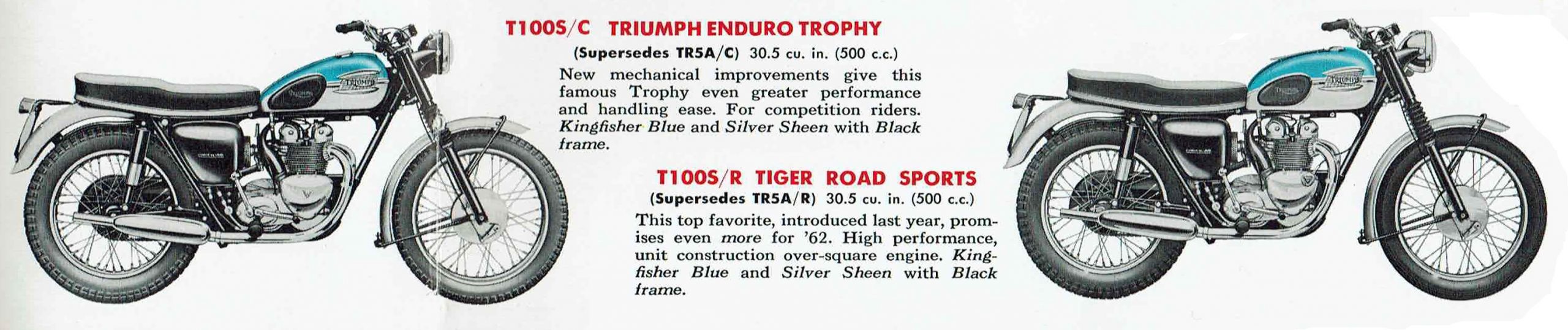
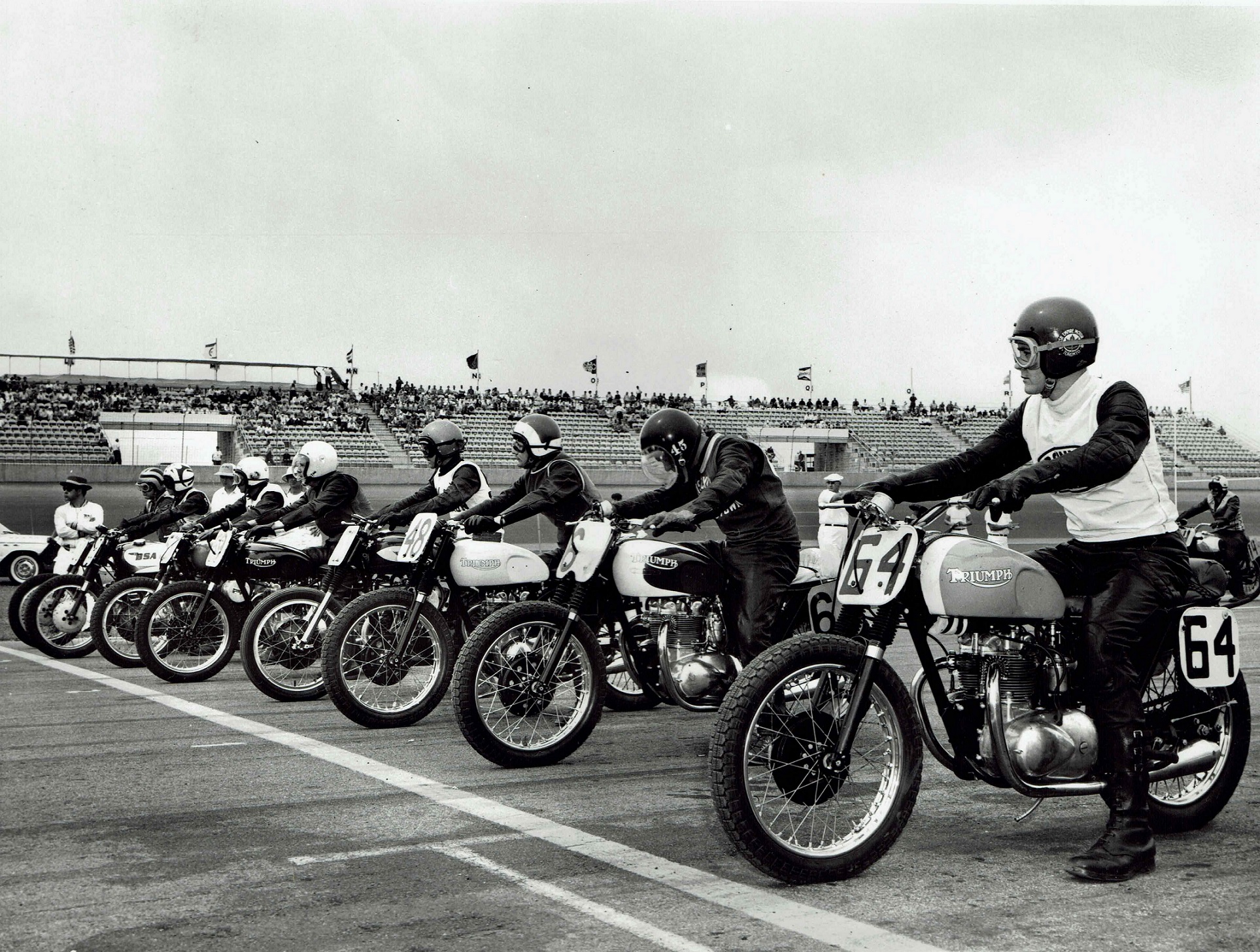
The Photograph above is featured in the period catalogue, note the modifications made to suit the class. If you have a project bike but not all the parts to complete a full restoration than a replica of a US dirt tracker or Daytona machine would make an interesting and enjoyable bike.
From 1962 Sales of the ‘C’ Range machines into the USA increase especially with the introduction of the better looking and versatile ‘Sports’ models. My conversation with US Triumph experts John Healy (former dealer) and Don Hutchinson indicates that machines supplied by Triumph into America were routinely modified prior to sale by the dealers to suit local tastes and conditions, some colour schemes were changed and gas tanks routinely replaced or stripped of badges and racks especially on machines sold for competition. Look for period Pictures.
Machines arrived in crates at the dealers only partially assembled, handlebars and levers, footrests, forks etc would not be attached and many of these parts were replaced.
Johnson Motors and Tri-Cor had already been producing their own ‘Triumph’ parts for several years such as Seat Rails and Screens.
If you are setting out to restore a US specification machine it is essential to obtain a copy of the Supplement to the Parts Catalogue No:4 published by Johnson Motors in June 1963. This contains details of all the parts that apply to the US Models along with an illustration of the small gas tank and fittings fitted from 1961.
Many machines were damaged in transit resulting in the need for parts to be substituted before the machines could be sold. It is therefore impossible to guarantee the sale specification of any US machine. Study the (US) Road Test photographs available in the period press carefully.
Various Factory Bulletins describe the Process of un-crating and preparing a machine for sale.
This is a summary of the engine modifications made during 1962 and the models that they apply to/from, these details are taken from the Factory Engine Build Records
H26450 New toggle clamp for distributor
H26707 Camwheels with 3 Keyways
1962 production begins officially with H25252 on the 5th September 1961. This number falls within a large batch of 3TA’s and other models, production beginning after a break on the 14th August 1961 with T100A’s H24283 to H24497. Many of these T100A’s are then converted to 3TA’s on dates between the 5th October and the 6th December and then sold in the Home market. With any machine numbered between H24283 and H25502 it is vital to consult the Factory Records to ascertain the specification.
Tiger 100SS production begins on the 9th September 1961 with a batch of 402 machines starting with H25502, dispatched to Wragg of Sheffield, this UK spec machine features Coil Ignition and a 19 Tooth Gearbox Sprocket. Much of the early production is destined for the Americas and equipped to suit with UK production and delivery commencing with H25760. Unusually there do not appear to be any pre-production T100SS’s
Note that the machines destined for the USA may not feature the Bikini fairing and may be to the 1961 TR5AR Specification.
H25900 shown in the Factory Dispatch Book as a T100SC retained in the Drawing Office and eventually sent to Elite in June 1963, the corresponding build book shows this machine as a T100SS.
H25861 (931 CAC) and H25900 (T100SC) appear to be the UK Test machines, H25900 is retained at Triumphs in the Drawing office and the Works Showroom, both machines are eventually sent to Elite Motors of Tooting.
100 Machines H26567 to H26666 are factory converted T100A’s. During this period further T100A’s are converted to 1962 specification 3TA’s and 5TA’s. The factory records for this period are confusing but a covering note exists detailing those numbers re-worked.
Production of the 1962 T100SS ends in July 62 with H29103, in total 1470 of this 1962 T100SS model are made in both home and export versions.
Total Production for the discontinued T100A is 3131 machines making this model in overall terms quite rare.
The 1962 US Brochure only illustrates the T100SC and T100SR though many SS models were sent there according to the dispatch records.
The Factory records are very confusing for this period and machines recorded in the Build books often show a different model designation than that shown in the Dispatch book and may differ again from the Model Code actually stamped on the engine and frame.
In addition, machines made sequentially on the same day and sent to the same customer (Tri-Cor) show differing order numbers which may imply a different specification.
It will be almost impossible to confirm the original specification for these machines unless you have original photographs to work from.
The excellent site at http://classicbike.biz/ has the complete US brochures available to view.
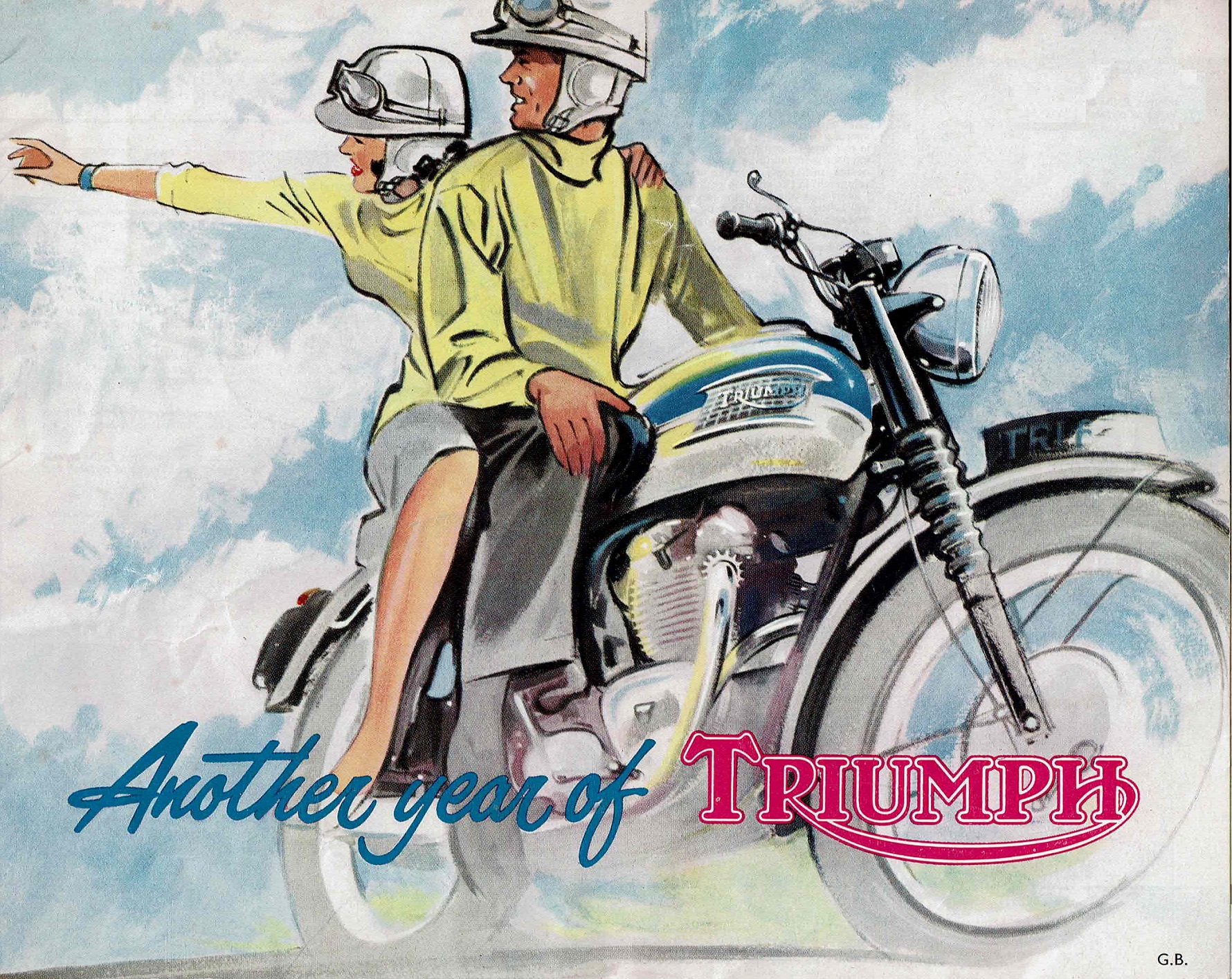
For information and pictures of the T100SS you need the April 1962 copy of Motorcycle Mechanics, this has an excellent colour front cover and test article on the well-known, 931 CAC (H25861), This machine is featured in many period photographs and an image of it is used as inspiration for the art cover of the 1963 brochure though a different machine is featured.
Mortons in their archive have a photograph of this machine obviously from the same set of negatives from Motorcycle Mechanics the image number is 3839918250.Paste this into the Mortons search box to take you to the image.
For a Pin Up shot look for the image of Karon Gardner seated on 931 CAC.

Cycle World of August 1962 has a road test of a T100SR with excellent photographs, essential for restorers. The Johnson Motors machine shows the early small tank, fitting using the rubber strap system that was changed for 1963.
Cycle World first published in January 1962 by Parkhurst Publishing are excellent magazines for restorers to collect as they frequently contain good quality photographs and numerous picture adverts, visitors to the Mid-Ohio Swapmeet will have met Dan Huff on his popular magazine stall.
Joseph Conrad (Joe) Parkhurst was inducted into the AMA hall of fame in 2001, read his citation via the AMA site http://www.motorcyclemuseum.org
The 3TA is tested in the Motor Cycle of the 26th July 1962 (509 CWD). This shows the bike on the cover with additional useful photographs in the article itself.
This article would be useful to any restorer of the other models in the C Range due to the detailed shots.

John Nelsons excellent book ‘Tiger 100/Daytona (ISBN 0-85429-489-9) covers in detail the US models with excellent photographs and data, a must have book!
Roy Bacons small book on the Tiger 90/100 is useful as it contains other images of the 931 CAC along with general details on ‘C’ range Machines.
For the 1962 ISDT held at Garmish-Partenkirchen (Austria) Gordon Blakeway and Roy Peplow are on 350’s (Tiger 90’s) while Johnny Giles, Roy Smith (H28967), Dick Clayton and Rohard Rolf (Germany) are on 500’s.
Gordon Blakeways machine H26228 (106 CWD) shows in the build record as a Tiger 90, in 1964 it is converted to 500cc.
Roy Peplows Machine H27606 (105 CWD) is recorded as a T100SS 350cc
Both these machines are registered were in April 1962 and pictured later in ‘The Motorcycle’ of 24th February 1966 in an article on Roy Peplow.
These machines survive but as usual with competition machines they show several later features.
I have had the pleasure to meet and interview Gordon Blakeway and Roy Peplow, Gordon was forced to retire from the ISDT as his machine was down on power with the clutch eventually failing. Gordons machine is later fitted with Engine H29984 (T90).
Roy and Gordon briefly swapped mounts at the ISDT to prove the difference between the bikes to Vic Fiddler, who was not amused!
Roy eventually went on to win a Gold Medal that he still has.
In Ivor Davies book ‘A Pictorial History of Triumph’ is a rarely seen picture of the team at the Welsh Three Day Trial in 1962
The Picture shows Roy on 105 CWD, Gordon on 106 CWD, Johnny on 119 CAC and Ken Heanes on an unidentified bike.
Look for the 1962 document by Johnson Motors/ Tri-Cor that details converting 1961 and 1962 models for class C Racing, it has all the information you need to build a replica American specification road racer or dirt tracker. A copy can be viewed via the French website etmoteur.fr

I am researching Don Burnett’s win at the 1962 Daytona 200, the first win for Triumph at this event, there is a nice article in the Daytona Beach Morning Journal of March the 5th 1962 visible via the internet. Other articles are visible via the AMA website at www.americanmotorcyclist.com or look for copies of American Motorcyclist online.
Several good images and information on these early unit racers are to be found in Lindsay Brooks and David Gaylins recent republication “Triumph Motorcycles in America”
By 1962 Tri-Cor are supplying a ‘Racing Kit’ for fitment to the 500cc machines together with a wide variety of camshafts and parts, refer to the 1962 Tri-Cor Brochure for detailed information. A small number of engines are rebuilt by both Jomo and Tri-Cor to race specification for “Customers” and stamped T100S/RR
For more information look for Gregory R Pearsons “The Complete Grand National Championship Volume 1”. This excellent book contains the results for all of the USA National Races from 1954 to 1969 with numerous pictures. A must have book for race fans.
If you are interested in the Triumph Competition Machines I advise you to obtain a copy of Claudio Sintich’s excellent Book on the subject.
‘Road Racing History of the Triumph 500 Unit Twin’ ISBN 978-0-9564975-0-5
Prices for 1962 are …
3TA £ 241/13s/11d
5TA £ 253/19s/4d
T100 £ 258/17s/5d
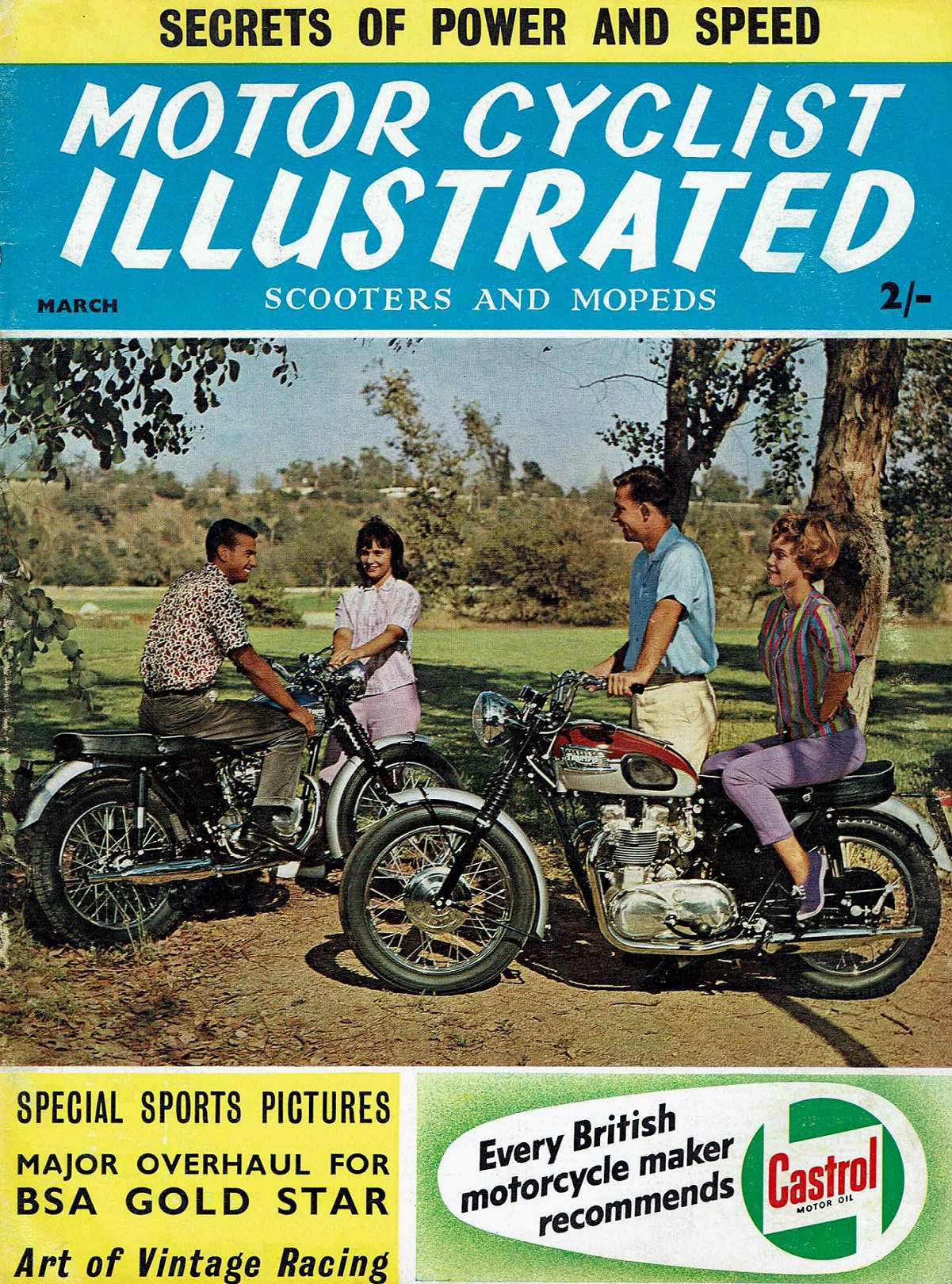
This rare copy is in the VMCC Collection.
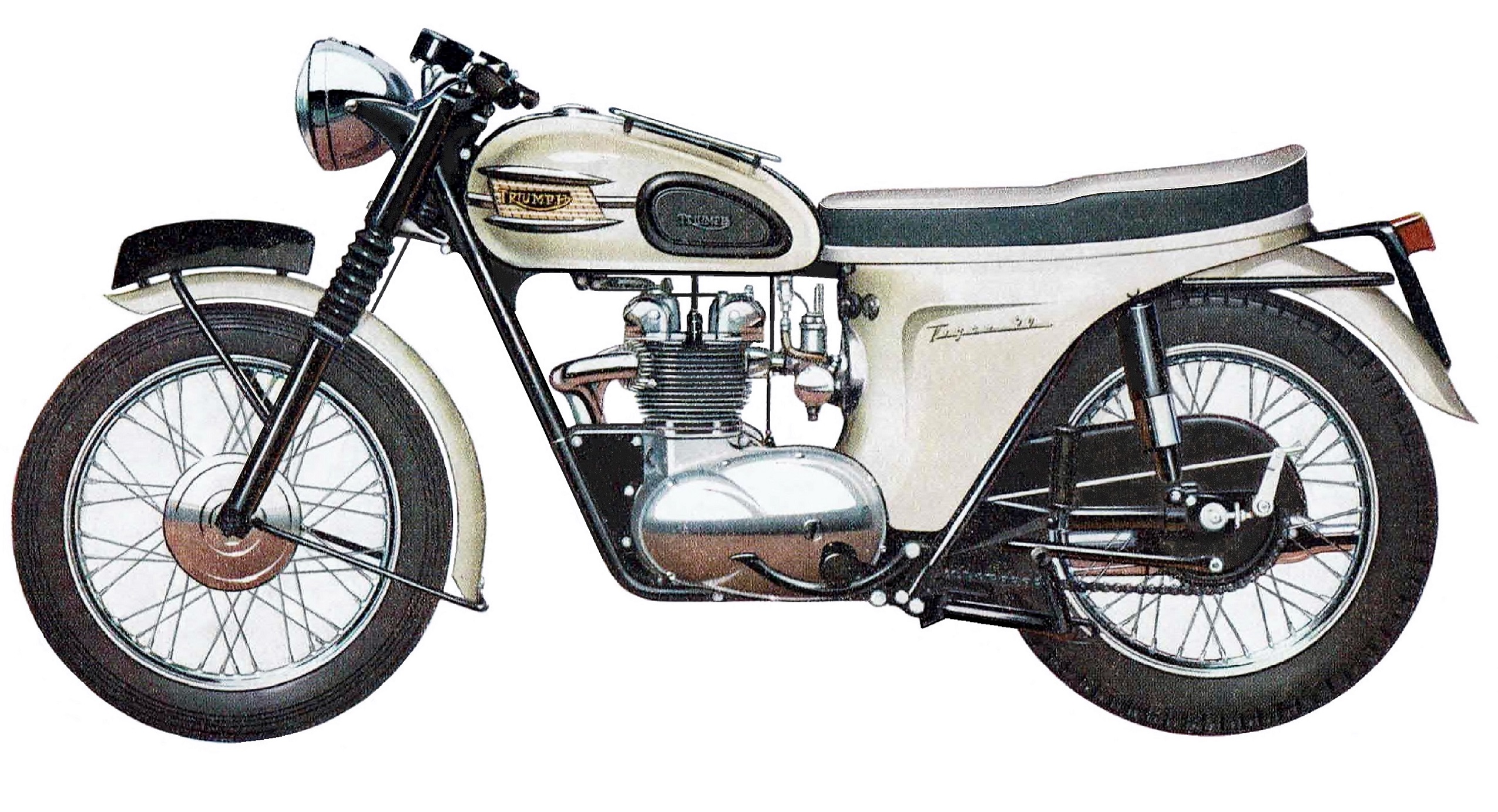
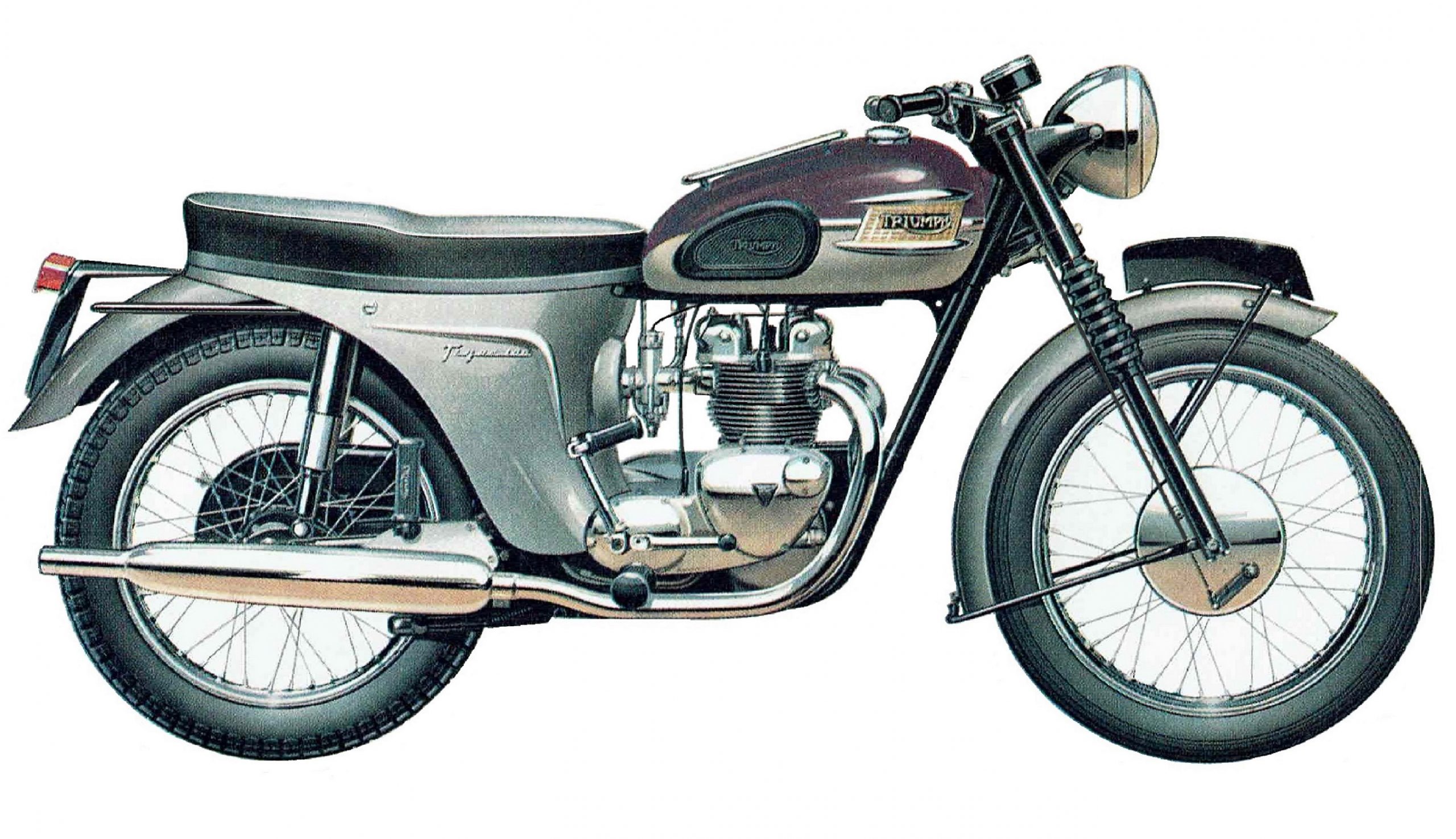
1963
Engine Frame Numbers H29733-H32464 (H32362)
| Models Covered | Standard | Police |
|---|---|---|
| 1963 Triumph Tiger 90 | 841 | |
| 1963 Triumph Tiger 90SC | 25 | |
| 1963 Triumph Tiger 100SS | 366 | |
| 1963 Triumph Tiger 100SC | 394 | |
| 1963 Triumph Tiger 100SR | 357 | |
| 1963 Triumph 3TA | 357 | 47 |
| 1963 Triumph 5TA | 237 | 104 |
Sales for all Triumph Models for 1963
| 1963 | T20 | T20SH | TR20 | TS20 | T20SR | T20SS | 3TA | 5TA | T90 | T100SS | T100SR | T100SC | TRW | 6T | T120 | TR6SS |
|---|---|---|---|---|---|---|---|---|---|---|---|---|---|---|---|---|
| Home | 2402 | 298 | 86 | 1 | 433 | 152 | 693 | 215 | 2 | 353 | 340 | 85 | ||||
| Jomo | 28 | 62 | 331 | 252 | 28 | 42 | 71 | 208 | 163 | 903 | 636 | |||||
| Tri-Cor | 241 | 27 | 407 | 240 | 34 | 185 | 252 | 1333 | 865 | |||||||
| Export | 2306 | 24 | 13 | 8 | 75 | 337 | 184 | 34 | 155 | 398 | 344 | 373 | 117 | |||
| 4977 | 322 | 161 | 340 | 27 | 734 | 770 | 336 | 755 | 652 | 105 | 395 | 398 | 1112 | 2949 | 1703 |
Note the popularity of the Cub and the increasing sales of the larger machines in the USA.
1963 sees the first Unit Construction 650’s and this important change together with increasingly specific US Models gives an indication as to the type and style of machine that will become popular, driven by motorcycling for leisure and sport.
In the Triumph Range for 1963 in the USA, only the 500cc T100SC, T100SR and the 5TA are described though there is an illustration of the T100SS.
Total production for all models not including the Tina Scooter is 15736, a considerable drop from the 1961 peak but comparable to 1962 figures
Sales into the USA amount to 40% of Triumph Production, up from 28% in 1962.
The engine number is on the left hand crankcase and will be preceded by the model type i.e 90 then Hxxxxx; the matching Frame number is on the left side of the headstock again preceded with the model type. Also look for casting date marks on the inside of the clutch case and sometimes behind the exhaust timing pinion. There will be date marks on the alternator stator and also date related stampings on the cylinder head.
The cylinder heads of the larger models show a date mark but not the ‘C’ range machines. The head also shows a number cast into the area between the inlets I am hoping to identify the meaning of this.
The introduction of the Sports models from 1961 bring with them many new parts and you will increasingly see detailed differences between the models, especially between Sports and Nacelle types where different parts are now being fitted to the fork and steering assemblies.
Look for John Nelsons Parts Guide to the T100 that was originally sold as a companion volume to his “Triumph Tiger 100 Daytona” book, this is not illustrated but details the part numbers fitted to all T100 models from 1939 until 1973 and is invaluable for restorers.
For the 1963 Tiger 100 there are detail differences depending on the model, SS, SC or SR and the original destination of the machine will help to confirm the specification.
The 1963 US brochure shows detail differences between the US and UK machines.
You will need to study the parts book carefully
T100SC machines generally are Energy Transfer ignition with Tri-Cor destination bikes fitted with wide Ratio Gearboxes though this is somewhat a generalisation.
Additionally the off road models have crankcase under shields, Universal tyres, and lack pillion footrests and main stand.
The 1963 USA (West Coast) Brochure describes the T100 as either the Speed Tiger (Road) of Sports Tiger (Competition) with specification differences to suit.
USA T100SC and T100SR machines built after H31735 in July 1963 may feature several detail differences to the earlier models including larger wheel sizes.
There is a Johnson Motors supplementary parts list that details all the new parts fitted, contact the VMCC library for a copy of this important document.

The machine pictured above shows a mixture of 1962 and 1963 parts and as with all factory or press images the machines and details shown may not represent actual production models or the change in parts introduced during the year. All images must be used by restorers with care, taking note of the location and context of the image. Photographs, illustrations and specifications in brochures are often of earlier or pre-production machines and may not represent the model period you are researching or restoring.
1963 sees the introduction of the Tiger 90, the name re-used from the pre-war sports model, 350 cc machines are popular due to lower insurance costs and the Tiger 90 is Triumphs Sports entry into this market. The 25 T90SC machines indicated above are all supplied to Johnson Motors, I assume to off road specification.
For 1963 the Tiger 90 and Tiger 100 models now have the ignition timing operated from the exhaust camshaft the Lucas 4CA (47606B) points and condensers being accessible behind a chromed cover on the timing case. Early 90’S up to H30593 were fitted with an incorrectly operating advance cam, which was rectified under warranty. (See 1963 notes). The 1963 3TA and 5TA continue with the Distributor Ignition of the earlier models, if the distributor is not fitted then the resulting hole is fitted with a blanking screwed cap.
Triumph did supply a ‘Kit’ to allow owners to convert Distributor machines to Points this is detailed in Triumph Performance Bulletin 13. Copies are available through Andover Norton who hold the copyright for some of John Nelsons Material.
Theoretically the 63 engine; does not have the TDC removable plug behind the cylinders, I have seen this on some machines but one of these I was suspicious of the engine number believing the left crankcase had been changed to a later one. The company regularly kept some engines aside for warranty or exchange repairs.
With Engines from H29520, Loctite is used to retain the flywheel bolts while Engines after H30790 have E1771 timing pinions these are ground to reduce noise.
The 1963 model engine will have the new three-spring clutch fitted across the ‘C’ range, while the clutch release mechanism on early machines (before H30038) may be different from later models. Earlier ‘C’ Range models featured a quick acting screw. During the year the Three Ball Ramp clutch release was introduced across the range though not advertised until 1964.
For details of these parts, photographs and assembly refer to my Restoration Guide.
1963 machines seem to show the clutch cable entry is slightly angled. From July 1st 1963 (H31736), T100SS models destined for the USA are fitted with a different clutch plate, part number T1885.
Within the Gearbox, the layshaft features a bronze bush and a single needle roller bearing, while the 3TA and 5TA of the period continue with sintered bronze bushes.
The gearbox ratios for the Tiger 90 are shared with the T100SS and differ from other models and later machines. I have information on gear ratios and part numbers and gearing fitted to all of the ‘C’ range up to H32465 Including the close and wide ratio gearboxes. The Brochures and Works Manual show the later ratios and are therefore inaccurate.
In the 1962 details the rear sprockets across the range are 43 teeth but for 1963 the brochure indicates that there are now two sizes available 43 and 46 teeth, 43 teeth on the 3TA and 5TA and 46 teeth on the T90 and T100SS. I cannot guarantee that the advertised information matches reality!
The cylinder head for the Tiger 90; numbered 3991, features a larger inlet valve than the 3TA and is attached with the modified bolts introduced to the ‘C’ range From H29151.The bolts have longer heads which protrude above the fins rather than being recessed as previously.
By this period Triumph Cylinder Heads are manufactured by High Duty Alloys of Buckingham Avenue, Slough, look for the letters HDA, I have spoken with a former employee who indicated that the stampings on the cylinder heads were used to trace the alloy to a particular batch and furnace so that any poor quality castings could be isolated and recycled.
Across the range the cylinder heads are generally similar, but different inlet manifolds are used depending on the model, refer to the parts book for details.
On all models the Tappett Adjustment Caps gain small sprung clips to help to prevent the loss of the caps, a common problem! Look carefully at the caps, as the serrated edge should be well formed to allow the spring clip to engage to prevent the cap from turning. These clips can be retro fitted to all earlier machines.
From H31253 an; oil feed pipe is provided for the rear chain. I have yet to identify exactly how this is arranged though the later parts books hint at a T piece in the breather pipe from the oil tank.
For this year the exhaust pipes on the T90 and T100SS are siamesed, fitting via a kinked pipe into the elongated “Resonator” silencer on the right hand side of the machine. The “Resonator” Silencer first appears on the 1962 Thunderbird. The silencer bracket incorporates the right pillion footrest.
Look carefully at the differences between the 1962 and 1963 illustrations.
Three (T90) machines were supplied with twin exhausts fitted at the factory at the request of the owner/dealer (H31452, H31520 and H31559). Other machines may have been dealer modified prior to sale.
3TA and 5TA models are supplied once again with either twin exhausts and silencers or a siamesed system, the details are recorded in the factory records.
For the export models the situation is infinitely more confused especially as so few original photographs survive.
The US press machine for 1963 shows twin low level silencers.
I have one original photograph of a US 1963 T100SC showing the machine fitted with a high level exhaust or exhausts.
In ‘Motorcycle Sport’ March 1965 is an excellent ‘Factory’ photograph and article on the Trophy Model History.
The Carb (T90) is an Amal 376/300 (on early machines not always 300) with button or lever type manual choke, some Carbs show a date stamp possibly month/year.
The offset pancake air filter appears on the UK T90 and T100 models, the body fits into a chromed edge recess within the rear Bikini bodywork.
Note that the carbs for each model in the range differ and care needs to be taken to confirm that the parts are to the correct specification for your machine.
For 1963 Triumph begin supplying and fitting some Police and Export 3TA and 5TA machines with a Pancake air filter kit detailed in Triumph Bulletin 242
This has the filter attached externally on the left of the carburettor.
The Forks remain the internal spring type with narrow gaiters, distinctive spindle caps and the early type shroud/headlamp supports, these are finely shaped; in not have the slotted boltholes to attach the headlamp. The chromed fork top nuts have a flat profile while the steering stops are the extended fasteners. Look for Motor Cycle 12th January 1967 for a detailed overhaul article with an excellent illustration. The rear shocks feature enclosed 145 lb springs and three-position adjustable pre-load.
The aluminium front mudguard is supported by a brace underneath between the forks and a single stay to the front while the Rear Mudguard continues to show a distinctive raised centre moulding and has an attractive sweep at the rear.
The rear mudguard forward bridge support is brazed/welded to the mudguard and painted in the overall scheme (Motor Cycle 23rd May 1963) at the rear a new support loop that replaces the earlier arrangement. It is likely the pattern of the mudguard changed during 1963 to the later form without the moulding. Both mudguards have sharp edges where they start and finish while the fasteners used are slightly domed (1/4in dsv7). Original Triumph fasteners are quite specialised the bolts are generally slightly domed and Simmons type nuts were regularly used. Cadmium plating was used extensively.
Note that the 3TA and 5TA retain the earlier fork arrangement with painted covers.
The wheels have full width hubs, changes from the 62 ‘C’ range include Grease retaining seals inboard of the wheel bearings. For 1963 and onwards the front hub for all Tiger 90 and 100 models are painted silver. The rear hub remains black.
A quickly detachable rear wheel is often fitted though it is an option. On the T90 and T100SS Both hubs are laced with 18 inch Dunlop WM2 Rims shod with 3.25 front and 3.5 rear tyres other models in the range have differing wheel sizes to suit their intended market. The original UK road tyres are similar in pattern to current Avon Speedmasters (no longer available in this size) Triumph fitted both Dunlop and Avon tyres as original fitment.
Information for T100S/C indicates that the Front Wheel is 19 inch and the Tyres are suited for off road use.
The brakes are 7 inch single leading shoe non vented type, for the front brake the cable stop is on the fork adjacent to the hinged lower mudguard stay, which is able to act as a prop to aid wheel removal, the fasteners here are specialised. The chrome plate on the hub continues to feature a circular moulding. The rear brake drum as previously incorporates the drive sprocket. Note that the Gearbox and Rear Sprockets differ from model to model and together with the wheel size determine the overall ratio.
The rear brake adjuster has four ears and the brake light clip is the early scroll type (This is a rare part but nicely illustrated in the parts book). The brake light switch changes to the later 22B (31383) type mounted on the Chain Guard operation relies on the spring within the switch. Modern Lucas Pattern switches are incorrectly assembled to use on pre 66 machines with the original arrangement.
The petrol tank; this is a new tank for the UK points models and is quite distinctive; showing the spaces for the twin ignition coils and internally features the strengthening beam as before (visible inside). The tank acts as a stressed member and often fractured, repairs usually being carried out under warranty, Triumph fitting the frame brace and four-bolt petrol tank fitted as standard to the 1965 model. (Illustrated in The Motor Cycle 8th October 1964). I have seen several machines modified with this later style tank.
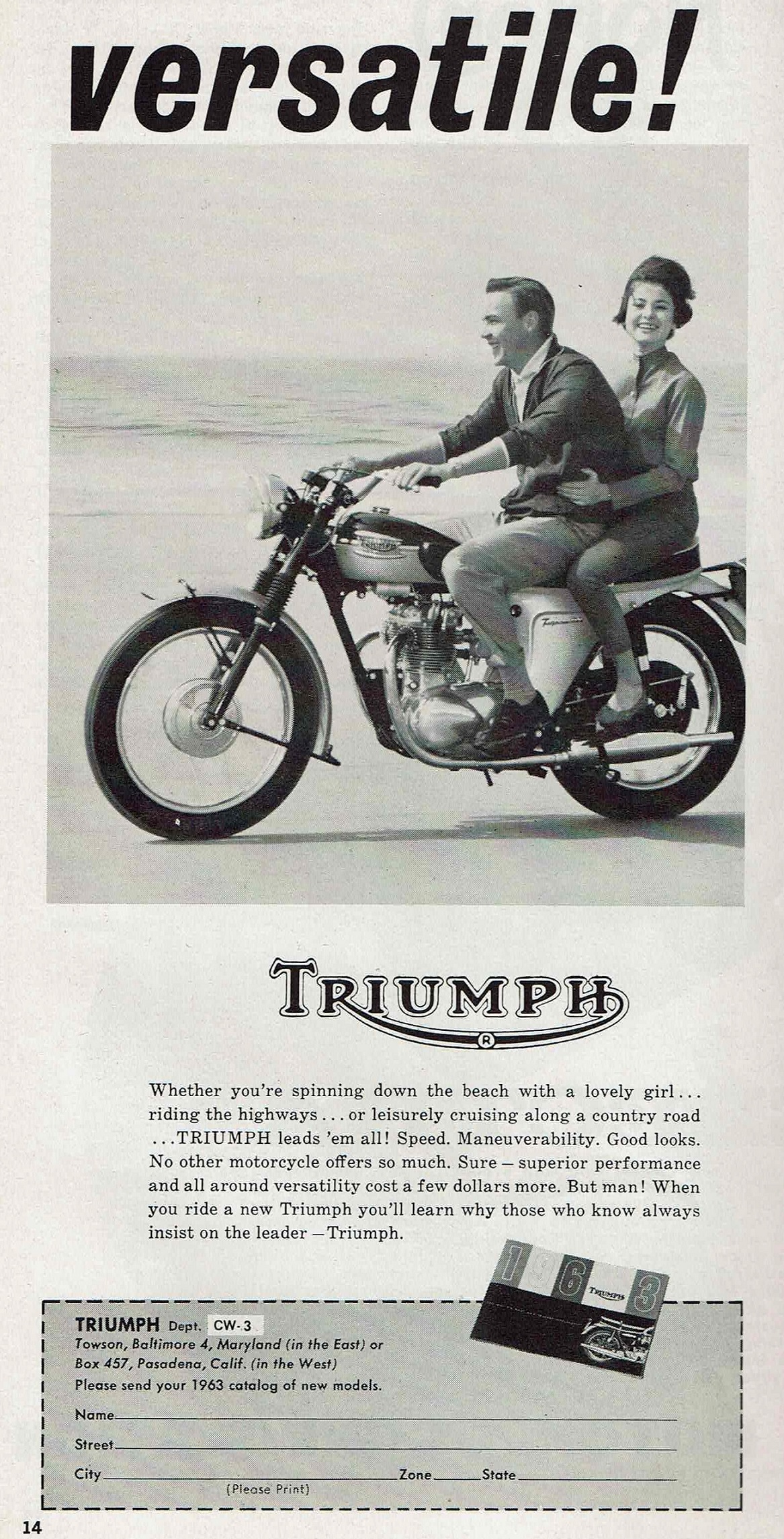
A Period advert showing the small tanked T100S/R with a 19inch front wheel. From Cycle World May 1963.
A retouched version of this image is used on the cover of the 1964 Johnson Motors Catalogue.
American and export T100S/C and some T100S/R Models destined for the West Coast of America will have a smaller tank with four point fixing and frame brace, these parts taken from the earlier TR5AC which uses the frame brace in 1961. The small export tank seems to show no or only minimal spaces for the coils and two fuel taps, one acting as the reserve. The Brackets for this tank are for 1963 only and very rare to find as a spare part. The Tank Grid is not fitted and the holes are plugged with rubber bungs.
Look for the pictures indicated in the notes below. This design of small tank seems to stabilise from this point on and appears on many later machines.
The factory records at the VMCC show the T100SR machines sent to Johnson Motors fitted with smaller fuel tanks, if you have a machine from H30467 to H30500, the Robert Brandt machine described in my notes for this section is likely to be one of these.
On machines destined for the USA, twin petrol taps, part numbers F4971 and F4972 are specified in the parts supplement.
The Bikini Fairing may not be fitted to export machines so do not assume that your machine was originally fitted with one! The specification for USA models is difficult to confirm as changes are introduced during the year and very few contemporary images survive.
The Bikini bodywork fitted to the T90, T100SS for 1963 differs in detail to the version fitted to the T100SS in 1962, it features the side mouldings and the added decorative strips wrapping around seat base. These are fragile and rare to survive. Many 1963 machines had the bodywork removed. Compare the shape of the Bikini with that of the bikini/bathtub fitted to earlier models.
The Side Panel F5559, standard on the 1964 models is available as a spare from the spring of 1963 to allow owners of the earlier Bathtub and Bikini machines to change machines to the naked look.
The Pillion footrest and exhaust mounting brackets are now the triangular form, which replace the tubular type on all models during 1963.
The left pillion footrest interestingly can have a drilled hole between the fixings, I have seen this on a several machines but it seems to have no purpose. The design of the pillion footrest bracket shown in the parts book is very different (From the earlier 3TA)!
The control levers are plain not ball ended with the brake and the clutch adjusters a sliding fit, the clamps vertical, attached to a flat and narrow 7/8inch handlebar with acute bends. (I have seen several lever versions and am trying to ascertain the correct type) Machines destined for export especially the USA will have the high bar and extended control cables and possibly ball ended levers, while the Nacelle fitted models may continue with the 1inch bar and controls to suit.
American Dealers are encouraged to sell a Rubber Mounted Handlebar Kit #CD306 which includes a new top lug with bonded rubber mounts and special eyebolts, similar in design to that fitted in 1967.
A monogrammed black painted steering damper is located centrally. The grips are the Amal pattern, quite thin!
The Kick Start rubber is monogrammed “Triumph” and has a closed end, period photographs often show, the end worn away! The gear lever rubber also shows “Triumph”.
T90 and T100 … The Twin Lucas MA6 Coils are on rubber mountings and spacers attached to the frame rail under the Fuel Tank, the illustration in Motorcycle 25th October 1962 shows the tyre pump clips on the tank but I have not seen these on production machines for 1963 or in period photographs.
The ignition and lighting switches (88SA) for the 6 volt electrical system are located side by side; forward on the left hand Bikini bodywork the with chrome trim surrounds, the light switch (Lucas 54330934), on the outside of the ignition has unequal length tags and a no chromed centre piece. The ignition key is the “Sardine can” type; there is in principle an “Emergency Ignition Circuit Position” to allow starting if the battery is flat. The Chromed Triumph model script (Tiger 90, Tiger 100 etc) is shown on both sides of the bodywork attached by press fit non-release tags.
The Headlamp shell contains a Lucas (SS700P) motorcycle lamp unit (Look carefully for Motorcycle written near the top of the glass) with pre focus main and pilot light and Lucas Ammeter (Black/Grey Faced 2AR). No warning lights or switches are fitted. US competition machines will have the smaller Lucas MCH66 pack and equipment to suit, look for the 1963 Lucas Spares list for Triumph.
The instruments… Chronometric Speedo SC 5301/## 120 mph. The rev counter if fitted (RC1307/##) is driven from the end of the exhaust camshaft without the 90′ drive box fitted later (from 1966). Pre 63 bikes drive the rev counter from the timing cover using a special gearbox and the crankcase does not have the screwed plug to suit. I have seen a late 1963 3TA, which did not have the rev counter drive-plug but retained the 1962 crankcase form which has no location for the drive cable.
No Tiger 90’s before H32372 were fitted with a rev counter on assembly, though a rev counter was fitted to some machines prior to dispatch; others may have been fitted later at the dealers. I can advise from my research if your machine was with a rev counter at the factory.
The horn attached to a frame bracket is fitted behind the left skirt. It is an early type Lucas 8H unit (70163 Serial) with all screw construction and a central Acorn nut. Usually a date stamp will be visible on the reverse showing the month and year of manufacture, i.e. 663 for June 63, the original horn is rare to survive.
The Lucas 8H Horn fitted to the road models was fitted to other machines, Royal Enfield (Clipper and Continental) Ariel Arrows and BSA C15s. Different Serial Numbers were used 70166 and 70169 indicating the fitting bracket supplied and its relation to the Electrical Connections. The finish is silver (Cadmium Plate). Poor copies are available! Competition models use the HF1950 horn and 4A horn push, refer to the Lucas Spares list for details.
A Lucas combined headlamp, dip and horn switch (31563D) attached by screws is found on the specialised clutch lever clamp. The wiring is grey.
The rear light is the usual Lucas 564 type fitted to all machines; look carefully at the lens to determine if this is original, as it will show the Lucas part-number detail.
The stepped dualseat has a plain grey top with white piping and black sides, US models show a seat strap fitted, the seat hinges and is supported with a wire strap and gives access to the battery and oil tank, mounting on metal strips running across the frame attached by bushed rubber washers.
The oil tank has a chromed filler cap with dipstick (Ceandess Ltd, Wolverhampton written underneath). The tank features a frothing tower / breather tube at the top rear, no oil drain plug is fitted but at the bottom is a simple gauze filter and return pipe arrangement including the T branch to the rocker feed.
Under the seat is also found the Lucas multi plate rectifier (2DS506), attached to a frame bracket on the left behind the battery. The Battery Carrier shows distinctive folded triangular bracing. On early machines the tools tuck between the battery and oil tank while later machines feature a simple open tool (Fag packet) box bolted to the rear mudguard. (For all this detail look for the excellent picture in the May 63 Road test).
I am trying to identify if a Tyre Pump was provided as seen on later Tiger 90’s, anecdotally this was stored next to the oil tank.
The colour scheme for the Tiger 90 is Alaskan White overall with the mudguard stripes gold lined in black. The stripe does not extend under the seat but does extend to the ends of the guards; it should be no wider than the front number plate mounts.
The scheme for the Tiger 100SS is Regal Purple over Silver with Black Pin-striping
The cylinder fins of all models except the 5TA are painted silver to compliment the lightly polished engine cases, which are affixed with distinctive Phillips type screws, look carefully to ascertain if these have been undone (often replaced due to wear).
The remaining cycle parts are gloss black enamel. The mouth organ tank badge has letters picked out in gold and features chromed styling strips running fore and aft, while
the monogrammed knee grips are a screw fit to the tank. A four bar tank grid and chrome centre styling strip occupy the tank top.
Note on the 3TA and 5TA that the chromed styling strips on the Tank are not fitted but present on all the other models.
The 3TA is supplied in either Blue Sheen or Silver Bronze and usually the colour is recorded in the Factory Records.
The 5TA Continues in Ruby Red as before, though interestingly I have other information which says Cherry Red!
Parts Book No: 4, note this covers models from 1960 to 1964
To view the Triumph Parts books use this link to Classic British Spares www.classicbritishspares.com and use the Parts Book library Tag.
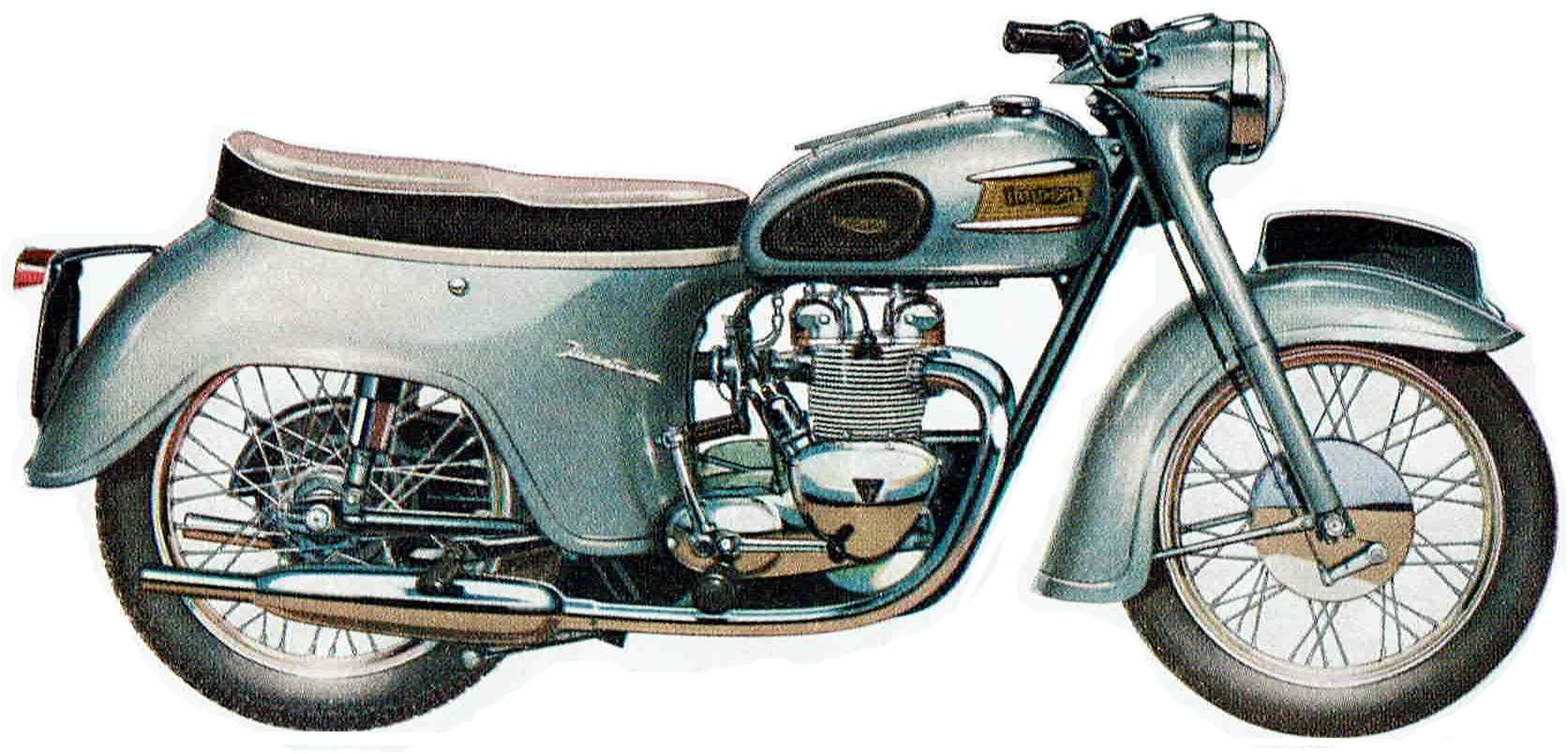
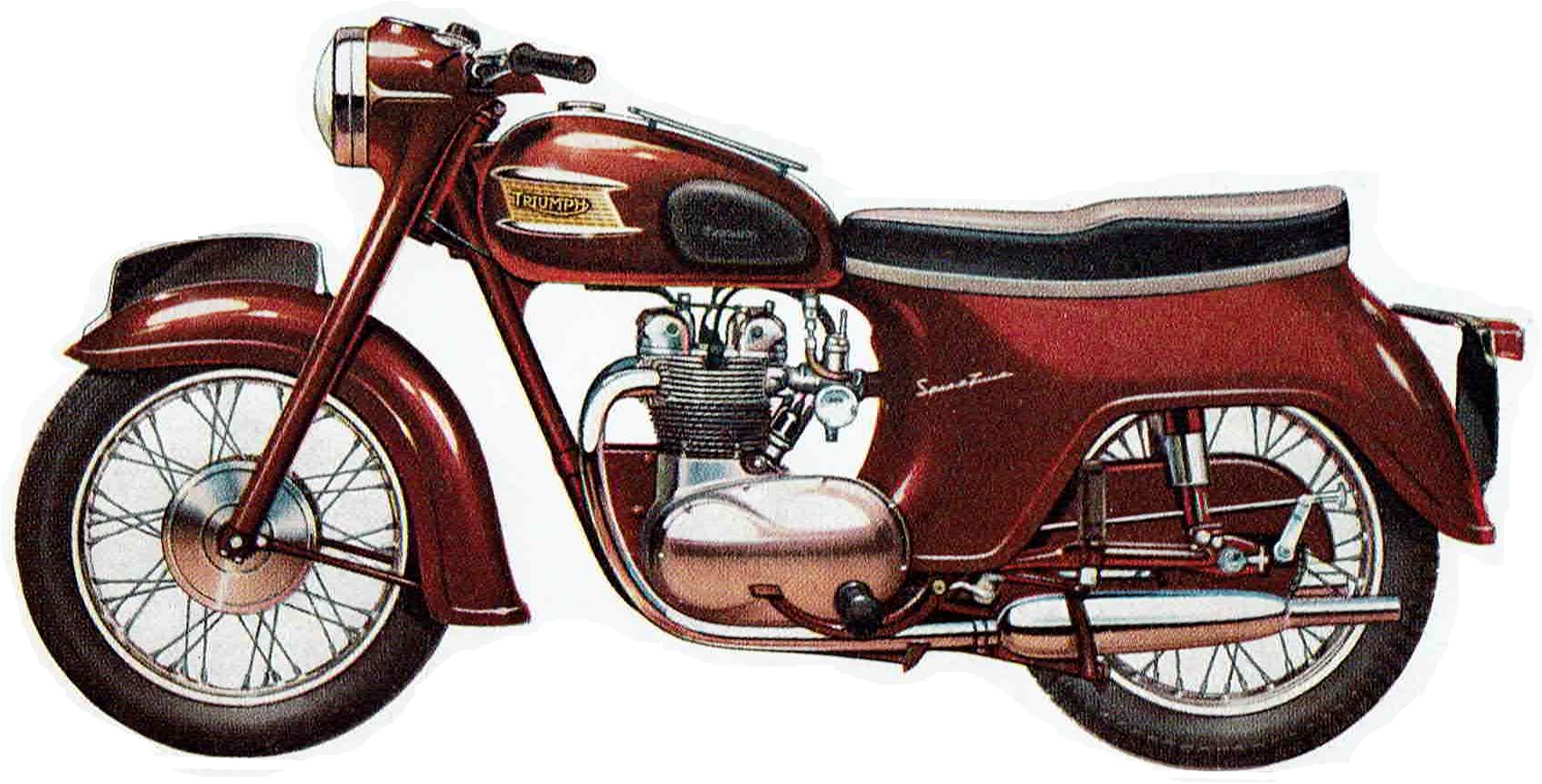
Notes for 1963
If you are setting out to restore a US specification machine it is essential to obtain a copy of the Supplement to the Parts Catalogue No:4 published by Johnson Motors in June 1963. This contains details of all the parts that apply to the US Models along with an illustration of the small gas tank and fittings fitted from 1961. You may find a copy in the back of the US edition !
On all Triumphs you will find a bewildering array of fastener threads and with the introduction of the new sports models there are detail differences in sizes and types used across the range. Prior to 1967 the majority of fasteners and threads are to British Standards, either BSCY (Cycle), BSF or BA. Threads into alloy such as crankcases vary and depend on the design requirements and you will find engine studs in BSF at one end and BSCY at the other. The parts books usually provide the length of studs and bolts but no hint as to the diameter, thread form, finish or head type. To identify bolt diameters refer to the parts book and use the associated washers to indicate the bolt diameter. For example part number S25-2 is a 3/8 diameter plain washer while S25-3 is 5/16 Plain washer. Nuts come in a variety of types including plain, chamfered, reduced and locking, and prior to the now common Nyloc nuts, Philidas, Simmonds and Clevlock nuts were used in certain critical locations. The history of fasteners and threads is fascinating in itself and covered well by Wikipedia.
Triumph feature a number of “Branded” fasteners, the most collectable are the “Bradleys” used to attach the shock absorbers and a must for the discerning restorer.
Also look out for “Newton” 5/16 BSF Bolts and if restoring an original machine pay specific attention to the types of heads that bolts have in the various locations.
Thinned head bolts can be used for the rear brake torque stay, the pillion footrests and front mudguard to stanchion fixing, while reduced nuts feature on the inlet manifold, carb to manifold joint, crankcase, gear change and the handlebar U bolts on the nacelle models.
This is a summary of the engine modifications made during 1963 and the models that they apply to/from, these details are taken from the Factory Engine Build Records.
H29151 Introduction of longer cylinder head bolts to ease access.
H30593 T90 1st engine fitted with 14’ Auto Advance.
H30790 T90 First Engine Fitted with E1771 Pinions (8th Jan 63)
T100SS Oil Drip Feed to Rear Chain from this number (25th Apr 63)
H31736 T100SS T1885 Clutch Plate for USA Models from this number (1st Jul 63)
H32209 3TA Loctite on all Alternator Nuts (29th Aug 63)
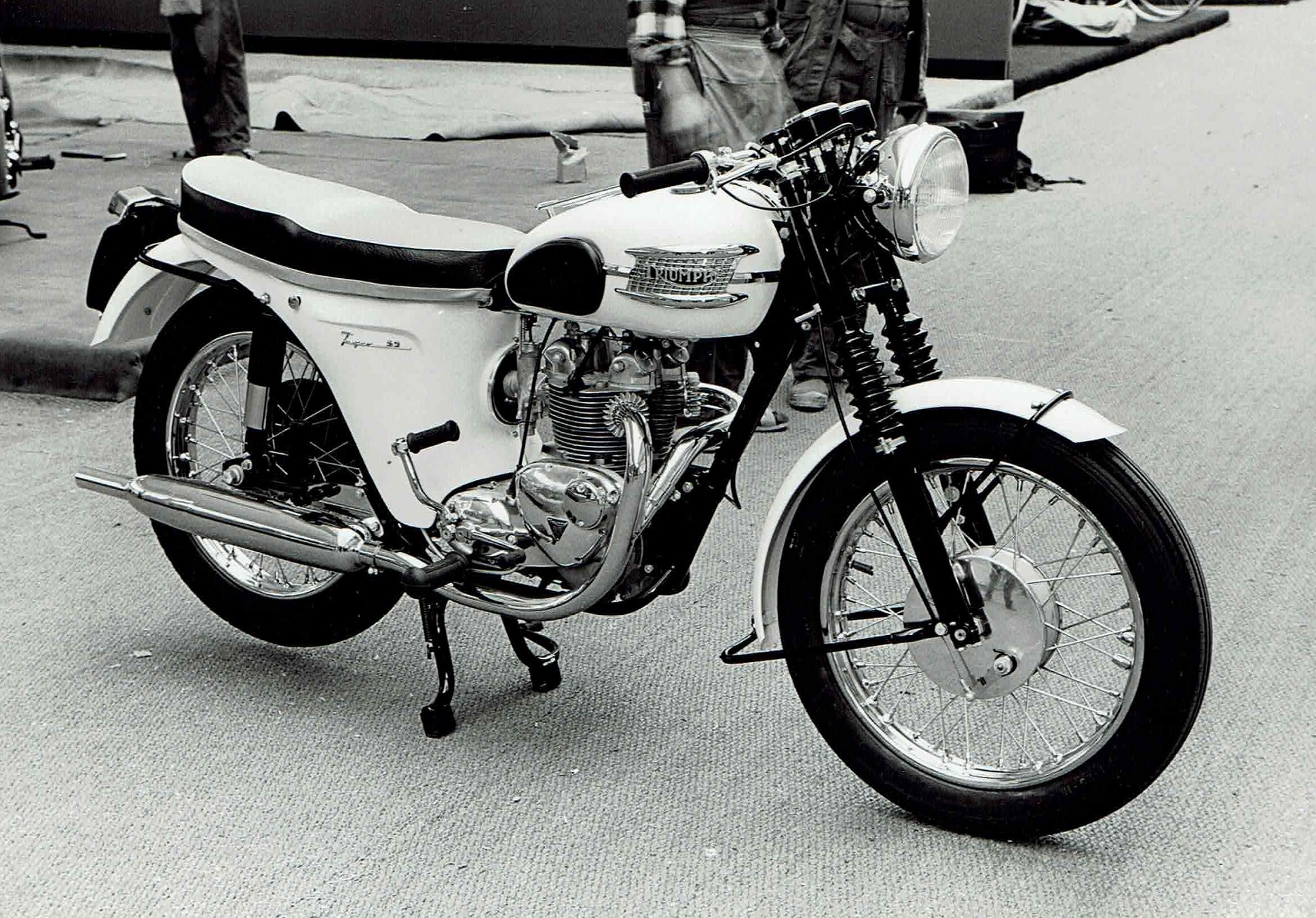
Note in the image above that the bike has been specially prepared, does not show the mudguard stripe and that it has been fitted with the rev counter and QD rear wheel.
The range information for 1963 indicates that the mudguards have a gold stripe lined in black.
The 1963 Season begins with Tiger 90 production, on the 24th September 1962 starting with H29733 (Survives) and finished on the 7th August 1963 (H32463) Totalling 863 Tiger 90’s The last two machines were built with wide ratio gears, 3TA Pistons, cylinder heads and clutches for the Triumph Experimental dept.
Bikes for the Paris show are Tiger 90 H29752 and Tiger 100SS H30083 Both are sent to Terrot.
For the Earls Court Show the pre-production tiger 90 (H21442) is displayed, this machine is converted from a 1961 5TA taken from the works show room and rebuilt to Tiger 90 specification. This machine is eventually sent to Hitchcocks of Folkeston on the 3rd November 1962. Other machines ….
H30201 is a Show Model T100SR sent to Johnson Motors on the 29th November 1962
H30236 is a Show Model T100SC sent to Tri-Cor on the 15th November 1962
H30286 is the Earls Court Show 3TA (Silver Bronze) sent to Elite of Tooting on 7th December 1962
H30287 is the Earls Court T90 sent to Decat Belgium for the Brussels Show on 18th December 1962
H30288 is the Earls Court T90 sent to Hughes Wallington on 4th December 1962
H30289 is the Earls Court 5TA the Engine is in recorded as retained.
H30290 is the Earls Court Show T100SS sent to Stokvis (Nederlands) on the 13th December 1963
In July 1963 Triumph have a stand at the Blackpool Show held at the Wintergardens, I have yet to identify the machines displayed or locate any period photographs of this event.
1963 T100SS (Home Market) production starts at H30083 (Paris Show) and is 332 machines in total, mostly in small batches. The low production makes the 63 T100SS rare.
Towards the end of 1963 production batches of 3TA’s and 5TA’s are produced, some Police models. Most are for export, the factory records detail the colour schemes applied to each machine. If you have a machine with an engine/frame number between H31916 and H32361 it is imperative that before you start restoration you consult with the VMCC Library to identify the specification for that machine.
1963 Tiger 90’s with Engine/Frame Numbers from H32362 to H32461 were mostly sent to Pride and Clarke of London. These last ‘C’ range machines for 1963 made in early August 1963 are shown in the records to be to 1963 specification, which surprises me; 5 of these machines survive. The factory records do seem to be pedantic in detailing the individual specifications of machines during this period!
John R Nelson kindly described for me the warranty problems with the early Tiger 90’s described by the service department and dealers as “Tiger 90 Itis,”
We had desperate phone calls from all over the country telling us that once started, and on the road, the bikes would become sluggish, misfire, and in many cases, just not pull the bike along. Marvellous! The trick was to tell ’em to remove the centre rectifier wire from the terminal, and bingo! performance restored. Problem actually was an extra spark as the contact breaker points closed, firing the incoming mixture – cured by a redesigned contact breaker cam. Funnily enough, the problem only commenced following a low battery at start up, when it became fully charged. Then you had to run the bike until the battery ran down – re-connect until the battery was charged up again – when it began all again….at least it got you home until we could supply a modified CB cam.
The 1963 sales brochure has extras as Pillion footrests, Prop stand, QD Rear wheel, Rev counter (22 machines in total) and Steering lock. Most machines were supplied with the QD wheel though it is indicated as an option. The brochure features a cut away picture of the silencer fitted to the sports models and other specification details.
The single page 1963 US brochure illustrates the T100SS in its US trim and indicates that there are sports and competition models.
The excellent site at http://classicbike.biz/ have the complete US brochures available to view.
For Tiger 90 Photographs and information look for the road tests in Motorcycling (Newspaper) of 7th November 1962 and Motor Cycle 23rd May 63, other earlier editions Of Motor Cycle also show the same Press Bike. These tests are essential for restorers of the 1963 Tiger 90 due to the quality and quantity of images included.
The Triumph Range for 1963 is shown in the Motor Cycle of 25th Oct 1962. and Motorcycling (Newspaper) 24th October 1962.
Motor Cycle features an exploded view of the new Bonneville Engine, the new B Group Frame, details of the range with an excellent shot of the new T90 on the cover. The Tiger 90 illustrated carries the same plate registered to a 1962 T100ss on the 7th October 1961, This well-known machine was used in several publicity shots, one is the basis for the cover illustration of the 1963 brochure.
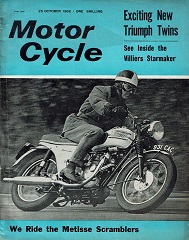
Mortons www.mortonsarchive.com have an excellent set of glass plate negatives of a press bike (H29935) in their archives now available to buy, some are shown in “ Classic Images Tried and Tested” Isbn 0-9542442-0-6. This machine becomes Johnny Giles ISDT mount and the engine survives. Contact Jane Scayman at 01507 529423 if you need more information.
Johnny’s machine is beautifully pictured and documented in Don Morleys “Classic British Trials Bikes” by Osprey ISBN 0-85045-545-6
Also look for the complimentary “Classic British Scramblers” by Osprey ISBN 0-85045-649-5
Both of these titles are out of print and the books are difficult to find but may be available from your Library.
Tiger 90 H29984 is used as a donor machine to repair Gordon Blakeways earlier ISDT Machine H26228
For the US Tiger 100 look for the image on Page 17 of the March 1963 edition of American Motorcyclist via this link to the AMA site. www.americanmotorcyclist.com
This is a particularly good shot of a US spec T100S/R, the Rider is Robert Brandt the husband of film-star Janet Leigh. Another advert image can be found in the April 63 copy of American Motorcyclist this time with possibly the same machine being ridden by Gil Stratton, film-star, sports reporter and employed by Triumph. I feel that this is clever marketing going on as the adverts also appear in Sports Illustrated for the same period. I am uncertain of the location of the photograph so cannot tell if the machine is to East Coast or West Coast Specification. The small tank fitted leads me to believe it is a machine supplied to Johnson Motors.
There is a superb image of a (possibly restored) machine in Lindsay Brooks ‘Triumph Motorcycles A century of Passion and Power’ ISBN 0-7603-0456-4
I have evidence of one or two earlier numbered (Pre-Production) competition machines, built to T90 Specification one described in the Factory records as T100SS 350CC, these were registered by the factory in May 1962; several months before production officially begins. I am aware of a 1963 Tiger 90 registered to the Police at Hendon.
These two machines H 26228 and H 27606 are destined to become famous as 106 CWD and 105 CWD, the ISDT Tiger 90’s.
In the Bemsee 1000 (km) race held on May the 19th at Oulton Park the 350cc Class is won by M. Low and D.F Peacock on a Tiger 90 with A. Dugdale and T Fearns
Second on another Tiger 90 these are likely to be H31540 and H31541 both made on the 8th May and dispatched on the 15th May. See below….
These Tiger 90’s (H31540 and H31541) were converted to all alloy T100SS spec for the Thruxton 500-race. The Class winning Machine (H31451) ridden by Brian Davis and Bill Scott is featured in Motorcycle Mechanics September 1963. Note the rear sets, 8inch brake, drop bars, alloy levers and other modifications. The Thruxton race entries and press reports for the period make interesting reading. See Motorcycle Sport August 1963 for a detailed report and list of entrants.
In total 13 Triumphs are entered of which 5 are Tiger 100’s or converted Tiger 90’s.
I have identified these two additional machines in the factory records ….
T100SS H31734 built on the 28th May 1963 is supplied to Dugdales in Thruxton Specification
T100SS H31735 also built on the 28th May is supplied to Keebles of Leiston also to Thruxton Specification.
One picture of the event shows a modified (1963) Tiger 90 or 100 that I have yet to identify in the records.
Johnny Giles wins the Pirbright 100 Mile scramble on his Tiger 100, this may be his reworked ISDT machine, see Motorcycle Sport August 63 for an excellent photo.
The 1963 ISDT is held in Czechoslovakia at Spindleruv Mlyn between the 2nd and 7th September 1963
Roy Peplow and Scott. Ellis are on 350’s. Roy on 105 CWD and Scott on 106 CWD
Roy Smith, Johnny Giles and Dick Clayton are on 500’s
Bud Ekins USA, Eric Chilton and Ken Heanes are riding 650’s. Ken on 929 FNX (T120 DU 1557)
For more on the ISDT look at the excellent website www.speedtracktales.wordpress.com
Johnny Giles ISDT Bike is loaned later in the year to Gunnar Johannsen to compete in an event in Sweden. (The two day Novemberkasen).
A Picture of the bike can be seen in Motor Cycling November 6th 1963
For information on the USA Race Scene for 1963 look for Gregory R Pearsons “The Complete Grand National Championship Volume 1”. This excellent book contains the results for all of the USA National Races from 1954 to 1969 with numerous pictures. A must have book for race fans.
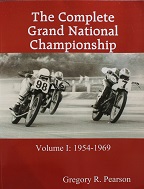
Triumphs are successful at Daytona with Larry Williamson, Peoria Ill coming second and Jess Thomas, Brighton Mass 14th.
Gary Nixon also wins the 50 mile Road Race held at Windber on a Cliff Guild-tuned Factory Tiger 100. His purse for the win if $900.
During the 1963 National Season of 14 Races, Triumph feature regularly especially in the hands of Gary Nixon, Ray Sievert and Larry Williamson.
Also again Triumph are successful in off road competition and speed events, refer to the 1964 USA Catalogue for more information and photos.
Book Thumbnail
60 1963 Tiger 90’s were exported; to Europe and the Far-East and the USA, including the 25 T90SC models made on the 1st March 1963 with special modifications which were sent to Johnson Motors in the USA, these were fitted with Broached Pistons, ET ignition and 17 tooth gearbox sprockets, one machine from this batch survives.
I have a Triumph illustration that seems to show an export version with High Bars and no front number plate!
From June 1963 Avon Fairings made by Mitchenall’s become available for all Triumph models (Motorcycle Sport June 1963).
UK Registration letters are only a guide to the year, The letter A is 1963 but was only used where three letters and numbers had run out eg London. Rural areas continued with the old system until 1964 or later! Some machines were not registered for several months and can therefore appear to be later machines.
Please note that with any make or model machine registered from 1963 that the Letter Suffix does not provide an accurate date of manufacture.
Prices for 1963 are ….
3TA £ 261/0s/0d
5TA £ 274/4s/0d
T90 £ 274/4s/0d
T100 £ 279/0s/0d
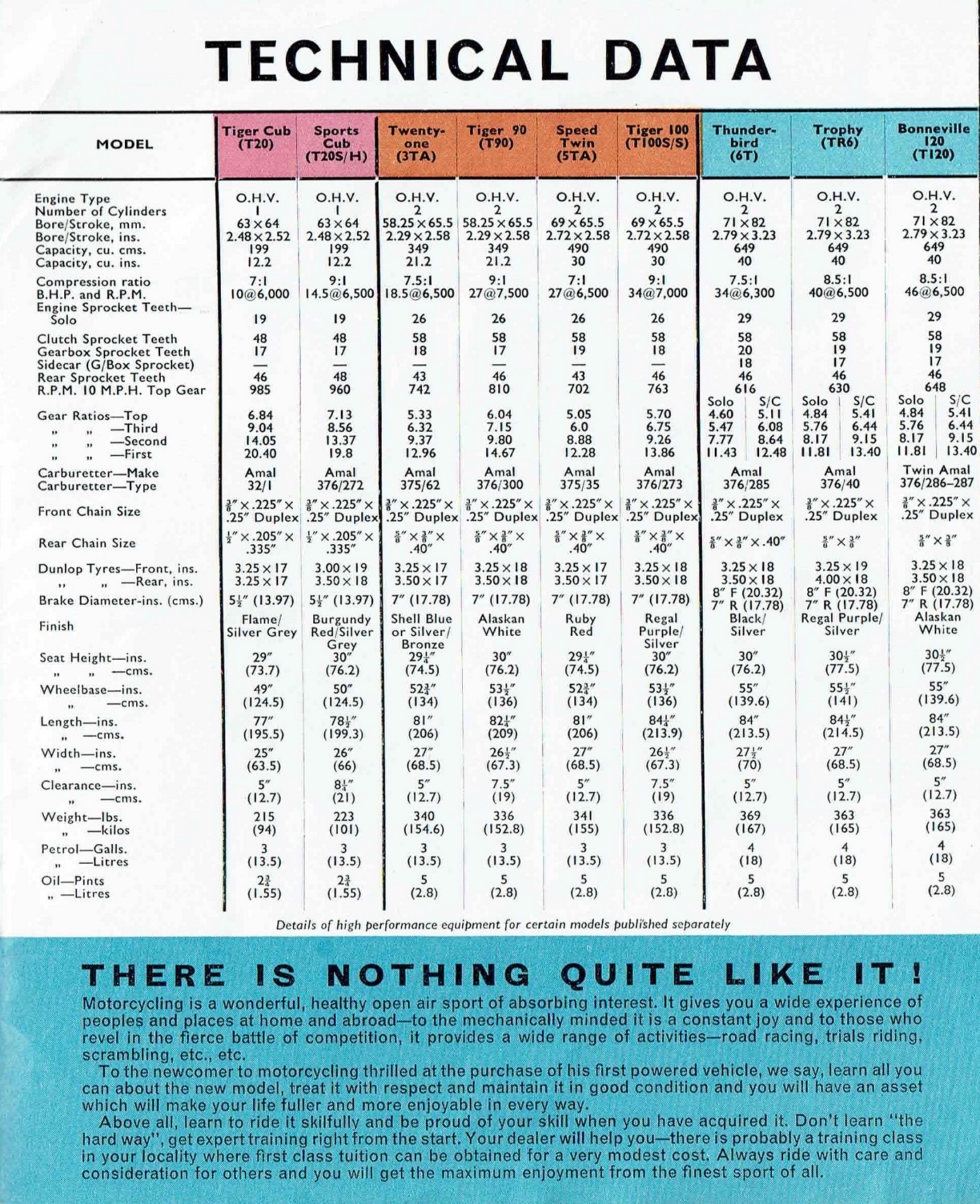
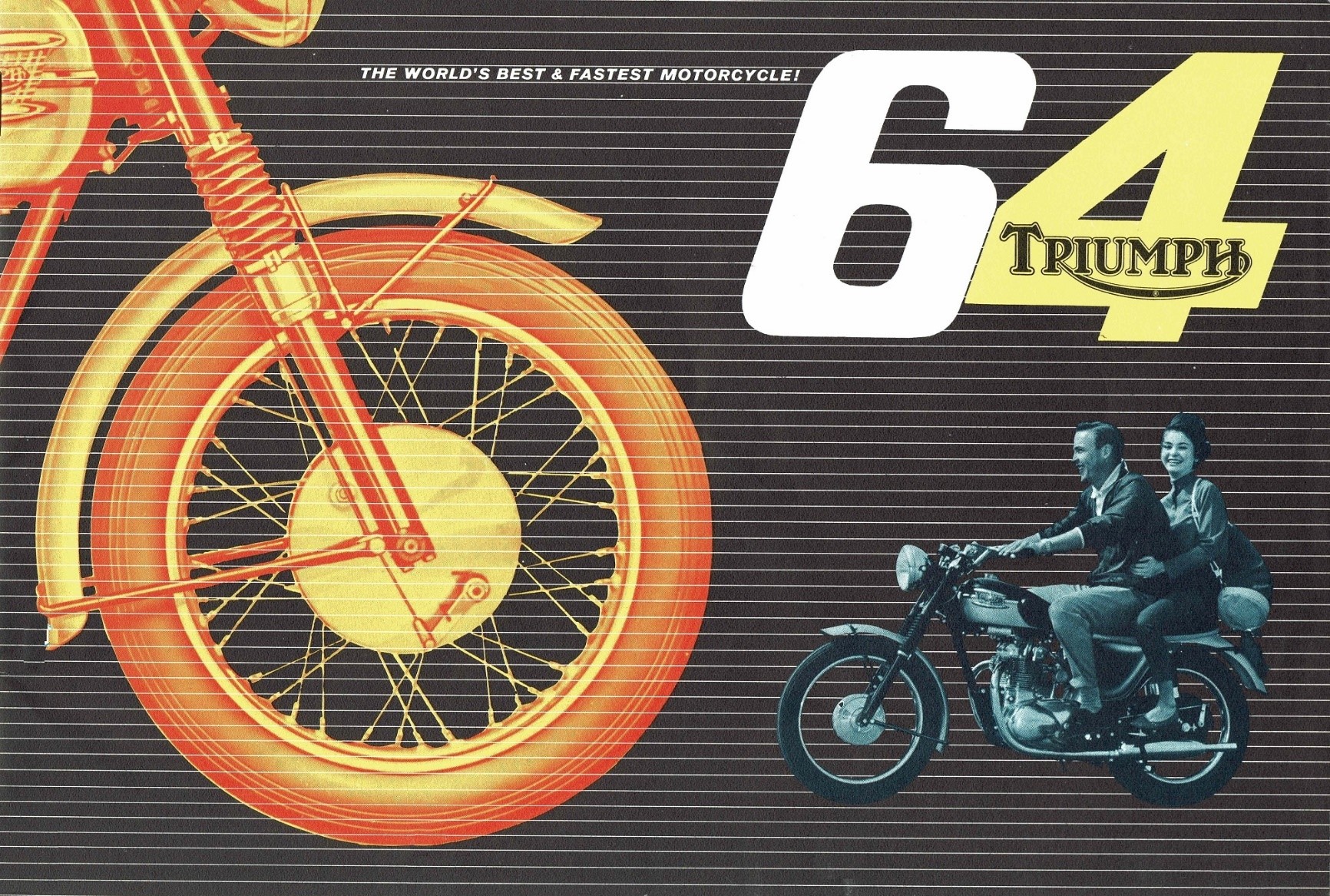
The Rare 1964 Johnson Motors Catalogue, Detailing West Coast Models
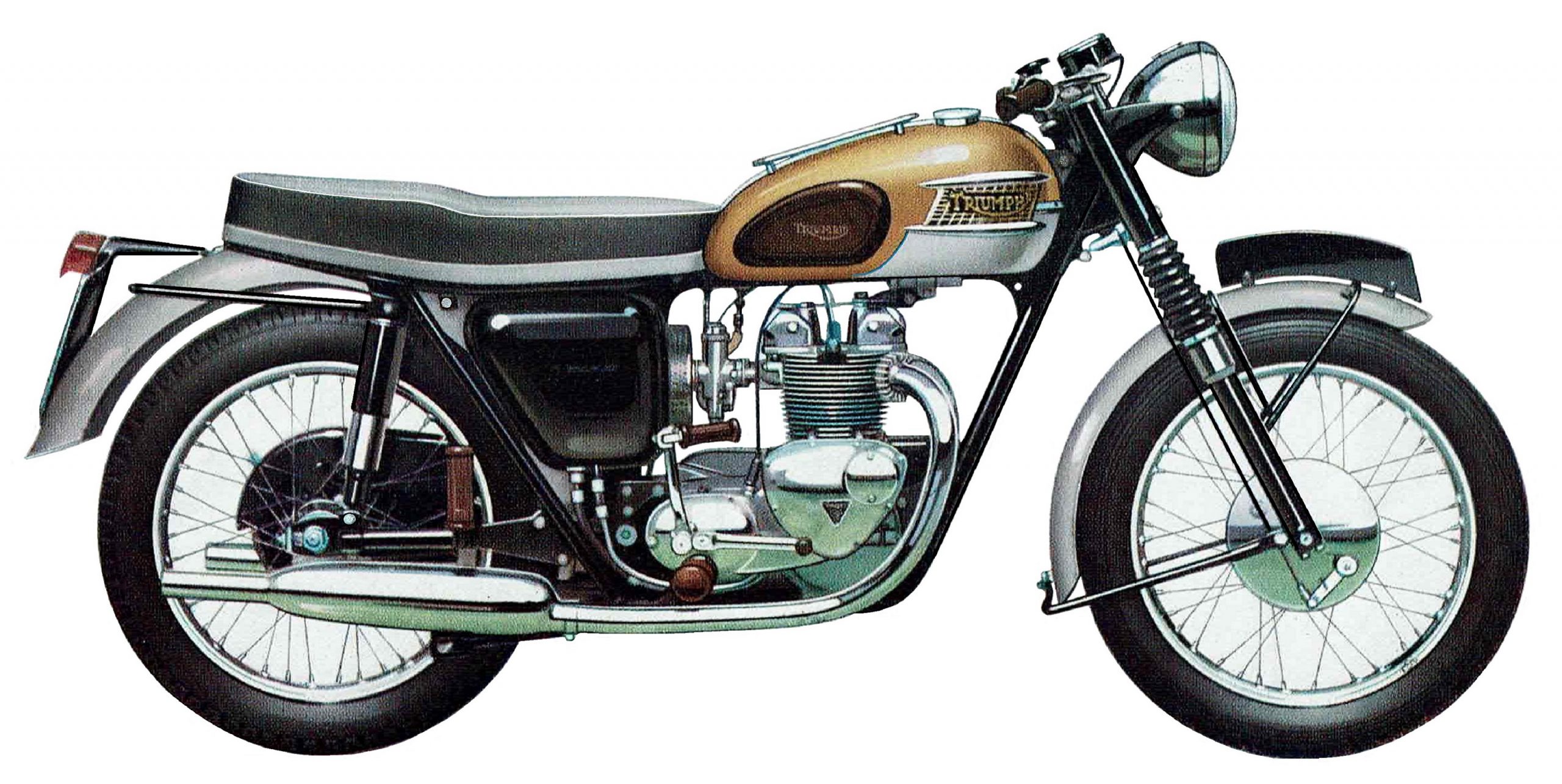
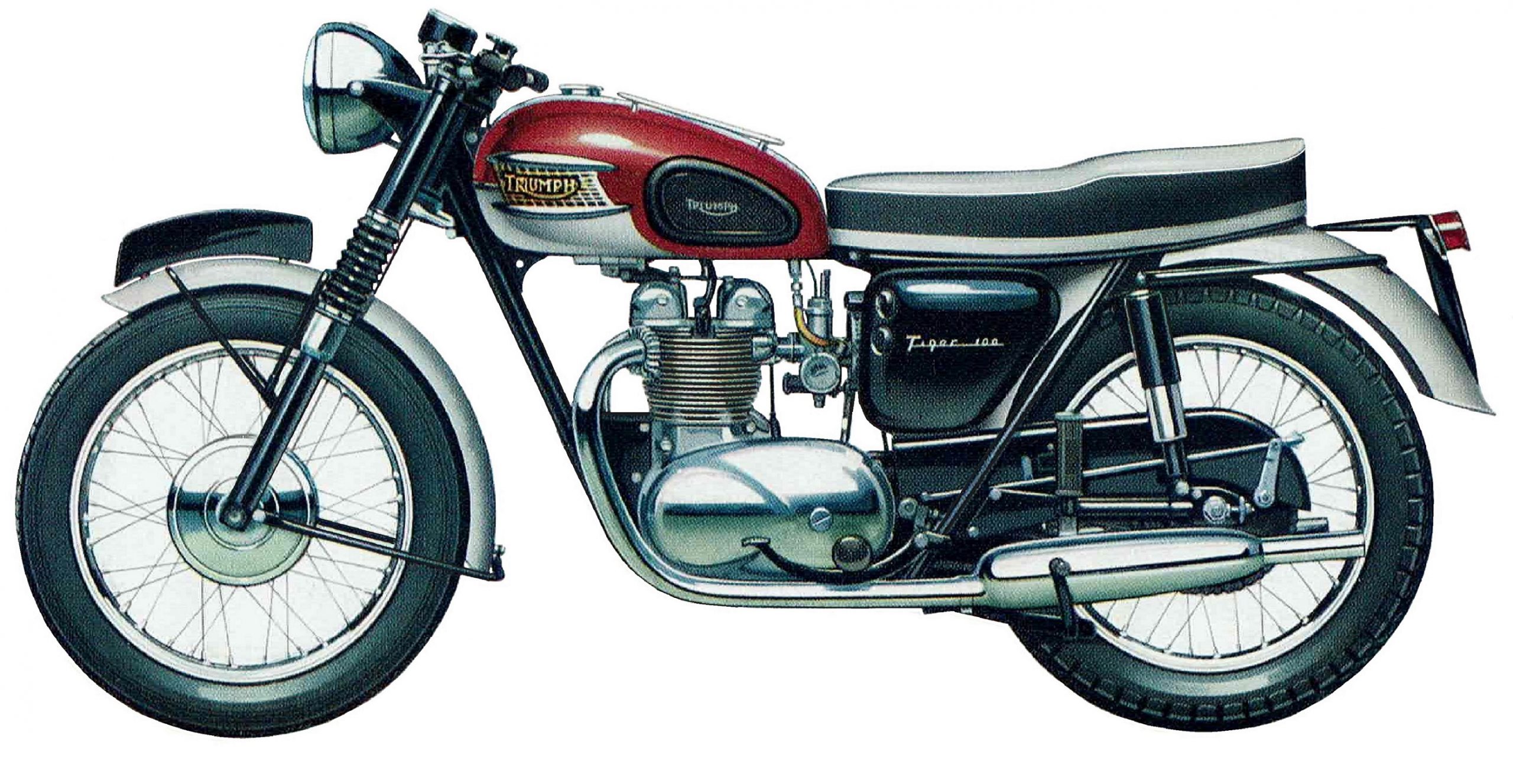
1964
Engine Frame Numbers H32465-H35986.
| Models Covered | Standard | Police | Military |
|---|---|---|---|
| 1964 Triumph Tiger 90 | 574 | ||
| 1964 Triumph Tiger 100SS | 476 | ||
| 1964 Triumph Tiger 100SC | 717 | ||
| 1964 Triumph Tiger 100SR | 489 | ||
| 1964 Triumph 3TA | 779 | 41 | |
| 1964 Triumph 5TA | 375 | 28 | 30 |
Sales for all Triumph Models for 1964
| 1964 | T20 | T20SH | TR20 | TS20 | T20SR | T20SS | T20SC | 3TA | T90 | 5TA | T100SS | T100SR | T100SC | TRW | 6T | TR6SS | T120 |
|---|---|---|---|---|---|---|---|---|---|---|---|---|---|---|---|---|---|
| Home | 1591 | 293 | 83 | 1 | 481 | 632 | 222 | 403 | 1 | 313 | 112 | 349 | |||||
| Jomo | 773 | 129 | 487 | 205 | 911 | 1229 | |||||||||||
| Tri-Cor | 124 | 168 | 160 | 354 | 225 | 185 | 854 | 1910 | |||||||||
| Export | 2045 | 11 | 14 | 1 | 2 | 42 | 10 | 614 | 42 | 243 | 153 | 31 | 488 | 98 | 608 | ||
| 3785 | 304 | 97 | 2 | 170 | 815 | 170 | 1095 | 674 | 465 | 1743 | 483 | 712 | 32 | 1191 | 1975 | 4096 |
The Sales figures above are compiled from the surviving original Triumph account books held at Warwick University Modern Records Centre.
The terms used for models often differ from production records and for some years including 1962, 1964 and 1965 T100SC and T100SR machines are shown in the accounts only as T100SS models. I have been able to compile the sales figures for some models through my work with the factory records. There is always some overlap between production and sales, with unsold machines remaining on the stocks until either reworked or discounted to sell.
16614 Triumphs are Built in 1964, Almost half of which are destined for the USA, with sales in the Home Market declining.
The Export models differ significantly in specification from UK/Home market machines and there are I believe further differences between models supplied to Johnson Motors (California) and Tri-Cor (Baltimore). Please note the specification for US and other Export machines is very confused.
I have in my collection a Tri-Cor bulletin (July 8th 1964) detailing the Parts fitted or not used on US Models. A scanned copy can be found in the Bulletins, use the Tab at the top of the page.
The T100SC (Tiger 100 Competition Trophy or Jack Pine) model features several changes over the R (road) model these include….
Smaller Petrol/Gas tank without the parcel grid, featuring two petrol taps, locations for the coils and finished with Tiger Cub badges and knee grips.
The bolted in frame brace, QD headlamp package, Polished Alloy Mudguards Fenders (Mudguards), Siamesed exhausts on the left, raised bars and off road tyres.
In the factory records this model is made in a number of batches through the production year, the batches show differing order numbers which may indicate differing specification. I have recently studied an unrestored T100SC machine made under order number 7303 that applies to approximately 150 machines sent to Jomo early in 1964.
Early 1964 production T100SC’s will be from Engine numbers between H33017 and H33644 and will differ from later production batches.
The USA Owners Manual for the 500 cc machines details the differences in specification between the T100SR and SC, a copy of this useful document which includes machine pictures and specifications can be obtained from the VMCC Library.
Tri-Cor Service Bulletin #3 of July 8th 1964 for the C range machines indicates that all US models of the T100SR and T100SC are fitted with 19 inch front wheels while rear wheels can be either 17 or 18 inch !
The 1964 Johnson Motors Catalogue featured above gives good details of the specifications applied across the range, with illustrations but not photographs, and as the catalogue is printed in October 1963 the specifications may not represent machines built and sold later in the production cycle. Treat the illustrations and information with scepticism! Note particularly that the colours described in the US catalogues are different to the UK Home Catalogue. Hi-Fi Red is called Sapphire Red or Flamboyant Scarlet, Alaskan White, White or Polar White, with Kingfisher Blue (Not Used on Home Market Models) called Crystal Blue in the Johnson Motors Catalogue.
Typically West Coast T100SR’s are fitted with small gas tanks (2 7/8 US Gallon F5421) and show a seat strap while East Coast versions use the larger gas tank (3 ½ US Gallon F5370) and have no seat strap.
Engine changes … New push rod cover tubes and seals are fitted as featured in the 1964 brochure and described in Performance Tech Bulletin No:13. The tubes are simplified and are now a single diameter throughout their length. New camshafts are also fitted. The Clutch operation is officially now the three-ball type and the clutch cable attachment is made more accessible to allow cable changes without removing the gearbox outer cover.
What is not universally known is that the gears themselves change to a coarse tooth pattern, with the new parts now showing the part number. The gears are not interchangeable with the earlier type and care must be taken when assembling a gearbox from parts that you have matched sets. Refer to my Restoration Guide for images of the two types of gear sets and the gearbox assembly.
Wide Ratio Gears are fitted to some T100SC Models, usually those supplied to Tri-Cor (East Coast Models) and described in the Tri-Cor Catalogue.
The gearbox gains a second needle roller bearing within the kick-start spindle while the selector camplate is induction hardened and a bridging strap added to prevent the plate spreading in use.
For all models the rear sprocket is shown in the brochure as having 46 teeth but the gearbox sprockets are sized to suit each model.
The Clutch components fitted across the range vary and you should study the appropriate parts book carefully noting the different part numbers. The illustration in the parts book and works manual do not differentiate the parts and are in fact inaccurate in the order of assembly of the thrust washer and the rollers.
When ordering parts you must specify what Model they will be for and confirm that the seller understands the differences in the clutch components.
For the T90, T100SS and T100SR, Re-styling sees the siamesed exhausts replaced with twin exhaust pipes. On the Tiger 90 These exhibit a distinct shoulder and change in diameter at both the cylinder head and the silencer end (1 ¼ inch, only fitted to Tiger 90). The standard silencers for other the ‘C’ range twins are fitted.
The Bikini goes replaced by a new fixed side panel on the left carrying the Chrome Model script.
Lighting and ignition switches now placed one above the other, (Lighting above Ignition). The design of the light switch knob changes slightly to two smaller unequal tangs and a chromed centre detail. On the right the oil tank is now exposed and gains a drain point near the lower front corner. An Oil Level transfer is shown and the dipstick within the cap is deleted. Clips for the tyre pump are now attached near the right hand rear stay. Triumph Literature states that a new design of rear shock was fitted giving greater tyre clearance.
On the 3TA and 5TA the ignition/lighting switch remains associated with the Nacelle as before
The Clutch and Brake levers remain as the 1963 version but during 1964 the Dip/Horn switch moves onto the handlebar attached by screws with a rubber insulation support.
The 1964 US Brochure and Press pictures do show Ball end levers fitted and this information is backed by photographs I have seen in American Motorcycling Magazine.
The 3TA and 5TA now use the same handlebar diameter and controls as the other models and feature the general improvements detailed.
New forks with external springs (8 ¾ inch), double acting oil seals and new gaiters held in place with zinc plated turnbuckle straps are fitted to the sporting models. The fork sliders and spindle caps retain the 1963 form on early machines. Later machines feature an improved fork with shorter lower sliders and longer springs (9 ¾ inch). The early sliders are steel tubes with brazed on fork ends while later sliders are extruded from a solid piece of billet steel. I have some factory literature that states that internal damper kits were available for all models from 1964. The design of the fork top nut changes, not visible but underneath does not feature the recess and securing pin-holes of the 1963 version. The fork on the 3TA and 5TA is also modified to but as yet I am unaware of the components used, compare the illustrations.
During 1964 the front brake cable stop moves from the fork to the brake plate probably in association with the later fork slider change.
The Mudguards for the Sports Models change for 1964 the front now in steel while the Rear Mudguard loses the raised centre moulding and sweep becoming somewhat plainer. On the front two mudguard stays replace the brace and single stay of the 1963 model.
Both the 3TA and 5TA now show the Bikini Fairing and Pancake Air Filter of the 1963 Sport bikes though the ‘Roman Helmet’ front mudguard and fork style remains.
Some T90 and T100 machines made between H33843 and H34021 and supplied via United Engineering to Malaya and Singapore (Order No’s 7474A and 7377A) were fitted with the Nacelle, the colour scheme for these machines is not shown in the records.
Magnetic instruments appear, the speedo a SSM 5001/00A or 00B 1600 item. The Rev Counter (Anticlockwise) a RSM 3001/02 (again the rev counter is an optional extra). The rev counter drive remains straight and does not feature the 90’ drive box.
The speedometer drive uses a 19/10 Ratio gearbox (unserviceable, fragile and now rare). A rubber sleeve reportedly is added to the steering damper to prevent it coming loose. The horn is often illustrated located beneath the tank forward of the engine but I have other illustrations and photographs which do not show the horn in this location. The Lucas 70163 8H Horn of the period is the riveted type but retains the Acorn centre nut.
The road models feature the Lucas 700 headlamp and shell, look carefully and you will see ‘Motorcycle’ in the Glass, the Competition Models will have the Smaller Lucas 575 headlamp package, this shows ‘Motorcycle Light Weight in the glass. Original headlamps rarely survive and should be carefully preserved.
Most 1964 machines show the four point fixing type of petrol tank and the bolted on frame brace not officially fitted until 1965. I am trying to ascertain when this change occurred. The factory illustrations all show the stressed tank supported by the early 1964 machines I have examined.
The 3TA and 5TA continue with the stressed tank.
I have some literature, which states that there are internal changes to the crankcase near the sump and a bigger gauze and larger drain plug fitted. The chain guard may also deeper and wider, both these details I have yet to verify used in practice.
The seat is the same for all of the 1963 models, Grey top and Fringe, Black sides, Export models are not illustrated with the Grab Strap though this may be fitted to machines destined for the USA and Export. The Seat Does Not show the Triumph Logo Transfer at the rear, this is confirmed by both period photographs and unrestored machines I have studied.
Not all models destined for California are fitted with the seat strap, study the specification sheet in the 1964 Johnson Motors Catalogue carefully, noting the term Two-Passenger Accessories!
The colour scheme for the 64 Tiger 90 is Lacquered Gold over Alaskan white with Black pin striping, This striping detail is something that has been very difficult to prove. I am aware that the 1965 T100SS takes the 1964 Tiger 90 Scheme and colour images from 1965 show blue striping. Original pictures from 1964 seem to show Black.
The gold covering the tank top sweeps down below the knee grips to follow the lower edge of the tank. Only the front chrome styling strips are fitted though the badge retains the locations for the rear strips. The mudguard stripes are gold lined in black as before. I believe the Triumph lettering on the badges is in Cream. The T100 scheme is Hi-Fi Scarlet over Silver with Gold striping. The US brochure describes the colour scheme as Flamboyant Scarlet over Silver. The Tank colour sweeps below the knee grips as seen in the illustrations above.
See Below for the colour illustrations of the 1964 3TA and 5TA. The 3TA is in Silver Bronze the 5TA Gloss Black over Silver Sheen.
For paint advice I recommend you approach John Chritchlow at www.msmotorcyclesuk.com he is the recognised Triumph Paint expert and can supply the correct shades, scheme diagrams and instructions.
Parts Book No: 5
To view the Triumph Parts books use this link to Classic British Spares www.classicbritishspares.com and use the Parts Book library Tag.
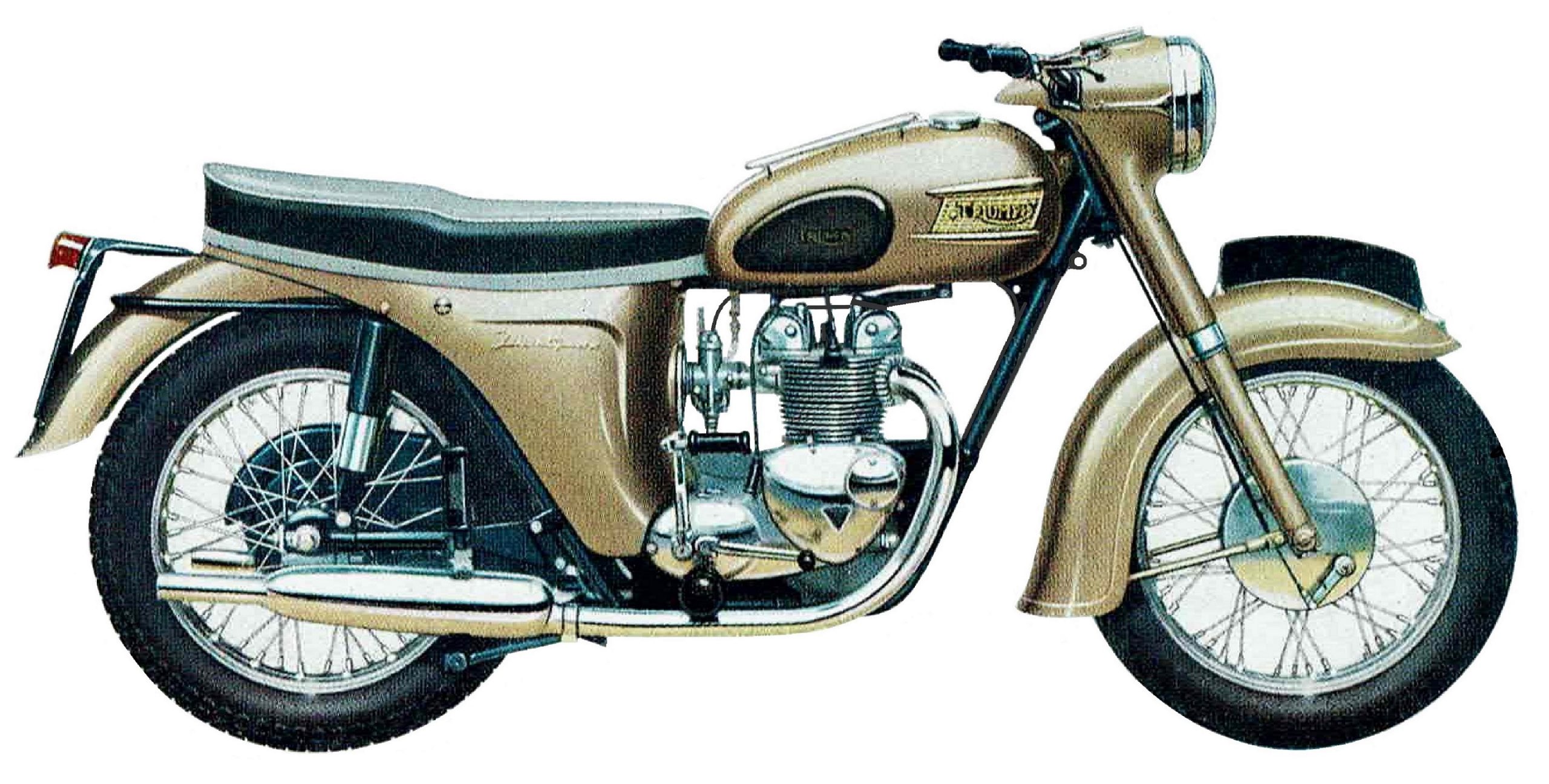
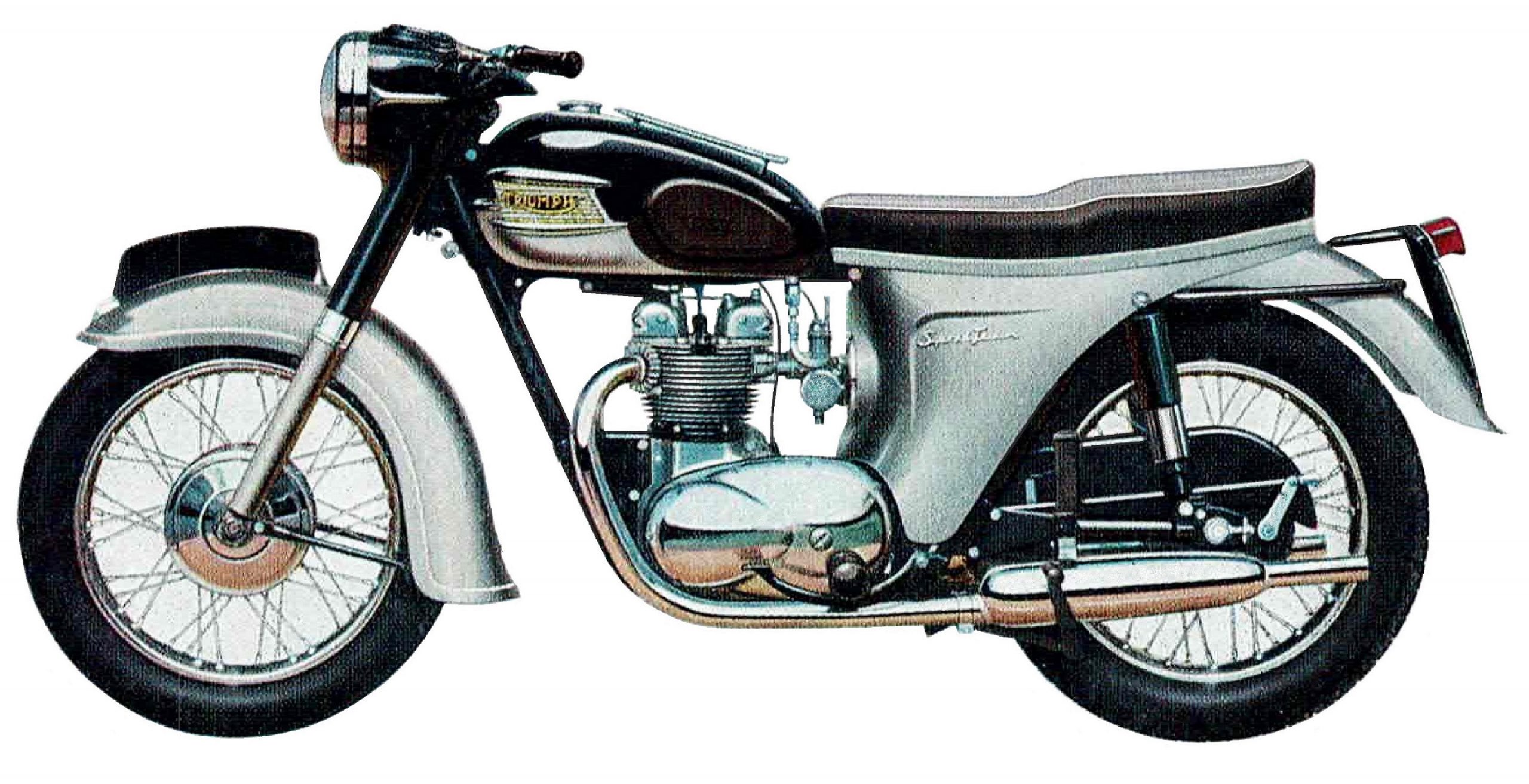
Notes for 1964
This is a summary of the 1964 Engine Modifications and the models they apply to.
H33687 T100SC Lucas 54021079 Alternator fitted from this number (17th Jan 64).
H35647 3TA Old type Engine Sprocket E4141 fitted from this number to H35753 (29th Jun 64).
1964 Production begins in batches on the 9th September 1963 with H32465 (T100SS) and ends on 6th July 1964 (5TA).
T90 Production begins on the 20th September (H32572) and ended on the 2nd July 1964 (H35867) with a total of 574 for the year. 29 machines were exported to destinations as varied as Malaya, Mexico, Denmark and Germany.
T100SS production for 1964 is 473 machines, again lower than Tiger 90 production.
T100’s H34372,3 and 4 are modified and supplied to Dugdales for the 1964 Thruxton, these and other interesting machines I am continuing to research.
Paris Show machines shown in the factory records for 1964 are T90 H32572, 3TA H32622 and T100SS’s H32547 & H32548
3TA’s H35132, H35133 and 5TA’s H35134 and H35135 are supplied to Morris Greenburg Israel for the Tel Aviv Show.
The VMCC in their archive have an excellent set of photographs of a 1964 5TA Road Test Machine 675 JNX (Motor Cycling January 15th 1964) showing a great deal of detail not usually visible, This machine is H32982 below, is pictured at Buckingham Palace being displayed by Mary Travers from the group Peter, Paul and Mary who were in concert at the Royal festival hall in April 1964.

In Roy Bacons ‘Triumph Twin Restoration’ book are some excellent factory images of a 1964 3TA see page 147 in particular.
Look for Motorcycling (Newspaper) 30th October 1963 or Motor Cycle 31st October 1963 for the Triumph Range of 1964.
The only 1964 road test is of a 5TA in Motorcycling (Newspaper) 15th January 1964.
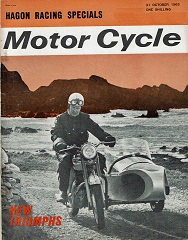
In my private collection kindly provided by one of my T90 contacts I have original photographs of a 1964 Tiger 90 collected from the factory together with photos taken after a crash and later racing history, I am happy to provide copies for your own research use.
The 1964 ISDT is held between the 7th and 12th September 1964 at Zeilort Erfurt in the DDR (East Germany)
Entrants on Triumphs are
Roy Peplow is on the 350 (Tiger 90) (105 CWD H 27606)
Bud Ekins, Dave Ekins, J.F Steen and Ray Sayer are on 500’s (Ray on 106 CWD H 29984 Converted to 500cc)
Steve Mc Queen, Johnny Giles, Cliff Coleman, and Ken Heanes are on 650’s. Johnny on 117 LAC (6T DU 9331) and Ken on 929 FNX (T120 DU 1557)
Ray Sayers Gold Medal Winning Machine 106 CWD is the same bike from the 1962 ISDT, this machine survives in Dick Shepherds collection.
There are several photographs available that show the 1964 Triumph Supported Riders posing with some of the machines at the BSA factory.
I have had the pleasure of meeting Ray Sayer and his wife Carol, who were happy to let me admire and photograph his Three Gold medals and souvenirs.
The Medals are not actually gold and were manufactured by the Birmingham Medal and Badge Company, of 95 Albion Street Birmingham.
Ray and Carol have fond memories of the ISDT events where a Party atmosphere predominated and the drinks flowed freely.
For an excellent report on the event you need Motorcyclist Illustrated of October 1964.
Motor Cyclist Illustrated, first published in 1958 is of interest to both historians and restorers due to the numerous images that accompany the articles.
A rare magazine to find; the VMCC have a good but incomplete collection.
The British Team ISDT machines were used in other events such as the Army Three Day trial and were usually retained and serviced by the factory, only being released to the riders a short time before each event.
Roy Peplow living near the factory would collect his machine personally and practice the various service tasks (puncture repair, cable replacement etc) until he was confident.
Both Roy, Ray, Gordon and Johnny Giles indicate that they were discouraged from modifying the machines themselves.
The 1964 US ISDT machines were modified production bikes not Works machines. The story of the 1964 ISDT is well documented in the book “40 Summers Ago” this rare book is a brilliant photographic record of the competition and features many rarely seen images.
Bud Ekins Tiger 100SC for the ISDT is H35403 with Dave Ekins mount likely to be H35401
For information and photographs of Bud and Dave Ekins have a look at this excellent site www.budanddaveekins.com
For details on the ISDT Look at the superb site www.speedtracktales.wordpress.com
Ace Classics www.aceclassics.co.uk have built a replica of Steve McQueen’s 1964 Machine. The original survives in the care of one of my contacts.
If visiting Los Angeles, I recommend the Petersen Museum, the fascinating Le Brea Tar Pits and of course the Queen Mary.
Continue your California trip to Include Dan Rouit’s Flat Track Museum in Clovis, or Buddy Stubbs excellent Museum in Phoenix Arizona.
For Information on the US Jack Pine Enduro won in 1964 by Roger Kussmaul (Cub) look at the Lansing MC site at www.lansingmotorcycleclub.org
Bill Baird was the most successful Enduro Rider using Triumphs, two of his famous machines survive, one is displayed at the AMA Museum in Pinkerton Ohio while his earlier machine is in a private collection.
In the 1964 Thruxton 500 there are several ‘Teams’ on Triumph’s
Look for ‘Motorcycle Sport’ August 1964 and the other period magazines for results details.
I have identified three machines in the records that are probably Thruxton bikes
H34372 is dispatched to Dugdales, Greenbank Garage, Alvanley, Cheshire
H34373 to a Mr R.A. King
H35374 is sent to Kilbourn Motorcycles, Mead Lane, Chertsey, Surrey
These three machines are recorded as being built in May and early June 1964 within a batch of T100SR machines for Tri-Cor built in early April 1964.
In the USA for the 1964 Season new race rules are applied with the long standing “Ownership” regulations revised. Previously, teams would have multiple engines with the same number stampings built from spare crankcases. Almost all ex race machines I have studied show “non-factory” stampings, not necessarily incorrect but should be treated with care !
The 1964 season covers 17 Races on Pavement, Dirt and TT with Gary Nixon and Buddy Elmore (El Paso, TX) prominent among the many soon to be famous names riding Triumphs. For more details look for Gregory R Pearsons “The Complete Grand National Championship Volume 1”
Details of Triumph’s competition successes for 1964 can be found in the 1965 US Catalogue.
The July 1964 edition of “Cycle” contains several pages detailing an interview between Floyd Clymer and Cliff Guild on the preparation of machines for Daytona.
The article also includes specifications and good quality photographs.
I recommend the French website etmoteur.fr for details.
Tiger 90’s are often referred to as the Baby Bonnie as they shared the same colour schemes for most years with Home Market Bonnevilles.
Optional extras are listed as Pillion footrests, prop stand, QD rear wheel, Tachometer..
Prices for 1964 are ….
3TA £ 261/0s/0d
5TA £ 274/4s/0d
T90 £ 274/4s/0d
T100 £ 279/4s/0d
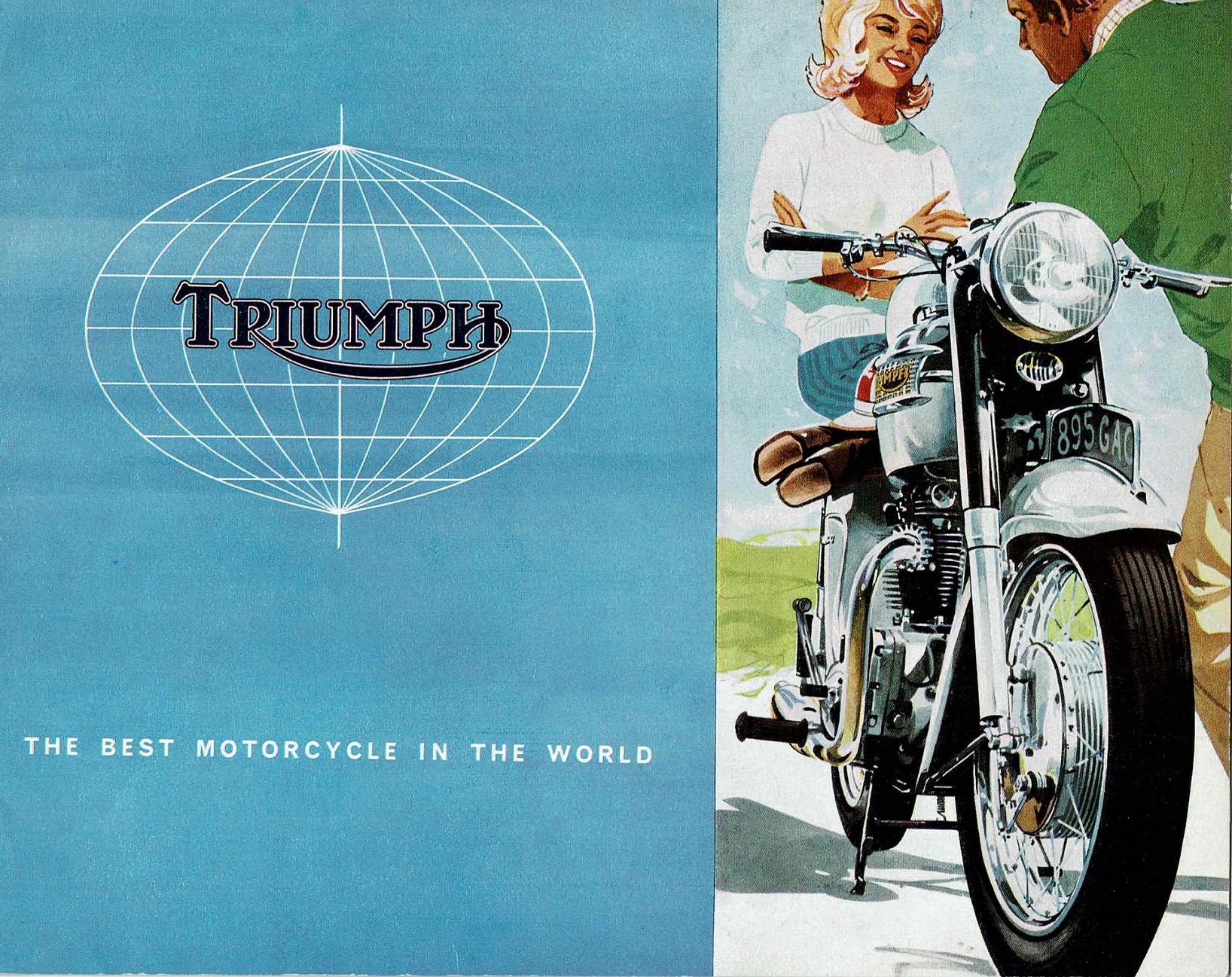
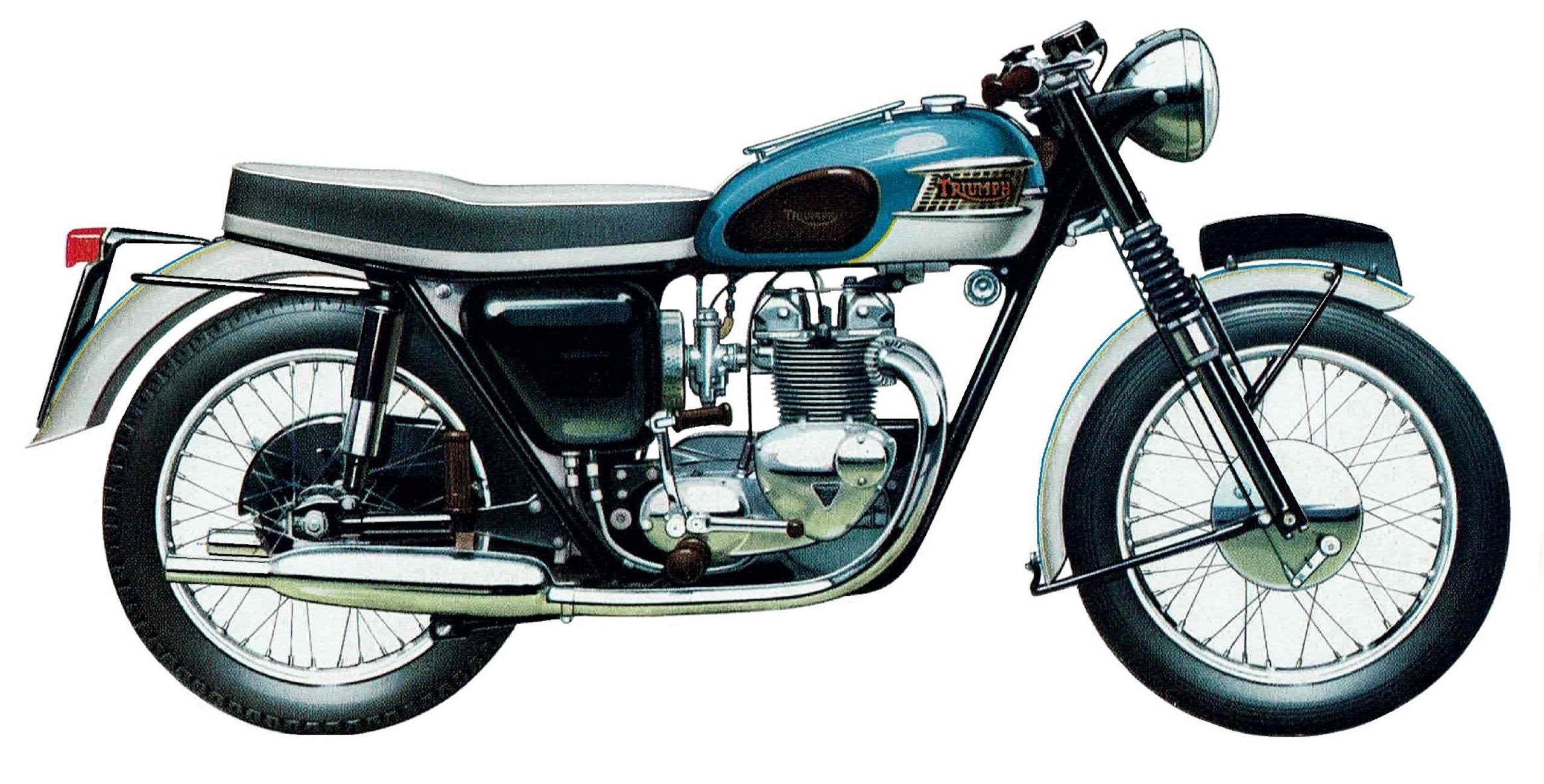
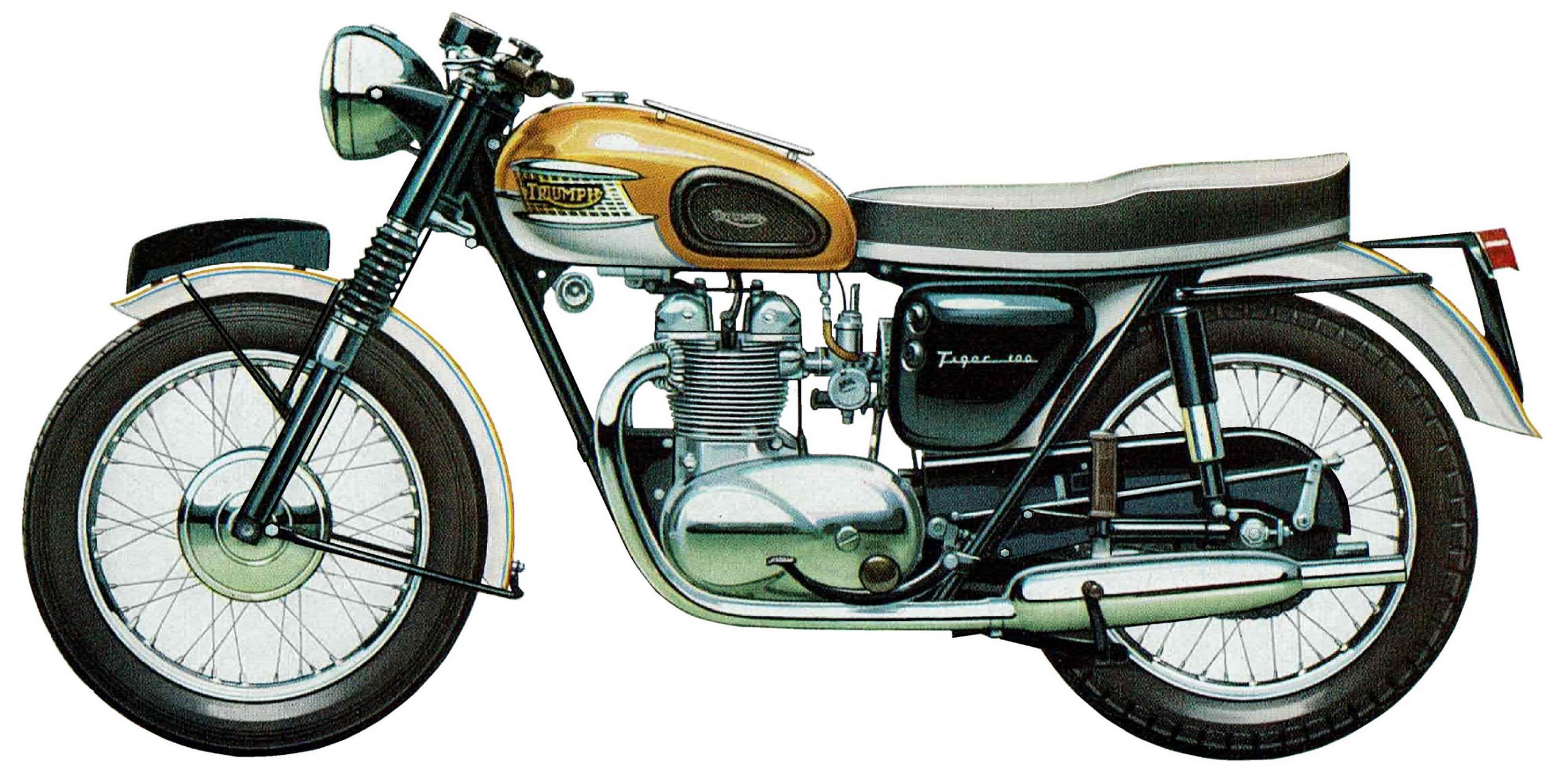
1965
Engine Frame Numbers H35987-H40527.
| Models Covered | Standard | Police | Military |
|---|---|---|---|
| 1965 Triumph Tiger 90 | 801 | ||
| 1965 Triumph Tiger 90SC | 2 | ||
| 1965 Triumph Tiger T100 | 21 | ||
| 1965 Triumph Tiger 100SS | 571 | ||
| 1965 Triumph Tiger 100SC | 1180 | ||
| 1965 Triumph Tiger 100SR | 827 | ||
| 1965 Triumph 3TA | 620 | 95 | 3 |
| 1965 Triumph 5TA | 336 | 11 | 1 |
| 1965 Triumph T50 | 17 |
Sales for all Triumph Models for 1965
| 1965 | T20T | T20SH | TR20 | T20SC | T20SR | T20SS | T20WD | 3TA | 5TA | T90 | T100SS | T100SR | T100SC | T50WD | 3TW | 5TW | TRW | Eng | 6T | TR6SS | T120 |
|---|---|---|---|---|---|---|---|---|---|---|---|---|---|---|---|---|---|---|---|---|---|
| Home | 289 | 116 | 93 | 279 | 189 | 774 | 324 | 15 | 433 | 224 | 701 | ||||||||||
| Jomo | 378 | 536 | 310 | 821 | 1147 | 1971 | |||||||||||||||
| Tri-Cor | 75 | 151 | 139 | 517 | 354 | 314 | 1722 | 3602 | |||||||||||||
| Export | 468 | 25 | 6 | 1 | 21 | 81 | 436 | 233 | 27 | 280 | 3 | 1 | 19 | 760 | 227 | 655 | |||||
| Govt | 500 | ||||||||||||||||||||
| 832 | 141 | 99 | 151 | 518 | 557 | 81 | 715 | 422 | 801 | 2594 | 827 | 1175 | 15 | 3 | 1 | 19 | 500 | 1507 | 3320 | 6929 |
In January 1965, part way through the build year, Tiger Cub production is transferred to BSA’s Small Heath and with the release of staff production of the B and C Range machines begins to increase.
In 1965 33,406 British built Motorcycles are exported to the USA, now the main market for Triumph’s. This period signals a major change for the fortunes of the British Motorcycle Industry, heading for the time into a period of prosperity, tied closely to the popularity of motorcycling in the USA.
The sales figures above show only part of the story and for additional information refer to Lindsay Brooks and David Gaylin’s excellent “Triumph Motorcycles in America”.
For additional historical context you should read both Bert Hopwood’s and Neale Shilton’s Books.
The Cub and earlier Terrier Models are covered extensively in Mike Estalls “The Triumph Tiger Cub Bible” and owners and restorers should seek out a copy of this excellent book before undertaking work on these models. The Cubs like the Twins undergo numerous changes in specification and shown above are the seven standard models produced just for 1965.
The rare 1965 Catalogue from Tri-Cor indicates that the T100S/R Road Models are also available with 17 inch wheels with mudguards and gearing modified…
The factory records and sales figures do not record these as a separate model and apart from one known survivor it is not possible to identify how many were supplied.
The catalogue also shows the standard T100S/R with a 19” front wheel and all models now feature the Lucas L679 Rear Light.
On all standard machines a bolted in top strut is added to the frame as standard along with the appropriate four-point fixing petrol tank. This is attached by special bolts located through rubber buffers, attached to strips across the frame themselves attached by U bolts and nuts. This tank design has been used since 1961 on export models but these seem to be a smaller capacity tank when comparing the US press pictures to Home market ones.
A slot incorporated in the flywheel together with a removable plug (1/2 BSF Thread) on the crankcase rear ease location of top dead centre for timing the ignition. (Seen earlier but not officially fitted), the 65 Range literature states that all Models now feature new clutch friction segments and that the oil pressure tell-tale button is deleted. (Since 63!). From H39194 to H39205 the drive side bearing fitted is described as a “Three Spot Bearing”! Felt washers are added to the gearbox output oil sleeve and to the right hand side of the rear wheel hub while the QD hub is re-designed to accept ball journal bearings instead of the previous taper roller bearing !
By now the crankcases for the 3TA and 5TA also show the rev counter drive point but internally the exhaust camshaft does not have the drive thimble fitted, externally the threaded hole is plugged by one of the plugs used also for the top dead centre access. These plugs and the gearbox drain all use the same ½ inch BSF thread form.
The points change to the Lucas 6CA type with the condensers now located on a bracket under the petrol tank. The Lucas 70163 8H horn of the period is now all riveted construction, located under the tank as shown in the illustration; there are corresponding changes to the frame brackets beneath the tank to suit these arrangements. After H37635 new alternators were fitted across the range (54021079)
The 3TA and 5TA continue with the earlier gearbox layshaft arrangement of plain bushes while the sports models (T90 & T100) show Torrington Needle roller bearings
at both ends of the Layshaft. The Kickstart spindles are not interchangeable as they are separate parts,
A note for restorers, the 3TA has different clutch parts and not just fewer plates but a different sprocket housing, centre, screw pins, spring cups, springs and operating rod. These parts are visually very similar and to the casual observer interchangeable, tread very carefully when ordering parts as this information is not widely known. All models share the hub, rollers clutch plates, hub plates, drive rubbers, pressure plate and chaincase. For confirmation study the parts book carefully.
Part Number T1040, the screws for the hub are 1 BA screws with a deep countersink, these are not fitted elsewhere.
From July 1965 a “Chain Oiler” is added, this takes the form of a Pinhole drilled into the circular cover plate behind the clutch. Owners complain of oil leaks and at H41568
(1966) this feature is deleted. Triumph bulletins advise Peening this hole over to cure the problem.
Indicated by the parts book, the 3TA and Tiger 90 share exhaust pipes differing from the pipes shared by the 5TA and Tiger 100SS.
For the 350’s the pipes exit the head and then reduce in diameter until reaching the Silencer where the diameter increases again.
All machines feature the standard silencer for the period; the parts book shows mutes available for all models.
The front brake cable stop now moves onto the brake plate as part of the fixed shoe location (late 64 machines show this). The fork sliders and spindle caps change and are now the simpler semicircular form again seen on some 1964 machines, these are the stronger type detailed for 64 and described in the 65 Range Detail; which also states that the spring abutment collars are now light alloy.
All 1965 Sports Models have forks with increased length of travel while the T100SC models use a different (sidecar) spring rate and have damper kits fitted.
Note that the fork design for all the models is the 64-65 type and in the illustrations you will note the changes.
The Nacelle models of the period do not have the Steering Damper fitted this remains on the other models in the range.
Top Lugs also differ and are not interchangeable between the Nacelle and Other Models but note that the distance piece H1667 is not fitted.
.
For the 3TA and 5TA the fork stop differs from the extended nuts fitted to the sports models, these are not accurately illustrated in the parts book!
For export machines such as the T100SC fitted with the Smaller Petrol Tank shorter length extended nuts are provided, refer to the parts book for all fork details.
The brake and clutch levers change now having the clamps horizontal the ends are plain not ball ended. Though the parts book shows Ball ended levers available as an alternative and it is likely that these were fitted to all export machines, certainly those destined for the USA.
The seat remains as for the earlier machines, interestingly the US brochure again shows the grab strap. Under the seat the toolbox now becomes partially closed off but is still attached to the rear mudguard.
With the seat there is some conjecture as to if there is a Triumph logo at the rear, in the UK prior to the introduction of the registration suffix there was sufficient space on the numberplate for a Triumph transfer but afterwards there is not. Many original machines I have studied do not have the logo on the seat.
A slightly revised rear number plates is fitted now with room for Seven Characters, i.e ABC 123C
For export models the rear light changes to the Lucas 679 (53972B) type illustrated in the period Lucas Brochure for Triumphs.
The colours for this year are (Tiger 90) Pacific Blue over Silver with Gold Pin- striping. (The 65 Range Detail actually states Light Pacific Blue over Alaskan White). The Tiger 100 is Burnished Gold over White, Interestingly the colour image on the cover of ‘Motorcycle Mechanics’ shows the Pin-striping in Blue! The other sources say Black!
On the petrol tank of both models the forward side styling strips are not fitted (though shown in the parts book and in the 1965 brochure) and a world speed record holder transfer is found on the top opposite the filler cap. Note the Triumph lettering can be picked out in deep red or light gold as is shown in the brochure! H36979 shows the gold H37631 Shows Red!
For 1965 the Front Hubs on all models are painted Silver as are the cylinder fins (except 5TA)
The 3TA and 5TA incorporate the general improvements for the range and in addition have new semi sports mudguards fitted as shown in the illustrations below.
The mudguards show a raised central rib similar to the guard used on the 1963 T90 and T100. Part numbers H1901 and F5963. Note the plain front number plate.
I believe like the other models in the range that the styling strips associated with the tank badges are not fitted even though they appear in both the parts books and brochures.
Colours for the 3TA are Silver Bronze, the 5TA Black over Silver Sheen.
Triumph service bulletin no:240 of July 1965 gives comprehensive details and parts available to convert 3TA and Tiger 90’s to High Performance Specification. Contact the VMCC for a copy.
The T100SC models as usual feature Off Road specification items not fitted to Road models.
The Road Test Machine in Cycle (September 65) shows the later Export Rear Lamp, High Bars, Siamesed Pipes, Alloy Mudguards (Fenders) etc
Parts book No 6.
Be aware that several of the illustrations in the parts book such as the frame do not accurately represent the parts fitted for 1965.
To view the Triumph Parts books use this link to Classic British Spares www.classicbritishspares.com and use the Parts Book library Tag.
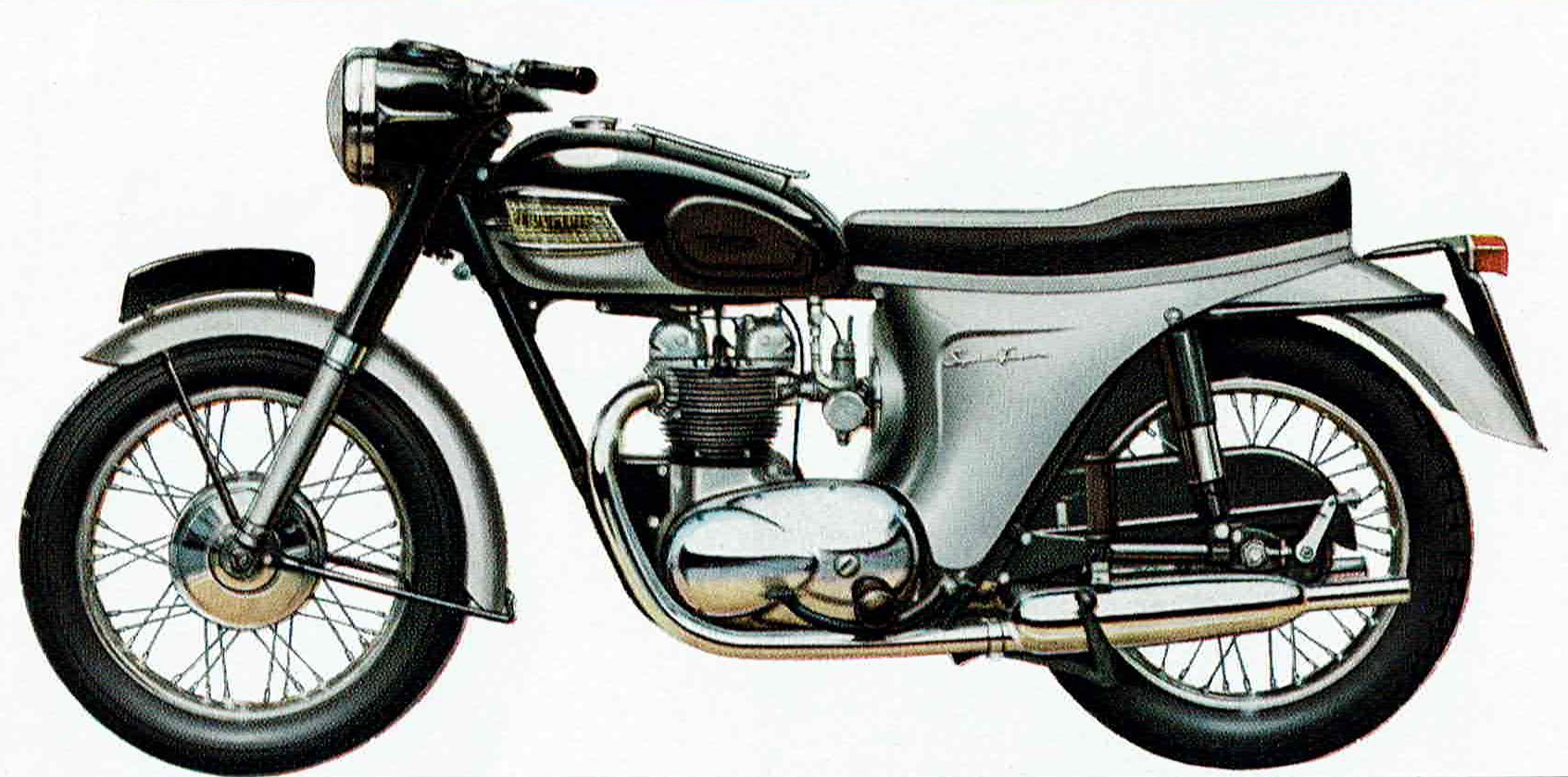
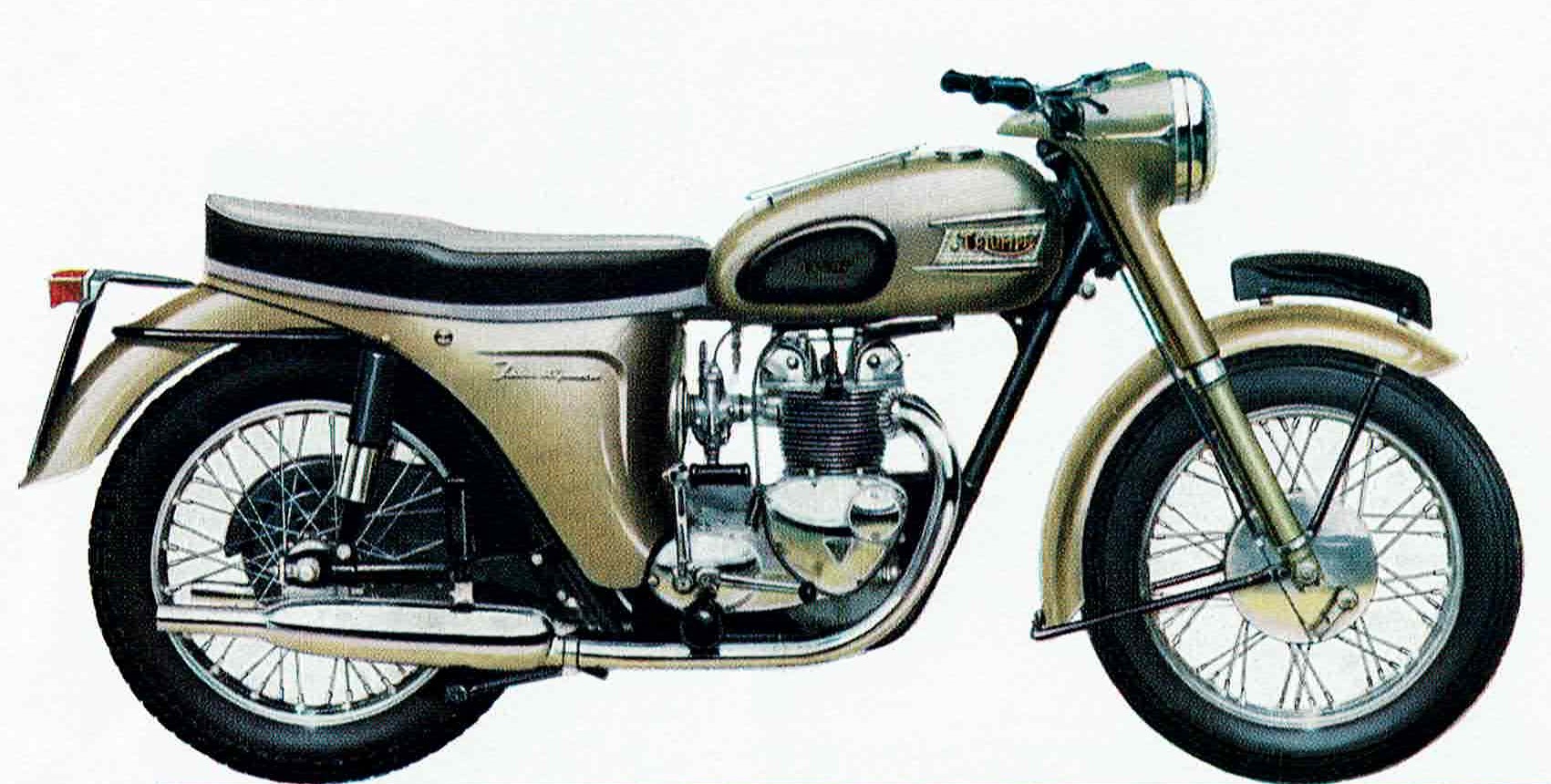
Notes for 1965
This is a summary of the engine modifications and the models they apply to or from for 1965.
H35987 3TA Modified Contact Breaker Bolt from this number. (9th Sep 64)
H36039 3TA 18T Gearbox Sprocket fitted as standard from this number. (10th Sep 64)
H37636 T90 Lucas 54021079 Alternators fitted from this number to all ‘C’ Range models (14th Jan 65)
T100SC T1614 Layshaft Bearing fitted together with Blanking Disc from this number (18th Jan 65)
H38411 T100SC Two thin Clutch Plates fitted in every clutch from this number (11th Mar 65)
H39194 to H39205 T90 Driving Side Bearing, Three Spot Bearing ! (25th Mar 65)
E6120 3TA Camshaft Fitted (24th May 65).
The information above gives an idea to the complexity of identifying original specifications and my recent tortured restoration of a 3TA has shown many details that I did not believe, especially thread sizes and the different fasteners I found all over this remarkably original but dishevelled machine. Even after nearly 30 years with these Triumphs I am still learning!
Earls Court Show Bikes for 1964 are … note that these are 1965 Models.
H36715 is the Earls Court Show 3TA sent to Chapmans of Norwich on the 8th December 1964.
H36716 is the Earls Court Show 5TA sent to Dene of Newcastle on the 10th December 1964
H36717 is the Earls Court Show T90 sent to Arbour of Leicester on the 22nd December 1964
H36718 is an Earls Court Show T100SS sent to Steiner, Switzerland on the 12th February 1965
H36718 is an Earls Court Show T100SS sent to Arbour of Leicester on the 18th December 1964
Other machines H36067 (T90) and H36068-H36071 (T100SS) are sent to Reinhardt, Denmark for Show Duties.
In January 1965 BSA buy a controlling share of Johnson Motors and shortly afterwards they purchase Hap Alzina (co) who have been handling the sales of BSA’s into the Western USA and from now on all sales and marketing into the USA is owned and arranged through the BSA Group in England.
Lindsay Brooks and David Gaylins new book Triumph Motorcycles in America gives an excellent historical perspective and is a must have book for anyone interested in Triumph History.
1965 production begins on the 9th September 64 (3TA) and ends on the 12th July 1965 (T100SS).
T90 production begins in batches on the 11th September 1964 (H36143) and ends on the 30th March 1965 (H39375) with a total of 803 built. 18 machines were exported. Japan, Canada and British Guiana were some of the destinations.
1965 T100SS production begins with H36586 but early production figures are low and the total for the year is only 549 machines. Interesting destinations include Denmark.
You need a June 1965 copy of ‘Motorcycle Mechanics’ magazine for the ‘Triple Test Feature’ showing lots of detail with a excellent colour front cover featuring a Cub, Tiger 90 and Tiger 100. The machines illustrated were registered on the 1st April 1965. (T90 H39276 Survives).
Other images of this bike are in Roy Bacons Triumph Restoration Guide.
In “The Motorcycle” of 8th October 1964 are the full Triumph range details for 1965 including useful images of the Tiger 90 and 3TA.
The British Manufacturers usually announced their new ranges and improvements in the autumn to coincide with the Motorcycle Show.
The details shown are very useful for restorers but often represent specification changes that have been introduced during production.
Note the Colours given for the finish in the Range Supplement do not correspond with the 1965 Triumph Brochure.
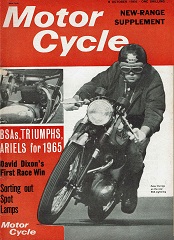
In Cycle (USA) of February 1965 the Triumph Range is featured, on the cover is a superb colour shot of one of the larger models (TR6).
The image like most Triumph publicity shots of the period was taken near the factory but styled to appeal to the important US market.
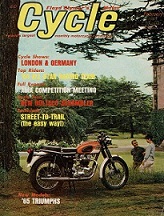
In Cycle (USA) of September 1965 is a road test of a 1965 T100SC with a number of excellent photographs. Though published in September 1965 after 1966 production has begun the machine featured is a 1965 model.
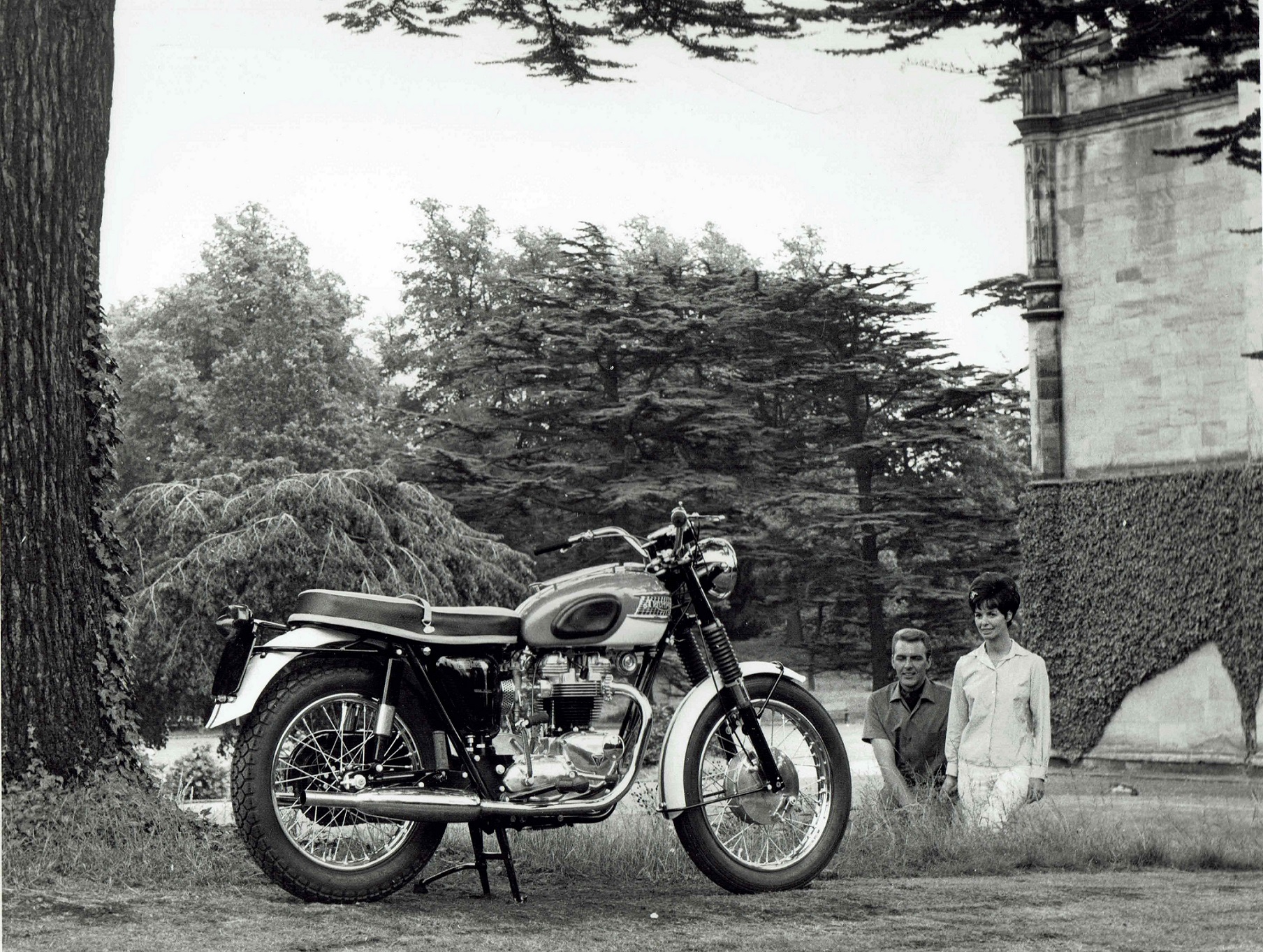
Look Up the famous Rev Bill Shergold of the 59 Club, there is an image of him starting his brand new T90 at Comerfords, a nice period shot. I am of course trying to identify this machine that appears in several other images featuring Bill and the 59 Club. The bike is distinctive with its carrier and crash bars. YouTube has some interesting clips worth searching for. Please note that Comerfords sold some 15 Tiger 90’s in 1965.
The Tri-Greeves (Triumph engine in Greeves Frame) has always been a popular conversion for Trials and off road use, of greater interest are the Triumph Engines fitted in BSA Victor frames as the initial versions of these were not sanctioned by either company, also of interest are the later engines fitted in genuine Cheney frames.
ISDT Machines … Several photographs show changes made to the ISDT machines for trials.
The 1965 ISDT is held on the Isle of Man between the 20th and 25th September
I had the pleasure of meeting Dale Richardson of the USA who took part in several ISDT’s from 1965 onwards, usually collecting his machine from
Ken Heanes or Cheneys. Dale was well known Enduro Rider in his home state of Idaho and winner of the Paul Bunyan Run in 1963.
Dale is featured in a well-known 1965 ISDT Photograph showing Ken Heanes on Sky Hill, copies are available through the Mortons Media Archive.
In the Army Three Day Trial for 1965, on the third day, Ray Sayer Crashed heavily, losing consciousness briefly and wrecking his mount when he entered a dried up stream bed that was deeper than expected, he had actually been well ahead of his time allowance and if he had been travelling more cautiously would not have been injured.
I am seeking to identify the bike he was riding, likely to have been 105 CWD (H27606) as the bike now shows a later frame.
Look for the Report in Motor Cycling of 24th July 1965 which contains pictures of Roy Peplows and Ken Heanes Machines.
The ‘Motorcycle’ of 4th February 1965 has an article on the ISDT modifications undertaken by Henry Vale and Vic Fiddler.
In Motor Cycling of April 17th 1965 is an excellent side view of Roy Peplows Machine showing the New Silencer for 1965 fitted to the IDST Machines.
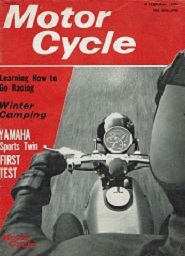
While in ‘Motorcycle Sport’ December 1965 is a superb article with pictures of Ray Sayers ISDT Tiger 90
Try www.speedtracktales.wordpress.com for details on the 1965 ISDT including many previously unpublished photographs.
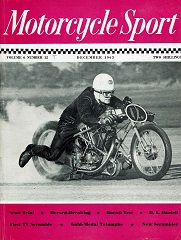
In the USA the National season now covers 18 Races starting traditionally with Daytona on the 28th March and with close to 2500 licensed racers in the USA the season looks set to be busy. The National races cover Road Races, Short Track, Half Mile, Mile and TT events and Triumphs feature heavily in the entries. Researching racing in the USA is time consuming requiring access to the period race programs and other related materials. All the events were popular spectacles drawing huge crowd and are likely to have been reported in the local and national press, with additional features on local racers. Contact experts such as Bill Millburn for advice or go to your local library to research activity in your area.
For information look for Gregory R Pearsons “The Complete Grand National Championship Volume 1”. This excellent book contains the results for all of the USA National Races from 1954 to 1969 with numerous pictures from the Mahoney archive, a must have book for race fans.
For researchers and fans a visit to the AMA and their museum in Columbus Ohio should be high on your list.
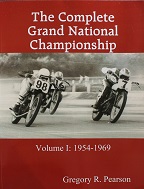
Nevertheless machines to look out for!
Extras are Pillion footrests, Prop stand, QD rear wheel, Tachometer. Though the article above seems to indicate that the prop stand and tachometer are standard fitments this is a writing error by the tester.
Prices for 1965 are …
3TA £ 279/9s/8d
5TA £ 283/1s/5d
T90 £ 283/1s/5d
T100 £ 286/13s/0d
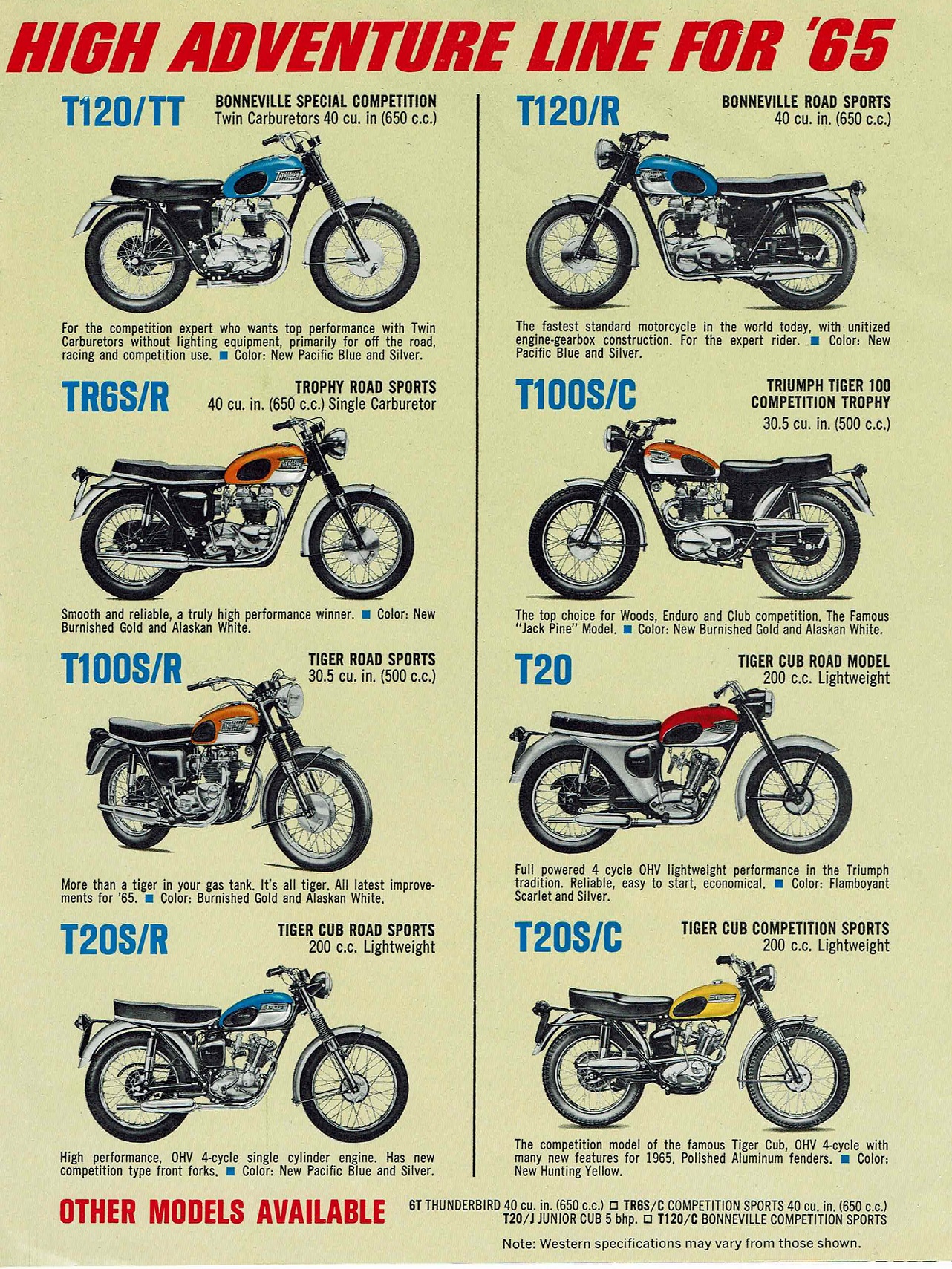
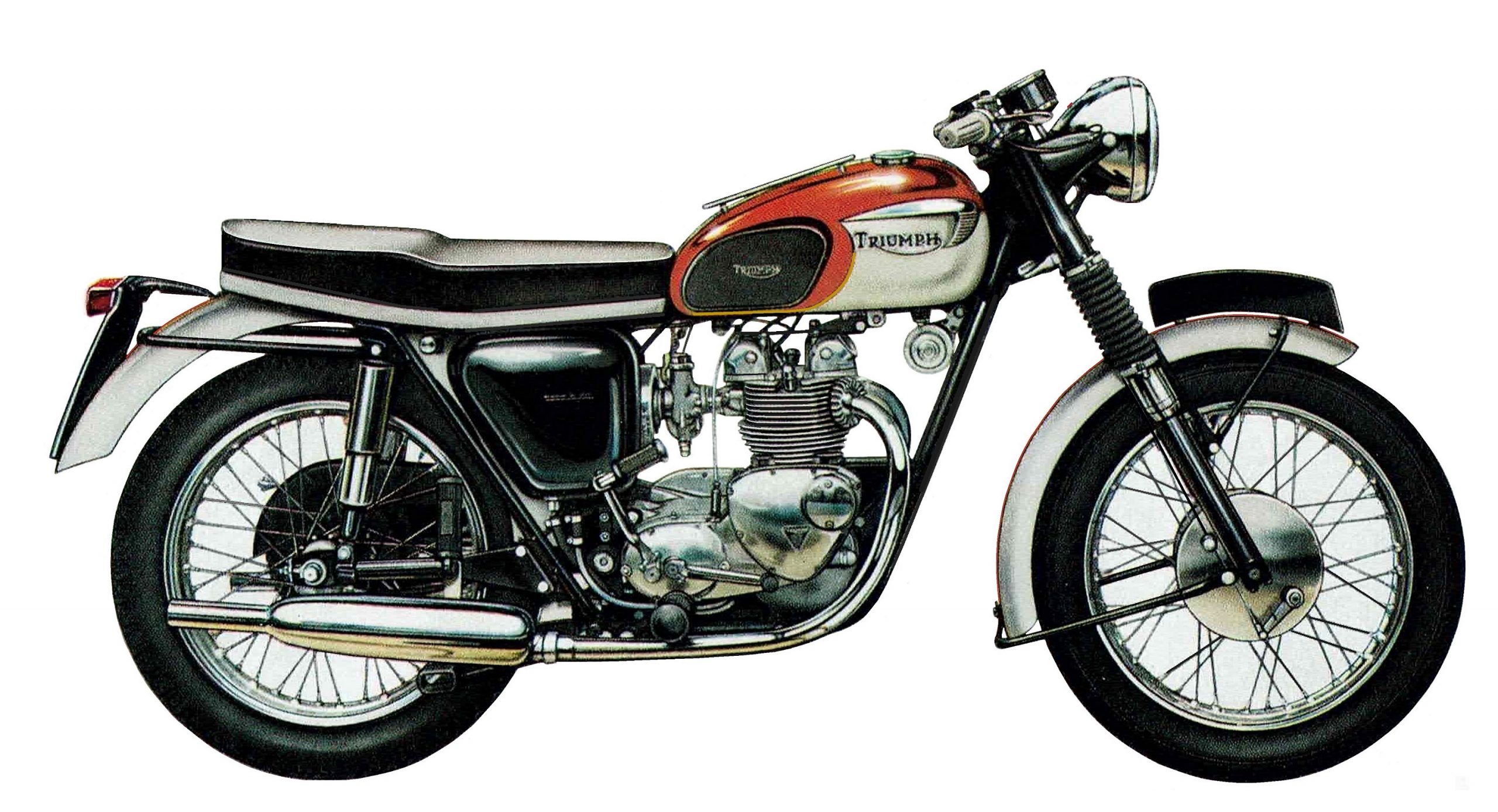
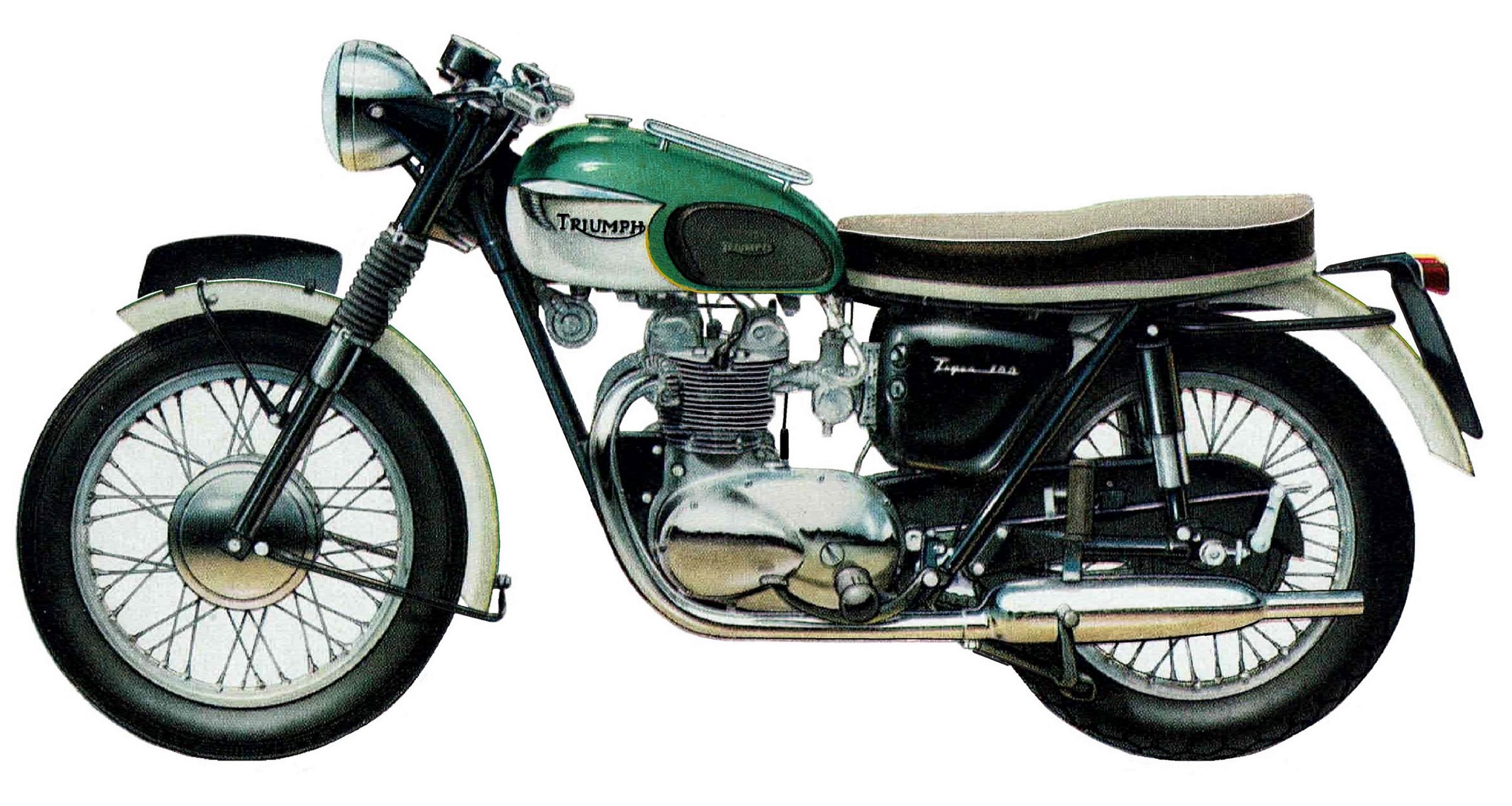
1966
Engine / Frame Numbers H40528-H48728. Last Year of 3TA and 5TA production.
| Models Covered | Standard | Police | Military |
|---|---|---|---|
| 1966 Triumph Tiger 90 | 913 | ||
| 1966 Triumph Tiger 90SR | 4 | ||
| 1966 Triumph Tiger 100SS | 1066 | ||
| 1966 Triumph Tiger 100C | 1977 | ||
| 1966 Triumph Tiger 100SC | 380 | 341 | |
| 1966 Triumph Tiger 100R | 848 | ||
| 1966 Triumph Tiger 100SR | 1150 | ||
| 1966 Triumph Tiger 100WD | 21 | ||
| 1966 Triumph 3TA | 680 | 298 | |
| 1966 Triumph 5TA | 235 | 255 | |
| 1966 Triumph T35WD | 1 | ||
| 1966 Triumph T50WD | 1 |
Sales for all Triumph Models for 1966
| 1966 | 3TA | 5TA | T90 | T100SS | T35WD | T100SC | T100SR | 6T | T120 | TR6 | T120R | TR6SR | T120TT | TR6SC |
|---|---|---|---|---|---|---|---|---|---|---|---|---|---|---|
| Home | 447 | 246 | 777 | 832 | 508 | 904 | 211 | |||||||
| Jomo | 1326 | 737 | 2920 | 1090 | 536 | 399 | ||||||||
| Tri-Cor | 822 | 1277 | 709 | 5351 | 2146 | 652 | 937 | |||||||
| Export | 265 | 246 | 46 | 700 | 1 | 814 | 1062 | 273 | ||||||
| 712 | 492 | 823 | 1532 | 1 | 2148 | 2014 | 2031 | 1966 | 484 | 8271 | 3236 | 1188 | 1336 |
The Sales figures above are compiled from the surviving original Triumph account books held at Warwick University Modern Records Centre. The terms used for models often differ from production machines and therefore I expect the South African Mercury’s actually built to T100C specification are here recorded as Export sales in the T100SS column. The accounts show machines actually sold to customers and so do not include stock at wholesale, storage or in shipping.
Comprehensive Sales Figures for all models together with useful indexes can be found in my recent book with Peter Henshaw.
From the information above you can begin to understand the complexity of identifying model specification for 1966, during the year the SC and SR designation in the Factory records are replaced by C and R models, this change seems to have been made in November 1965.
Several changes to specification were made during the production across the range this year and great care needs to be taken identifying which model and period you have.
There are also many detailed differences between the Sports and Nacelle Models with visually similar parts but that are specific to the Nacelle models. Consult the parts book with care noting for example that there are two types of fork stanchions and crowns. The illustrations in the parts book are illustrations and do not always represent what the part actually looks like or if it was fitted, if in doubt ask for advice.
Many 3TA, 5TA and Police machines often show specifications and parts that differ from the other production models such as side panels without switches, unusual seats, early type mudguards, switchgear and other parts that are generally unobtainable as spares and not usually illustrated in the parts books.
These models can be very difficult to return to factory specification, very few survive in original condition and information is scarce.
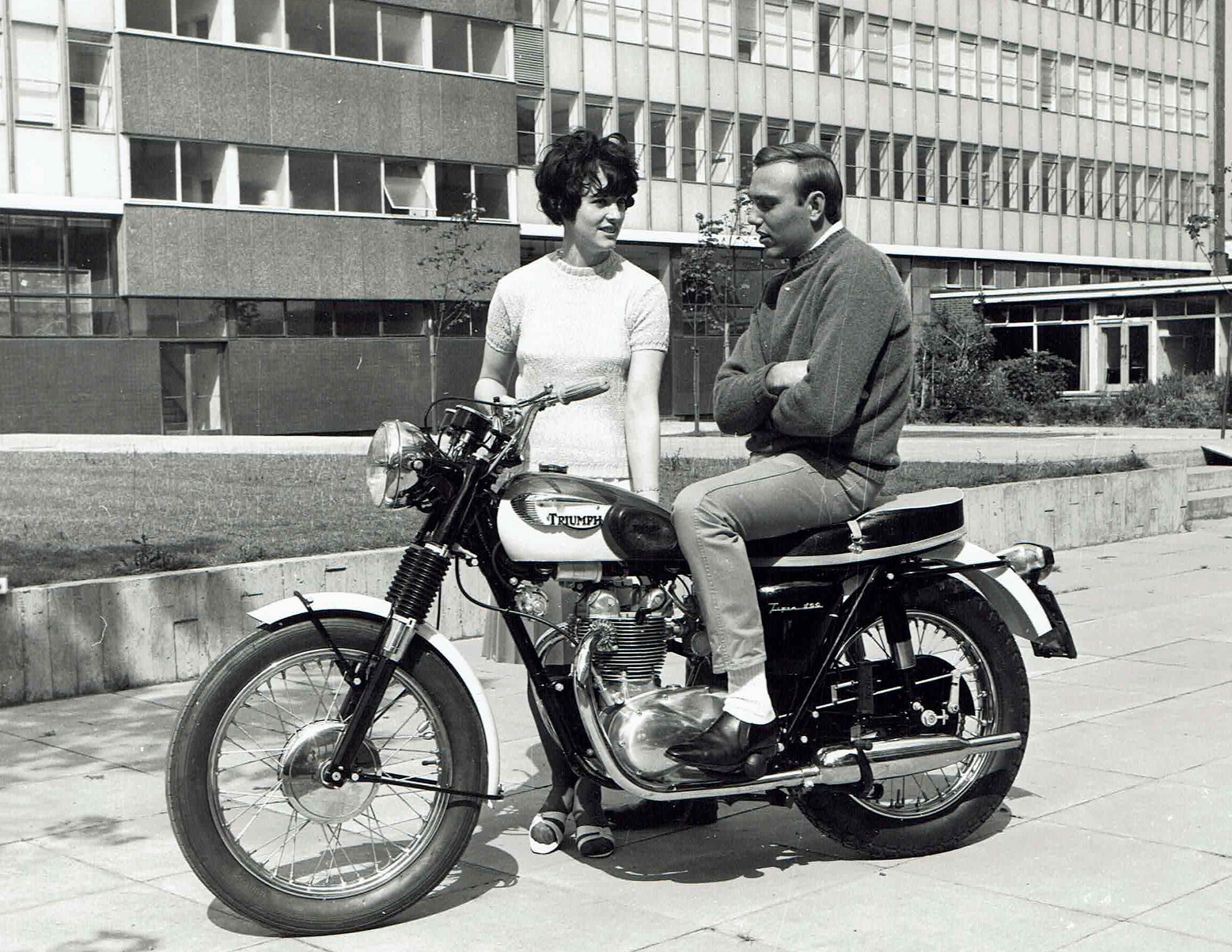
For 1966 there are numerous general specification changes, starting with the Frame.
The bolted in frame strut is now welded in place though the frame retains the bolt mountings. A steering lock body is attached to the headstock (the “Neiman” lock mechanism detaches when not in use). The fixings for the pillion footrests are simplified to bolts instead of studs and nuts as previously used.
For details of the Frame dimensions refer to the Works Manual section E16.
A new petrol tank is fitted to UK models on slightly changed mountings, the new ‘Eyebrow’ tank badges are fitted to all models, the lettering of which is black on the Alaskan white background. On home market machines the knee grips change to the early plain stuck on type, while on the smaller tanked export models the pre 66 screw on knee grips continue attaching to welded brackets. See the 1966 US Brochure and parts book for confirmation.
A picture I have of an original South African Mercury T100C shows the small tank and the knee grips clearly.
From H44000 (January 1966), T100R and T100C models shipped to the USA are fitted with the 1966 “B” Range Style 2 ½ Gallon Tank, these are not interchangeable with the larger model because of different tank and frame mountings, See the tank fitted to the period T120R for illustration.
I have seen a variation in the design of the forward Petrol Tank Mount, most machines use a U bolt and a simple steel strip but I have also seen a clamp type and reinforced strip used on a later production machine.
The changes between the 65 and 66 tanks are small and relate to the number and location of tapped holes for the badges and knee grips, only with some experience is it possible to identify the differences. Generally the 1966 Standard Tank will not show the tapped holes for the knee grips.
The cylinder head on the T90 and 100’s now feature aluminium bronze valve guides while the Carb now shows a date code possibly week/year stamped on the nearside flange.
Though the 5TA, T90 and T100 models share Camshafts the Inlet Manifolds differ between the models. Refer to the parts book for details.
The 3TA and 5TA as for 1965 continue with the earlier gearbox layshaft arrangement of plain bushes at both ends of the Layshaft. The Kickstart spindles are not interchangeable as they are separate parts,
A note for restorers, the 1966 3TA has different clutch parts and not just fewer plates but a different sprocket housing, centre, screw pins, spring cups, springs and operating rod. These parts are visually very similar and to the casual observer interchangeable. All models share the hub, rollers clutch plates, hub plates, drive rubbers, pressure plate and chaincase. For confirmation study the parts book carefully, noting that the clutch illustration is for the 6 plate clutch and that there is an error in the arrangement of the thrust washer and the rollers! (I have corrected the illustration on my parts book page).
Part Number T1040, the screws for the hub are 1 BA screws with a deep countersink, these are not fitted elsewhere and the very similar camshaft plate screws E3728 (15/32 BSF) cannot be substituted here.
When ordering new parts for the clutch you must specify and confirm that the seller understands your needs and the detail differences in these components.
12 volt electrics take over with a Zener Diode on a simple shaped aluminium heat sink behind the side panel, Machines prior to H43714 have the early heat sink F6900 with the earth lead to the diode incorrectly fitted causing overheating of the unit. After H43714 the Heat Sink is the F7237 type and the earth terminal is relocated to the rear of the Heat Sink. The battery carrier is modified and shows two holes on the left to mount the heat sink. After H42328 the Rectifier is located centrally behind the battery or batteries instead of to the left as before (Workshop Manual), the wiring is adjusted to suit. The headlamp now has a Single Red ignition warning light (hexagon) while the ignition gains a barrel type (Wilmot-Breeden Union) lock. A Lucas SS5 (35601) kill switch is fitted to the right hand handlebar, very rare indeed but good quality patterns are now available, I have period photos showing the wiring as black while that for the dipswitch is grey! The factory data states that the HT cables are suppressed internally!
T100C Models are now fitted with the VDO “Enduro” Speedometer while the road models continue with Magnetic Instruments. Police machines in the UK continue to use Chronometric Speedometers as they can calibrated for accuracy.
The rev-counter if fitted gains the neater 90’ drive unit and the instrument is now the clockwise version (RSM 3003/01), the cable runs at a quarter engine speed.
The clutch and brake levers are difficult to verify but I have several UK period photographs showing the same plain levers with horizontal clamps as fitted in 1965 though the 1966 US brochure has an excellent picture of a T100R with Ball Ended levers.
Many UK machines I have seen from this period, are fitted with the ball-ended levers by Docherty, that I have seen these advertised in the period magazines. Triumph were of course fitting ball ended levers to export models but these are by Amal their regular supplier.
The rear brake drum (Qualcast) Non QD is attached to the hub with distinctive headed bolts and locknuts, it gains a separate sprocket (46 Tooth, attached with distinctive fastenings) instead of being integral (Remains integral on the QD Option) and a new form of brake adjuster appears with two instead of four ears. The brake light clip is simplified to a plain strip drilled to accept the tension spring, (Both these details are not shown in the parts book).
I have noted on unrestored machines that the Brake Light Switch stands off the chainguard on additional nuts, not shown in the parts book !
This feature is introduced on some models from September production but may in not be universal.
The chrome plate on the front hub changes to a plainer slightly more dished design.
The front mudguard lower support that swings down to become a stand, now appears in two versions; wide and narrow. I have seen both types fitted to original machines though the narrow version is rare and may only have been fitted to the 3TA and 5TA for a short period of time before being superseded. Compare the illustrations for the T90 and T100 to those of the 3TA and 5TA.
I am attempting to verify the style of mudguards fitted for 1966, period photographs show the same versions as for 1965 but the rear mudguard now features a cut away area to allow the enlarged oil tank to fit. Some 66 machines I have studied show a small rolled bead but this is unusual and I believe a later mudguard feature (1967).
The 3TA and 5TA illustrations (below) show a new style of front mudguard attachment and amended forks.
By 1966 Triumph are not making their own mudguards and these are supplied by several companies in Birmingham to slightly varying designs, the actual design details will be
very difficult to verify. Jim Lee (former Meriden employee) indicated that due to industrial action at the usual suppliers, Triumph were obliged to obtain mudguards wherever
they could in order to continue production and complete orders. I have seen several variations of mudguards on original condition machines from 1966 onwards.
Under the seat a new larger capacity and design of oil tank incorporates a chain oiler, frothing tower and changes to the rocker feed take off, drain plug location and breathing pipe. The mountings change to more effective rubber isolated spigots shared with the new battery carrier with changes to the frame brackets to suit. The design of oil tank only applies for 1966. The Left Panel is modified slightly to incorporate the chain oil feed pipe exit in addition to the brake light wiring. I have seen the chain oiler routed through a hole in the crankcase over the engine sprocket but I am uncertain of the arrangement as the parts book shows a crankcase protection bracket affixed here, certainly fitted to the T100C models destined for America.
Documents indicate the Crankcase Protection Blade is fitted from H42963 but my own machine H42001 shows the threaded hole for the attachment bolt.
The side panel for 1966 remains in the same style as the earlier machines but during the year an additional hole is seen along the lower edge, this may be associated with the chain oiling pipe or for drainage and is not found on pattern panels.
For the 3TA and 5TA the panel is plain, without the switch holes but does feature the additional hole in the lower edge. These panels often stress crack near the top and welded repairs are common
On early machines two 6volt batteries were fitted with carrier and parts to suit. After H45511 a Lucas PUZ5A battery is provided. A shallow plastic tool tray (light grey and very rare but pattern ones now available) appears mounting on welded brackets across the frame behind the battery. (See the period road test).
On my 1966 3TA restoration project the original tool tray is black, not light grey, I have had the tool tray scanned and re-made using 3D Printing.
The kick-start rubber is now plainer, without the Triumph Motif and is open ended. In the earlier road tests you will often see that the end of the old style rubber has broken off!
On T90 H47024, a late 66 machine the removable cover over the sludge trap is deleted (present on H46928 but not H46840 but seen on T100 H47638, H47736 and H48561).
I have also noted on late machines that there are changes to the crankcase adjacent to the oil pressure relief valve in preparation for the fitting of the oil pressure indication. Machines after H44000 will show the two warning lights (Green Ignition, Red High Beam and gaiter spring clips appropriate for the late 1966 machines. Please note the headlamp warning light arrangement is only appropriate for the T90 and T100SS and T100R.
According to the parts book the T90 and T100 models are fitted with a crankcase chain protector and on the crankcase is seen a tapped hole to accept the fastening.
This distinctive hole (1/4 BSF) is seen on all post 1966 crankcases, the fastener fits with a small Clevelock nut visible on the top.
The 3TA and 5TA use a rubber plug to blank off the hole and the forward chainguard is not fitted.
For this year the handgrips by Amal are White, the left grip is sometimes cut away to allow the dipswitch to operate. The white handgrips are fitted to most Triumph models for 1966 and were universally disliked at the time. To obtain these correct white grips contact Jeff Hunter at Jeffalanhunter@aol.com
T100C machines supplied to Tri-Cor are supplied with either Trials Universal Tyres or Sports Tyres with the details sometimes recorded in the Factory Records.
I have seen one original photograph of a USA T100C showing a machine which does not have the Side Panel and uses the smaller detachable headlamp, consult the parts book and supplementary update carefully if you are restoring a T100C Model. Note also that there will be differences between East and West coast versions.
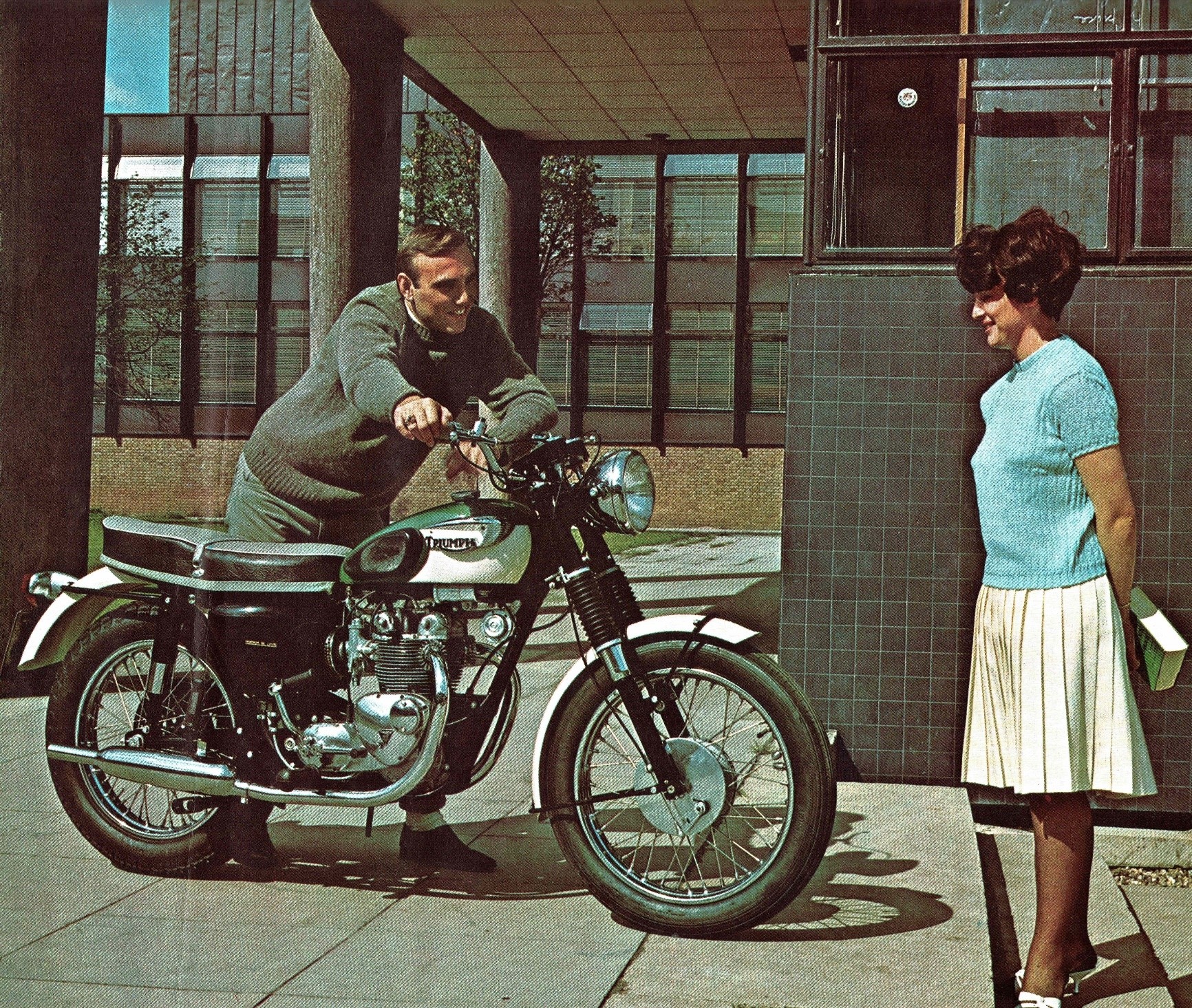
Here the same West Coast T100SR, employees and location from the rare 1966 Johnson Motors Catalogue
Less than ideal photographic conditions in the bright summer sunshine of early August 1965.
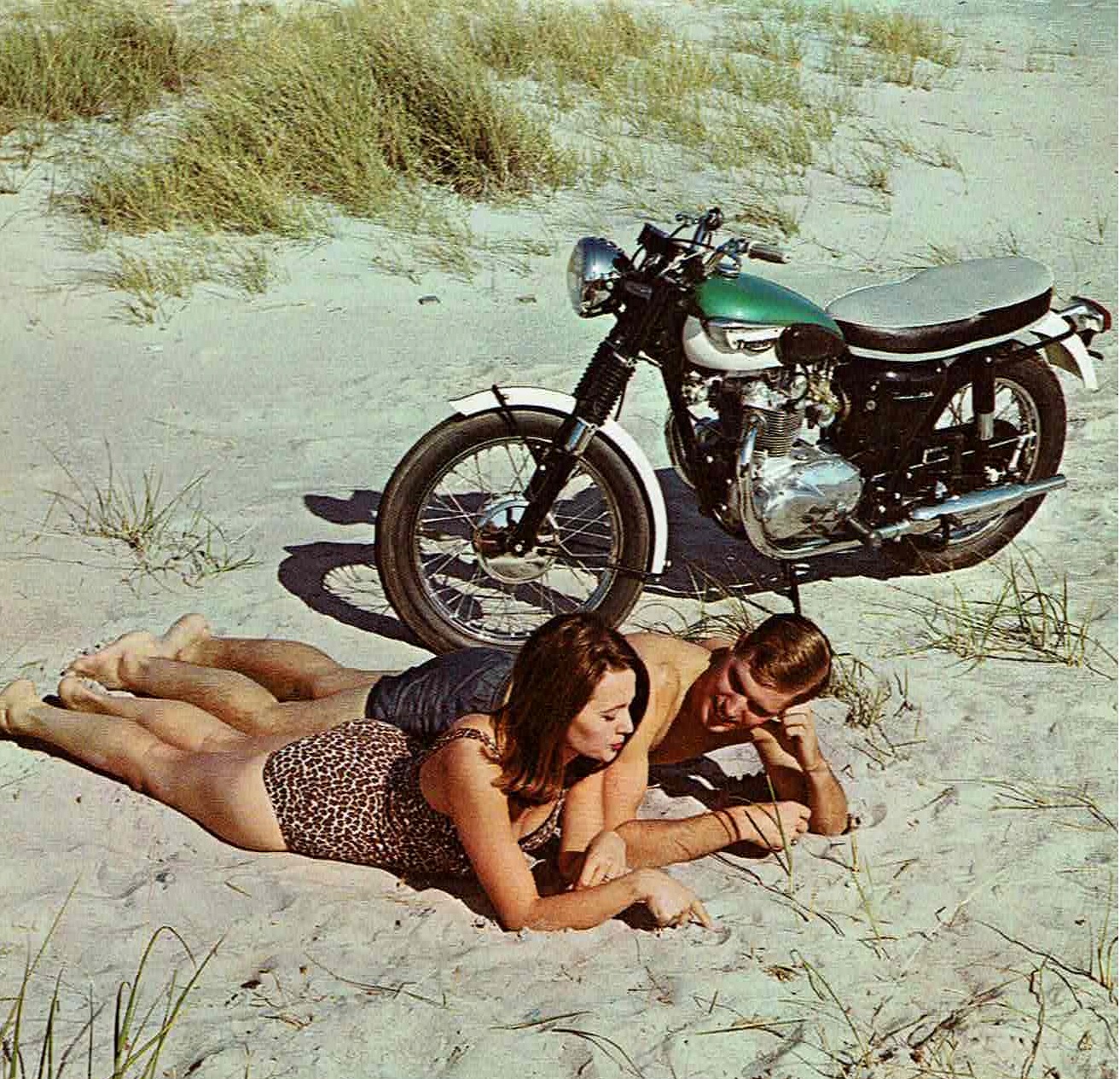
Note in the image above that the machine shows the smaller tank without the parcel rack, high bars, ball ended levers, export tail light and 19 inch front wheel.
The 1966 US Colour Catalogue (below) does not give full specifications and states that “Western specifications may vary from those shown” while the non-colour less collectable 12 page US catalogue gives full specifications.
UK Machine Colours for this year are, Tiger 90 Grenadier Red (Tangerine) over Alaskan White. The Tiger 100, Polychromatic Sherborne Green over Alaskan White, the Works manual indicates that Sherborne Green is a Metallic Paint! The striping for both models in Gold! Verifying the colours of the Export Models is very difficult as original colour images are rare. The 1966 US Brochure shows the T100SC in a single colour with of course the polished alloy mudguards and off road fitments appropriate for the model, what is not shown is the tank from the top and this may have a series of racing stripes applied in Alaskan White with Gold Lining.
The Tank colour on the road models sweeps below the knee grips following the curve of the tank badge as seen in the illustrations. The rear mudguard stripe does not extend under the seat.
For the last year of the 3TA and 5TA most parts are now common to the range except in the retention of the Nacelle. Engine specifications remain as earlier for each model while wheel sizes increase to 18 inches to match the rest of the range.
The 3TA for 1966 is Pacific Blue over White with Gold Lining in the 1966 pattern Silver Cylinder Fins. Pacific Blue is a Candy Colour applied over a Silver Sheen base.
The 5TA for 1966 is Black over Silver Sheen with Gold Lining in the 1966 pattern. Neither model has striped mudguards
Standard UK 5TA’s are Rare due to the low level of production.
Any machines from the first batches made in September 1965 will sometimes have a C registration making them appear to be 1965 machines!
Parts Book No: 7
To view the Triumph Parts books use this link to Classic British Spares www.classicbritishspares.com and use the Parts Book library Tag.
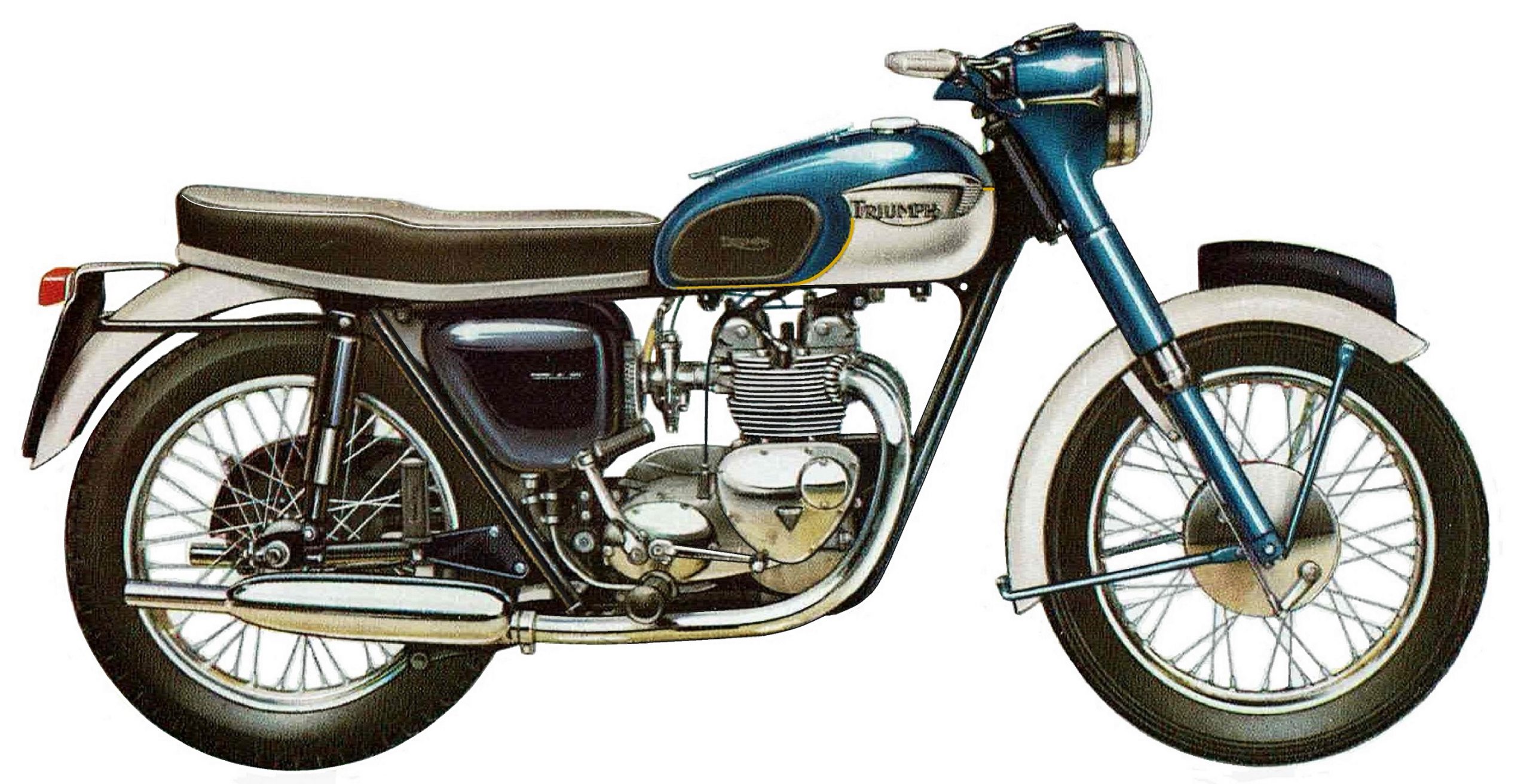
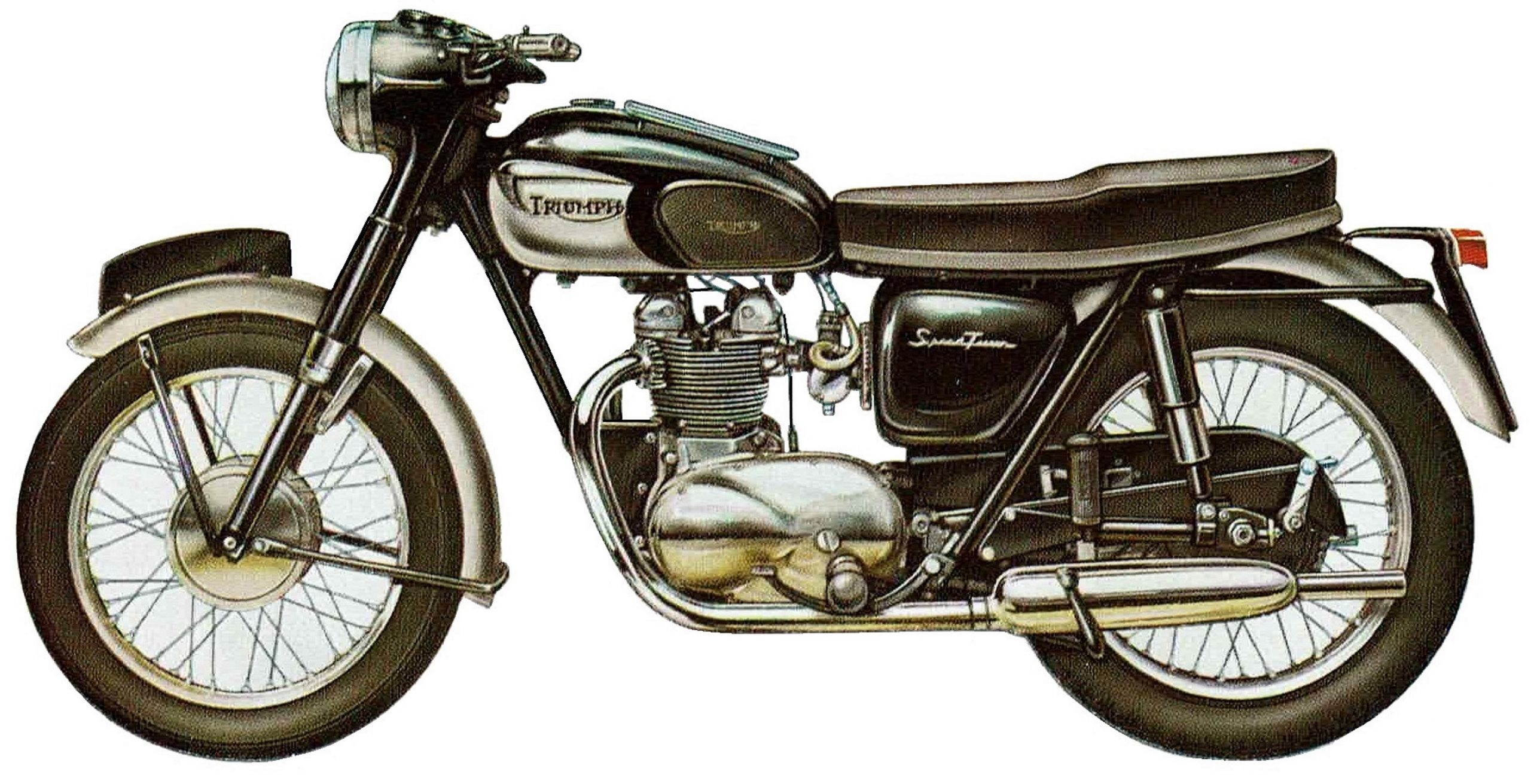
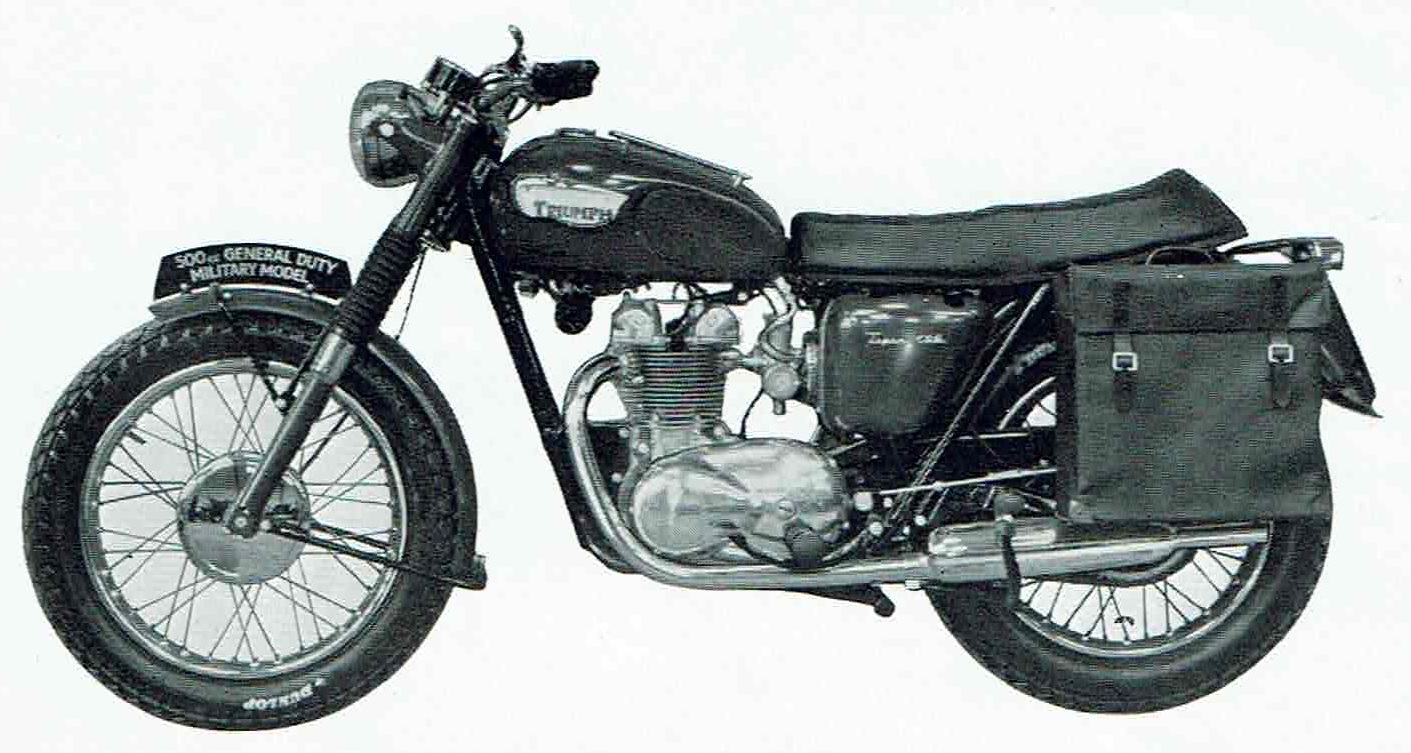
Refer to Neale Shiltons book “A Million Miles Ago” for background information on Military and Police Sales.
This excellent read covers Neale Shilton’s carrier as Triumph Sales Manager from joining the company after the war until his resignation.
Neale continues his sales work with Nortons and then finally BMW before retiring. This should be on every motorcyclist’s bookshelf.
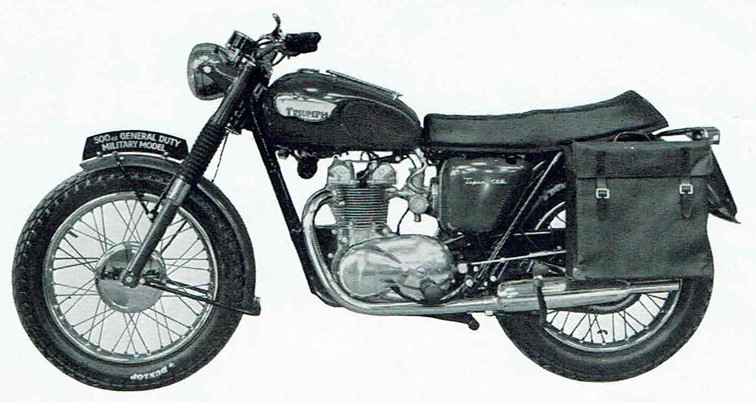
Triumph Mercury, General Duty Military Model, shown here is the 1967 Model.
In 1966 Production of all Twins is increased on the orders of Harry Sturgeon. Prior to 1966 the production program is for 200 Cubs and 375 Twins but this is rapidly expanded and leads to delays in the supply of components from Triumph’s ancillary suppliers. Production of the ‘C’ Range twins for 1965 is 4500 machines but this rises to 8200 for 1966. For restorers, you will begin to see variations in types of mudguards and other components where more than one supplier is used for that item, identifying what is “Right” becomes increasingly difficult !
1966 Production begins at H40528 with a batch of 341 T100SC’s, these are the famed Mercury Model and are destined for the South African Army, Supplied to Keep Brothers SA, finished overall in Brunswick Green and to export T100SC specification with Small Tanks, pre 66 Knee Grips, QD Lighting and with the addition of panniers and crash-bars, at least five of these rare machines survive and I am in contact with the owners. The VMCC in their archive have this single publicity shot of a 1967 machine and a small and interesting brochure on the 1968 model. It is advertised as being available in both 350 and 500cc versions. So far I have not been able to identify if any more of this model were sold, the factory records do not differentiate the Mercury specification from standard machines but I suspect that machines supplied in groups to foreign governments may in fact be Mercurys!
The factory records for 1966 and 1967 do mention T100WD’s but the numbers are small.
The illustrated 1966 Parts Book is useful in identifying the differences in specification between the standard models, but some parts illustrated as being fitted were not. A particular example is the Front Mudguard Bottom Stay H1482 which does not actually appear on the Tiger 90’s I have studied.
The parts book also shows differences between the US East Coast and US West Coast T100’s
Production of standard 1966 models starts on the 29th July 1965 with H40869 a T100SR destined for Johnson Motors with H40871 also a T100SR destined for Tri-Cor these are the first of many sent to the USA
1966 Tiger 90 production begins on the 3rd September 1965 with H41923 and finished on the 6th June 1966 (H47063) with a total of 912 made. 94 machines were exported, mostly to Guam, Nicaragua, Tahiti and Formosa! One ex Formosa machine survives now back in the UK. I am keen to find more of the 25 that went to Guam, I have information on two of these now in the USA. Guam seems to have been quite a good sales location.
1966 T100SS Production begins on the 1st September 1965 with H41719 and totals at 1066 machines, many are for export with a large batch of home market machines made late in 1966 production. The Last is H48728 sent to David Paul Motor Cycles, Camborne, Cornwall.
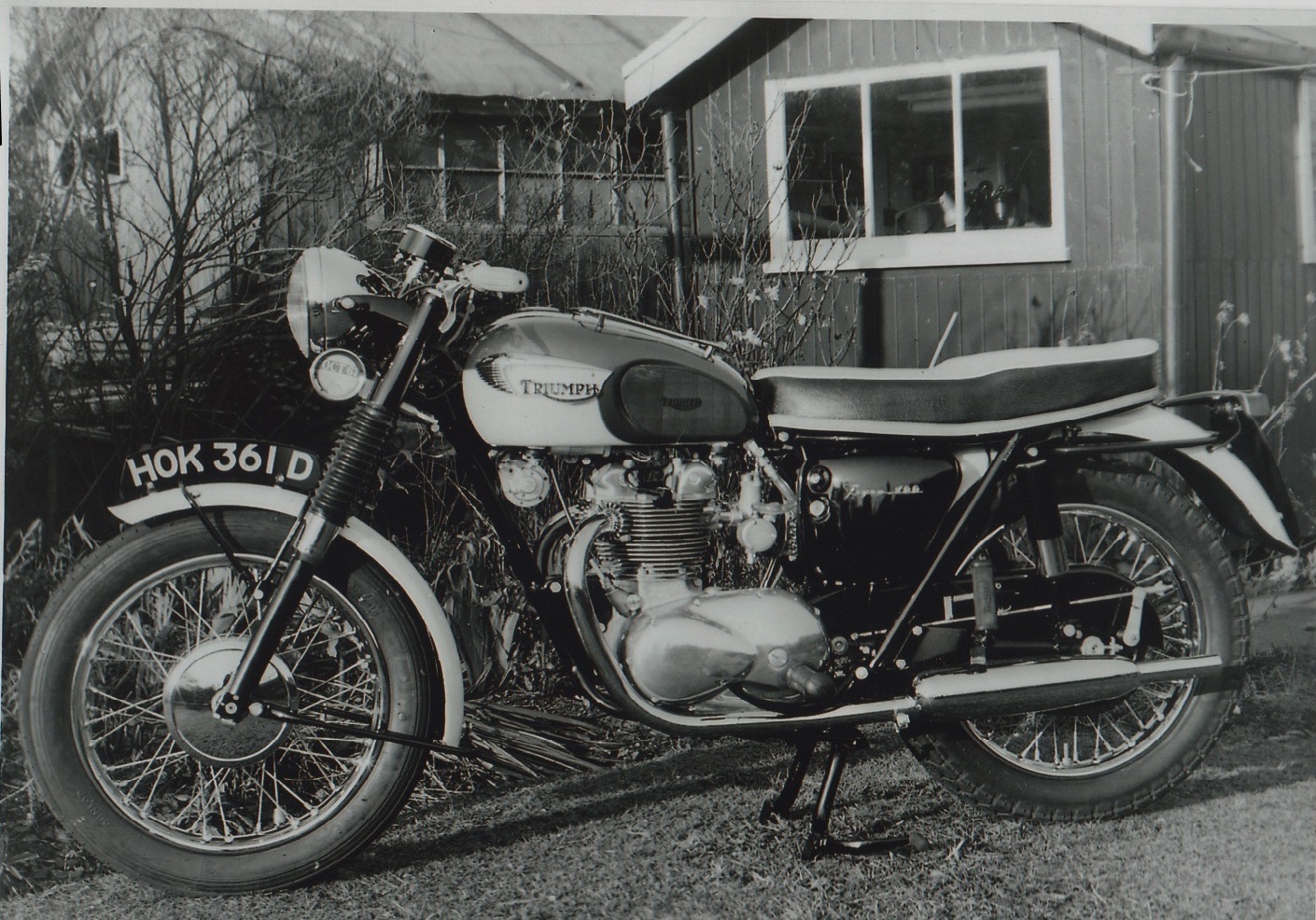
In the ‘Motor Cycle’ September 22nd 1966 is an excellent test review of a late batch 1966 T90 (H46806) with a wealth of detail.
This copy is essential for restorers of 1966 Tiger 90’s from H 46454 to H 47063 and represents most surviving 1966 Bikes.
The Motor Cycle of 13th October 1966, has a Tiger 90 information article that covers the model and takes owners views, that are on the whole generally positive.

Also look for the excellent Tiger 100 Test in ‘Motor Cycle’ 18th August 1966.
This article is essential for restorers of any of the 1966 C Range production due to the quality of the photographs.
I have featured these Thumbnails to enable you to easily identify the magazine you need if you are collecting a file on your machine.

In the Motor-Cycle 2nd September 1965 is a BSA/Triumph supplement detailing the changes to the BSA and Triumph models for 1966.
This contains useful information for restorers and a wealth of detail on the 1966 ranges from both Triumph and BSA.
Cycle World November 1966 has an article describing the fitting of an electric start system to Anne Margeret’s T100 by A.J. Lewis. It describes the clever compression release system used with a starter from a small Yamaha.
The single sheet US Brochure has two excellent re-touched photographs showing an early production TR6R and the T100SR/R (Speed Tiger), both images show a wealth of detail not seen in the UK brochure illustrations. The Original image of the T100SR/R which is used in the 1966 US brochure is available in the VMCC’s collection.
For Period photographs ….
Look for bcgreeneiv’s photostream on Flickr, a great collection of 60’s colour images from California.
Parts book No 7 covering the 1966 machines shows much detail including optional Wide and Close Ratio Gears.
The last 3TA is H46082 (sent to the MOD in Beirut 23rd June 1966) and The Last 5TA is H46431. 3TA production for all years including T21’s, totals at 20,000 machines, while 5TA production totals at 8500.
I am aware of surviving 3TA’s in Pakistan, Malaya, Nigeria, New Zealand and Nepal.
The Workshop Manual for the ‘C’ range machines designed and instigated by John Nelson to replace the earlier owners handbook becomes available from February 1966.
A copy is available using the Manual Tab. This is essential your workshop and toolkit, copies can usually be found for sale.
John Nelson described for me the process of selecting the colour schemes for the forthcoming year. “We would be called to Edward Turners office where he would then say “Come in gentleman, these are the colour schemes we have agreed upon”!
Carrs (Birmingham) were one of the paint suppliers to Triumph and would provide Mr Turner with a set of colour swatches, he personally would select the shades and the design. The paint shop would then produce samples of Tanks and Mudguards as demonstration items before these were shown to the staff including representatives from Johnsons Motors (Jomo) and Triumph Corporation (Tri-Cor) USA for approval.
The only colour not received well by the USA buyers was the 1966 Tangerine scheme, look through the 1965 US Brochure for images.
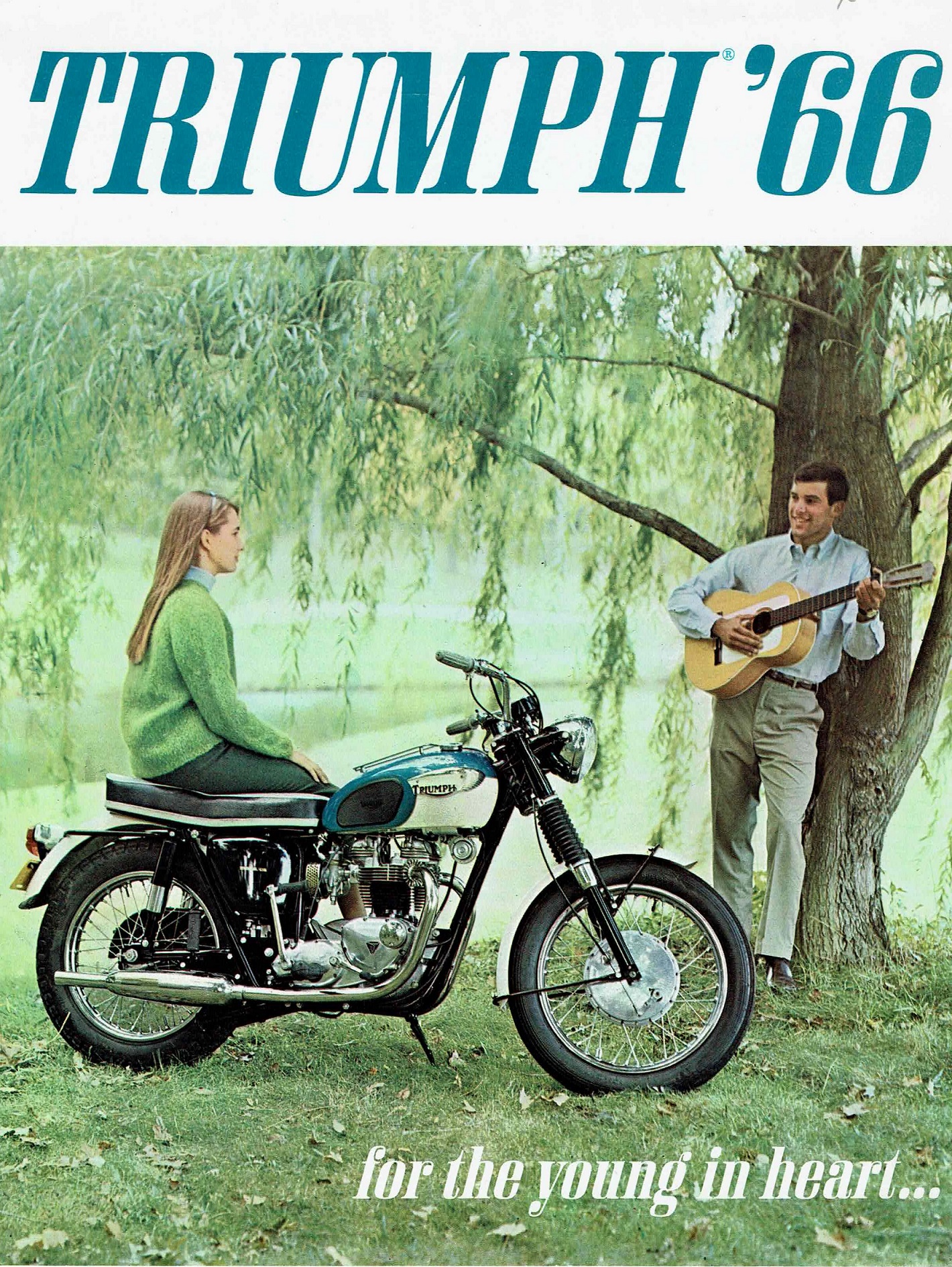
Shown above is the rare 1966 US Catalogue, for Collectors!
Sporting News
The 1966 ISDT is held in Villingsberg Sweden, for information on the event look at www.speedtracktales.wordpress.com
The Factory enters six machines …
HUE 252D (H44954) is ridden by Ray Sayer
HUE 253D (H45023) is ridden by Sammy Miller
HUE 254D (H45117) is ridden by Johnny Brittain and used as the scouting machine
HUE 255D (H45140) is ridden by Ken Heanes
HUE 256D (H45150) is ridden by Gordon Farley. Sold at Stafford April 2019
HUE 258D (Possibly H45126) 105 CWD H27606 (Tiger 90) Ridden by Johnny Giles
106 CWD H26228 (500CC) Ridden by Roy Peplow
There are several other entrants on Triumphs but I have not been able to identify these machines in the records.
Ray Sayers 1966 ISDT Tiger 100 HUE 252D (H44954) survives, I have been fortunate to photograph this machine that is still regularly used.
This machine features in a famous photograph with Johnny Giles astride the machine in conversation with Vic Fiddler.
Other machines show up in the records, 17 machines H45491-H45507 are taken from the production line and passed to the Experimental dept
One of the spare ISDT machines HUE 254D is pictured in scrambles trim for the Farleigh Castle event of 1966 in Don Morleys ‘Classic British Scramblers’.
This excellent but rare book contains a wealth of technical information on the engine development process for the factory machines.
Gordon Farley’s Gold Medal Winning Mount HUE 256D (H45150) survives. Having been in a private collection for many years it was sold at the Bonhams Auction at Stafford in April 2019 together with an extensive historic file. Previously owned by Don Morley the machine is in spectacular original condition with details from 1969 when it was again entered in the 1969 ISDT by Colin Dommett with sponsorship from Comerfords, but retired with ignition failure.
“Fifteen Alloy barrels were cast by BSA, in varying capacities as the ISDT rules demanded a presence in each class, but several of these highly desirable components were stolen while in transit from the BSA machine shop to Triumph’s Competition department. It is thought that just eight survived the journey.”
The period magazines which show details of the ISDT often show entry lists of competitors and the models of machines used.
In addition to the usual Medals, the winners were presented with rather attractive engraved Crystal Vases featuring a Viking longboat design on the front with
ISDT Sverige 1966 engraved at the base on the back, keep an eye out for these rare items of memorabilia.
The 1966 BAHA California Event using Triumphs has been nicely written and illustrated up by Dave Ekins on www.budanddaveekins.com
For the Baha event the bikes used are the 1964 USA Team ISDT machines.
I am also researching a possible race win at Oulton Park in 1963 and a race prepared Tiger 90 built by Bill Chuck of Nelson & Ford (Basildon) and used at Snetterton and Brands Hatch in 1967, this machine is H46535 and a number of articles on this machine appear in Motorcycle Sport.
The National season in the USA is reduced to 14 Races, three road races with the rest of the season a mix of short track, half-mile, mile and TT events. This favours the dirt riders over pavement and numerous Triumph mounted riders feature throughout the season.
The factory prepares six machines…
The Daytona race bikes for 1966 are T100R’s H44111 to H44116 made on the 13th January 1966.
“Four are Race machines with two Spares”, quote from Doug Hele in Cycle World Article.
In February 1966 five of the machines were shipped to Tri-Cor and tested at the Marlboro, Maryland Circuit by Gary Nixon under the watchful eyes of Tri-Cor’s Rod Coates and Doug Hele from Triumph. After Gary Nixon had selected H44114 as his mount the remaining machines were divided between Jomo and Tri-Cor.
For a detailed article and excellent pictures you need to refer to Lindsay Brooks and David Gaylins recent “Triumph Motorcycles in America”
A number of these Daytona Bikes survive; Buddy Elmore’s winning machine was returned to Triumph and displayed at the Earls Court Show in 1966.
This machine H44111 survives and though in a private collection is often displayed.
The three road races for the 1966 season are Daytona on March 20th, Greenwood, Indiana on the 6th August and Carlsbad, California on September 18th
Buddy Elmore as a Pavement specialist features in all three races, coming first, ninth and sixth. While Gary Nixon also mounted on a Triumph at Daytona enters multiple events including these road races, coming 9th, 1st and 2nd. Look for “The Gary Nixon Story” an excellent amateur documentary on You Tube
For details of the 1966 GNC season refer to Gregory R Pearsons “The Complete Grand National Championship Volume 1 1954-1969”.
Another rare book to look for is J.J O’Malleys, Daytona Hot Shoe. The History of Short Track Motorcycle Racing in Daytona Beach by Anthem Motorsports
Look for Claudio Sintich’s excellent book ‘Road Racing History of the Triumph 500 Unit Twin’ by Panther Publishing. The book describes in detail the race machines, their development, the races and has interesting sections on the people involved in racing the Daytona Triumphs.
Percy Tait’s successful machine can be viewed at the National Motorcycle Museum (Birmingham UK).
There are other books on Triumph’s Racing History, which contain interesting photographs. Look for the books by Lindsay Brooke and David Gaylin.
A replica of Buddy Elmore’s Daytona Winning machine based on a 1969 T100C frame (H66917) and Engine (H61007) was built by Ace Classics / Jim Hiddlestone in 2012
for the Goodwood revival festival. Pictures and video clips of this machine can be found on the internet.
Other replicas of Buddy Elmore’s Triumph have been built over the years.
Prices for 1966 are …
3TA £ 279/9s/8d
5TA £ 283/1s/5d
T90 £ 286/13s/0d
T100 £ 291/8s/7d
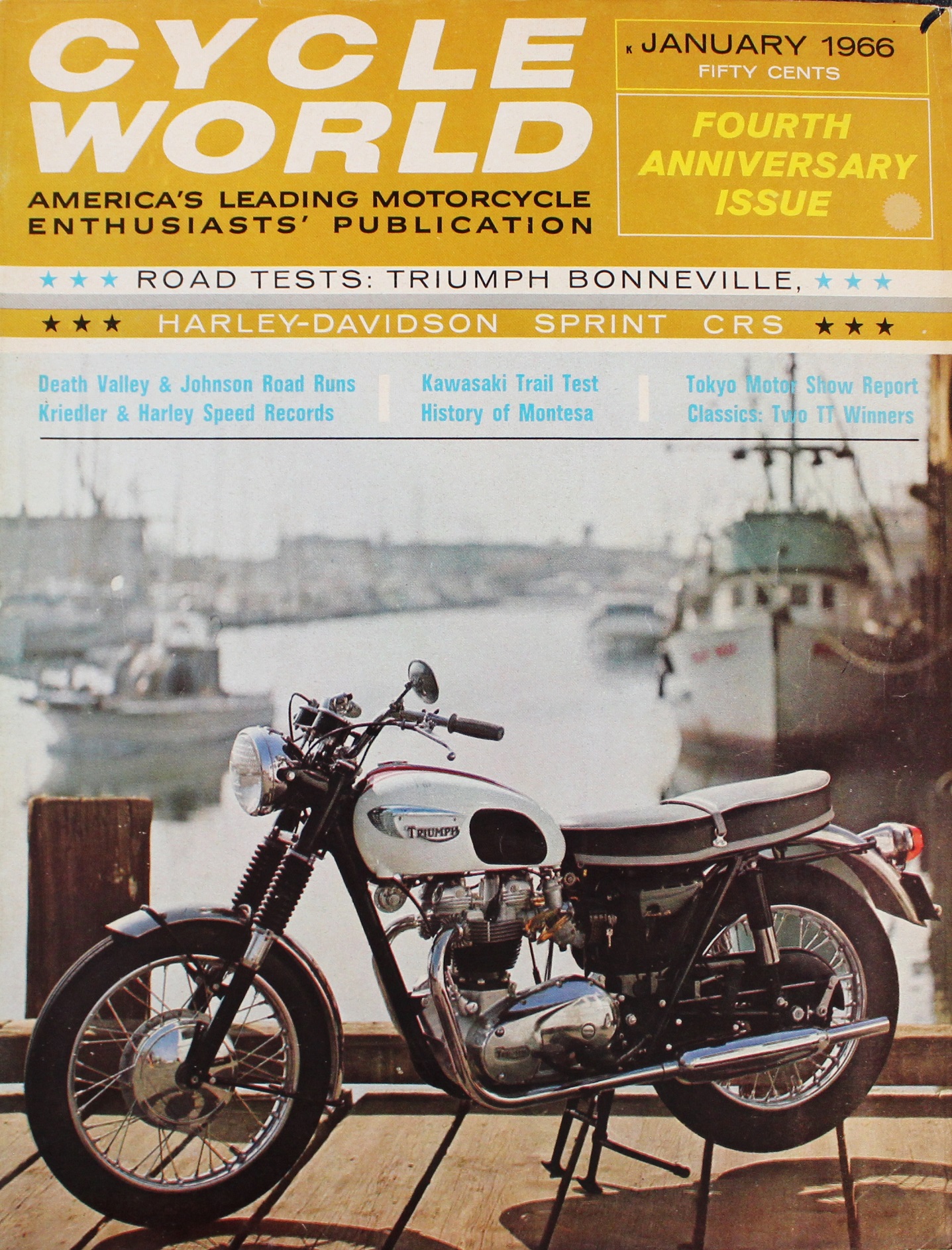
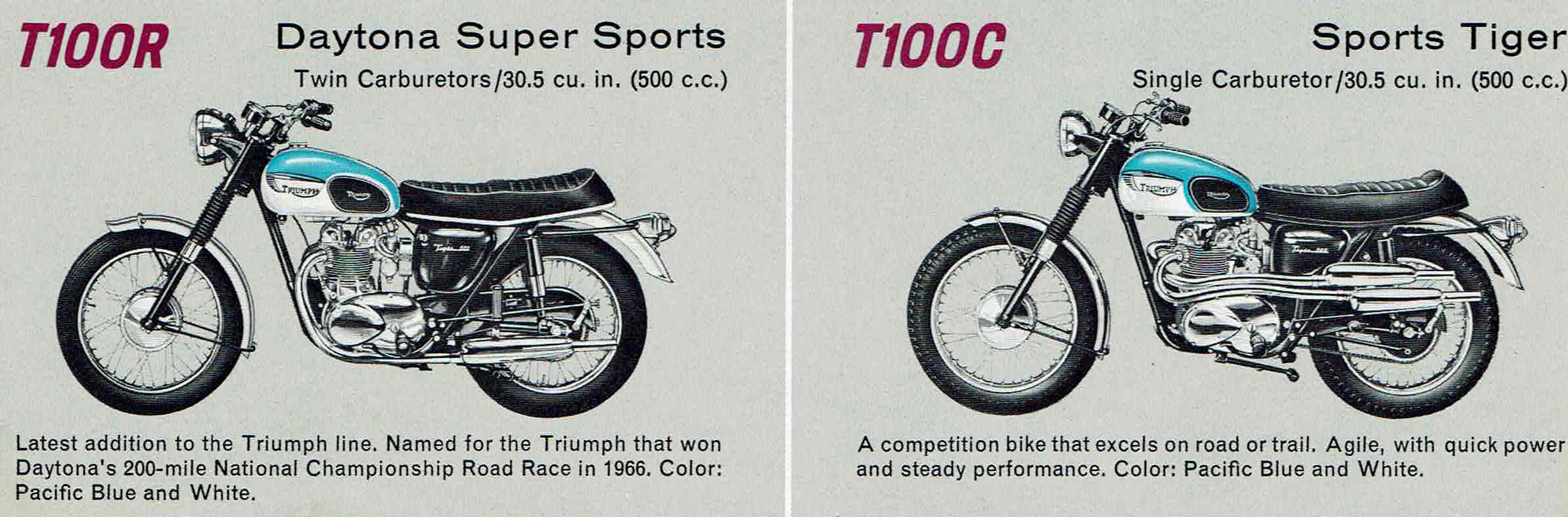
1967
Engine / Frame Numbers H48729-H57082.
| Models Covered | Standard | Police | Military | Daytona | |
|---|---|---|---|---|---|
| 1967 Triumph Tiger 90 | Tiger 90 | 200 | |||
| 1967 Triumph Tiger 90P | Tiger 90 Police | 178 | |||
| 1967 Triumph Tiger 100SS | Tiger 100 | 216 | |||
| 1967 Triumph Tiger 100C | Sports Tiger | 2637 | |||
| 1967 Triumph Tiger 100CP | Mercury Models | 53 | |||
| 1967 Triumph Tiger 100SC | Mercury Models | 56 | |||
| 1967 Triumph Tiger 100R | Daytona Super Sports USA | 3341 | |||
| 1967 Triumph Tiger 100T | Tiger Daytona Sports UK | 421 | |||
| 1967 Triumph Tiger 100P | Tiger 100 Police | 73 | |||
| 1967 Triumph Tiger 100WD | Royal Navy | 10 | |||
| 1967 Triumph 3TAWD | Dutch Military | 1104 | |||
| 1967 Triumph T100R | Daytona Race Bikes | 8 |
Sales for all Triumph Models for 1967
| 1967 | 3TA | 5TA | T90 | T100SS | T100R | T100C | T100T | T100SC | T100SR | T50WD | T35WD | 6T | TR6 | T120 | T120R | TR6SR | TR6R | TR6SC | TR6C | T120T | T120TT |
|---|---|---|---|---|---|---|---|---|---|---|---|---|---|---|---|---|---|---|---|---|---|
| Home | 42 | 52 | 186 | 135 | 19 | 30 | 277 | 196 | 289 | 397 | |||||||||||
| Jomo | 976 | 904 | 2214 | 1685 | 1770 | 494 | |||||||||||||||
| Tri-Cor | 1402 | 1987 | 212 | 7706 | 3849 | 1045 | 571 | ||||||||||||||
| Export | 108 | 51 | 228 | 77 | 479 | 78 | 345 | 1 | 1099 | 686 | 217 | 482 | 1392 | 540 | 104 | 32 | |||||
| 150 | 103 | 414 | 212 | 498 | 30 | 355 | 2723 | 2891 | 1 | 1099 | 1094 | 506 | 879 | 11312 | 5534 | 540 | 2815 | 104 | 32 | 1065 |
1967 is the high point for Triumph with over of 32,500 machines being sold. 80% of production is for the USA and Canada.
With 1967 machines is vital to identify the original destination of the machine from the factory records held by the VMCC or the TOMCC before starting restoration. This applies especially to machines made early in 1967 production when the factory are producing models for export.
The information above shows some of the general complexity involved in identifying the models.
The Dutch Military Machines H48739 to H49832 show many 1966 features and 1966 parts and special items only for this model.
The frame shows both 1966 and 1967 features and is peculiar to these machines as is the Petrol Tank and parts of the Air Filter. There are detail differences
to the crankcase in relation to the alternator wiring outlet and some engines feature the unusual boss on the timing side seen on late 1966 engines.
Many of the Dutch bikes survive; make interesting restorations and practical machines for off road use with their soft state of tune and reduced gear ratios.
Once you know the model type and original destination for your machine, parts book (No:8) can be used to confirm the specification. Note the parts book has several inaccuracies and does not cover the Military or Police models. Do not assume that any of the parts books are accurate!
The Tri-Cor (Yellow) Parts Bulletins 67-5P and 67-6P, I have in my collection identifies all the parts not applicable to the US models and errors in part numbers.
Tri-Cor “Where it is stated in our correction bulletins that an item is “not fitted to U.S. models” this means only that the part is not fitted at the factory to that particular range as supplied that year to the Eastern United States. These same parts may very well be fitted to other Triumph ranges or may be available from our parts stock”
1967 is the first year of the Daytona twin carburettor machines, the ‘R’ for export and the ‘T’ for home with specifications to suit.
During 1967 production; thread forms begin to change from Cycle to UNF, this change happens gradually and is not fully documented.
The changes are particularly noticeable on the fork components. Officially UNF Threads on the forks do not appear until 1968.
Tri-Cor Bulletin 67-12P gives detailed information on Unified Thread forms and Part Numbers applicable from 1966.
On the rear shock absorber upper mounting you will find the smaller headed ‘Bradfield’ marked bolts, you will also begin to see the fitting of specialised ‘lock’ type nuts which become an increasingly common fitment especially on the mudguards.
There are many detailed machine changes for 1967, the main change is the new stronger, lighter and lower frame featuring increased rake and with greatly improved support at the headstock and swinging arm, the differences in the frames are detailed in diagrams in the later editions of the works manual. The frame design is derived from the successful 1966 Daytona Winning machines. Percy Tait’s similar Factory machine is housed at the National Motorcycle Museum.
The upper frame tube is of larger diameter than the lower while the swinging arm is well braced with triangular brackets to the rear sub frame. The 67 swing arm does not have the underside grease nipple of the earlier machines.
Revised headset now with barrel type steering lock (Wilmot-Breeden Union), fairing mountings, revised steering stops, head steady location, and steering damper..
The Parts Book (No 8) shows several inaccuracies. On page 53 the Top Lug H2100 and the associated bushes for rubber mounting the handlebars are not factory fitted but are available as spares. The Stanchion covers H1696 are also not factory fitted but are available as spares.
Refer to the parts book for details of the forks fitted to home market and USA models are there are differences.
The Mudguard Bottom Stay H1678 illustration is incorrect as there is only one mounting tab. Stay H1482 is not fitted to the US models.
All models show the spring clips for the gaiters introduced in late 1966
New Petrol tank with three attachment bolts, Home market machines are fitted with the 3 gallon tank and all US models have the 2 ½ gallon tank and fittings as shown in the parts book No:8 Pages 64-65
Early Petrol tanks of the new type had incorrectly welded rear brackets.
The Dutch Military Machines feature a special tank that does not show the tapped holes for the badges or parcel rack but does include a snorkel from the air filter to the front of the tank. This tank also shows different fittings to the 1966 or 1967 versions.
Confidential factory Correspondence I have seen indicates that for the ‘C’ Range Machines there had been a period where the Crankshafts had been incorrectly hardened and suffering from rapid wear. This period will cover machines made before H55204 after which the issue is resolved.
Additionally for a short period the incorrect type of Loctite was used on the crankshafts (AV instead of Hydroseal)
The Daytona models; T100T and T100R feature large inlet valves (1 17/32 Diameter), Bonneville specification camshafts and tappets with shallow (1 1/8) radius feet.
Exhaust valves are a higher specification than for the T100 and Monoblock Twin Carbs (fuel fed from the left hand float chamber) complete the specification.
There is no choke facility on the Daytona machines.
The Tappet Blocks now gain additional O rings, initially this is only the Exhaust Block but soon the Inlet Block also features an O ring.
The engine of the T90 features a new cylinder head, Hepolite pistons from H49837 and alloy con rods (H Section RR.56 Hiduminium Alloy).
All models gain an oil pump with smaller scavenge pump. From H50445 a dowel is added to the timing cover/crankcase and from H51016 the exhaust adaptors now feature holes instead of slots (a particularly distinctive feature to look for when searching for cylinder heads).
The Clutch is now secured with a self-locking nut instead of the tab washer of earlier machines, while the gearbox mainshaft and pinions change so that the splines now confirm to British Standards. These gearbox parts are not interchangeable with earlier models.
The removable cover over the ‘Sludge Trap’ behind the right cylinder is deleted and blanked off. (Seen On Late 66 Machines) and you should see the oil pressure switch casting under the relief valve; again seen on late period 1966 bikes.
Some machines from this period show an unusual casting behind the Timing cover, this may be involved with changes to the oiling system for the Tappets,
This is indicated in some correspondence I have seen. This ‘Boss’ is deleted before 1968 production begins
From engine H51616 a new auto advance unit (160 degree contact breaker cam (54041118)) is fitted to overcome ignition problems. (Bulletin 67/3)
From H51717 the alternator stator is encapsulated and a longer engine breather pipe is fitted.
Early 1967 road models fitted with Lucas Coils had issues with an extra spark produced when the points closed due to an incorrect points cam being fitted (Lucas part no: 54441729), this is superseded by a 160’ cam, part no: 54419124. Engines after H51616 are fitted with the new part as standard.
Tri-Cor service bulletin 67/3 gives details
Wheel sizes indicated in the parts book show that the T100C and T100R feature 19 inch Front Wheels, additionally the parts book indicates differing fork and headset components for US T100C and T100R models.
US models are not factory fitted with the QD wheel though the parts are dealer stocked.
The Daytona models, T100T and T100R gain the 8 inch front brake and hub components of the Larger (B Range) machines.
Interestingly none of the brochure images or parts books for 1967 show this and only one of two road test machines shows the 8in brake, though it is indicated in the Works Manual Specification for the T100T. What a nightmare !
The rear brake rod changes to run outboard of the shock absorber (not illustrated above). The rear Brake arm is cranked to meet the brake rod and a chain oiling pipe is added to the rear brake torque stay.
The lighting switch (light Grey or Black with two equal tangs) is now located centrally on the headlamp below the ammeter and there are now two hexagonal warning lamps on either side (Green Ignition on right hand, Red High Beam on left). One road test says these are reversed !
The horn is under the tank again (Now Clearhooter 27899) moved from the 1966 location.
The design of the Mudguards again changes now featuring a small rolled bead at the leading/trailing edge to reduce the sharpness of the ends; the front mudguard stay/wheel stand is now the simpler curved type, which wraps around the mudguard and has two fastenings replacing the single specialised nut of earlier machines.
The US brochure shows the Daytona (T) and Sports Tiger (C) models fitted with polished alloy or stainless steel fenders (Muduards)
The side panel now only has the ignition switch, high up near the seat and also loses the hole for the chain oiling pipe.
On an original mid production T100S (H54717) I have studied, the side panel is the 1966 pattern but with the ignition switch using the upper hole and the lower hole blanked off by a grommet. This UK machine shows several features that are applied to later standard 1967 models.
The oil tank again shows changes, from H51726 reverting to the T piece to take oil from the return line to the rockers but retaining the adjustable chain oil feed.
From H53963 the oil tank is etch primed instead of phosphated as previously.
All UK models in the range feature new handlebars (H1871), actually the earlier bars used on the 3TA and 5TA in 1966, these are a slightly raised profile.
The US models continue with American Bars H1519 for the T100C and H1873 for the T100R.
The parts book shows differences in the handlebar mounting arrangements between US and Home Market models, the US machines continue with the previous rigid arrangement of split washers, clamps and bolts while Home Market machines show the new Rubber isolated Eye-Bolts.
Home and American models feature differing levers. All the handlebars and parts are nicely illustrated in the parts book 8 that covers the 1967 models.
For 1967 the Handgrips are the new ‘Balloon’ type with the left one cut away to allow operation of the Dipswitch.
Unlike 1966, all models are now fitted with Smiths Magnetic instruments, the VDO Enduro Speedometer are available if desired but at the dealers or customers request.
Police Models usually feature the Chronometric Speedometer as it is a more accurate instrument.
A new “Quiltop” dualseat arrives, slightly longer then before; overhanging the frame loop, with a ribbed top in grey with black “Vynide” sides’ and white piping.
At the rear is the gold embossed Triumph Logo. I am not actually sure if this is applied as I have conflicting information, I have seen one unrestored 1968 machine which does not feature this transfer !
For US models there are detailed differences which can be seen when studying the US Brochure images, the C model features the usual changes to suit it’s off road style.
The 1967 Lucas Equipment and Spare Parts List details the differing electrical items fitted.
Identifying the exact specification and colour schemes of the various T100 models for 1967 is a minefield! Here is a basic guide ….
T100T UK Daytona Specification, twin carbs, low level exhausts, 3 gallon fuel tank with rack in 67 scheme, painted mudguards, Lucas 564 rear light.
T100S/S UK Specification, single carb, low level exhausts, 3 gallon tank with rack in 67 scheme, painted mudguards, Lucas 564 rear light.
T100R US Specification, twin carbs, low level exhausts, 2 gallon tank no rack in 67 scheme, polished alloy mudguards, Lucas 679 rear light.
T100C US specification, single carb, high level exhausts on left, 2 gallon tank no rack to 66 scheme, polished alloy mudguards, off road equipment, Lucas 679 rear light.
Colours for the standard Tiger 90 for 1967 are Hi-fi Scarlet over Alaskan White, note the Scarlet sweeps over the top of the kneegrips not underneath as previously; while the view from the top of the Petrol Tank shows a pronounced Vee at the front. The surviving Police Tiger 90’s I have seen are painted overall Gloss Black.
The scheme for the Tiger 100 is Pacific Blue over Alaskan White with the scheme for the T100T, R and S in the same style as the Tiger 90. For the T100C the scheme on the Tank follows the 1966 design.
I have over the years seen several original paint schemes that do not follow the accepted design for that year, From 1967 Triumph become inconsistent in following one scheme throughout the year and later production machines especially will not correspond with the published materials, advertisements or road tests.
Tiger 90’s I have seen show mudguards in either overall Hi-Fi Scarlet or Alaskan White with the stripe if it is applied in the alternative colour, lined with Gold.
Mudguards for this year on much of the Triumph Range DO NOT appear to feature the Colour Stripe!
This is indicated by the period adverts the 1967 US Brochure and two road tests of separate Tiger 100’s! In Roy Bacons ‘Triumph Twin Restoration’ there is a particularly good image showing this detail on a UK T100T on page 185 together with other images of 67 machines.
When examining images in the many books available it is worth looking for the registration number and at the background to try to identify if the photos are related.
Cylinder fins and Front hubs Silver of course!
The Tiger 90 model is now officially listed at the Tiger Cub (T90)!
Parts books 8
To view the Triumph Parts books use this link to Classic British Spares www.classicbritishspares.com and use the Parts Book library Tag.
Parts book No 8 covers the 1967 Machines from H49833 (ie not the Dutch Military Machines).
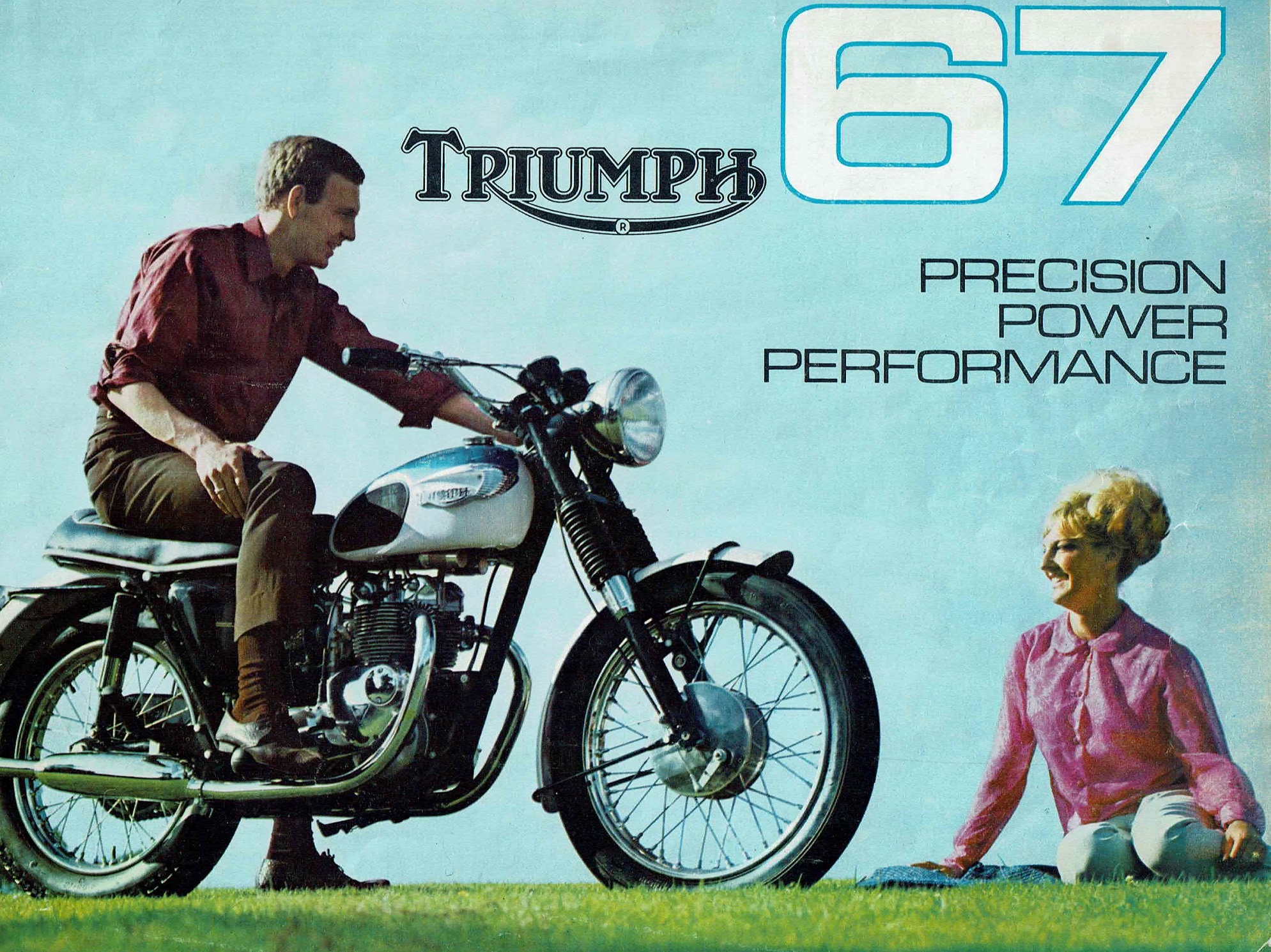
Notes for 1967
The BSA group wins a Queens Award for Industry, in the past three years Triumph have exported 82% of its total production with BSA exporting 68% …
1967 Production begins (H48729-H49832) with a batch of 1104 Military 3TA’s destined for the Dutch Army,
The first Dutch Army machine is in fact H45509 (1966) provided for Neale Shilton (Triumph Sales Manager) for the Amsterdam Show and is featured in Motorcycle Sport April 1966 and also in Neale Shiltons excellent book ‘A Million Miles Ago’
This machine shows differences from the later production machines particularly in reference to the air filter arrangement.
These Military machines feature many special parts and detail differences from standard ‘C’ Range machines, There is a strong following for these machines in the Netherlands with survivors now in the UK and New Zealand. Have a look at the excellent Dutch site http://www.triumph3ta.nl/
Machines H49833 to H52108 are for the Duarte (USA), Paris, Cologne and Earls Court shows and Daytona together with batches of ‘Mercurys’ and other machines for special purposes. Production figures for this period are very interesting and any machine made during early 1967 needs to be checked carefully against the factory records to identify the original customer and destination.
H49833 is a T100R sent to Johnson Motors on the 6th September 1966
H49834 is a T100C sent to Johnson Motors also on the 6th September 1966
H49835 is a T100T sent to C.G.C.I.M, France for the Paris show
H49836 is a T100SS also sent to C.G.C.I.M for the Paris show.
H52101 to H52106 are the Daytona Race Bikes, ridden by Dick Hammer, Larry Palmgren, Buddy Elmore, Gary Nixon, Gene Romero and Eddy Mulder all famous names from the past….
As before the bikes are shipped firstly to Baltimore for testing and selection, look for Lindsay Brooks and David Gaylins recent and excellent “Triumph Motorcycles in America” if you want additional information and pictures on this historic period for Triumph. I have been very fortunate to see and study three of the surviving 1967 Race machines.
1967 Daytona Machine Entrants, this information supplied by Bill Milburn.
H52101 is ridden by Dick Hammer, this machine survives at the AMA Museum in Columbus Ohio (the engine is unnumbered)
H52102 is ridden by Larry Palmgren
H52103 is ridden by Buddy Elmore
H52104 is ridden by Gary Nixon
H52105 is ridden by Gene Romero
H52106 is ridden by Eddie Mulder
H52107 is the Percy Tait bike retained and raced in the UK, See Claudio Sintich’s Book, Road Racing History of the 500 Unit Twin.
For details of the 1967 GNC season refer to Gregory R Pearsons “The Complete Grand National Championship Volume 1 1954-1969”.
This excellent book is a must for race fans with its detailed charts and excellent photos from the Mahony Photo Archive.
Dick Hammer’s machine on display at the AMA Museum in Pickerton Ohio has been restored but shows many original details. The file on this machine provided by Woody Leone gives comprehensive details of the racing history and modifications made. The museum also holds the “Grand National Trophy” awarded each year to the top rider in the multi discipline race season.
Motor Cycle of the 23rd February 1967 contains a good article on machine development for Daytona with some excellent photos.
Great inspiration if you are setting out to create a replica racer of trying to restore an original.
A series of articles appear in ‘The Motor Cycle’ in May 1967 which cover the race and machine development. Mortons Media have an excellent set of photographs showing a great deal of detail of one of the 1967 Race Machines.
Gary Nixon’s Daytona Winning Machine survives and is currently in restoration in the USA.
Claudio Sintich’s ‘Road Racing History of the Triumph 500 Unit Twin’ Covers most of the race machines and races in detail and is a must have book if you are intending to re-create one of the race machines.
Missing from Claudios book are details of the 500cc Production TT won by Ray Knight on a Hughes Sponsored Triumph, 1968 is a very successful year for Triumph with several entries in the 500cc event. I am researching the riders and machines.
There was a Race Machine developed by Geoff Duke based on a Ken Sprayson Frame and Tuned Daytona Engine, this is featured in ‘The Motorcycle’ of 6th April 1967.
For the 1967 ISDT there are no factory supported teams, Ken Heanes, Roy Peplow, Johnny Giles and Gordon Farley are on Private entry Triumphs.
Look for articles in Motorcycling for the 9th and 16th August for Pictures and Details. Gordon Farleys 350 is entered by Comerfords.
Roy Peplows mount for the ISDT is a T100, bored to 504 cc to compete in the 750 class. The machine is Registered NEA 1F and Roy uses his considerable experience to make the bike competitive, though for 1967 it is unsuccessful, retiring with clutch trouble.
The Engine and Frame numbers are recorded as RP 504 and I suspect that the machine is actually based on a 1966 Model rather than a 1967 donor machine.
The Bike is more successful in 1968 and 1969 winning Gold and Silver Medals.
For many years it was in the collection of Bob Gardiner until sold at Stafford in April 2019, its history is fully recorded.
1967 T90 Production is in two batches starting on the 15th October 1966 (H51045) and ending on the 15th March 1967 (H55203) totalling 378 machines.
109 of these Tiger 90’s are Police Versions (H51665-H51715 and H55077-H55134) most of the first group go to New Zealand with the second group destined for locations in Burma and the Arabian Gulf. I have information on surviving 1967 Police Tiger 90’s in New Zealand, Tenerife and Burma.
UK Police force also used Tiger 90’s. Five were supplied to the Chief Constable of Buckinghamshire of which two survive while others go to Dorset and Middlesbrough.
71 Tiger 90 Machines went to British Guiana, possibly these were Mercury’s or Police Machines; one survives but is in Holland! I am hoping to find more.
In total 200 T90’s were exported to destinations in Portugal, Jamaica, Formosa, Australia and New Zealand. Because of the large number of Tiger 90’s exported UK registered 1967 Bikes are rare.
Restorers should refer to the rare full colour 1967 US Brochure; this features excellent colour images of early production machines. The images were taken in England but posed to give the appearance of the USA
There is a picture of a 1967 Tiger 90 available, in Roy Bacons small book on the T90 and T100, this machine is H51624 (KUE65D) eventually sent to Mick Hemmings on the 15th Nov 1969. Other pictures of this machine can be viewed at ‘British Only Austria’ at www.vintage-motorcycle.com and going to the Picture Gallery
There do not appear to be any press road tests for the Tiger 90 in 1967
In “Motorcycle Sport” March 67 there is a T100 test with some good photographs. Look carefully at the front mudguard as this does not show the colour stripe! The same machine is featured again in a clutch strip article in Motorcycle Mechanics July 1967.
This Factory Press machine is an early 1967 model registered in October 1966 and may be the same one used in the Catalogue photograph above.
In “The Motor Cycle” of 3rd November 1966 is a test article on the T100T Daytona (KNX 809D) with excellent pictures especially one showing the tank and instruments.
In this edition is also the detail on the Triumph Range which has additional photographs of the Daytona. Note the absence of lining on the mudguards!

In “Motor Cycle” of 13th July 1967 is a road test with excellent pictures of an export specification 1967 T100C showing many of the details of this model.
Also look for the articles in “Cycle” and “Cycle World” detailed in my Magazine List.
Also look for Cycle (USA) February 1967 and Cycle World (shown below) for road tests of the new Daytona Model.
Cycle Magazine also contains the colour 1967 Triumph Brochure that is a useful guide for restorers.
Cycle magazine set up by Floyd Clymer starts in 1949. Clymer is one of the great characters of motorcycling, a capable rider, successful dealer,publisher, publicist and showman, take the time to find out more and read his many books.
These useful magazines for Restorers are filled with period adverts and numerous images. Start your collection.
A T100T Daytona KUE 533D is featured in the November 1967 edition of Motorcycle Sport.
This and KNX809D must be early 1967 bikes as they carry ‘D’ registrations, interestingly only KUE 533D shows the 8inch Brake!
From my work with the Warwickshire Registration Records KUE refers to the registration period October to December 1966.
Most T100’s produced for 1967 are for export, the majority destined for the USA but other locations include Canada, Mexico, Peurto Rico and Denmark.
It should be noted that during 1967 the UK registration period changed from January to January to the August to August scheme, the Letter E valid only for January until August.
During 1967 when Amal were developing the Concentric Carb they offered a Carb Swap scheme, offering to replace the earlier Monoblock for free!
Retail Prices for 1967 are …
T90 £ 291/6s/4d
T100 £ 296/3s/5d
T100T £ 331/7s/6d
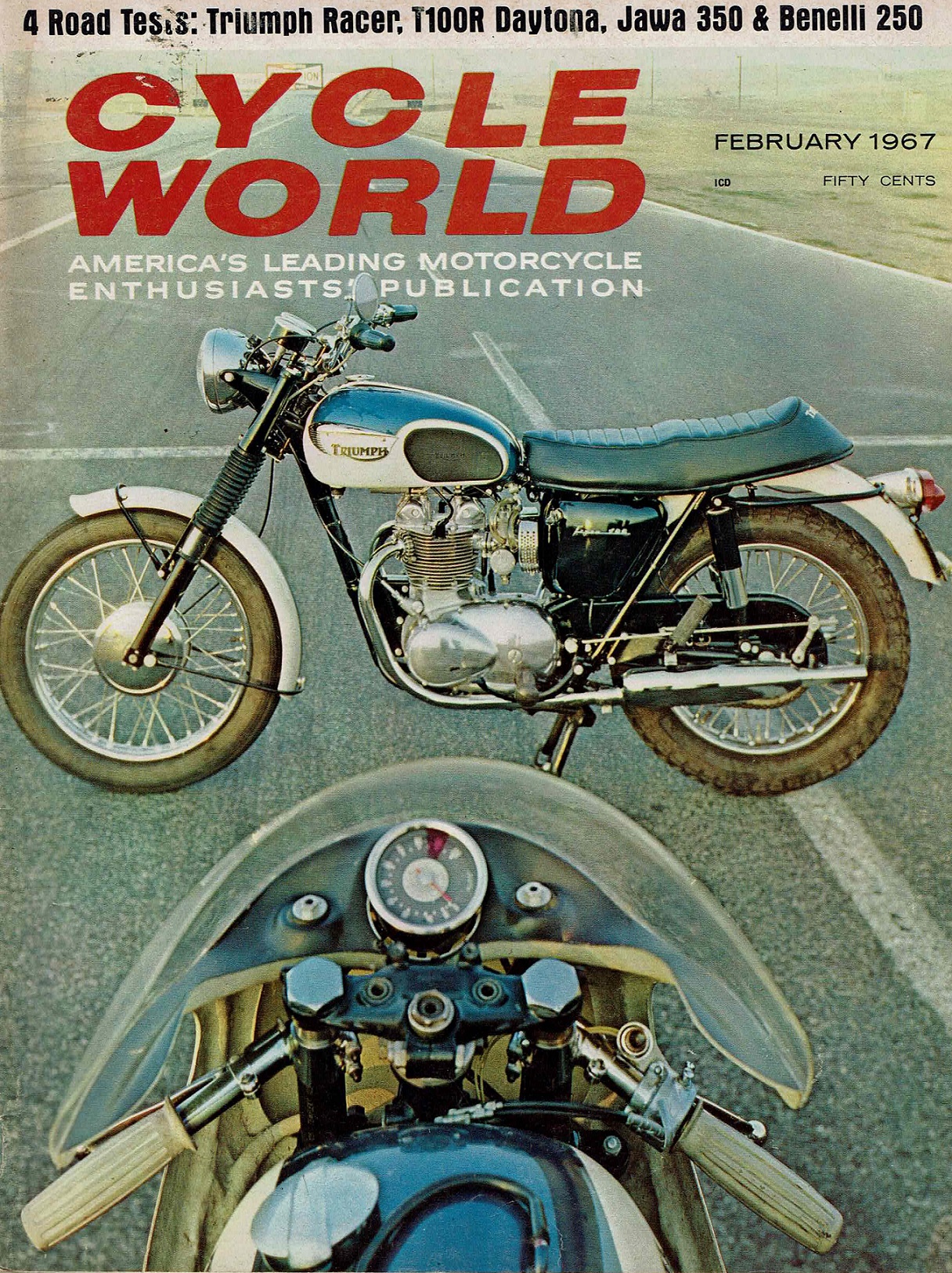
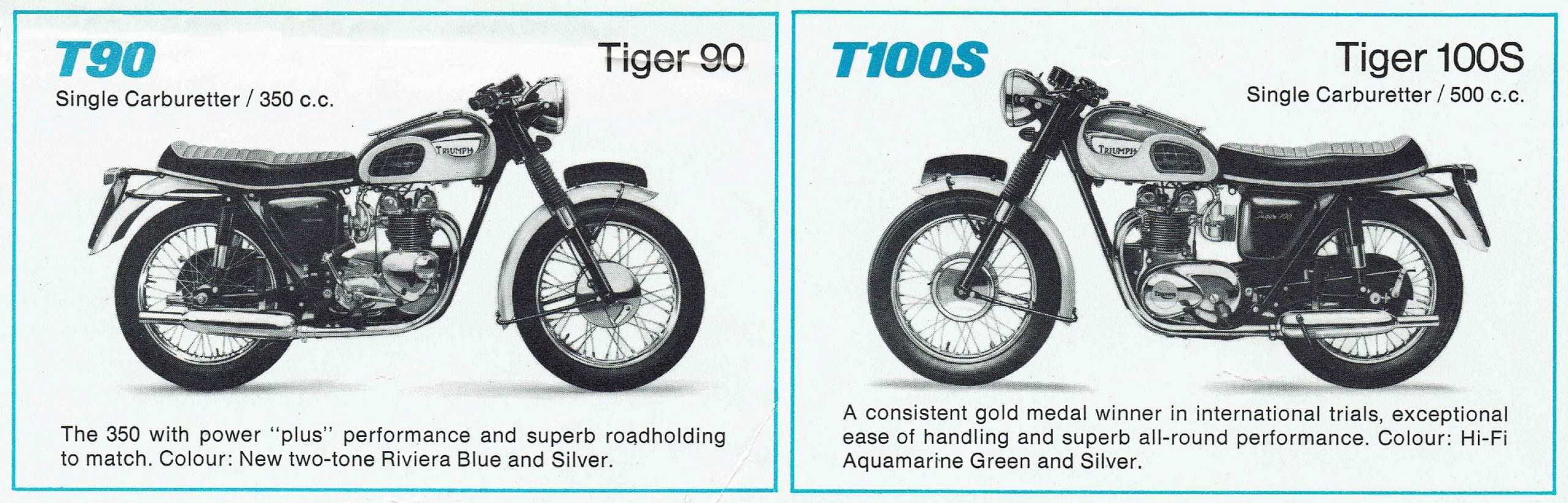
1968
Engine / Frame Numbers H57083-H65572.
| Models Covered | Standard | Police | |
|---|---|---|---|
| 1968 Triumph Tiger 90 | Tiger 90 | 345 | |
| 1968 Triumph Tiger 90 Police | Tiger 90 Police | 330 | |
| 1968 Triumph Tiger 100S | Tiger 100 | 578 | |
| 1968 Triumph Tiger 100SS | 260 | ||
| 1968 Triumph Tiger 100C | Tiger Competition | 3400 | |
| 1968 Triumph Tiger 100R | Daytona Super Sports USA | 2808 | |
| 1968 Triumph Tiger 100T | Tiger Daytona Sports UK | 540 | |
| 1968 Triumph Tiger 100P | Tiger 100 Police | 207 |
Sales for all Triumph Models for 1968
| 1968 | 3TA | 5TA | T90 | T100S | T100R | T100C | T100T | T100P | 6T | T120 | TR6 | T120R | TR6R | TR6C | T150 | TR6S |
|---|---|---|---|---|---|---|---|---|---|---|---|---|---|---|---|---|
| Home | 2 | 347 | 312 | 1 | 18 | 363 | 20 | 777 | 211 | 4 | 3 | |||||
| Jomo | 1106 | 904 | 2064 | 865 | 432 | 40 | ||||||||||
| Tri-Cor | 1336 | 2201 | 6974 | 2286 | 1072 | 2 | ||||||||||
| Export | 160 | 507 | 443 | 268 | 195 | 1 | 827 | 241 | 2501 | 546 | 269 | 15 | ||||
| Police H | 2 | 26 | 7 | 33 | 7 | 2 | 263 | |||||||||
| 1 | 7 | 152 | 75 | 11 | 139 | 71 | 652 | 8 | 7 | |||||||
| 5 | 7 | 685 | 826 | 2994 | 3402 | 558 | 139 | 99 | 1606 | 1367 | 11551 | 3707 | 1773 | 42 | 15 |
For 1968 New 250cc Trophy Models are introduced to the Triumph Range but not recorded in the sales figures above as these machines are made by BSA at their Smallheath factory in Birmingham. These models are derived from BSA B25 versions but badged as Triumphs and feature differences from their BSA cousins. Refer to Rupert Ratio’s excellent books on the BSA 250 Singles for detailed information on these machines.
Note from above the large selection of models and the popularity of the T120R Bonneville, also various Police Models including T100R’s and Bonneville’s! The few 3TA and 5TA Sales would have been machines remaining
in stock from 1966 and any discrepancies in the figures will usually be the previous year’s models sold from stock.
By 1968 quality control has not kept pace with the rapidly increased production and to combat this numerous detail changes are applied across the range.
To be fair the 1968 machines are now reliable, refined and attractive with good all round performance, many survive and continue to be enjoyed.
Note that the 1968 Bonneville with over 11,000 built is not rare but the 6T is, and if you want a really rare bike you need one of the 11 Australian Police T100CP’s.
I believe that some of the 500 Export T100S machines and some of the T90’s will be Mercurys’ rather than standard machines.
With 1968 machines is also vital to identify the original destination of the machine from the factory records held by the VMCC and TOMCC before starting restoration as there are detail differences between UK and Export models.
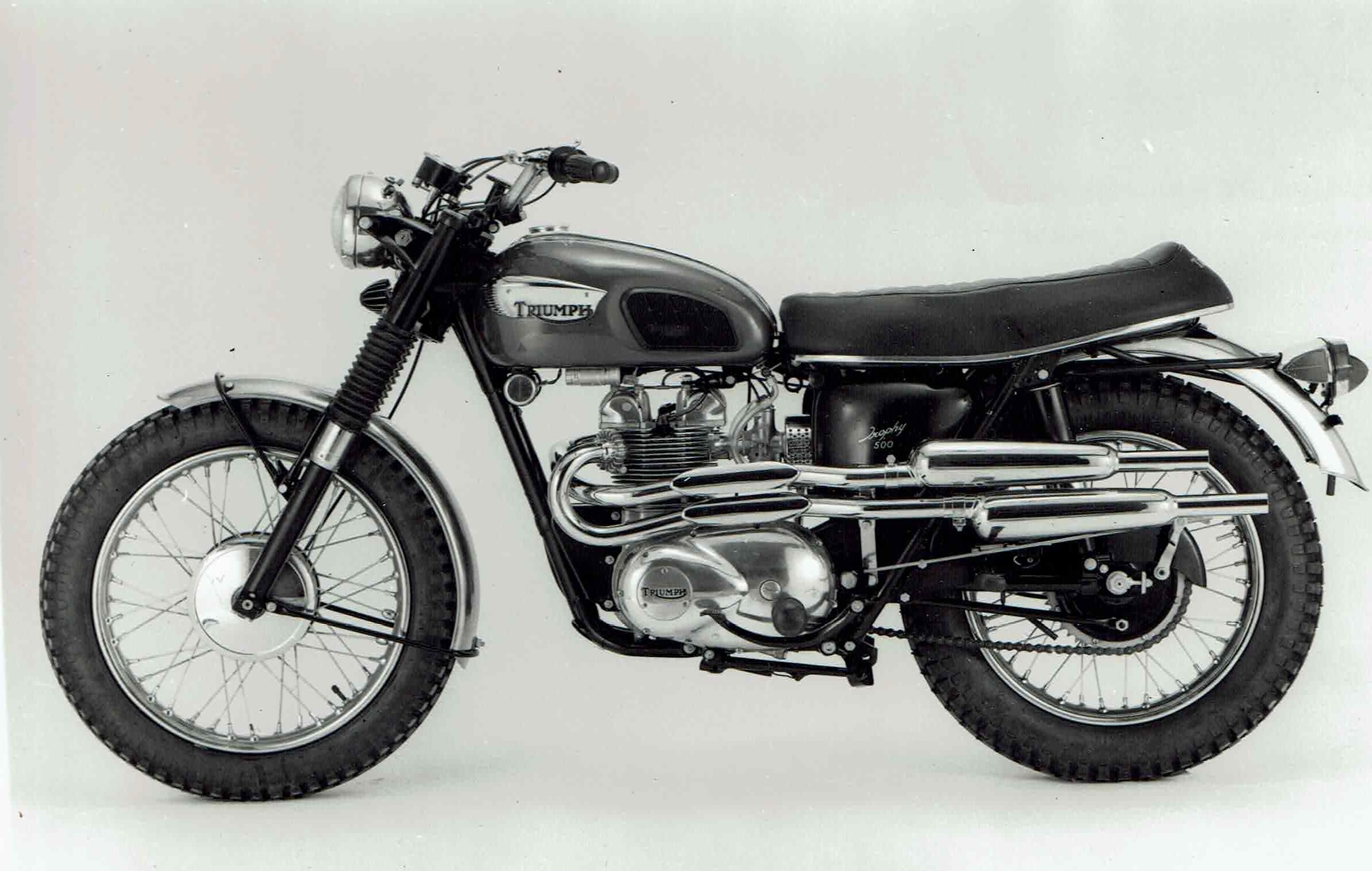
You will note from the image above many of the standard 1968 details such as the removable strobe timing cover, the finned Zener diode heatsink, shroud ignition switch, removable side panel, balloon grips, longer dual seat, reflectors, herring-bone kneegrips, chain oiler and panel transfers.
For all models new front forks with UNF threads (28 tpi) (design by Triumph employee Ernest Rodgers) now with shuttle damping, including new gaiters and seal holders, incorporating a seal wipe. Officially the fork shrouds gain slots to aid headlamp alignment, but many earlier machines show these. The handlebars are now rubber mounted and feature the late balloon type grips.
The fork caps now show a slightly domed shape and are marked on one side with four small interlocking circles to indicate the change of thread pattern.
The handlebar also shows the choke lever assembly for the Concentric Carburettor as this no longer uses the earlier plunger mechanism
A Concentric (624/2) replaces the Monoblock Carburettor and the fastenings for the inlet manifold change to cap bolts. The primary chaincase gains a distinctive removable cover to allow strobe timing of the ignition, a considerable number of machines were produced without the timing peg to align the rotor marking; a separate timing plate (D 2014) was provided as a service part. I believe the TDC removable plug is deleted as I have evidence that shows this but is contradicted by the Triumph Information for 1968. From H57100 the rocker boxes increase in thickness and After H63307 the oil feed to the pushrods changes, the drillings through the rocker arms are deleted, now relying on splash lubrication. This is illustrated in the Works Manual (Fig BB1)
Between H57083 and H63307 the Points show no lubricating wicks.
Early production machines (The first 1500) have points with incorrect machining (by Lucas) and the back plate is turned 180’ to compensate, most machines now have electronic ignition fitted and this issue is usually now irreverent.
The Tappet guide blocks gain O rings where they fit into the barrel casting, begins on 1967 Models
Specialist fitting instructions are supplied in later Factory Bulletins to dealers
For 1968 the new 12 Point Cylinder Base Nuts are introduced (from H58798), these are only available in UNF and require a change of stud thread and crankcase thread to suit. Correspondence from August 1967 indicates that these are being considered for production at the earliest opportunity by Frank Baker and John Nelson
For the 1968 models throughout the Twin Range the Gearbox Mainshaft Threads change from Cycle (9/16 20 tpi) to UNF (9/16 18 tpi).
Be aware of this thread change when obtaining parts.
I have a Tri-Cor Bulletin that details all the parts now with Unified Threads.
The chainguard changes and the design of the kneegrips is now the spaced herringbone pattern. The exhaust pipe stays move forward to the engine plates instead of underneath as earlier, the steering damper is deleted from the road models, the ignition switch moves to the left hand fork shroud allowing the side panel to become removable with space beneath for tools, while the Zener Diode moves to between the forks fitted in a distinctive finned heat-sink. The Condensers are found under front of the tank protected by a rubber cover and the stator changes to the Later 47204 version.
The parts book shows the parts fitted only to the T100C, these include folding footrests, sump plate and raised exhaust system.
On the side panel, the distinctive metal model script of old is deleted and on all models transfers appear, UK models may show the Queens Award Transfer.
The Transfers are not illustrated in the parts book.
The oil tank remains as for 67 but the filler cap during 1968 now features a dipstick, the engine breather pipe is now run under the rear mudguard attached by clips to exit at the rear of the machine. This is something you will rarely see except on unrestored machines.
The works manual states that the dipstick is not fitted until H 65573 (1969) but I think this is licence.
Air Filters fitted to the Twin Carb T100T and T100R Models are now of Cloth and Gauze construction
Wheel sizes and brakes fitted will depend on the model, destination and date of manufacture as new parts and specifications were introduced.
The T100R and C models show a 19inch front wheel with the C model having a 3.5inch width rim the other models remain at 18inch 3.25 rim.
Sometime during the year the T100R shows the 8 inch brake taken from the larger models, distinctive with its larger spoke flange see illustration below.
Note that the front mudguard lower stay is now of a simple hoop design rather than having distinctive “feet”
The lighting switch in the headlamp changes to easy to operate the toggle switch. A plain gear lever rubber replaces the earlier monogrammed item. From the illustration above it can be seen that there appear to be two fuel lines and fuel taps either side, I cannot confirm this detail as yet and the Test feature indicates that no reserve tap was fitted. The range literature states that the rear brake lever is longer, new number plate mounting and stellite tipped inlet valves, and new Lucas points were fitted. This information states that the seat has a simulated chrome trim!
The Seat finish shown in the parts book states that The T100C and T100R use a black top while Home and General Export machines have a grey topped seat.
Under the seat the hinges change to the pressed and rolled steel version and the seat knob now has a black plastic finish.
From H57842 the left hand chain adjuster has a shorter Trunnion to prevent interference with the brake a common fault on earlier models!
The Battery fuse rating on the 1968 models is reduced to 20 amps (service Bulletin 20)
Once again the specification for the various T100 models is a minefield in which many an unwary restorer has fallen, even the professionals! Detail differences between the models abound and the literature cannot be relied upon to give an accurate answer, these are the general details….
T100T UK Daytona Specification, twin carbs, low level exhausts, 3 gallon fuel tank with rack in 66 scheme, painted mudguards, Lucas 564 rear light.
T100S/S UK Specification, single carb, low level exhausts, 3 gallon tank with rack in 68 scheme, painted mudguards, Lucas 564 rear light.
T100R US Specification, twin carbs, low level exhausts, 2 gallon tank no rack in 68 scheme, painted mudguards, Lucas 679 rear light.
T100C US specification, single carb, high level exhausts on left, 2 gallon tank no rack colour sides/contrasting stripe, polished alloy mudguards, off road equipment, Lucas 679 rear light.
Round Lucas RER 14 Reflectors are added under the front of the Petrol (Gas) Tank on US Models
In 1968 Across the model range the schemes for the paintwork do not follow a consistent form and you will note when studying original machines, brochures, photographs and road tests that there are several variations. If restoring an original machine pay special attention and record what you have before setting out to re-paint.
Often traces of the original colour, un-faded by sunlight, or contaminated with dirt will survive beneath the tank badges and knee grips. These “Chips” can be used by your auto shop to produce a close match in modern paints.
Some compromise is necessary and even during original production there would have been subtle changes in shades and hues between batches of machines. There is no such thing as “The Original Colour” especially for light metallic finishes where atmospheric conditions such as temperature and humidity affect the “lay” of the aluminium flakes during drying. Modern paints will give more consistent and resistant finishes and are also more environmentally friendly; they will give you a bike that looks good for a long time.
Colours for the Tiger 90 are Riviera Blue over Silver Sheen (the Range information incorrectly says White!) Gold Lining, the tank with a script “Tiger 90” transfer opposite the filler cap. Note on the Tiger 90 and Tiger 100S the Blue paintwork does not extend below the kneegrip but sweeps above and to the back like the 67 style. This is a detail I am trying to verify as I have conflicting information. Again the pronounced Vee pattern of paintwork is displayed on the front of the tank.
Colours for the T100 models are Aquamarine over Silver Sheen with White lining. The 1968 US and UK brochures feature a good colour photograph of a US T100R showing good detail. Note that only on the T100S does the colour pattern follow that of the T90, the T100R has the same style as the 1966 machines while the T100C is Single Colour with a contrasting central stripe on the Tank.
In my collection I have an original photograph of a new UK T100T registered in Feb-March 1968 showing the Tank in a single colour !
As usual the competition models feature polished Fenders, (Mudguards) now in Stainless Steel and off road fitments.
While the test machines and advertisements for 1967 show an absence of the mudguard lines, the 1968 Test Machine does show the line on the front mudguard. I believe that the rear guard is unlined as so little is on display and I have been able to verify this from the few original machines that survive. Not conclusive information I’m afraid !
Parts book 9
To view the Triumph Parts books use this link to Classic British Spares www.classicbritishspares.com and use the Parts Book library Tag.
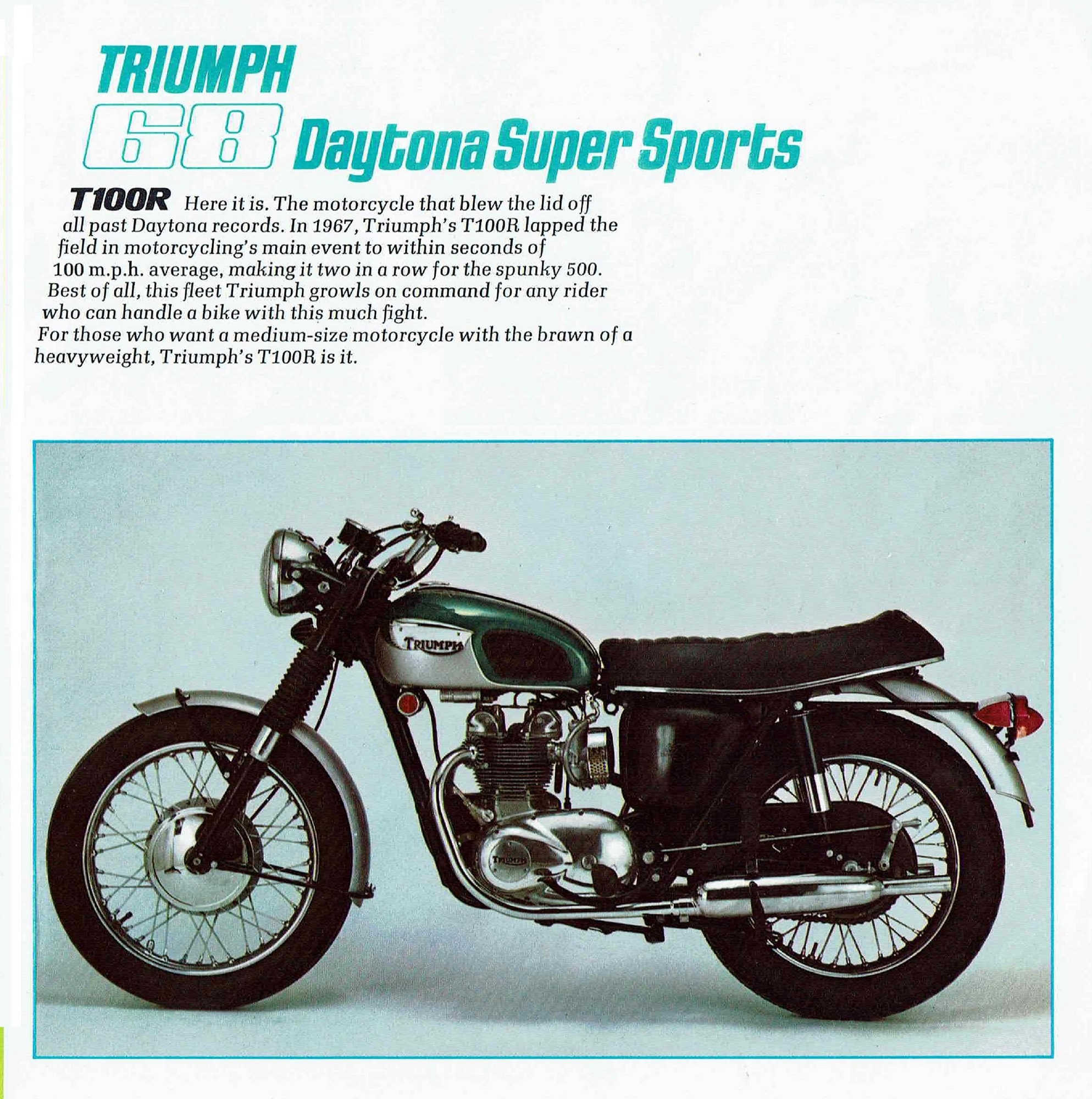
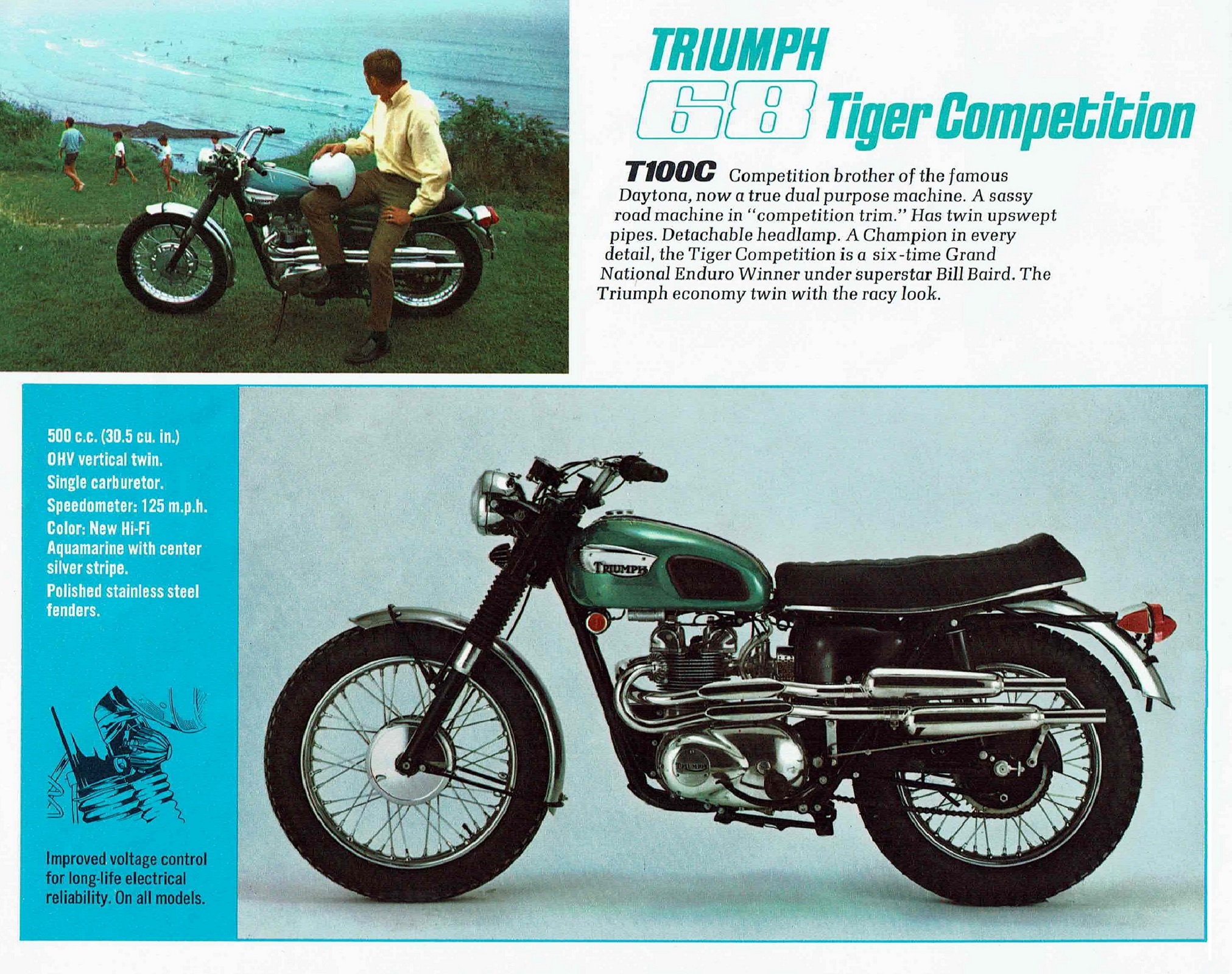
Notes for 1968
The introduction to of the 250cc Trophy models the TR25SS and TR25T increases the model range to cover the popular Trail Bike scene, especially in the USA. All of these machines are built alongside their BSA versions at the BSA factory in Smallheath, Birmingham and recorded together in the BSA Ledgers, also held by the VMCC. From 1968 commonality of parts for machines made by BSA and Triumph is encouraged though for now the part numbers used remain separate. From initial research approximately equal numbers of Triumph and BSA 250’s are built with the majority destined for the USA.
These are the Changes indicated for 1968 in the Factory Bulletins and start at the number indicated
H58191 Permatex 300 Gasket Sealing Compound Used from here
H58797 Ignition Location Holes in flywheel amended to 15/64 diameter
H58797 Dunlop K70 Tyres Fitted for Tri-Cor USA
H58797 Holes and Grooves Deleted from the Oil Pump Plungers (Interim Condition)
H58798 12 Point Cylinder Base Nuts Fitted
H60232 Revised Rubber Mix used for Knee Grips
H60232 US Models are Supplied with Factory fitted Seat rails (Limited Supplies mean Seat Rails are not actually fitted buy shipped at a later date).
H60570 Holes and Grooves Deleted from the Oil Pump Plungers (Final Condition)
H60620 Safety Rail fitted to Dual Seat for Johnson Motors
H60832 Safety Rail Fitted to Dual Seat for Tri-Cor
H63307 Front Petrol Tank Mountings change to “Cleveloc” Nuts
H63307 Steel Oil tank filter and crankcase filter. (Previously Brass or Copper)
H63307 Rocker Oil System Changed to splash lubrication
H63307 1/16 diameter hole drilled in swinging arm oil seal to allow air to escape when greasing
H63307 “Stat-o-Seal” washer for petrol tap sealing
H63307 Cylinder Head bolt tightening now 18 lb.ft
H63307 Front Mudguard Lengthened (Not Stainless Guard)
H63307 Coupled Upswept exhaust pipes (T100C)
H63307 Stronger Connecting Rods
H63307 Felt Lubricating wicks added to 6CA contact breaker, Exhaust Camshaft taper amended
H63370 Thicker walled cylinder blocks are gradually introduced.
Blue Service Bulletin #20 advises that 20 amp fuses are fitted in place of the 35 amp fuse used previously.
“When the new Triumph Military and Police Mercury model was unveiled at the Brussels motor show last month, they immediately attracted orders totalling £ 20,000, customers include the Irish Army and Garda (Police) and the Belgian Police” from Triumph World Wide February 1968.
1968 Production begins with a small batch of ten T100SS machines destined for the BBC supplied by Harvey Owen the well-known, London Dealer (H57083-H57092).
1968 T90 Production began on the 2nd January 1968 (H62186) and ended on the 13th May 1968 (H65570) with the total for the year being 677 machines. 171 of these were Police Versions. 300 1968 machines were exported to Africa, Denmark and the Far East again possibly some of these may be to ‘Mercury’ Specification. See 1966 Notes.
H65570, the last Tiger 90 produced; survives in the USA.
The records indicate that it went to France, but was in fact bought by a US Forces Pilot based in Italy and eventually sent to California on his retirement.
Total Tiger 90 Production of all years was 4204 with a small number of engines each year exported or retained for service exchange.
I have recently discovered that a small batch of Tiger 90’s were built in 1969 for the Irish Police (Garda) these are likely to be ‘Mercury’ Models rather than Civilian Machines, one survives!
‘Rolling Road’ testing was introduced in 1968 as machines produced during the winter would need to be cleaned after open road testing and the USA Dealers were complaining that machines were arriving rusty due to the salt used to treat the roads around Meriden.
A group of 1968 machines were shipped without piston rings! This fault was not detected using the new testing system. Jim Lee (Former Tester) describes the process. ‘We would start the rollers, select second and drop the clutch to start the engine, working the engine through the gears and testing everything. The exhausts were attached to an extraction system so we never realised that the engines were smoking heavily, it was only on arrival at the dealers was the problem found!
According to Motorcycling 11th October 1967, some US Market T100SC machines are sold into the UK Market through Comerfords, I hope to identify these in the factory records. These are to full US specification including the US Tail Light and Tank Reflectors.
H57708 is a T100R given to a Mr George Best the footballer, the date in the dispatch book shows 23rd March 1972 so possibly the machine was on display at the factory showroom prior to this. This would be a US specification machine and currently I am not aware if it survives.
H63301 to H63306 are the Factory Built Daytona Race Machines for 1968
1968 Daytona Entrants, this information is kindly supplied by Bill Milburn. Note these are mostly 1967 Machines.
H52101 is ridden by Van Leeuwen/ prepared by Woody Leone
H52102 is ridden by Bob Sholly/ Tricor
H52103 is ridden by Buddy Elmore/ Tricor
H52105 Jim Odom/ JOMO
H52106 Tim Coopey/ Deeley’s
H63302 Dusty Coppage/ JOMO
H63303 Chuck Palmgren/ Tricor
H63305 Gary Nixon/ Tricor
? Entered for Rod Gould raced by Dick Hammer
The 1967 bikes that were retained by JOMO and Tricor for the 1968 season were fitted with “Sonicweld” swing arms
Nixon’s 1968 bike had a “Sonicweld” swing arm fitted.
The two fastest Triumphs at Daytona for 1968 were 1967s prepared by Woody Leone, H52101 (Van Leeuwen) and H52105 (Schoenfeldt)
Nobody had good things to say about the 1968 frames as the wiggled !
They also got rid of the front mounted oil tanks and underseat oil coolers early on…
I had the great pleasure of meeting Skip Van Leeuwen in LA, a few years ago what a great guy and full of stories of the dangers and friendly rivalry between all the racers at the various Dirt Track events throughout America, his family are still in the Motorcycle Business with a successful parts business. www.vleonline.com
Sadly Skip passed away a couple of years ago along with Jack Simmonds another famous name from the period who I also had the pleasure of meeting.
T100T H63305 Chuck Palmgren’s machine is at the AMA Museum with the first T100 motor in it
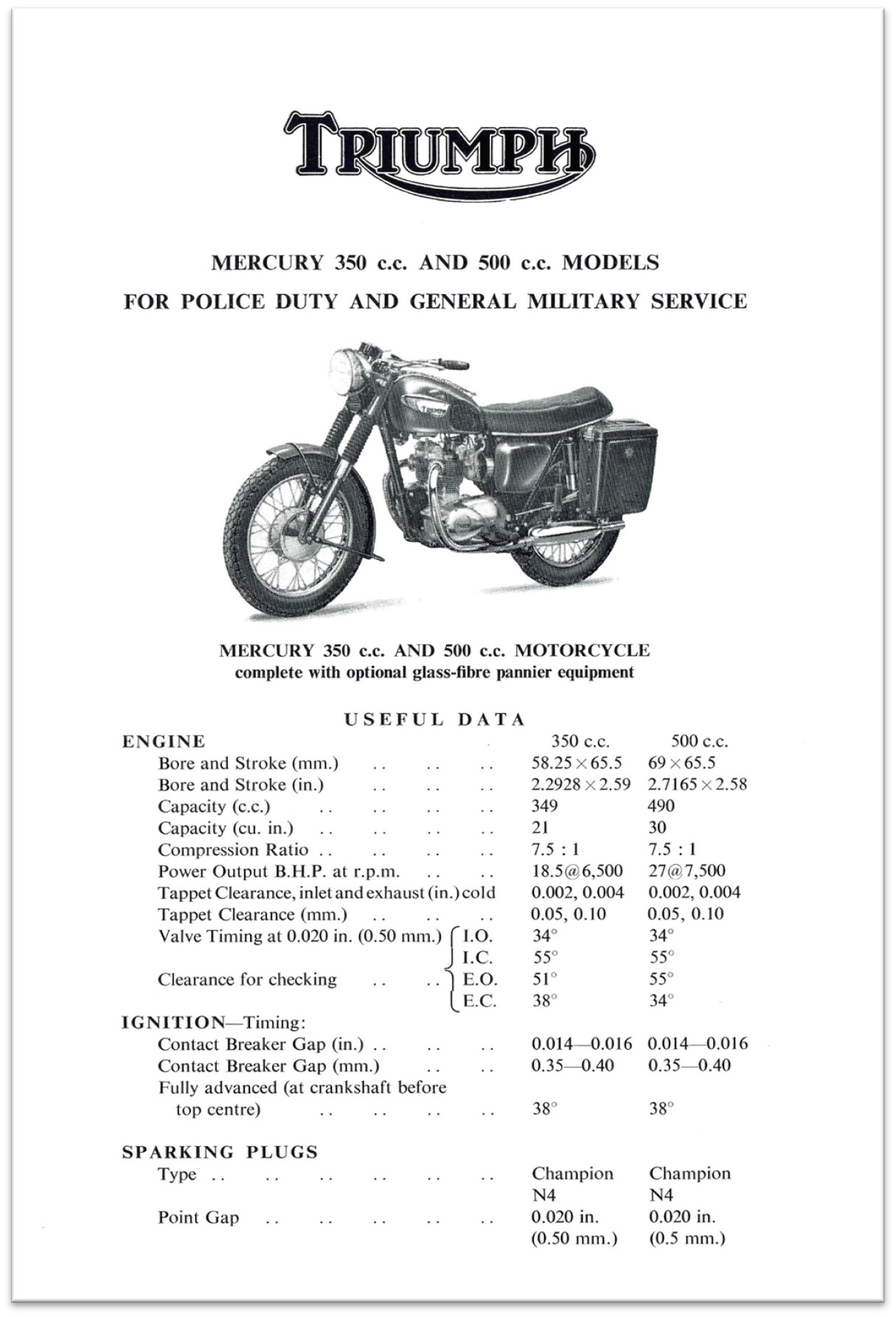
The brochure and service guide for the 1968 Mercury, in 350 and 500cc Versions.
The Factory Records do not differentiate these from standard models!
The 1968 GNC (Grand National Championship” season is extended to 23 races running from February until October with the first race of the season at the Houston Astrodome enjoyed by a crowd of 31,000 and won by Gary Nixon on a Triumph. Triumphs still feature heavily in the entries but are most successful on the dirt.
For details of the 1968 GNC season refer to Gregory R Pearsons “The Complete Grand National Championship Volume 1 1954-1969”.
This excellent book is a must for race fans with its detailed charts, notes and excellent photos from the Mahoney collection.
The winning machine of the Thruxton 500 held at Brands Hatch on the 12th May 1968 is a Boyer of Bromley T100R ridden by David Dixon and Peter Butler. This machine survives
See the ‘Motor Cycle’ of 15th May 1968 and also the 29th May 1968 for articles and pictures.
Mortons Media have images of this machine in their archive.
A number of 1968 machines were supplied to the UK Police forces Glasgow, Dublin, Liverpool, Buckinghamshire, Dorset etc numbered (T90P H******) and fitted and finished appropriately for their duties. Each Police force could specify the machines to suit their requirements. I am researching police machines and interviewing police officers from the period to try to clarify the situation.
Two Tiger 90’s (H65385 and H65404) with reinforced frames; were supplied to Sid Morams of Slough.
T100T H61427 is one of the Press Machines, Registered PAC 520F, This Machine Survives
T100T H61527 is another Press Machine and is the featured in the Haynes Manual of the period.
Restorers should refer to the rare full colour 1968 US Brochure; this features superb colour images of early production machines and is an essential tool.
Also refer to my Magazine list for details of other Road Tests and articles you may find useful.
Look for Motor Cycle 8th November 1967 for the Range information. There do not appear to be any Road tests of the Tiger 90 but there is a brief Test on the Tiger 100 in the August 68 edition of Motor Cyclist Illustrated, the same machine PAC 521F (H61944) is shown in Roy Bacons’ book T90 and T100 Unit Twins Isbn 1-85648-308-8.
The February 1968 copy of Cycle Guide has an excellent test of a T100R Daytona with great photos. A must have article for restorers of this popular model.
Cycle Guide can be difficult to source but this copy is worth finding.
There is a good test article of a US T100C in the August 1968 copy of ‘Cycle’, shown here and below, with a number of excellent photographs including a colour cover shot.
Use my Magazine Index to identify suitable articles for your own research.

T100R H60173 (PNX 896F) was bought by a Mr Daniel R Pike of the USA under the ‘Personal Export Scheme’.
He has yet to pay for the parking ticket he received in Bullstrode Street London W1 in 1968. I have seen the correspondence between the Metropolitan police and Triumph!
Another example; a Bonneville DU79416 sold to Wayne Michael Burke of Gainsville, seen speeding and driven in a reckless and dangerous manner near Edinburgh.
Further to your notice of intended prosecution dated 30th May 1968 we wish to inform you that the Motorcycle registration number PUE 905F does not belong to us.
The Machine was sold to an American visitor under the Personal Export Scheme for Motor Vehicles and the transfer took place on the 9th May 1968. The owner is a Mr Wayne Michael Burke of the United States. Yours Faithfully, Triumph engineering Company
In January 1968 the Shipping Cases were modified to try to eliminate ‘In Transit Damage’. The file I have seen at Warwick University shows quite considerable numbers of machines damaged in some way during shipping and delivery to the dealer. Each machine is recorded by engine/frame number and the damage indicated.
For example T100C H58369 was delivered with a damaged frame and oil tank, T100C H60751 had damaged Fender and Exhaust.
The file I have seen shows some 70 machines damaged in transit and this is just the C Range machines for 1968.
This new information needs to be included when assessing the specification of any Triumph.
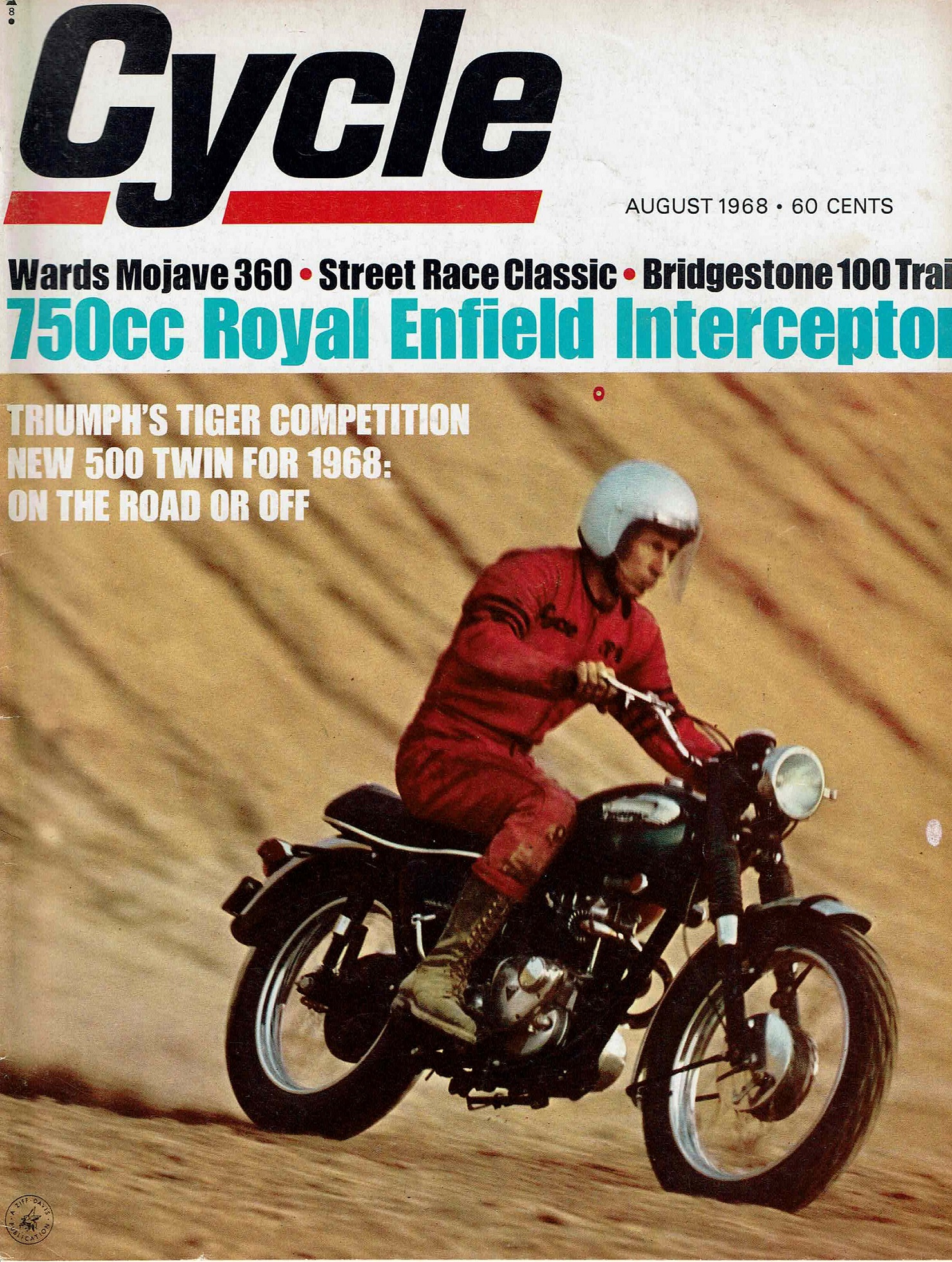
For more information on where to find Tests and other articles go to the Magazine Page.
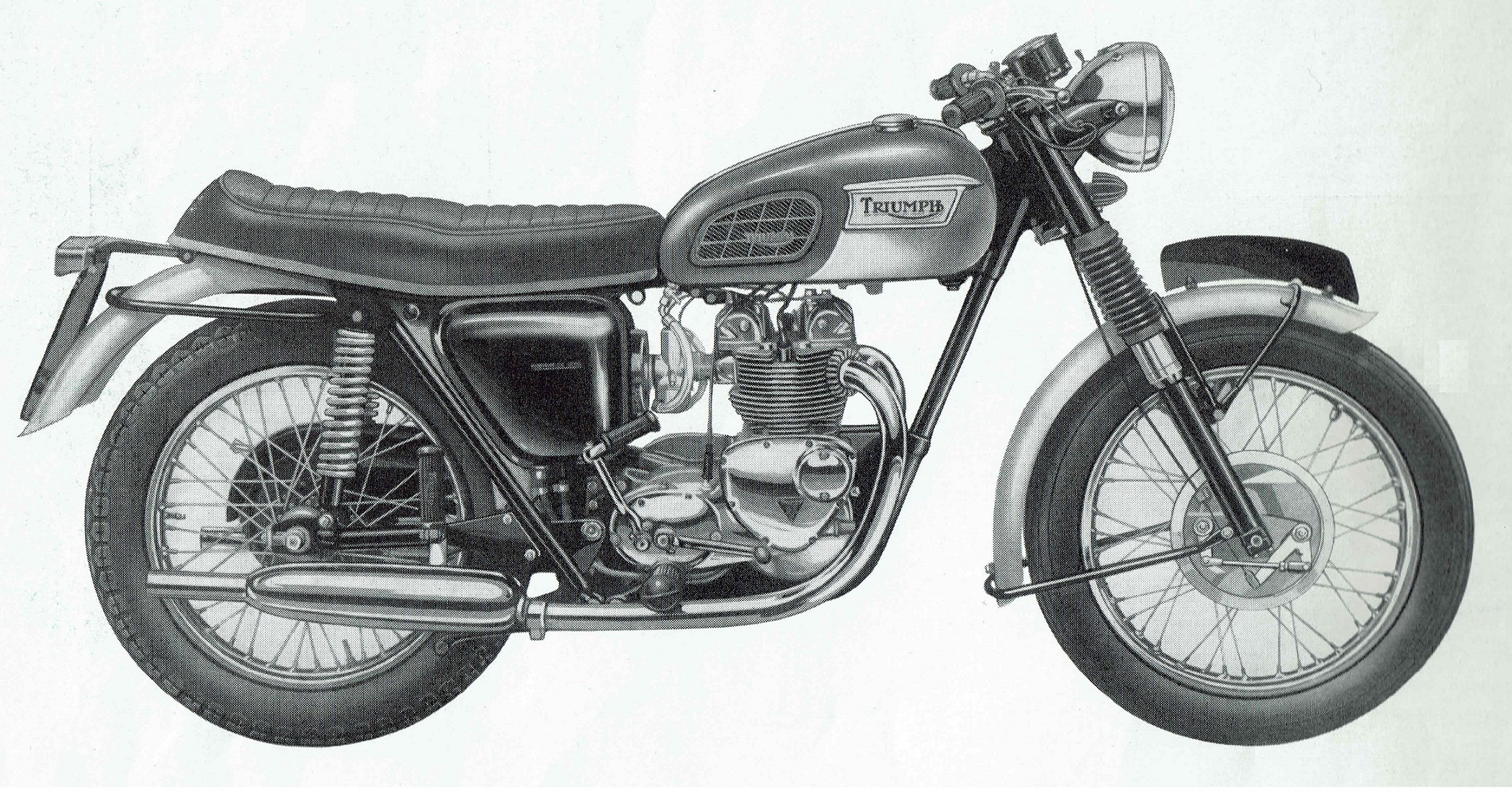
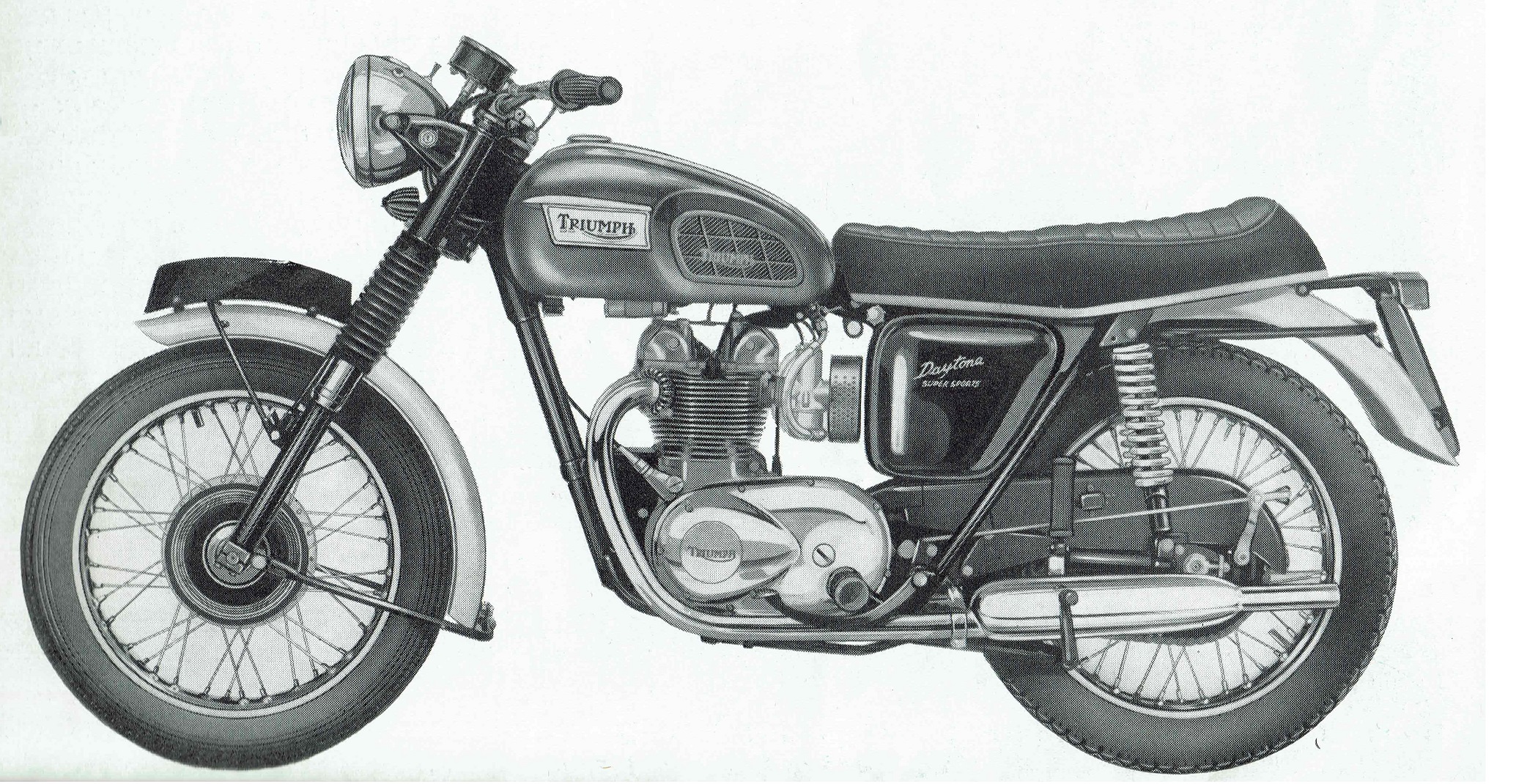
1969
Engine / Frame Numbers H65573-H67730 then
Engine / Frame Numbers NC100-JC23789
| Production for 1969 | Standard | Police | |
|---|---|---|---|
| 1969 Triumph 3TA | 30 Engines | ||
| 1969 Triumph Tiger 90P | Tiger 90 Police | 28 | |
| 1969 Triumph Tiger 100SS | 15 | ||
| 1969 Triumph Tiger 100S | 1336 | ||
| 1969 Triumph Tiger 100C | Trophy 500 | 3230 | |
| 1969 Triumph Tiger 100R | Daytona Super Sports USA | 2388 | |
| 1969 Triumph Tiger 100T | Tiger Daytona Sports UK | 501 | |
| 1969 Triumph Tiger 100P | Tiger 100 Police | 352 | |
| 1969 Triumph Tiger T100C SP | Tiger 100C Police | 11 |
Production all Triumph Twins for 1969
| 1969 | 3TA | T90P | T100S | T100SS | T100C | T100CP | T100P | T100T | T100R | TR6 | TR6R | TR6C | TR6P | T120 | T120R |
|---|---|---|---|---|---|---|---|---|---|---|---|---|---|---|---|
| Built | 30 | 28 | 1336 | 15 | 3230 | 11 | 352 | 501 | 2388 | 476 | 4952 | 2752 | 879 | 1706 | 12138 |
No sales figures survive after 1968 but most production is now destined for the USA with the Bonneville taking centre stage.
1969 Production for the Twins begins in June 1968 with DU 85904 (T120R) while the smaller twins start in August with H 65573 (T100R), the standard numbering sequences
continue until October and H 67730 and DU 90282 respectively.
From October 1968 the Engine and Frame Numbers for all models change to include a two letter Month and Year Code, with the first letter indicating the month of manufacture with the second letter indicating the Model Year.
The system is shared across the Triumph Range and the H (350cc-500cc) and DU (650cc) Prefixes are no longer used.
The Numbers are stamped over a “Triumph” background featuring seven small logos. Note there is some variation in the position of engine number and model code
on the stamped background and the script used differs from all earlier types.
The Factory made an error in the coding of 1145 machines built in January 1969 as these were given the year code D instead of C.
All machines in the range AD7780 to AD8884 are 1969 Models.
A small number of T120 Bonneville engines from CC15071 are supplied to Ital Jet and used to create the Ital Grifon, I am aware of two surviving, an earlier 500 cc model was built and publicity images of the machine survive but the engine number is not known. The Grifon is a rare machine and unknown outside of a few experts.
The Styling of the Grifon is continued into machines imported into the USA by Floyd Clymer as Indians and fitted with Velocette and Royal Enfield Engines.
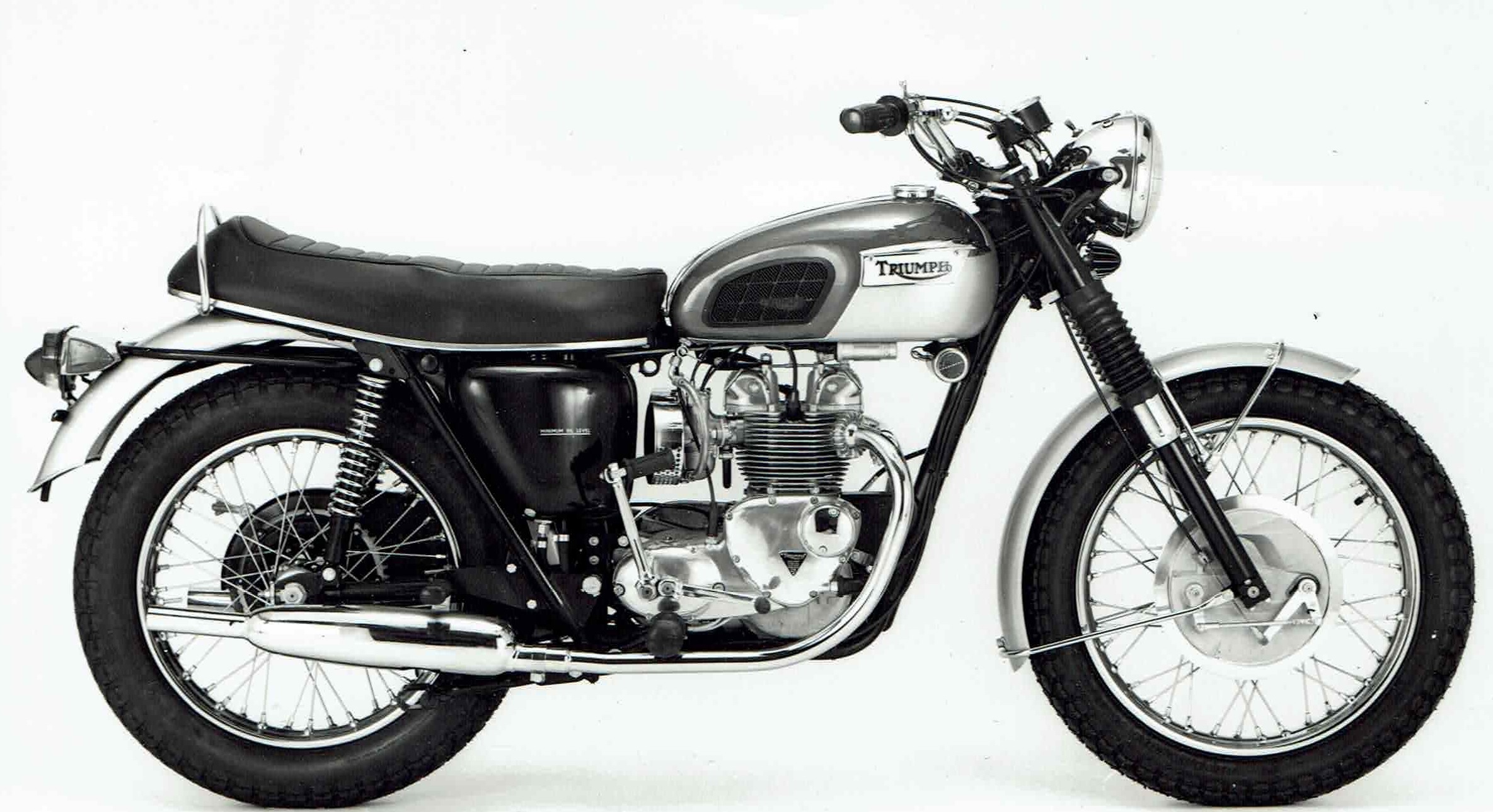
For 1969 there are numerous changes to the engine specification to improve reliability of what is now a much more powerful engine than the original 1957 version.
In the engine there is a new one piece crankshaft now featuring UNF threads and a roller bearing for the Drive side while the Timing side is now a ball race.
To cater for the new crankshaft the oil feed system is changed to now feed into the end of the crankshaft from the Timing Cover..
The oil pressure switch now with moves into the Timing Cover to correspond with the feed arrangement. The switch operates at 7 psi and is wired to a red indicator light in the headlamp which acts as both Ignition and Oil Pressure warning light.
This practice matches what has been available on the B range for some time.
Note : The Red warning light goes out once the engine has started and the oil pressure has risen above 7 psi.
In the literature the Oil Pressure Switch is indicated as UNF but in practice the thread used is either 1/8 NPT (National Pipe Tapered) Smiths Part 5307/05, Triumph D1943, BSA 19-6504) or 1/8 NPS (National Pipe Straight) Smiths Part 5330/1/03, Triumph 60-3719)
The actual thread form shares some dimensions with Unified threads e.g.60 degree included angle, but both NP are 27 threads per inch and have a major diameter of 0.405”
It is believed that all early 1969 models show a tapered thread in the Timing cover with this later changing to a straight thread around the introduction of the new engine number codes. Check carefully, as fitting a straight threaded oil pressure switch into the tapered hole will damage the timing cover.
(Many thanks to Stuart MacAulay who provided this detailed information)
On the Twin Carburettor models (T100R and T100T) the Conrods are now of improved material, RR56 Aliminium Alloy fitted with Vandervell VP3 Big End Shells.
From the start of production No Small End Bushes are filled in the connecting rods. (Works Manual section BB25)
Nitrided Heat Treated Racing Form E3134 Inlet Camshafts are used with Nitrided E3134 Exhaust Camshafts on Twin Carburettor Models and
While E3325 Camshafts are used on the single carb models (T100S & T100C)
Cam followers are 1 1/8 radius for the Twin Carburettor Models and ¾ inch radius on the Single Carburettor Models.
Factory press bulletins state that O rings are introduced in the Tappet Blocks during the year and O rings added to the inside of the pushrod tubes.
Further changes are made to the Push Rod Cover tubes, these now show “Fingers” at the top designed to guide oil towards the centre of the tube.
A new Cast Iron Cylinder Barrel with thicker walls is introduced for all models, Painted Silver as before
The Barrels are actually introduced in late 1968 from H63370.
The T100C (Trophy 500) now has Cast Iron Valve Guides while the other models continue with Hidural 5 Bronze Guides.
The need for new Crankcases allows some of the joint faces to be enlarged where this is possible to reduce oil leaks.
A left hand thread is introduced for the Rev-counter drive to prevent problems with it unscrewing in use, a problem with the earlier versions.
While the alternator cable exit is moved to above rather than hidden beneath the gearbox, this is a distinctive feature for the 1969 type crankcase.
Another distinctive feature of the early 1969 Crankcase is the roller main bearing together with the original timed breather parts. This system is superseded during the year by the later breathing arrangement into the primary case (May 1969).
Within the gearbox there is a new locating plunger and spring to try to improve gear changes
While the Clutch Cover now shows the Triumph logo.
From CC18734 the locating tabs on the Thrust washer are deleted and to suit this condition the holes are deleted in the clutch hub.
I have seen some factory correspondence that indicates that the Clutch cable now has a lubricator, but I do not know how this is arranged.
The Parts Book indicates that the East Coast T100C has Wide Ratio Gears fitted with Close Ratio Gears available for the T90 and T100.
By now almost all of the thread sizes within the engine are Unified either UNF or UNC depending on the requirement and this pattern continues on the rest of the machine.
New parts are fitted into the Concentric Carburettors these are, Needle, Needle Jet and Jet Holder
Tricor Bulletin no: 69/3 from Feb 20th 1969 shows the details.
Frame …a new Frame front section featuring a new steering lock platform is introduced under a new part number
This frame shows the Side Stand lug now mounted forward of the lower engine mounting and matches the new longer and stronger Side Stand that is introduced.
Allegedly there is new centre stand geometry but I cannot confirm if this is true.
New wider fork crowns from 6 ½ to 6 ¾ inches and a longer wheel spindle allow the fitting of wider front tyres.
All models show the twin leading shoe brake, 8inch for T100T and T100R and 7 inch on T100S and T100C with air scoop and Bell Crank lever.
Early T100C Models for 1969 show the earlier single leading show brake
The Front Wheel Spindle a ¼ inch longer. Earlier spindles do show a part number so you will be able to differentiate between these.
Note that the new fork components are visually very similar to their predecessors and the parts are easy to mis-match.
The Front hub has new grease retainers fitted and the chrome cover now shows concentric ribs instead of the plain plates of the earlier models.
See the appropriate images.
Forks from Engine/Frame EC17978 use new stanchions with revised damping holes. See Factory Bulletin 69/11 of May 18th 196 for details..
The Front Brake anchor peg is longer on the wider fork (1 19/64 to 1 27/64) to allow a single part to be used with the differing brakes plates
Do not use old stanchions as replacements for any of the 1969 models. Bulletin 69/13 covers the changes.
Fork Gaiters no longer require the metal spring clips as they are designed to grip the seal holder in a form of Labyrinth seal and at the top by a groove in the abutment with a corresponding ridge in the Gaiter.
With the introduction of unified threads in 1968 the fork top nuts are marked on one side with a pattern of circles, the nuts also have a distinctive domed shape that makes them easy to differentiate from the earlier flat type.
The exhaust pipes on all models except the T100C are now connected by a balance pipe near the cylinder head, while the T100C gains a connector near the silencers and the distinctive and attractive wire mesh “Chip Basket” heat shield.
Silencers are internally baffled on the Home and General Export models and Straight Through on the US T100R.
The parts book also shows folding footrests and sump guard fitted to the T100C
Chrome Front Mudguard Stays appear initially on the US T100R with the lower loop stay no longer acting as a stand. (Attached by a single bolt).
The T100C shows Black Stays with the Stainless Steel Mudguards (Fenders)
All models now feature handlebar levers with ball ends though these have been available for many years as an option.
Note that the Steering Damper is not always present and becomes an option during the year.
When it is not fitted a decorative chrome cap nut is used to improve the appearance of the steering head.
The handlebar fitting method remains as for 1968.
Rear shocks now feature exposed springs on the UK and General Export models with 145 lb ft springs used
While US Models use 100 lb ft springs. I recommend that for solo riding you consider these as they improve overall comfort.
On the Petrol Tank the Parcel Grid is no longer fitted (US Court Case) and with this change new simpler “Picture Frame” Tank Badges are introduced
The centre seam trim is fitted with a hook at the front to reduce stresses that had causing cracking of the earlier version
Lucas RAR 25 Amber Reflectors are fitted under the Tank on the US Models
New Tank top and Side Panel Transfers appear, these are in a simple block script.
On the Toolbox a new Clip appears, this is to prevent the standard knob loosening in use and depositing the contents of the toolbox on the road
The part number is F11357. (1969) and can be supplied to fit earlier machines.
The Toolbox is adorned with the model transfer and UK machines can show an additional “Queens Award” Transfer.
These transfers are not illustrated in the parts book.
All models now use a single version of the Dualseat which has a black Quiltop cover with a chrome rim band.
Underneath the hinges will be the later type, made from pressed and rolled steel rather than forged as before.
Export models will feature the Grab Rail that was introduced on the late 1968 model, see 1968 Notes.
The Seat Knob will be the black plastic covered version rather than being chromed.
The routing of the speedometer cable changes to now run along under the engine and then to follow the main down tube, this change may have been introduced earlier
but is especially visible in the images in this section.
Changes are made to the wiring to include provision for a the fitting of a front brake light switch and wiring is now incorporated to add indicators easily
though these are not fitted as standard as yet.
The exit for the wires for the alternator can now be seen on the gearbox top behind the Clutch (filler cap).
A Lucas RM21 Stator is now used with, Siba Coils, Lucas 6CA Points and a separate capacitor Pack (Lucas 2CP) is mounted under the front of the petrol tank.
Home Market Machines have Lucas MA12 Coils. The Siba Coils use a different “S” bracket and show suitable spacers used to mount them to the frame.
Test pictures show metal supressed spark plug caps fitted to a European test machine while the brochure images show black plastic/rubber ones used.
As previously the T100C features the smaller Lucas MCH66 Lamp Unit while the other models have the SS700P unit with Ammeter, three way switch and warning lights.
At the rear is either the Lucas 564 or the Lucas 679 unit with additional Red (Lucas RER 24) Reflectors, depending on the market the machine is supplied to.
For additional information consult the period Lucas Brochure CE830/69
Colours for the year are Lincoln Green (Green Metallic) over Silver Sheen with White Lining the style of finish differing between models.
The T100C Trophy is finished overall in Lincoln Green with Stainless Steel mudguards (Fenders).
As for 1968 there are several variations in the style of the paint finish and for 1969 a lack of good quality pictures and road tests to use as examples.
The 1969 Triumph Bonneville shows three differing paint schemes and I suspect that the T100’s are similarly affected.
US Fittings Alternatives
High Bars
Twin Rotor Twistgrip T100R
Sump Plate T100C
Folding Footrests T100C
Steering Damper T100C
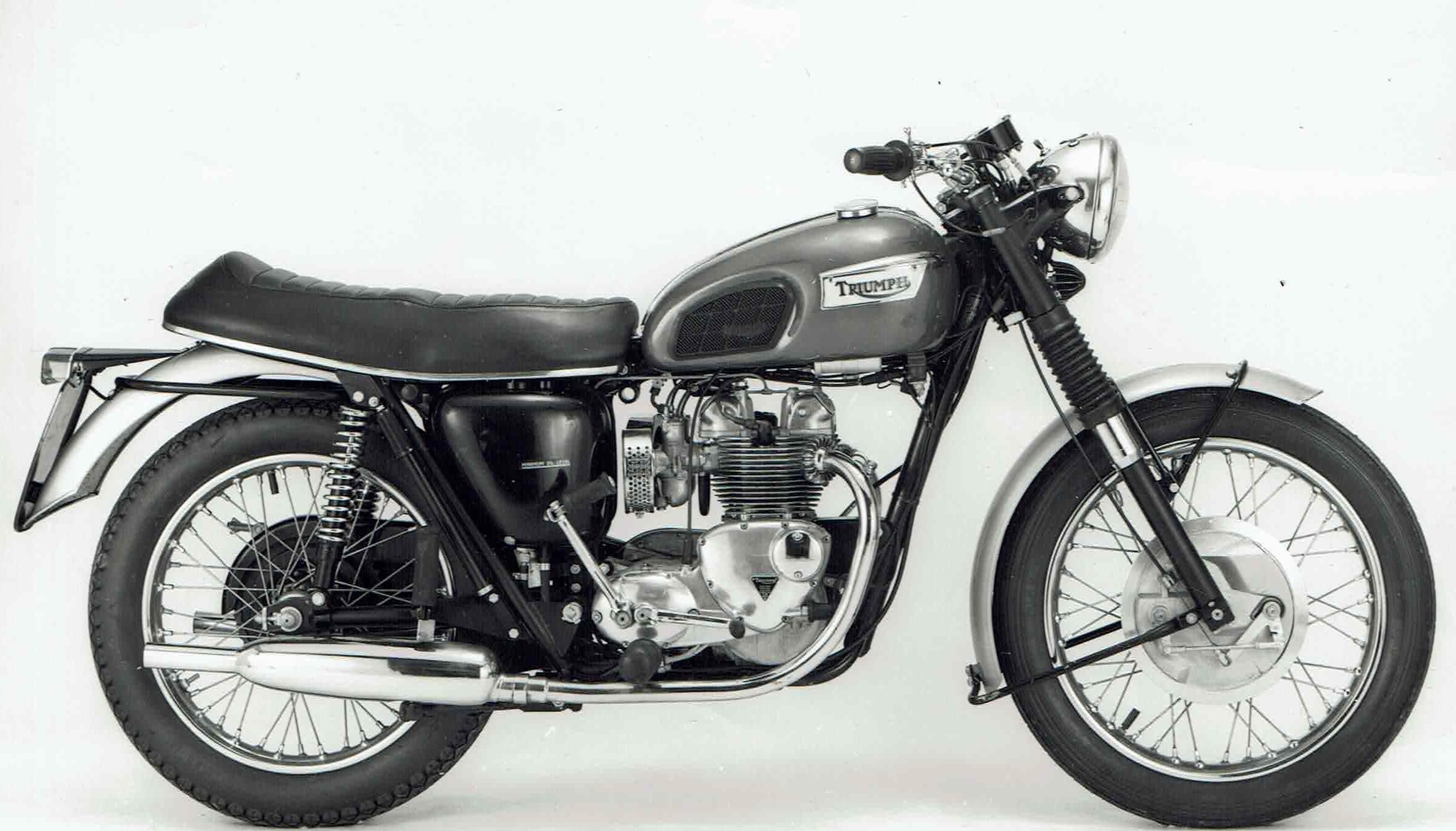
Notes for 1969
With the introduction of the new numbering system in October the Factory Records change in the way machines are recorded.
They are no longer recorded by range and are instead all recorded together in large, fabric covered, punch bound ledgers.
Each entry shows the Engine and Frame code and number, the engine build date, machine assembly date, date to despatch, despatch date, invoice number and destination.
A separate set of records covers Engine Assembly and includes brief notes detailing new parts or assembly methods used.
1969 Production recorded in the new books begins with T120R Bonneville’s NC100-NC2034, with C Range production starting at PC5516 (30, 3TA Engines)
The books are fascinating and are available to view by visitors at the VMCC Library in Burton on Trent.
Production of the range is in three distinct batches XC 6297 to AC 9987, EC 17978 to EC19912 and HC24353 to JC 24839
December 1968 to Jan 1969, May 1969 and July and August 1969. The Account books for the period do not survive and therefore it has not been possible to identify how many of each model were supplied to the differing markets, most T100R and T100C production is from the first batch.
The Engine books no longer contain the separate pages of notes detailing the starting Engine Number for new parts being used.
This new arrangement makes deciphering changes much more difficult so I apologise in advance for the lack of information I can provide.
Some information is revealed in the Factory Bulletins.
500cc Twins to EC 17978 have problems with undersized Drive Side Bearings Bulletin 69/14 June 27th 1969
T100C models prior to AC 9210 will show the earlier single leading shoe brake rather than the twin leading shoe version
Parts Book No: 10 is the one for the 1969 models, published in September 1968 it shows the parts fitted across the range for all markets.
In the parts book look for parts now with five figures such as the Styling Strip F10007. Some parts show the Unified Part Numbers (14.0303) that are introduced later.
Note, though the T90 is shown only Police models were manufactured, destined for Ireland and possibly for the RUC (Royal Ulster Constabulary) One survives !
For Road Tests refer to my Magazine List as there are many suitable articles from 1969, many with excellent colour pictures.
A good example is the February 1969 edition of the USA only magazine ‘Modern Cycle’ and its test of an early production T100C.
Moto Revue No: 1950 of 18th October 1969 features a test of the Daytona (T100T) with useful images, text in French.
Moto Revue was a long established magazine, starting in 1912 and the equivalent of Motor Cycle and Motorcycling. Rare to find outside
of some specialist sellers but available and collectable.
Motorcycle Mechanics May 1969 features a test of the T100S with useful pictures of the Factory Test Bike.
Motorcycle Mechanics begins in June 1960. Published monthly it is aimed at the home mechanic with numerous pictorial service articles and often colour covers in a period when the “Weeklies” are still in black and white. Old copies are widely available in the UK.
For Restorers the quality of the images inside are poor but the cover can make up for this.

Note that for 1969 there are again numbers of Personal Export machines showing in the factory records and I recommend that you check with the VMCC Library to confirm the history and details for your machine.

Superb Shot of the New Triumph Trident on the Cover of Cycle Guide, quite a rare Magazine !
The UK Factory Test Bike was crashed by Charles Deane of Motorcycle Mechanics and
later pictures show the machine fitted with different parts!
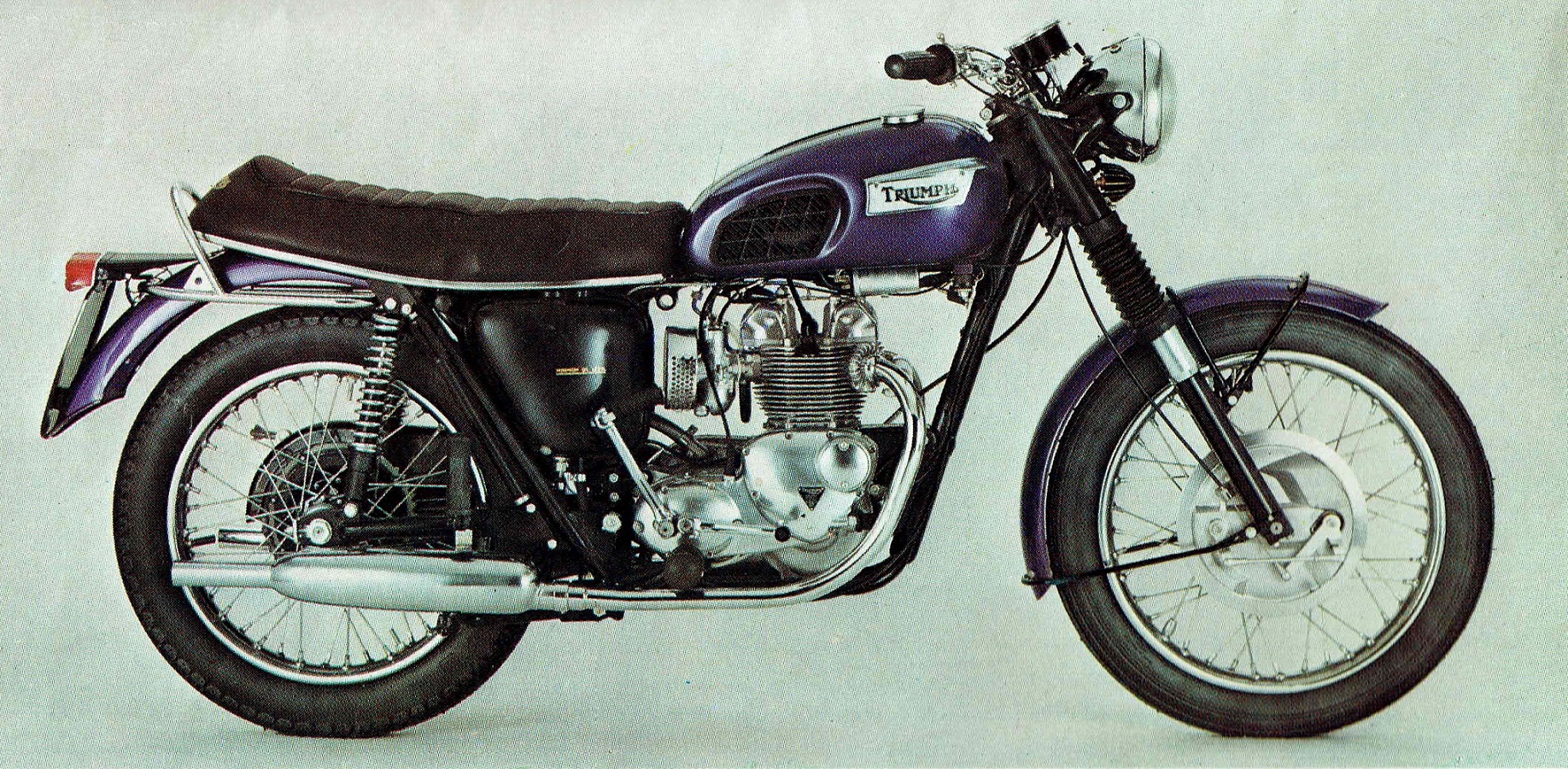
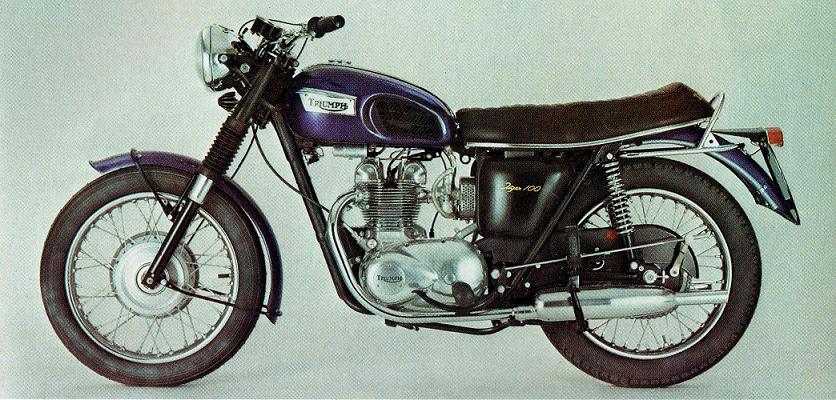
1970
Year Code D i.e. KD27850
Production of the 1970 Twins covers JD24848 (August 1969) to ND60540 (October 1970) a total of 35691 machines
| Production for 1970 | Standard | Police | |
|---|---|---|---|
| 1970 Triumph Tiger 100S | Tiger 100 | 1497 | |
| 1970 Triumph Tiger 100C | Trophy 500 | 4122 | |
| 1970 Triumph Tiger 100R | Daytona Super Sports USA | 3244 | |
| 1970 Triumph Tiger 100T | Tiger Daytona Sports UK | 380 | |
| 1970 Triumph Tiger 100P | Tiger 100 Police | 271 |
Production Triumph Twin Models for 1970
| 1970 | T100S | T100C | T100P | T100T | T100R | TR6 | TR6P | TR6R | TR6C | T120 | T120R |
|---|---|---|---|---|---|---|---|---|---|---|---|
| Built | 1497 | 4122 | 271 | 380 | 3244 | 627 | 1222 | 6241 | 2746 | 1989 | 13322 |
The Model Year for the 500cc twins starts with KD27850
Again there are multiple detailed changes introduced on the 1970 models, shown above are the UK/Home Market T100T Daytona and the UK Home Market T100S.
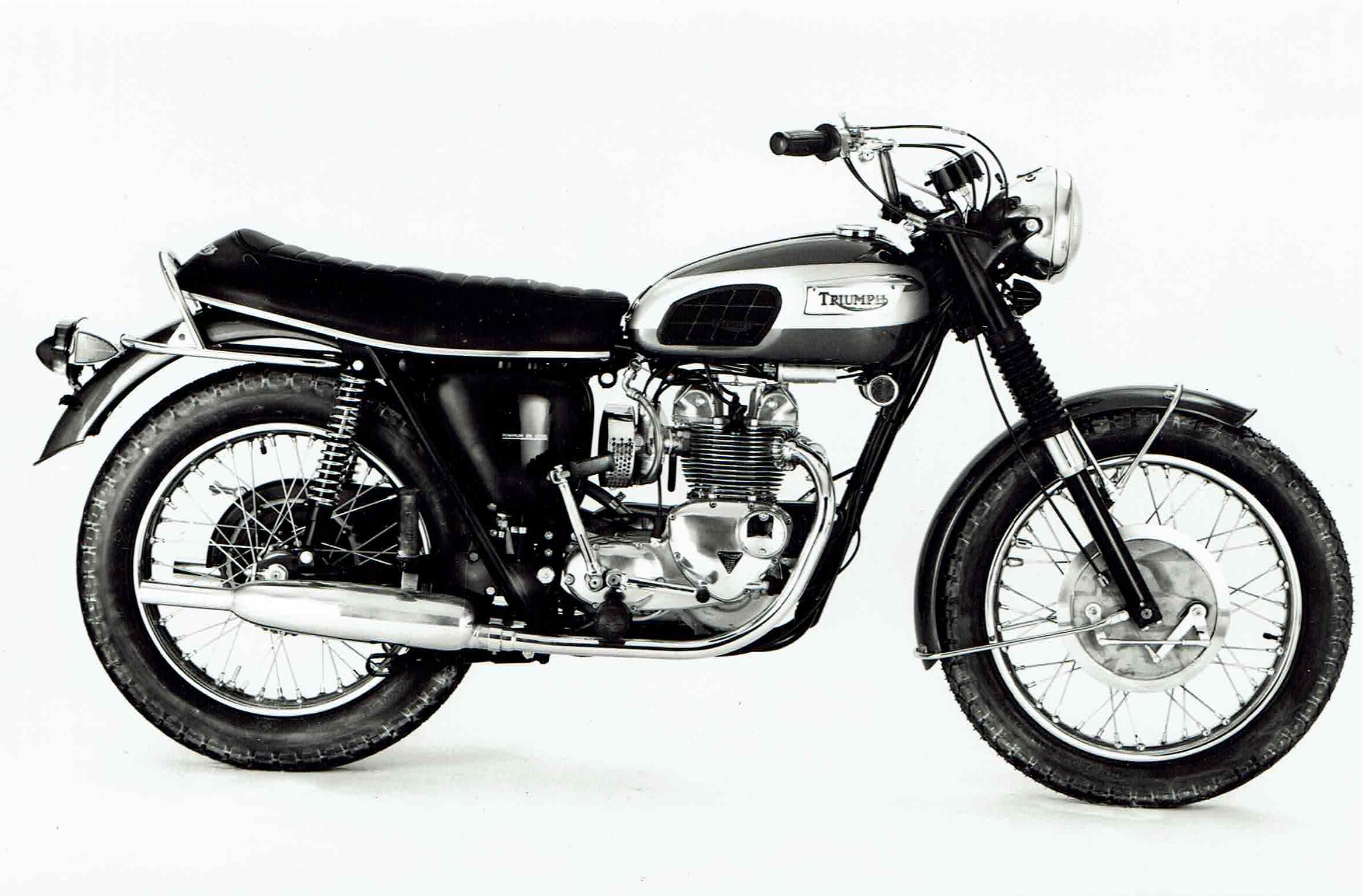
The US Specification T100R Daytona, in a very unusual Scheme, from the VMCC Library Collection.
Engine. The Inlet Camshaft is changed to remove the breather function with engine breathing now arranged through the primary drive case.
The oil seal associated with the drive side bearing is deleted and three small drilled breather holes appear between the primary drive and crankshaft.
A steel baffle plate behind the clutch and high up in the primary case vents gases to a large bore breather pipe stub and beyond this the breather pipe.
The new breather arrangement is very distinctive and allows dating of the crankcases to 1970 and beyond even in the absence of an engine number.
On the Exhaust Camshaft the Rev-Counter (Tachometer) Take off plug in the camshaft is now solid instead of a being a pressing, the pressing often failing prematurely and requiring removal of the camshaft to undertake repair.
Changes also occur within the right hand crankcase to remove the main bearing abutment ring.
Once again for 1970 there are changes to the push rod tubes and the “Fingers” from the 1969 version are deleted though illustrated in the parts book.
Service Bulletin 324 covers the Push Rod cover and seal arrangements that were introduced from 1969 to try to prevent leaks
Note the type of cam followers used depend on the model, with the Daytona models using the “R” type followers.
In the gearbox the components now have an improved gas treated surface finish with hardened nickel chrome gears and a heavy duty mainshaft.
Changes were introduced because of increasing gearbox failures on the higher performance models.
A new precision pressed camplate is introduced during the 1970 season to improve gear changes, this camplate can be used on earlier models but requires modification prior to fitting.
The front Engine mountings are modified to ease fitting and removal of the engine. I have been unable to ascertain what these changes were
Frame. The Frame Number is now found stamped on a raised plinth; initially this is plain but later partially embossed with the Triumph Logo as an anti-theft feature.
No other changes are apparent apart from the prop stand has an adjustable stop added.
Front Forks. These are now feature extruded bottom sliders instead of being forged.
The stanchions are now hard chromed and ground and two additional bleed holes appear near the bottom
The brake anchor lug on the right is now strengthened; manufactured from cold drawn section steel and welded to the right hand fork leg.
The Fork Shroud on the right now shows a hole and grommet where the throttle cable or cables pass through.
Rear Shocks though still exposed they now feature extended spring adjusters.
The period road tests are critical of the standard of the chrome plating on the springs.
The friction steering damper is deleted except on the T100C and replaced if appropriate with a rounded chromed fork stem nut.
The T100C can show just the sleeve nut so that the damper can be fitted as an option or from spares.
The Rear Brake Torque Stay is now made of flat section steel, painted black and attached with Cleveloc Nuts, these fasteners become common on all areas of the machine.
Mudguards/Fenders. Introduced this year is the distinctive chromed rear support rail and lifting handle incorporating the passenger grab rail.
The Front Mudguard has the Number Plate holes deleted and now shows two fixing holes for the lower stay.
Chromed Stays continue for the T100R but may be fitted across the range later in the production cycle.
On the rear mudguard, there are now holes for the breather pipe clips and for the new seat rail/grab handle.
The Handlebar is now shared with the 650’s and the levers now have holes to allow mirrors to be fitted if required
You will also find here the choke lever assembly, dip and horn switch and Balloon grips.
Electrical. Smaller Lucas 17M12 coils are fitted and mounted on a reinforced bracket and there is a Lucas 2CP condenser pack attached to the frame under the petrol tank.
Changes are again made to the alternator cable exit from the primary drive, now there is no grommet with the wires exiting directly from the crankcase.
Introduced for 1970 is the Lucas MC2 Ignition Capacitor and the distinctive mounting spring, this allows the battery to be removed on competition machines.
Carbs on single carburettor models are partially rubber mounted to reduce frothing and four ply cloth and gauze air filter elements are specified.
The Oil Tank changes, with more reserve capacity and has a new part number to reflect new production methods but is the same dimensions as for the 1968 69 Models
On US models the chain oiler and adjustment system is dispensed with.
The Oil tank breather joins into the main breather pipe via a T piece and the Silver D shaped plastic pipe then runs to the rear of the rear mudguard attached by clips
along the left hand side.
Wheels. Rear wheel change to UNF Threads
The published details for Wheel and Tyre Sizes are confusing with some specifications showing 19 inch front wheels fitted to the Daytona T100R and Trophy T100C models and 18 inch for the T100S.
The dual seat now features black pierced Ambla fabric on the top, the Triumph logo at the rear can be absent.
The colour scheme for 1970 was Jacaranda Purple over Silver Sheen with Gold Lining.
The various models show differing Paint Schemes and the available period pictures do not necessarily represent the finish that was used throughout the year.
Of special interest is the paint scheme shown in the first adverts for the model as this does not seem to have lasted for very long in production.
I would not expect machines after XD34763 to use this early scheme.
Note that on the rear mudguard that the stripe is often absent, especially on UK & General Export machines fitted with the UK number-plate
Notes for 1970
The Parts Books (No:11) are now subdivided into UK & General Export and USA Sections, ensure you consult the correct one.
Refer to Factory Bulletin #70/3P which is the Corrections for the 1970 Parts Book 99-0903 and essential for restorers.
The QD Rear wheel parts described on page 48 of the USA parts book only refer to machines from AD34763 to AD35762 after AD38465 the 1969 wheel is used.
1970 Production is in five distinct batches with production alternating between the larger B range machines as orders were prepared and planned delivery dates arranged.
The majority of USA machines are built in the autumn and winter of 1969.
Though the Model Year is indicated as starting with KD24750 there are two machines built in July 1969 that are the Press Machines.
KD24712 is the show T100T eventually sent to Andrews of London in February 1971
KD24713 is the show T100S eventually sent to John Cooper (John “Mooneyes” Cooper) of Derby in November 1970
Motorcycle Sport from March 1970 has a test of the T100S with useful pictures.

For the ISDT held in Spain for 1970; eight machines are prepared by Ken Heanes and Eric Cheney using modified Engines in Cheney Frames
The Engines are all supplied to Slocombes of London.
XD 35900 T100S Ridden to a Silver award by Johnny Giles
JD 24703 T100S Ridden by Malcolm Rathmell
JD 24840 T100T Ridden to a Gold award by Ken Heanes
JD 24844 T100S Ridden by Colin Dommett
JD 24845 T100S Ridden to a Gold award by Jim Sandiford
JD 24847 T100C Ridden to a Gold award by Mick Wilkinson
DD 48014 T100T Ridden to a Silver award by John Pease
Other Machines sent to Slocombes
H66210 T100C
H66532 T100C
H66630 Harvey Owen
H67039 T100S
H67085
H67254
H67307
EC 18638 Spare (An Earlier Machine)
Some of these machines are used in the 1971 ISDT in the Isle of Man.
A number period articles can be found covering the preparation of these interesting machines, several of which survive.
Look for Das Motorrad 31st Oct 1970 and Motorcycle World of September 1972.
Motorcycle Sport December 1970 and Motorcycle Illustrated from Nov 1970 together with several features in later magazines.
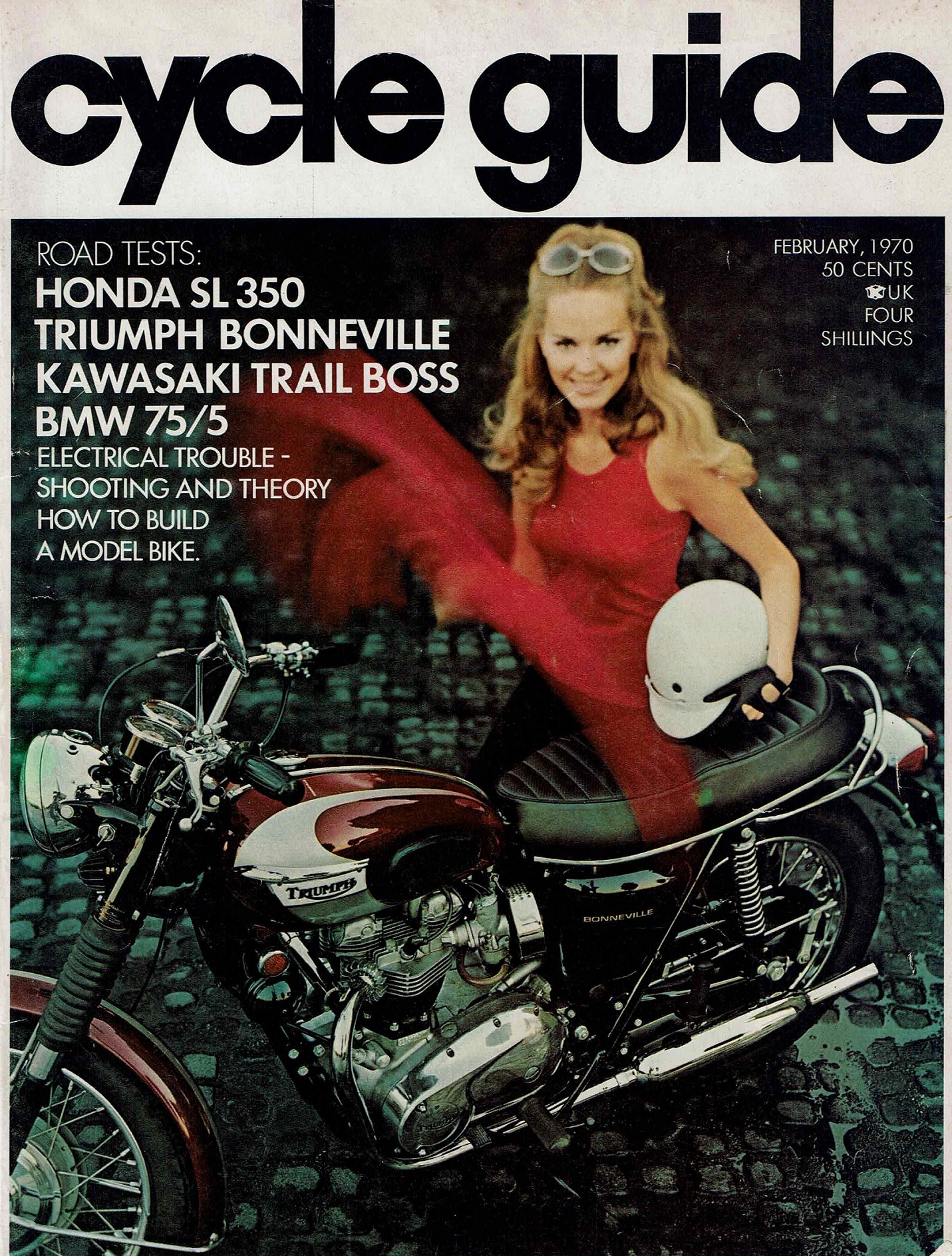
Use my Magazine Index to start your information search.

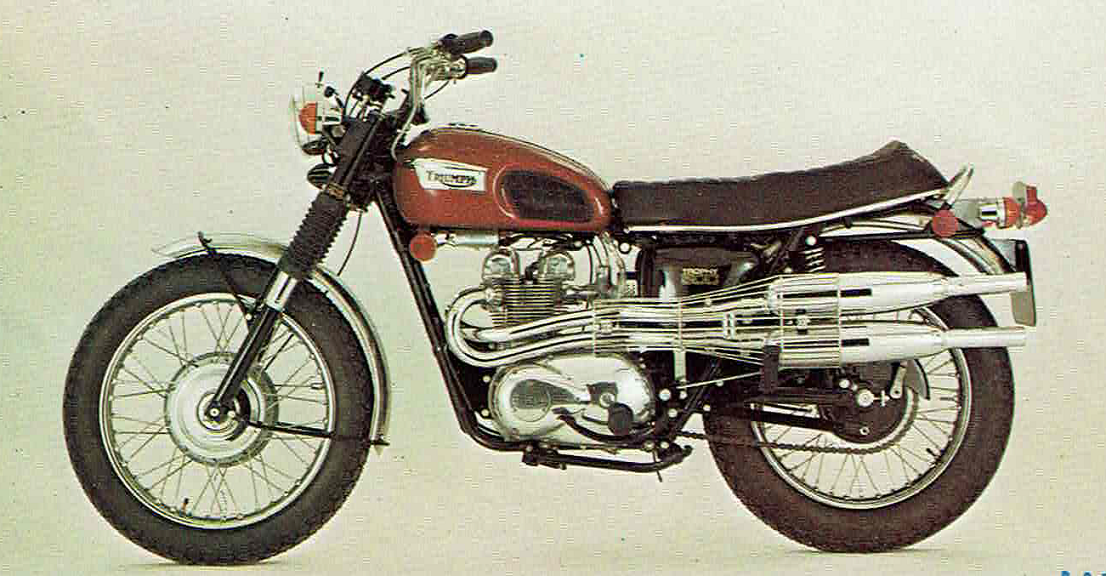
1971
Year Code E i.e. KE00001
Production of the 1971 Twins covers KE00001 (September 1970) to HE30869 (July 1971) a total of 30869 machines.
| Production for 1971 | Standard | Police | |
|---|---|---|---|
| 1971 Triumph Tiger 100C | Trophy 500 | 2331 | |
| 1971 Triumph Tiger 100R | Daytona Super Sports | 2368 | |
| 1971 Triumph Tiger 100P | Tiger 100 Police | 103 |
Production. Triumph Twins for 1971
| 1971 | T100C | T100R | T100P | TR6R | TR6C | TR6P | T120R | T120V | T120RV |
|---|---|---|---|---|---|---|---|---|---|
| Built | 2331 | 2368 | 103 | 7544 | 3070 | 156 | 13494 | 21 | 1729 |
1971 is a momentous year for BSA/Triumph Group with the release of the newly styled and re-framed Tiger and Bonneville, the all new Bandit and improvements across the range of shared models with BSA such as the T25S and T25T Blazers. History tells a different story…
The model range for the smaller twins is now reduced to those pictured above, with sales for the smaller machines now declining with the introduction of reliable and fast Japanese two strokes into the major markets. Information shows differences between models depending on their market destinations, so UK machines differ from European Models and again from the US Models.
There are few engine changes. Small access plugs sealed by O rings and sealant, are added to both sides of the rocker boxes to ease the setting of the valve gaps.
Oil pressure relief valve, a one piece valve is introduced but soon replaced with the earlier version.
Information I have seen indicates that the heavier Conrods fitted to the Daytona models in 1969 are used throughout the range.
Pistons (9.1) are shared between the models and valve guides for the T100C continue in cast iron.
During the season the exhaust pipe adaptors in the cylinder head are deleted and the exhausts are now a push fit into the head.
I believe that with the push fit exhausts that the finned clamps are deleted but cannot confirm this detail.
Klingerite cylinder head gaskets are shown as spares and are likely to be used on production models.
Loctite or Permatex 300 sealant is now used on many parts including the rocker box caps and access plugs.
While other sealants are recommended for Fork Caps, Air Boxes and other parts.
There is an increasing use of “Cleveloc” nuts. These distinctive fasteners are not available as spares and should be saved whenever possible.
All fasteners are now UNC or UNF threads with nuts in a variety of types, Cleveloc, Philidas, Stiffnut and Nyloc.
Refer to pages 82 and 83 of the parts book for details and part numbers of all of the fasteners. This is very useful information for restorers.
There are no frame changes reported.
Forks, Home Market & General Export models appear in the parts book to have a different part number for the fork assembly than the USA models.
This is not illustrated so it is impossible at the moment to identify the differences.
New for 1971 are headlamp mounting brackets rubber mounted to the fork shrouds, the left shroud has a location for the ignition switch while the right shroud
has a pierced hole and grommet for the throttle cable or cables.
Lucas 874 Indicators appear, mounting on the headlamp and tail light, the tail reflectors are deleted and round red Lucas RER 14 reflectors now appear on the grab rail.
along with new handlebar switches which have all of the controls incorporated.
Reflectors are fitted to all models and markets.
A new handlebar is required to accommodate the new switchgear. The mounting of the handlebar varies according to the model and destination with only the “Western” USA
Models using a solid mounting (a different fork crown).
The Brake and Clutch levers that are now alloy on the road models and are incorporated into the new switchgear (Lucas 169SA) for all control functions.
On the right is the Headlamp Flasher and Indicator Switch, on the left the Kill Switch, Horn and Headlamp Dip/Main.
The Daytona models use a twin rotor Twistgrip.
In the headlamp the Ammeter is deleted and its place taken with a light switch, indicator warning light (centrally) with shrouded warning lights for the Ignition/Oil Pressure & High Beam on either side. The T100C only shows two warning lights, High Beam and Ignition with the shrouds.
The T100R, T100T and T100S continue to use the Lucas SS700P headlamp unit while the T100C uses the Lucas MCH66 headlamp unit.
Look for the Front Brake Cable Stoplight Switch and the Flasher Relay and its associated holder and bracket.
Under the tank mounted on its bracket will be the “Clearhooter” horn and beneath the headlamp you will find the Zener diode on its distinctive finned heatsink.
The speedometer and rev counter (if fitted) are now fully rubber mounted and show a simpler design of dial.
The Smiths Part Number for the Speedometer is SSM5007/02A (mph) or SSM5007/03 (kph)
Rev Counter, Smiths RSM3003/13A.
All models show the wheels as 19 inch Front and 18 inch Rear
Literature states that the quickly detachable wheel is discontinued, see notes.
Home & General Export models should be fitted with the larger 3 gallon (UK) Petrol tank while USA models have the smaller 2 ¼ Gallon (US) Gas Tank
The part numbers differ for the four tanks but this is likely to be differences in the paint scheme rather than design.
Once again the oil tank has its capacity increased, continued is the quick release alloy cap and dipstick.
It is impossible to tell which tank you have or require as there are no differences in the fitting arrangements.
Mudguards are the usual mix of painted or polished stainless steel but are now drilled to accommodate the new “Umberslade” rear light unit
This carries the Lucas 769 lamp for brake and stop light duties together with the direction indicators.
The side reflectors are found on the seat rail at the junction of the passenger grab rail.
For UK models the silencers change to quieter and more restrictive “Megaphone” silencers borrowed from the Bonneville while the USA models continue with the Standard straight through silencers mated to new downswept coupled exhaust pipes.
The Trophy shows the Silencers on the left with the “Chip Basket” heatshield as for earlier models.
In theory UK and general export machines (T100R and T100C) are now fitted with a new combined induction system and air filter, but road tests and other evidence do not show this and generally you will find the Pancake Filters as before.
For an illustration of the Air Filter, induction box look for the Parts Supplement for the UK and General Export Models.
Colours for this year are Olympic Flame with Black together with white lining though there are illustrations of UK Machines showing White as the companion colour.
Once again variations abound and care is needed to confirm the original scheme for your machine if evidence of old finishes is available.
The Factory illustrations feature schemes that are generally not adopted on later production machines and original machines I have seen usually show the
“scalloped” finish, Black over Olympic Flame with white lining.
On the tank there is usually a simple script transfer of the model, while the side panel more reliably has the full model transfer.
The Oil Tank continues to show the Minimum Oil Level and Oil Grade Transfers.
Notes for 1971
The parts book is again separated into Home & General Export and USA Editions/Sections.
It contains numerous errors so ensure that you use the supplementary parts list for the year.
By 1971 the BSA/Triumph group is in serious financial and managerial trouble, this period is a depressing read and recorded comprehensively in several other books beyond the scope of the motorcycles themselves.
The year sees the introduction of the first type “Oil In Frame” for the 650cc models and numerous part changes are found on the larger machines.
The introduction of these changes on the production line does not go well as it is discovered that the engines will not fit into the new frames with the rocker boxes fitted and for a period of time the factory is building engines but not assembling machines, these issues only concern the larger models and therefore the production schedule is changed so that the bulk of the orders for the 500’s are built together while the issues with “Oil in Frame” are resolved.
For details on this period refer to John Nelsons book “Bonnie” that covers the inception and development history of the Triumph Bonneville.
1971 “C” Range production is in three distinct batches, production beginning on the 12th September 1970 with JE 0001 a T100R destined for Baltimore.
Note that production of 1971 models is considerably reduced from 1970 levels. (4802 from 9514)

1972
Year Code G i.e. HG32303
Production of the 1972 Twins covers HG30870 (July 1971) to HG62061 (July 1972) a total of 30135 machines.
| Production for 1972 | Standard | Police | |
|---|---|---|---|
| 1972 Triumph Tiger 100R | Daytona Super Sports | 5423 | |
| 1972 Triumph Tiger 100P | Tiger 100 Police | 485 |
Production. Triumph Twins for 1972
| 1972 | T100R | T100P | TR6R | TR6RV | TR6C | TR6CV | TR6P | T120R | T120V |
|---|---|---|---|---|---|---|---|---|---|
| Built | 5423 | 485 | 5461 | 2050 | 1150 | 2 | 751 | 6247 | 8507 |
The figures above include a number of service engines and engines supplied to the Rickman’s. Triumph are increasingly diversifying their market as sales in the USA are now being affected by a variety of issues.
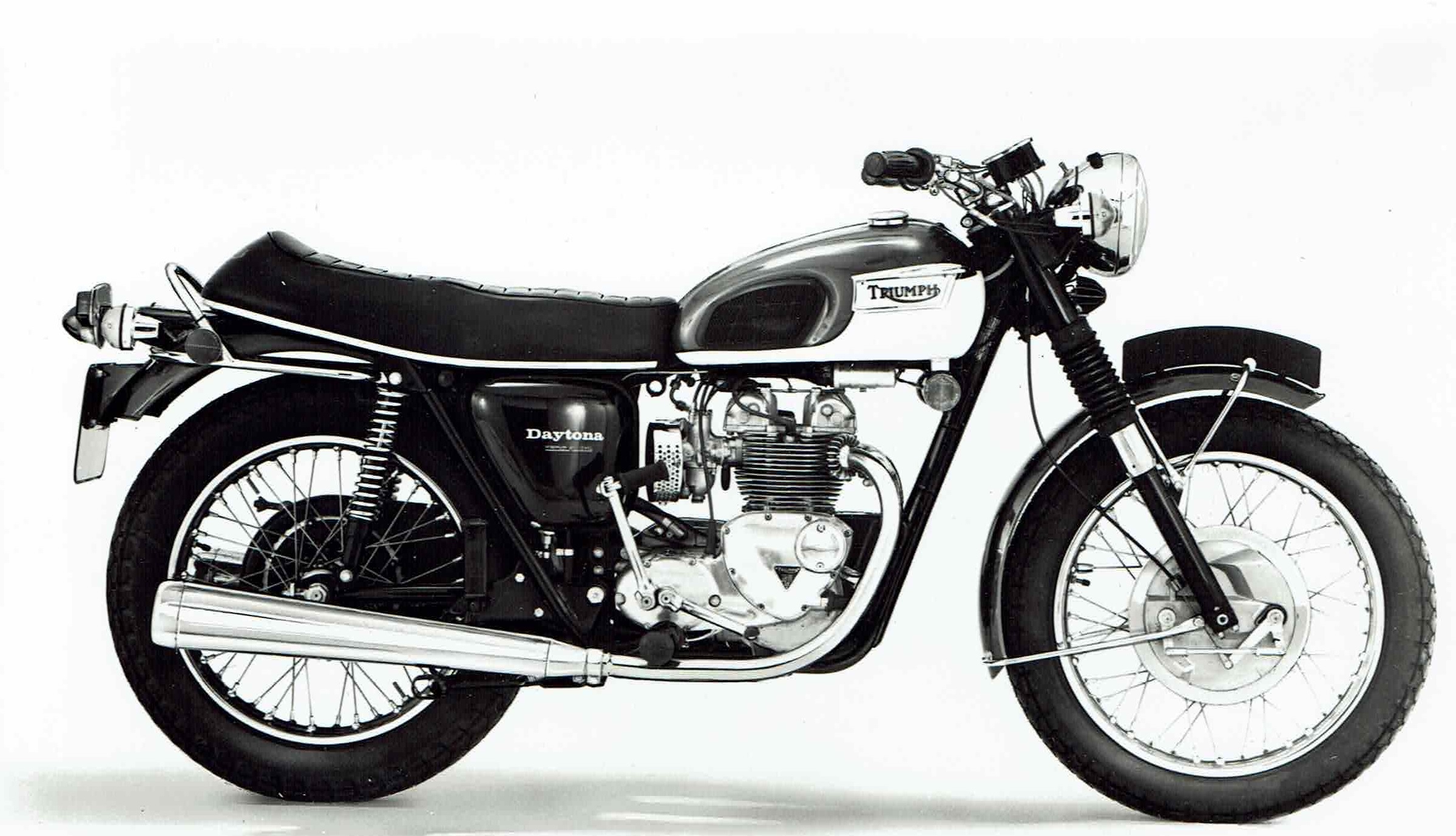
1972 Production for the 500cc machines begins at JG32303
The Model Range is now reduced to the T100R Daytona 500 and Police Models T100P
Even though the T100C is referred to in the parts books and the owners’ manual, very confusing!
It needs to be considered that by 1972 the T100C is soon to be replaced by the TR5T Trophy Trail/Adventurer and other BSA derived off Road Models.
Very few changes are made for this year with only the push in exhausts to look for and the composite oil pressure relief valve introduced previously.
As a styling note the push in exhausts gain the finned clamps only to retain the appearance of old.
The UK and some Home Market machines retain the Cone-Shaped Silencers and the US Models keep the traditional silencer as before but new and slightly shorter
Coupled exhaust pipes are fitted to all machines.
Note the kickstart is a new part, angled outwards to clear the new silencer arrangement.
In theory the Home and General Export machines are fitted with the Induction Airbox and Filter but this is a very rare find in reality!
The catalogue for the year indicates that the Daytona is available with either the 2.2 gallon Tank or the larger 3 gallon tank.
Some illustrations show Knee Grips in others these are missing.
The Colour scheme is shown as Cherry Red over Cold White, lined Gold with the Tank scheme shown in the catalogue as for 1966 models
Mudguards are Cherry red overall with Cold White stripes lined in Gold.
Note that again the published scheme may not be the one actually used and I suspect that the “Scalloped” design is continued.
Notes for 1972
The Parts Book (99-0954) and the supplementary lists show parts for both the T100R and T100C
The Factory Records for the period appear to show that no T100C models are built as all references are for T100R or T100P models.
From April 1972 the rear fuel tank mount is modified to reduce the stresses placed on the mounting. (Bulletin 4/72)
Clips are also fitted to the Balance Pipe between the Carburettor intake manifolds.
For an excellent road test of the T100R by Frank Melling refer to Motor Cycle World March 1973, this has numerous pictures of a factory registered T100R
GWD 428K with painted mudguards in a dark colour scheme and showing the same details as the machine shown above.
Frank Describes the machine as “A true Bike through to the last nut… and unfortunately carrying with it a number of accepted family illnesses”
Parts book Corrections for the 1972 Parts Book can be found on Bulletin #72-03P
For each machine there is in the records a three figure tyre fitting code but this is impossible to decipher.
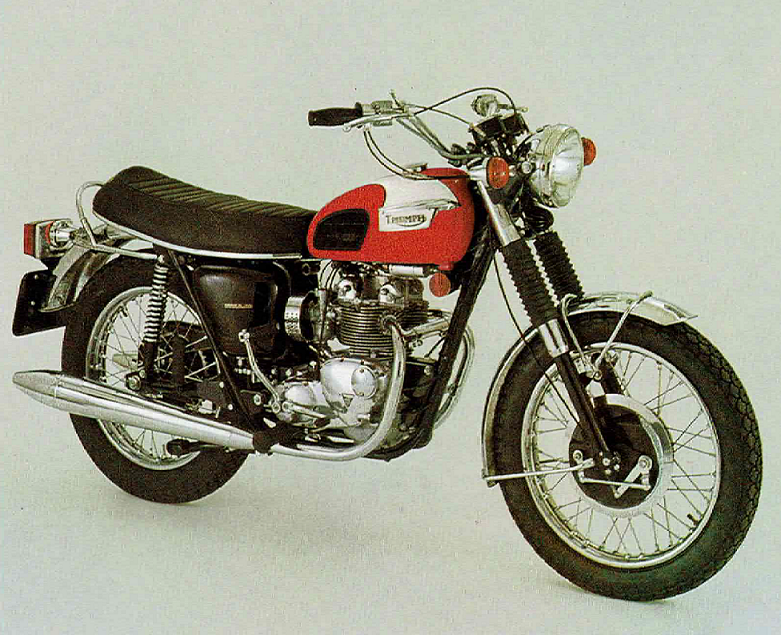
1973
Year Code H i.e. JH15597
Production of the 1973 Twins covers JH15001 (August 1972) to GH35469 (June 1973) a total of 20068 machines.
| Production for 1973 | Standard | Police | |
|---|---|---|---|
| 1973 Triumph Trophy TR5T | Trophy/Adventurer | 2549 | |
| 1973 Triumph Tiger 100R | Daytona Super Sports | 2365 | |
| 1973 Triumph Tiger 100P | Tiger 100 Police | 180 |
Production. Triumph Twins for 1973
| 1973 | T100R | TR5T | T100P | TR6RV | T65 | TR7 | T120V | T140V | TR7RV | TR7PV |
|---|---|---|---|---|---|---|---|---|---|---|
| Built | 2365 | 2549 | 180 | 121 | 265 | 2 | 108 | 8055 | 6236 | 79 |
The Factory Records for this period show a confusing array of model codes and some 400 machines are not recorded or built with an additional 101 service engines and 7 experimental machines being recorded.
The T65 Machines shown above are 650cc Tiger Models Badged as BSA’s; these are recorded as being built early in the production cycle. Not recorded in the records are the TR5MX machines based on the BSA B50 Scrambler, both of these rare models are beyond the scope of this website but have a strong following with knowledgeable collectors.
Production of 500cc Machines begins with JH15597 a T100R
The TR5T is a new model introduced for the 1973 season, this features a slightly modified T100C engine fitted into the highly successful BSA Victor Frame.
I will attempt to cover this model separately at a later date as research material becomes available.
Only the T100R continues to be marketed and in a more generalised form for all markets.
Very few Engine changes are applied, a balance pipe is added to the inlet manifolds to improve low speed running.
Note that the TR5T features modified rocker boxes, cylinder head studs and nuts to suit the Victor frame and may not be interchangeable.
The air filter arrangement with the air box fitted in theory to UK machines is discontinued, so expect to see the standard pancake filter used.
New noise regulations enforced from the 1st January 1973 require machines manufactured after this date to comply and machines built after DH 30706 now feature the more restrictive silencers illustrated on the machine above. Machines built early in the model year show the exhaust and silencer arrangement continued from the 1972 models.
Factory Bulletin 2/73 details the part number changes but is not illustrated
The headlamp Supports/Shrouds are reinforced at the headlamp mountings, note the machine illustrated shows chromed supports that may not be standard.
Addition information indicates that the fork sliders are modified but I have not been able to identify how.
The petrol tank design is changed in both the 3 gallon and 2 ½ gallon versions. The centre seam is deleted along with the covering styling strip.
UK and General export machines show a single fuel tap with reserve capability, while US machines have separate main and reserve taps.
As previously, orange reflectors are fitted under the front of the tank.
The brakes though the same part differ in finish between UK/General Export and USA machines.
The finish is Matt Black for UK/General export models and Polished on the USA machines.
Chrome plated mudguards (Fenders) are introduced with chrome plated stays and rear support/grab rail.
The rear mudguard is now a shorter ‘Sport’ design though some General Export machines are fitted with a longer version of the mudguard.
Introduced is a new Lucas L917 Rear Light unit incorporating side reflectors which allows the indicators to be now mounted on the grab rail in the location
previously used for the reflectors, a slight modification in the wiring is required to suit the new arrangement.
On the handlebar the switchgear changes to show larger lever switches, with the Kill Switch on the left and the Dip Switch on the right hand cluster.
Specified are new chromed steel ball ended handlebar levers for all models.
The tachometer is now fitted as standard, driven by a new one piece drive gearbox and fixed by a ‘Welch’ washer (any ideas?)
interestingly a service bulletin later details that the Welch washer is discontinued and the drive gearbox changed to incorporate a threaded cap plug.
For 1973 the finish is Ice White over Hi-fi Vermillion with Black lining or Gold over Astral Blue with Black lining.
In theory only US models are in the Vermillion scheme.
Note that the mudguards if painted use the Ice White as the stripe over Vermillion, i.e. the Reverse Scheme.
Notes for 1973
The TR5T Trophy Trail/Adventurer is a dual purpose model using the T100C Engine in a slightly modified BSA Victor oil in frame, with a combination of parts from the range of machines from both factories. Many parts are shared with the BSA singles models of the same period and are interchangeable, though exceptions include the Petrol Tank, Seat Cover, Exhaust, Engine Brackets, Bash Plates and associated fasteners. The model shows styling applied across the larger Triumph models and cycle parts are derived from these and BSA rather than the T100R and C Range.
The Triumph and BSA Parts Books for the model need comparing with care as some part numbers appear to differ even though the items look the same.
Refer to Rupert Ratios BSA Book, Volume 2 by Panther Publishing (ISBN 978-1-909213-14-2) for details. This book and the other volumes are useful when researching the earlier T25 Trailblazer based on the BSA Barracuda.
All 1973 TR5T’s are from two batches, KH16597-KH17096 and PH19020-XH21068
There are multiple road tests of the Trophy Trail/Adventurer often with excellent images, refer to my road tests tab for a list.
The factory test TR5 and press machine survives in a private collection, it is unrestored.
Dirt Rider from May 1973 features a test of the Trophy Trail.
A rare magazine but worthwhile searching for.
Six crated machines are selected at Tri-Cor in Baltimore for preparation to enter for the ISDT, held that year at Dalton, Massachusetts.
Photos show the preparation of these machines and additional information on the ISDT can be found via Speed Track Tales, the ISDT Website.
Three Engines GH 15001-GH 15003 were prepared by the experimental department and dispatched to Duarte, Triumph’s race shop.
One of these engines survives in an ISDT TR5T machine sold at auction in 2010.
The parts supplement published on the 1st November 1972 indicates that there are new part numbers for both the Crankcases and Frame
but I have been unable to identify what if any changes were introduced.
Ted Simons famous Jupiters Travels and his Triumph T100P (DH 31414) are featured at the Coventry Transport Museum
Here you will find an excellent collection of cars, bicycles and motorcycles and displays on Coventry’s role in British transport history.
A small group of T100P machines including DH31452 are supplied to the AA (Automobile Association) fitted with an accessory group which includes a single seat, fairing, panniers and carrier all finished in Yellow. DH31452 was sold at Stafford in October 2019 and another is known to survive. The destinations of the T100P models vary with groups for the MOD, Metropolitan Police, Australia and Tunisia and it is likely that the specifications vary widely, if you find one of these rare machines study carefully before commencing restoration.
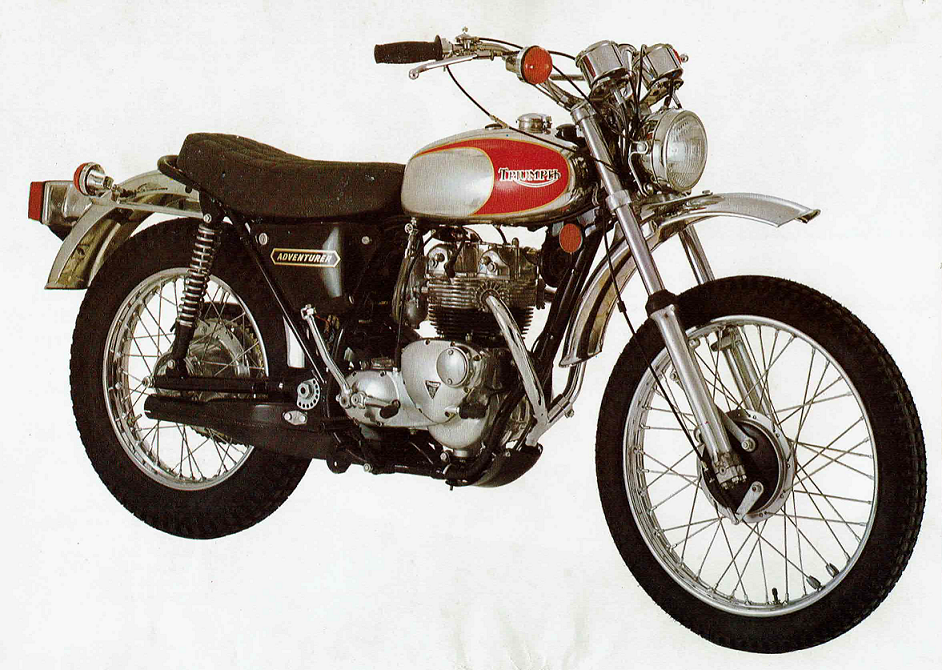
1974
Year Code J i.e. JJ32303
Production of the 1974 Twins covers GJ55101 (June 1973) to NJ60084 (October 1973) a total of 4963 machines.
| Production for 1974 | Standard | Police | |
|---|---|---|---|
| 1974 Triumph Trophy TR5T | Trophy/Adventurer | 929 | |
| 1974 Triumph Tiger T100D | Daytona MK2 | 25 | |
| 1974 Triumph Tiger 100R | Daytona Super Sports | 550 | |
| 1974 Triumph Tiger 100P | Tiger 100 Police | 100 |
Production. All Twins for 1974
| 1974 | T100R | T100D | TR5T | T100P | T120V | T140V | TR7RV |
|---|---|---|---|---|---|---|---|
| Built | 550 | 25 | 929 | 100 | 1000 | 2334 | 25 |
By 1974 Triumph are in deep trouble with unpopular models, poor dealer support, spares supply and industrial action. There is a loyal following for the brand but the products now seem old fashioned when compared to the machines being built in Japan, Italy and Germany. The year sees the end of production for the 350 and 500cc twins that for over 30 years have been in continuous production, sold and enjoyed all over the world, a lasting tribute to their designer Edward Turner, who perhaps thankfully did not live long enough to see the end of the company he will forever be associated with.
1974 Production begins in June 1973 and continues until 14th September 1973 when the factory closes and the “Sit In” starts
500cc Production starts in July with HJ56408 a TR5T.
All T100R (550) models produces up to this date are the Mk1 Models featuring drum brakes and the previous front fork with only very few of the
MK 2 T100D versions with the front disc and Ceriani Type Fork are built and completed.
The only noted engine changes for the 1974 season is the fitting of a higher pressure relief valve, now operating at 75-85 psi and fitted with a coarse mesh filter.
This part is from the Triples. Part No: 70-6595.
The silencers fitted are the ones used from January 1973, elongated and torpedo shaped they are fitted with new exhaust pipes with captive head fixing bolts and brackets similar in design to the larger models attached to the pillion footrests using longer bolts.
There is a minor change to the wiring arrangement in the headlamp for the Indicators which reverses the operation of the handlebar switch
And the left hand panel and tool box is slightly modified to reduce the opportunity for cables to chafe.
The factory bulletins for the period detail these minor changes.
The colour scheme chosen for the season for the T100R is Ice White over Argosy Blue with Gold lining
Notes for 1974
For a good history of the last days of Meriden look for John Rosamonds Book “Save the Triumph Bonneville” published by Veloce ISBN 978-1-845842-65-9
Cycle World May 1974 has an excellent road test of the TR5T with good photographs that restorers will find invaluable.
All 1974 TR5T’s are built as one batch HJ56408 (July 1973) to JJ57336 (August 1973).
The T100D refers to the MK 2 Daytona fitted with parts from the BSA/Triumph Group, this includes the disc front brake, conical rear hub and forks from the other models in the range. Very few of these machines were manufactured the last machine being JJ 58013.
All of the T100P machines JJ 57888 to JJ 57987 are built on the 6th September 1973. They are almost the last machines made before the factory closure.
Though completed just prior to the closure of the factory they leave for their customer the Ministry of Defence in Burma on the 21st September.
Information kindly provided by Richard Wheadon of the Triumph Owners Club details the Engine/Frame Numbers of the machines that were involved in the “Sit In”
and the first production batches when production eventually resumes.